Brașov, Romania: Self-Guided Walking Tour
Things to do in Brașov: what to see in Romania’s historic city
The best things to do in Brașov include exploring its medieval fortifications, visiting the Black Church, and discovering the churches and museums of the historic centre and Șcheii Brașovului district. Set in Romania, the city brings together Transylvanian Saxon, Romanian, Jewish and Orthodox heritage in a compact area that is rewarding to explore on foot. Neywo has a free audio guide for Brașov with 45 narrated places, available in 11 languages.
What to see in Brașov
Council Square and the historic centre
Piața Sfatului, or Council Square, is one of the main starting points for exploring Brașov. The square appears on the Neywo walk through the Saxon heart of the city, alongside the Council House, the Mureșenilor House, the New Dormition of the Theotokos church and the Black Church.
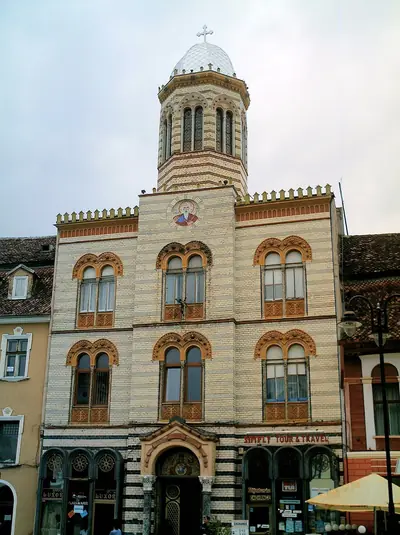
The New Dormition of the Theotokos church stands on the northeast side of the square at 3 Piața Sfatului. Built between 1895 and 1896 and dedicated in 1899, it is a neo-Byzantine church with a central dome and bell tower. Its position on the square marked an important step for Brașov’s Orthodox Romanian community, which had previously been associated more closely with the St. Nicholas area.
The Mureșenilor House is one of the historic houses in the Main Square and now houses a museum. It should not be confused with the separate Mureșanu House on Vár Street.
The Black Church
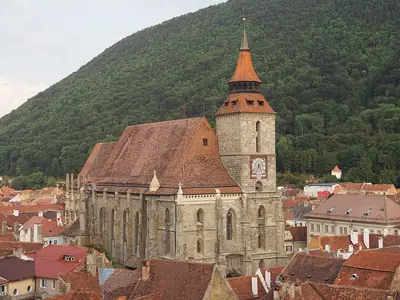
The Black Church is Brașov’s main landmark and the parish church of the city’s Lutheran community. Built by Transylvanian Saxon builders during the medieval period, it is a Gothic structure measuring 89 metres in length and is recognised as the largest Gothic construction in southeastern Europe.
A fire in 1689 partially damaged the church and darkened its walls, giving rise to its popular name. A long-standing legend says that soot from the blaze turned the building black, although the name was not officially adopted until the nineteenth century. The church was also once described as the largest between Vienna and Constantinople.
St. Nicholas Church and the First Romanian School
The Șcheii Brașovului district preserves some of the most important places connected with Romanian education and religious history. At its centre stands St. Nicholas Church, whose sacred site dates back at least to 1292. The present stone church was built between 1495 and 1519, then received additional towers, chapels and Baroque features over the following centuries. Its architecture combines Gothic stonework with later Baroque decoration.
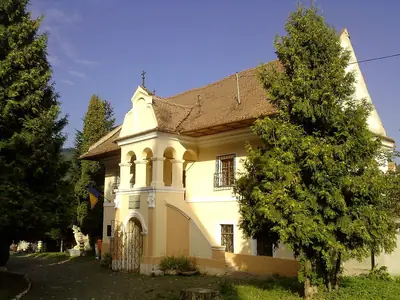
The church stands in Piața Unirii behind a protective wall. Its garden also contains the First Romanian School building, a museum and a statue of the deacon Coresi.
The First Romanian School Museum occupies the historic school building in the courtyard of St. Nicholas Church. The school is traditionally dated to the late fifteenth century, and Romanian was used for teaching there by 1583. It was the first Romanian-language school on the territory of present-day Romania and admitted secular students as well as church figures.
The building took its present form in 1761. It also became an important centre of Romanian-language publishing: deacon Coresi printed the first books in Romanian there, while Dimitrie Eustatievici wrote the first Romanian grammar book in 1757. The museum now displays old Romanian books and written monuments connected with this tradition.
Brașov’s medieval gates and bastions
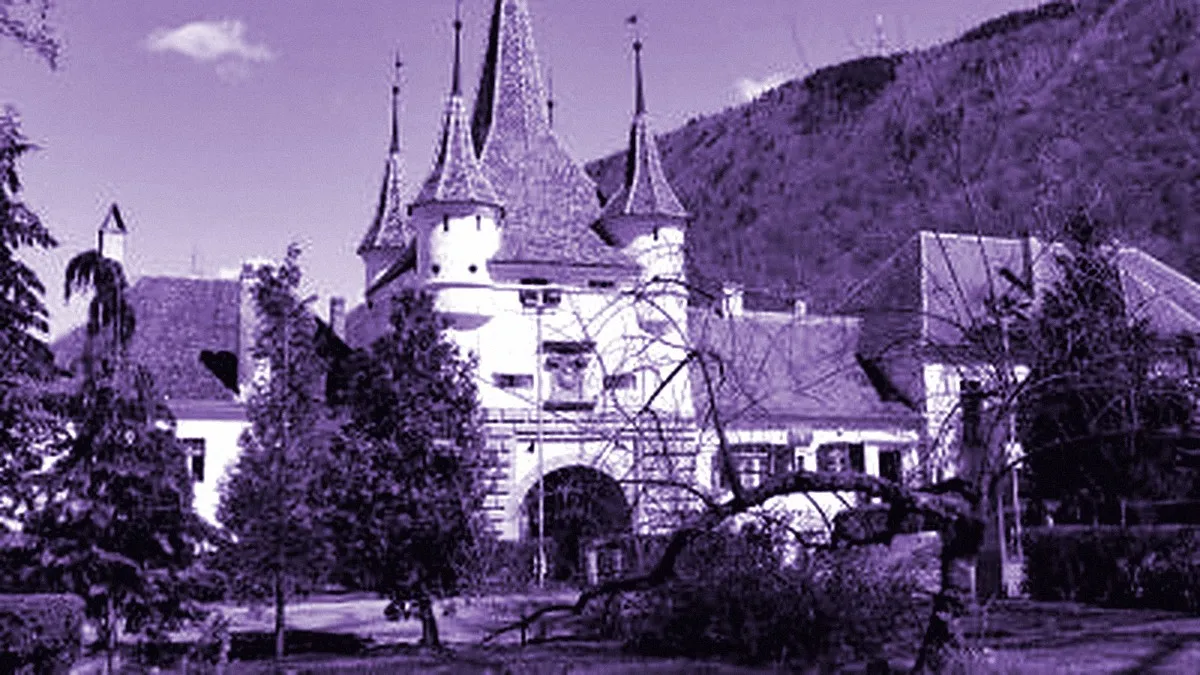
Brașov’s fortifications reveal the city’s former strategic importance. Catherine’s Gate is the only original medieval city gate still standing. Built in 1559 by the Tailors’ Guild, it replaced an earlier gate destroyed by a flood in 1526. Four small turrets at the corners symbolised the town’s judicial autonomy and right to administer capital punishment.
For centuries, Catherine’s Gate was the only entrance available to Romanians living in the Șchei district. They had to pay a toll to bring their goods into the citadel.
The city’s bastions show how different guilds participated in Brașov’s defence:
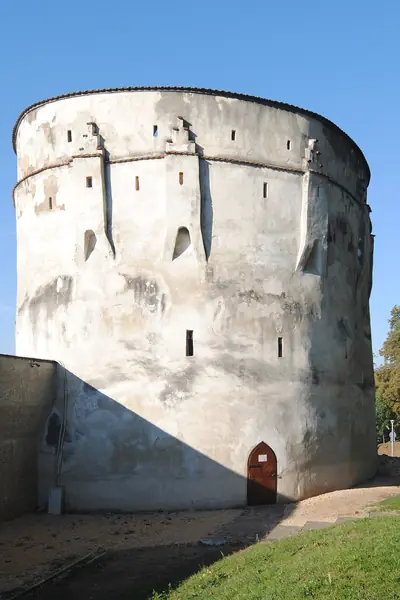
- The Weavers’ Bastion was built by the weavers’ guild and forms part of the city’s southwestern defensive wall. Its four storeys, thick walls, embrasures and watchtowers make it one of the most intact fortifications in Brașov. It survived the great fire of 1689 and now contains a permanent exhibition of the Brașov County Museum of History.
- Postăvari Bastion, also known as Drapers’ Bastion, occupies the fortress’s northeastern corner. The goldsmiths first built and defended it between 1450 and 1455 before it passed to the cloth-makers’ guild. It has four levels of wooden galleries and an elliptical plan.
- Funari Bastion, or Ropers’ Bastion, guarded the southeastern wall and is the first bastion recorded in Brașov’s documents, appearing in 1416. Its foundations can still be seen below the lower station of the funicular to Cenk.
- The Blacksmiths’ Bastion forms part of the fortress’s southwest wall. Built in the sixteenth century, it has a U-shaped and pentagonal plan, three levels and interior galleries. The blacksmiths’ guild was responsible for maintaining and defending it.
Brașov Fortress
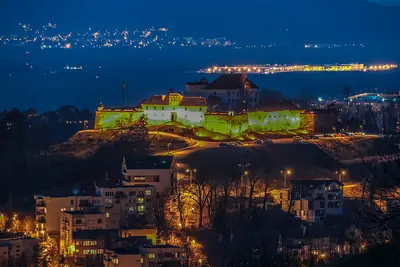
Brașov Fortress stands on Straja Hill above the northern edge of the historic centre. Its oldest tower was built in 1524, and the outer fortification wall was completed in 1630–1631. Habsburg troops later used the complex, adding barracks, warehouses and a commander’s residence.
The fortress last saw defensive action in 1849. Its plan is a slightly irregular square with four bastions directed towards the cardinal points, surrounding a central horn-shaped tower.
Brașov’s museums
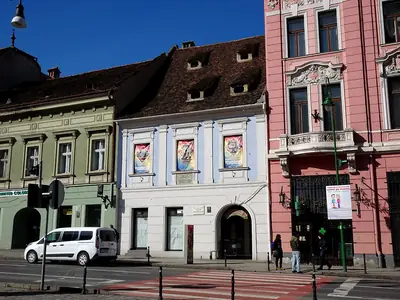
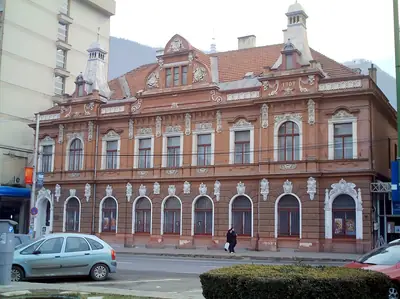
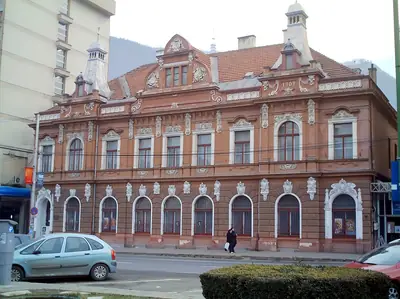
The Brașov Art Museum occupies a neo-Baroque building designed by M. Wagner in 1902. Originally the headquarters of the Saxon Guild of Trades, it became a museum in 1949 and an independent institution in 1990.
Its collections include eighteenth-century anonymous works, art from the generation of 1848 and paintings by Romanian artists including Theodor Aman, Nicolae Grigorescu, Ion Andreescu, Ștefan Luchian, Theodor Pallady and Nicolae Tonitza. Nicolae Grigorescu is particularly well represented, with 36 works spanning different periods of his career. The museum also displays sculpture and decorative art.
The Ethnographic Museum of Brașov is housed in an annex of the Art Museum. Its collection of more than 1,000 objects presents the rural traditions of southeastern Transylvania, with material from Bran, Rupea, Făgăraș Country and Bârsa Country. The permanent exhibition focuses on weaving and its role in interiors and folk costume. The museum also operates in Săcele and Rupea.
The Neolog Jewish Temple
The Neolog Jewish Temple, now known as the Beth Israel Synagogue, stands near Poarta Șchei Street. Built between 1899 and 1901 to designs by Lipót Baumhorn, it combines Hungarian Secession, neo-Gothic and Moorish elements.
The building was renamed Beit Israel, meaning “House of Israel”, in October 2014. Since 2015, it has been used by an Orthodox Jewish community and remains an active place of worship. The complex also includes a community seat and a kosher restaurant.
Saint Bartholomew Church
Saint Bartholomew Church stands near the end of Stradă Lungă, at the edge of Old Brașov. It is the city’s oldest church and oldest building. The present structure dates from the thirteenth or fourteenth century and is an early Gothic, three-aisled basilica with a transept and Romanesque elements.
The church is part of a historic monument ensemble that includes its protective wall, gate and parsonage. Although it is an Evangelical Lutheran church, it is no longer used for worship.
Explore Brașov with a self-guided audio tour
Neywo offers four walking tours and one bus route in Brașov:
- Council Square and the Saxon Heart: 1.81 km, 90 minutes and 11 narrated stops.
- Guardians of the Citadel: The Wall Walk: 3.11 km, 92 minutes and 9 stops.
- Șcheii Brașovului: Where Romanian Was Taught: 2.87 km, 91 minutes and 8 stops.
- Beyond the Walls: Belle Époque Brașov: 3.31 km, 101 minutes and 9 stops.
- Line 4 Through Old Brașov: Șchei to Rezső Boulevard: a 3.4 km bus route lasting 15 minutes, with 10 stops.
Download the free Neywo app and explore Brașov at your own pace. The app tells the story of each place as you reach it, with no group and no schedule. Once you have discovered the city, continue travelling through Romania, or compare Brașov with nearby destinations such as Sibiu, Sighișoara and Sinaia.
Places with an audio guide in Brașov
8 places in Brașov with a Neywo audio guide. Each one starts telling its story as you reach it.
Self-guided tours in Brașov
5 tours in Brașov, free in the Neywo app. Each stop tells its story as you reach it.
- Bus ride
Line 4 Through Old Brașov: Șchei to Rezső Boulevard
RAT Brașov's city bus 4 runs the whole historic spine: from Șchei Gate and the First Romanian School past the Blacksmiths' Bastion, the Black Church and the Orthodox and Catholic churches of the old town, then out along Rezső Boulevard to the museums, the courthouse, the theatre and St George church. Ride it to cover in minutes what takes a full day on foot.
First Romanian School · Șchei Gate · The Blacksmiths' Bastion in Brasov, Romania · Black Church · New Dormition of the Theotokos church in Brașov · Saints Peter and Paul Catholic Church in Brașov …
Open this tour: Line 4 Through Old Brașov: Șchei to Rezső Boulevard - Walk
Council Square and the Saxon Heart
Start in the square where Brașov's merchants traded since 1364 and where a pillory still stands. Wander the old town's churches, guild houses and the Blacksmiths' Bastion, and finish at the Black Church, the largest Gothic church between Vienna and Constantinople, with the Reduta cultural centre a step away.
Brașov Council Square · Council House · New Dormition of the Theotokos church in Brașov · Piața George Enescu · Franciscan Church · Saints Peter and Paul Catholic Church in Brașov …
Open this tour: Council Square and the Saxon Heart - Walk
Guardians of the Citadel: The Wall Walk
Circle Brașov's medieval defences: the Weavers', Blacksmiths', Graft and Draper bastions, plus the only gates that survived. End in the old Jewish quarter, where synagogues show how the city welcomed other faiths behind its walls.
Țesători bastion of Brașov · Șchei Gate · Catherine's Gate · The Blacksmiths' Bastion in Brasov, Romania · Graft Bastion in Brașov · Postăvari Bastion …
Open this tour: Guardians of the Citadel: The Wall Walk - Walk
Șcheii Brașovului: Where Romanian Was Taught
Start at the Weavers' Bastion and pass through Șchei Gate into the old Romanian quarter that stood outside the Saxon walls. Visit the oldest Orthodox church in the country and the school where Romanian was first used for teaching, then climb to the highest church in historic Brașov.
Țesători bastion of Brașov · Șchei Gate · Saint Paraskeva church in Brașov · Hungarian Calvinist church in Brașov · Captain Ilie Birt's cross in Union Square, Brașov · St. Nicholas Church …
Open this tour: Șcheii Brașovului: Where Romanian Was Taught - Walk
Beyond the Walls: Belle Époque Brașov
Follow Rezső Boulevard through the 19th-century city built outside the fortress: the grand courthouse, the theatre and the art museums. The walk starts at the late-Baroque Brașovechi church and the old Saint Martin's Church, passes the Cetățuia fortress on Straja Hill and ends at the Ethnographic Museum.
Dormition of the Theotokos church in Brașov · Saint Martin's church in Brașov · Brașov Fortress · Unitarian church in Brașov · St. George church in Brașov · Sică Alexandrescu Theatre …
Open this tour: Beyond the Walls: Belle Époque Brașov
Walk Brașov with Neywo
Neywo turns Brașov into a self-guided audio tour. Stories arrive as you reach the place they belong to, and the route reshapes when you wander off it.

