What to See in Sinaia, Romania: Free Audio Guide
Things to Do in Sinaia: Royal Palaces and Mountain Heritage
The best things to do in Sinaia combine royal architecture, historic churches, museums, and the scenery of the Carpathian Mountains. The town is known for Peleș Castle, Pelișor Castle, and Sinaia Monastery, while its streets and villas reflect its history as a mountain resort. Neywo offers a free audio guide for Sinaia with 11 narrated places, available in 11 languages.
What to See in Sinaia
Doina Marian House and Sinaia’s historic villas
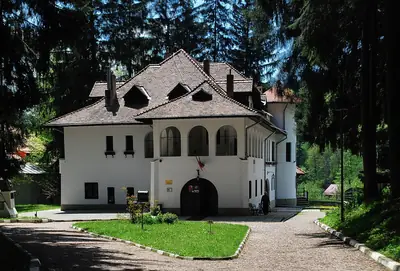
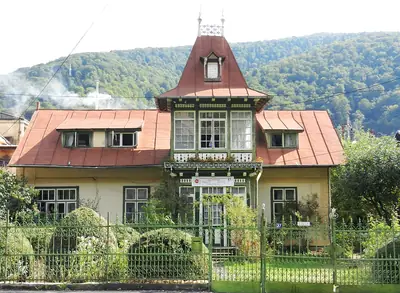
Sinaia’s heritage is not limited to its royal palaces. The Doina Marian House is a listed heritage site in Prahova County, while Villa Carola is another historic building included among the town’s points of interest. Together with the town’s wooded setting and mountain backdrop, they introduce the architectural character of Sinaia.
Florescu-Știrbei Palace
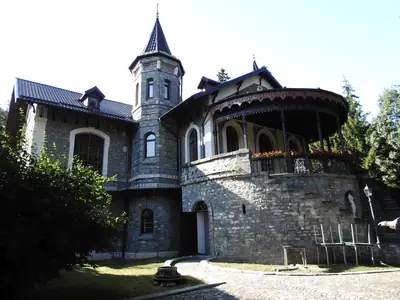
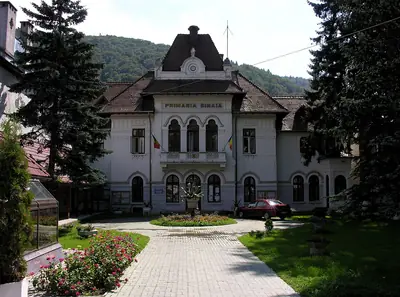
Florescu-Știrbei Palace, also known as Vila Alina Știrbei or Castelul Știrbey, is Sinaia’s oldest surviving civil building. It was built between 1874 and 1875 for General Ioan Florescu and his wife, Alina Știrbei.
The palace was designed in a romantic style influenced by German and Swiss mountain resorts. Its original estate included a park, a lake, a chapel, and service buildings. After serving various city institutions, the building became the City Museum of Sinaia.
Sinaia Monastery and its museum collection
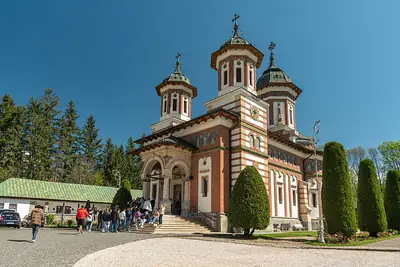
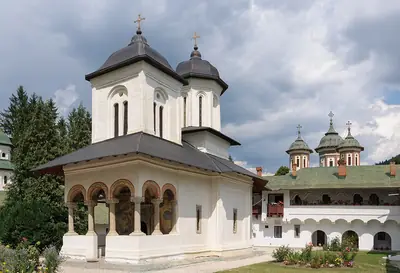
Sinaia Monastery is an Orthodox settlement founded in 1695 by Prince Mihail Cantacuzino. Its name refers to Saint Catherine’s Monastery on Mount Sinai in Egypt. The monastery remains one of the central historic landmarks in the town.
The Colecția Muzeală a Mănăstirii Ortodoxe Sinaia belongs to the monastery and adds a museum dimension to a visit. The monastery complex also includes the Church of the Assumption of Mary, known locally as Biserica veche – Adormirea Maicii Domnului. The church is recognized as a heritage site in Prahova County.
Sinaia Casino
In Dimitrie Ghica Park, the Sinaia Casino stands as one of the town’s best-known historic buildings. It was built at the initiative of King Carol I of Romania and designed by architect Petre Antonescu, with its design influenced by the Monte Carlo Casino.
Construction began in 1911, and the building officially opened on 5 July 1912. Its theatre hall is known for its acoustics and architecture and has seating for about 400 people. After reopening in 1913, the casino hosted a concert by George Enescu and a play by Alexandru Davila, attended by the royal family and Prime Minister Titu Maiorescu.
The building later served as a refuge and medical centre during the world wars. Gambling ended there in 1947, after which the former casino took on other roles. It now functions as an international conference centre.
Peleș Castle
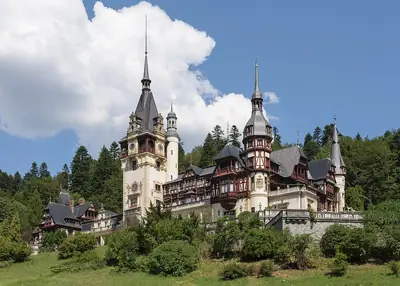
Peleș Castle is the defining royal landmark of Sinaia. This Neo-Renaissance palace was built between 1873 and 1914 as a summer residence for Romania’s royal family and was officially inaugurated in 1883 for King Carol I.
Set among the Carpathian Mountains, the castle’s architecture contrasts with the surrounding forest and mountain landscape. Its location also has a long historical connection: Peleș Castle stands on an old medieval route linking Transylvania and Wallachia.
Pelișor Castle
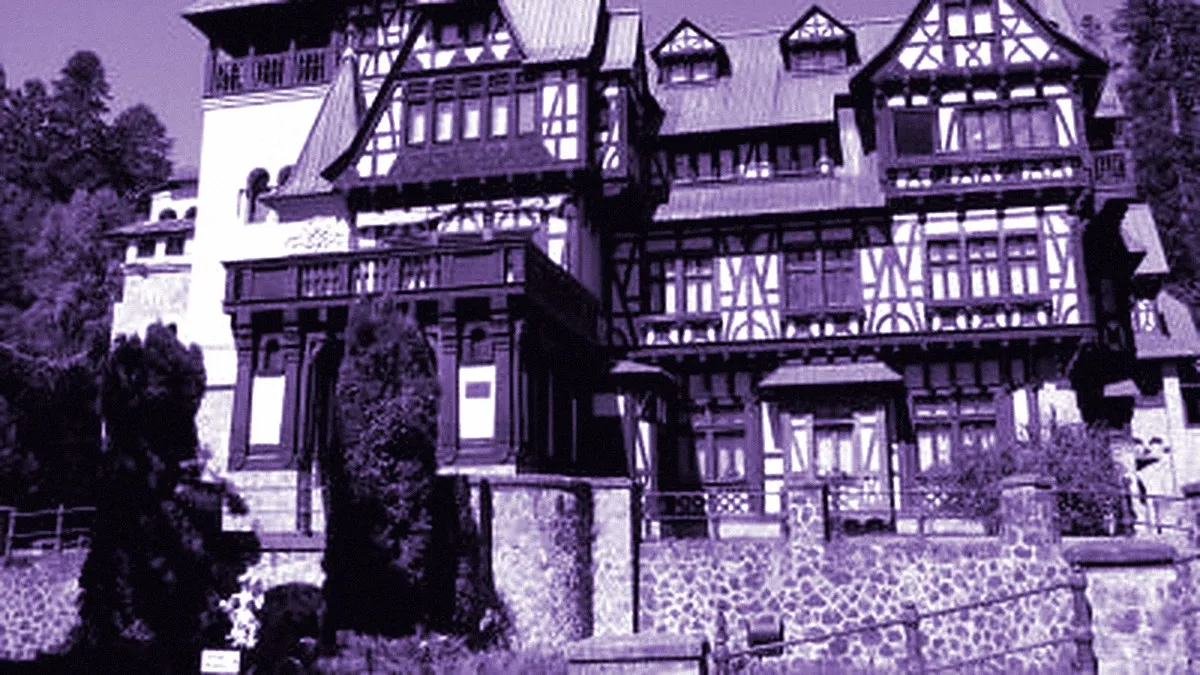
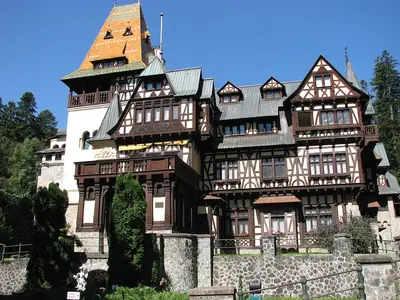
Pelișor Castle is an intimate royal residence within the Peleș estate. Built between 1899 and 1902 to designs by the Czech architect Karel Liman, it was decorated by the Viennese artist Bernhard Ludwig. From 1903, it served as the summer home of Prince Ferdinand and Princess Marie.
The interiors contain several distinctive details. The Hall of Honour features oak panelling and a stained-glass chandelier, while King Ferdinand’s office includes a neo-German Renaissance walnut desk carved with panels depicting Peleș, Pelișor, and Foișor. Queen Marie’s chapel is decorated with Ruschița marble and gilded columns.
The Golden Bedroom contains gilded, carved linden-wood furniture with Celtic-inspired interlaces and Byzantine motifs. In the Golden Room, gilded stucco with oak-leaf designs covers the walls, and a chandelier shaped like a Celtic cross forms the centrepiece.
Foișor Castle
Foișor Castle is the third royal residence on the Peleș Estate, although it has never been opened to the public. It began as a modest hunting cabin and served as a private retreat for King Carol I and Queen Elisabeta before they moved into Peleș Castle.
The building later became a home for Prince Carol and Elena. On 25 October 1921, their only son, the future King Mihai, was born there. A fire damaged the residence in 1932, after which it was rebuilt and enlarged under King Carol II.
George Enescu Memorial House
In the Cumpătu neighbourhood, the George Enescu Memorial House occupies Vila Luminiș, a neo-Romanian villa designed by architect Radu Dudescu between 1923 and 1926. The composer George Enescu lived and worked there from 1926 until his move to Paris in 1946.
A marble bust of Enescu by Ion Irimescu stands at the entrance. After Enescu donated the villa, it was inaugurated as a memorial house in September 1995 through the efforts of his pupil, the violinist Yehudi Menuhin.
Sinaia Self-Guided Walking Tour
For a Sinaia self-guided walking tour, Neywo’s route “The Royal Summer Capital” covers 3.69 km in 106 minutes and includes eight narrated stops. It follows a route through the Doina Marian House, Florescu-Știrbei Palace, Villa Carola, Sinaia Monastery, the Church of the Assumption of Mary, Peleș Castle, Pelișor Castle, and Foișor Castle.
The route brings together Sinaia’s civil heritage, religious history, and royal residences in one walk. It is a practical way to explore the town while hearing the story of each place in context.
Explore Sinaia with Neywo
Download Neywo to explore Sinaia with a free audio guide that includes 1 walking tour, covering 3.69 km and 106 minutes, with 8 narrated stops. The app tells the story of each place as you reach it, at your own pace, with no group and no schedule.
After Sinaia, continue exploring Romania, or discover the country’s other historic cities, including Bucharest, Brașov, and Sighișoara.
Places with an audio guide in Sinaia
8 places in Sinaia with a Neywo audio guide. Each one starts telling its story as you reach it.
Self-guided tours in Sinaia
1 tour in Sinaia, free in the Neywo app. Each stop tells its story as you reach it.
- Walk
Sinaia: The Royal Summer Capital
Sinaia grew around a monastery founded in 1695 and became the summer seat of Romania's kings. Start among the town's mountain-resort villas and its oldest civil building, pass the monastery and its old church, then climb into the Peleș estate to see Peleș, Pelișor and Foișor, the three royal castles.
Doina Marian House · Florescu-Știrbei palace · Villa Carola · Sinaia Monastery · Church of the Assumption of Mary at Sinaia monastery · Peleș Castle …
Open this tour: Sinaia: The Royal Summer Capital
Walk Sinaia with Neywo
Neywo turns Sinaia into a self-guided audio tour. Stories arrive as you reach the place they belong to, and the route reshapes when you wander off it.

