Colchester, United Kingdom: Self-Guided Walking Tour
Things to Do in Colchester: What to See in England’s Ancient Roman Capital
Looking for things to do in Colchester? This historic town brings together Roman foundations, a Norman castle, Tudor architecture, museums and surviving medieval buildings. It is a rewarding place to explore on foot, especially if you want to connect different layers of English history in a compact centre. Neywo has a free audio guide for Colchester with 77 narrated places.
What to See in Colchester
Colchester Castle
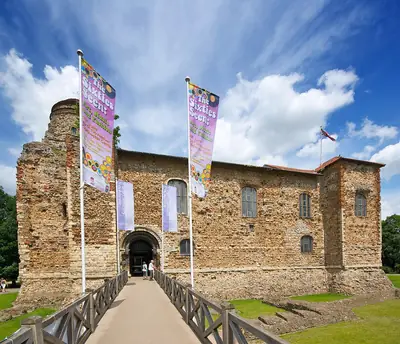
Colchester Castle is one of the town’s defining landmarks. The mostly intact Norman keep is the largest example of its kind in Europe, and it was built in the second half of the eleventh century on the foundations of a Roman temple dedicated to the emperor Claudius.
Its substantial keep measures about 46.2 by 33.5 metres and reaches 27.4 metres in height. The building survived a three-month siege in 1216, but later fell into disrepair. Parts of the curtain walls and upper keep were demolished, and the remaining structure was used as a prison before being partly restored as a garden pavilion and eventually becoming a museum.
St. John’s Abbey and its Gatehouse
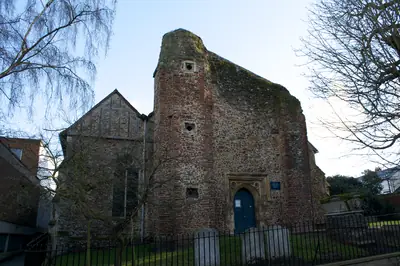
Founded in 1095, St. John’s Abbey was a Benedictine monastery that remained on the site until its dissolution in 1539. Most of the abbey was demolished to make way for a large private house, which was itself destroyed during the 1648 siege of Colchester.
The substantial gatehouse is the most elaborate surviving part of the abbey. The foundations of the abbey church were rediscovered in 2010, offering another glimpse of the scale of the monastery that once stood here.
Hollytrees Museum
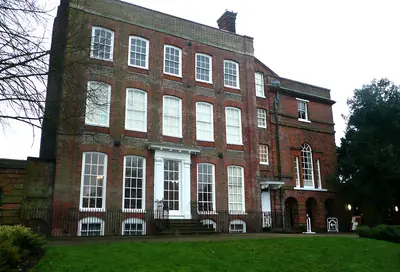
Hollytrees Museum occupies an eighteenth-century house in Castle Park, close to Colchester Castle. Built in 1718 for Elizabeth Cornelisen, the property was named after two holly trees planted in its grounds by Charles Gray in 1729.
The building is Grade I listed and remained a private residence for more than two centuries. The Corporation of Colchester acquired it in 1922, and it opened as a museum in 1929. Today, Hollytrees focuses on local history and offers another perspective on the town beyond its Roman and Norman monuments.
The Minories
At the east end of High Street, The Minories is a Grade II listed building surrounded by gardens. It is now home to The Minories Galleries and stands close to Hollytrees, Gate House and Colchester Castle.
The building and its setting provide a quieter architectural stop within the central heritage area. Its listed status reflects the importance of both the house and the gardens.
St Martin’s Church
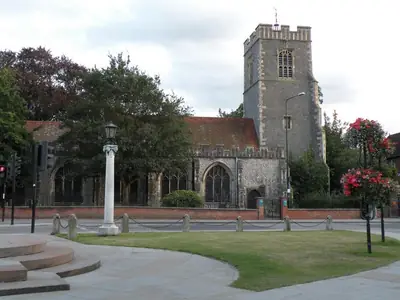
Close to the town hall, St Martin’s Church remains an active Orthodox church belonging to the Antiochian Archdiocese of the British Isles and Ireland. It is also recognised as a Grade II* listed building on the National Heritage List for England.
The church adds a living religious dimension to Colchester’s historic centre, alongside the town’s museums and archaeological remains.
Rye Gate
Rye Gate marks another historic point in Colchester. It is a compact stop to include while walking through the town, particularly on a route linking the central streets with the surrounding remains and churches.
Natural History Museum
The Natural History Museum in Colchester, also known as All Saints Museum, is dedicated to natural history. Its setting in a historic church gives it a distinctive place among the town’s museums.
Layer Marney Tower
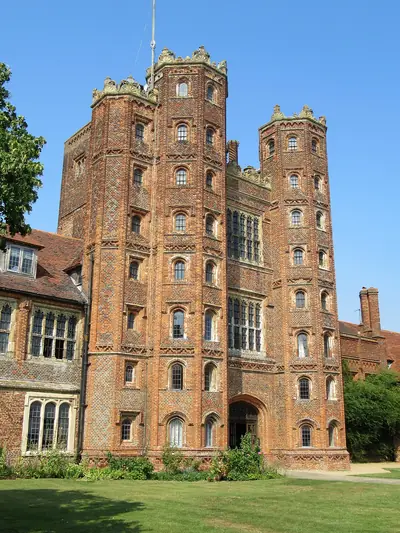
Outside the centre, Layer Marney Tower is an early Tudor country house set among gardens and parkland in Layer Marney, Essex. Its great gatehouse rises about eighty feet, making it the tallest example of its kind in Britain.
The tower is notable for its rare combination of brick and terracotta and dates from about 1523. Henry, the first Lord Marney, principally created the building, while his son John continued the work. John died two years later without a male heir, ending the family line and leaving the wider project unfinished. The surviving complex includes the main range, the gatehouse, several outbuildings and a new church.
Castle House and the Munnings Art Museum
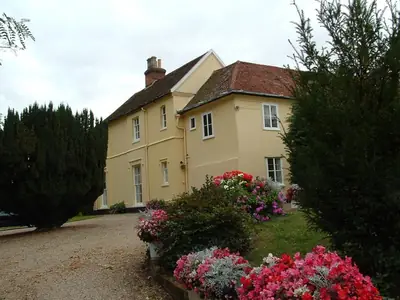
Castle House, also known as the Munnings Art Museum, was the home of Sir Alfred Munnings from 1919 until his death in 1959. The house combines Tudor and Georgian architectural elements.
Munnings wished for his pictures and estate to be left to the nation. After his death, his widow established the Violet Munnings Trust Fund in 1962 to create and run a museum dedicated to his work. The Castle House Trust followed in 1965, receiving the house, surrounding land, paintings held by Lady Munnings, and further funds and investments.
East Anglian Railway Museum
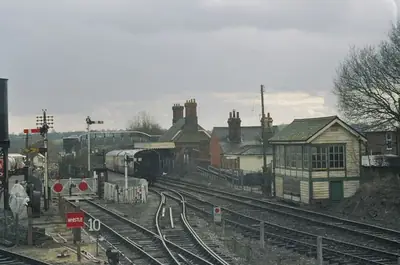
At Chappel and Wakes Colne station, the East Anglian Railway Museum preserves railway history in its original setting. Historic railway buildings stand alongside locomotives, carriages and other railway vehicles connected with East Anglia.
The museum began in 1968 as the Stour Valley Railway Preservation Society, adopted its present name in 1986, became a registered charity in 1991 and was registered as a museum in 1995. The site also has a music connection: Blur performed its first concert there in 1989 and returned in 2009.
Boxted Airfield Museum
Boxted Airfield Museum in Langham, Essex, is a local museum devoted to the area’s World War Two history. It provides a different historical perspective from Colchester’s older landmarks, connecting the wider area with its wartime past.
ESCALA Gallery
ESCALA Gallery, also known as the Essex Collection of Art from Latin America, is a distinctive university museum in the East of England. Its focus gives Colchester’s cultural landscape an international dimension.
University of Essex
The University of Essex is a public research university whose primary campus is at Wivenhoe Park in Colchester. It is one of the original plate glass universities created during the expansion of higher education in the 1960s, and it received its royal charter in 1965.
The university has three campuses across the county, with additional campuses in Southend-on-Sea and Loughton. It was named University of the Year at the Times Higher Education Awards in 2018 and has received the Queen’s Anniversary Prize for advances in human rights and for social and economic research.
Explore Colchester with a Self-Guided Audio Tour
A Colchester self-guided walking tour lets you explore the centre without joining a group or following a fixed timetable. Neywo’s stories play as you reach each place, at your own pace, with no group and no schedule. Narration is available in 11 languages.
The Colchester guide includes:
- Two walking tours
- Britain’s First Roman Capital: Castle, Gates and Georgian Houses: 1.81 km, 79 minutes and 10 narrated stops.
- Abbey Gate, Old Churches and the Hythe: 2.87 km, 66 minutes and 5 narrated stops.
- One bus route
- Bus 74: From the High Street down Hythe Hill to Wivenhoe: 8.7 km, 37 minutes and 6 narrated stops.
Download Neywo to explore Colchester with the story of each place arriving when you do. It is a free audio guide designed for independent discovery, whether you follow a walking route or listen while travelling by bus. For more destinations, continue exploring England and the wider United Kingdom.
Places with an audio guide in Colchester
8 places in Colchester with a Neywo audio guide. Each one starts telling its story as you reach it.
Self-guided tours in Colchester
3 tours in Colchester, free in the Neywo app. Each stop tells its story as you reach it.
- Bus ride
Bus 74: From the High Street down Hythe Hill to Wivenhoe
A public bus from Colchester town centre east along the River Colne towards Clacton. Ride past the Priory church of St Botolph and down to the old port quarter at the Hythe, where the church door still carries Civil War bullet holes, then out to the riverside town of Wivenhoe.
Albert Hall · Natural History Museum, Colchester · Church of St Botolph · Church of St Giles, Colchester · Church of St Leonard at the Hythe, Colchester · St Monica, Wivenhoe
Open this tour: Bus 74: From the High Street down Hythe Hill to Wivenhoe - Walk
Britain's First Roman Capital: Castle, Gates and Georgian Houses
Colchester was a Roman city before it was a Norman one, and this walk shows both. Start on the High Street at the old corn exchange and a rare Orthodox church, pass Rye Gate, then climb to the biggest Norman keep in Europe, built on the foundations of a Roman temple. Wander the museums and gardens of Castle Park, a Georgian house and a church turned natural history museum, then finish among the gallery gardens of The Minories and the churches of the east end.
Mercury Theatre · Albert Hall · St Martin's Church, Colchester · Rye Gate · Colchester Castle · Hollytrees Museum …
Open this tour: Britain's First Roman Capital: Castle, Gates and Georgian Houses - Walk
Abbey Gate, Old Churches and the Hythe
A wander through the quieter old quarter south and east of the castle. See the surviving gatehouse of St John's Abbey, a Benedictine monastery founded in 1095 and dissolved in 1539, follow the lanes past medieval parish churches, then walk down Hythe Hill to the old port church whose door still carries Civil War bullet holes.
St. John's Abbey · Church of St Giles, Colchester · Church of St Botolph · St Stephen's Church Centre · Church of St Leonard at the Hythe, Colchester
Open this tour: Abbey Gate, Old Churches and the Hythe
Walk Colchester with Neywo
Neywo turns Colchester into a self-guided audio tour. Stories arrive as you reach the place they belong to, and the route reshapes when you wander off it.

