Cirencester, United Kingdom: Self-Guided Walking Tour
Things to do in Cirencester: Roman history and Cotswold heritage
Wondering what to do in Cirencester? This historic Cotswold town brings together the remains of Roman Corinium, a wealthy Augustinian abbey, a large medieval parish church and traces of a turbulent medieval castle. Neywo has a free audio guide for Cirencester with 12 narrated places, so you can explore its history as you walk.
Cirencester is in England, within the United Kingdom, and its most important sights are close enough to connect on foot. The town’s story reaches from the Neolithic period to Victorian times, with Roman, medieval and later chapters still visible in its streets and monuments.
What to see in Cirencester
The best way to experience Cirencester is to follow its history through the town, beginning with its Roman past and continuing through its religious and civic landmarks.
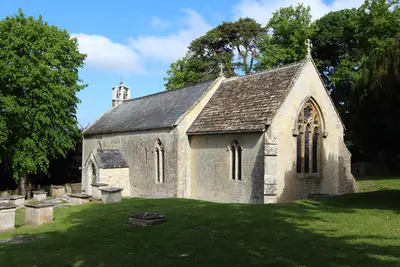
Church of the Holy Trinity
The Church of the Holy Trinity is one of the places to visit in the Cotswolds while exploring Cirencester. It forms part of the town’s collection of historic churches and provides an early stop on the route through the area.
Cirencester Amphitheatre
The earthworks of Cirencester Amphitheatre, also known as the Cirencester Roman Amphitheatre, reveal the outline of an arena built towards the beginning of the second century. Although the arena itself has disappeared, its surrounding banks rise as much as 25 feet from the bottom of the arena.
The arena measured about 150 feet by 135 feet, or roughly 46 by 41 metres. Excavations have uncovered Roman coins and pottery, as well as stone terraces that supported the seating. There may have been an earlier timber structure on the site.
The amphitheatre later became part of Cirencester’s defences. During the fifth century, wooden structures were placed inside the arena and the north-east entrance was partly blocked as the site was fortified against invading Saxons.
Cirencester Castle
Cirencester Castle once stood as a relatively small fortress of mainly local importance, but its history became entangled in the conflicts of twelfth-century England. It began as a timber building in the eleventh century, before a square stone keep was added in 1107.
During the Anarchy, Robert, Earl of Gloucester, seized the castle for the Empress Matilda. King Stephen captured it in a surprise attack in 1142 and set it on fire. What happened afterwards remains disputed. Some nineteenth-century historians believed the castle was rebuilt and later involved in further conflicts, while historian E. Fuller argued in 1890 that this later account came from a misreading of place names and that the castle’s story ended with its destruction in 1142.
Corinium Museum
The Corinium Museum is the key place to visit for understanding Cirencester’s past. Its collections come from the local area and cover the history of the Cotswold District from the Neolithic period through to Victorian times.
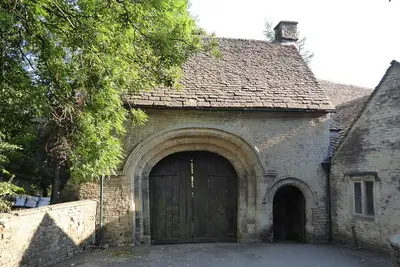
The museum’s largest collection comes from the Roman town of Corinium Dobunnorum. Objects from the Roman settlement form part of a much longer local story, allowing visitors to compare different periods and see how the area changed over time. The museum and its attached gateway also form a connected feature within the museum site.
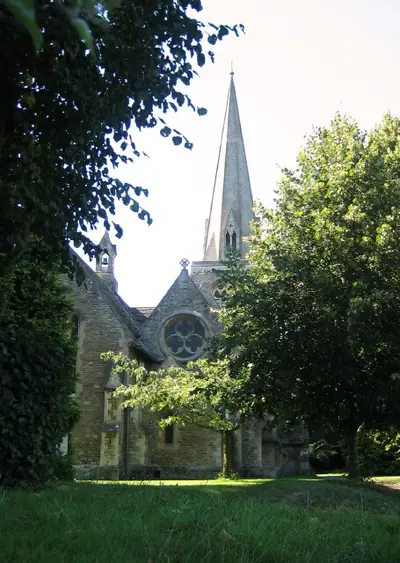
Church of St John the Baptist
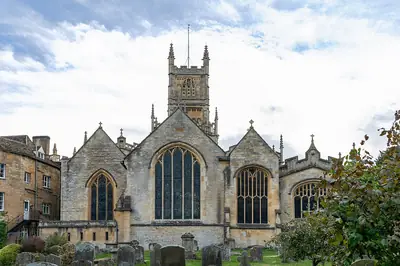
The Church of St John the Baptist is one of Cirencester’s most imposing landmarks. Built from warm Cotswold stone, it is a Grade I listed parish church and one of the largest parish churches in England.
Its architecture brings together styles from the twelfth century onward. The oldest surviving parts are the chancel and attached chapel; the nave was rebuilt twice, and the tower was added in the fifteenth century. The building measures about 180 feet, or 55 metres, in length and 104 feet, or 32 metres, in width. Its bell tower rises to around 134 feet, or 41 metres.
Inside, tombs and monuments sit alongside surviving fragments of medieval stained glass and wall paintings. The south porch was built by Cirencester Abbey around 1480, although it was not connected to the church until the eighteenth century.
Cirencester Abbey
Cirencester Abbey was once home to one of the wealthiest Augustinian communities in England. Founded in 1130 by Henry the First of England on the site of a large late Saxon church, it remained an important religious house until December 1539, when it was surrendered during the dissolution of the monasteries.
The abbey was known for its library and its extensive precinct, which was shaped by mills and carefully managed watercourses. These features point to a community organised around religious life, learning, industry and the management of its surroundings.
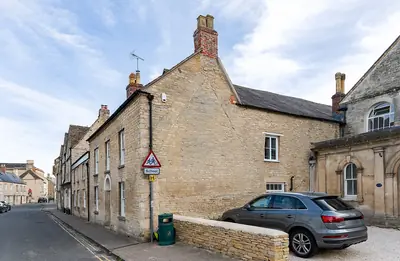
Spital Gate and Attached Cottage
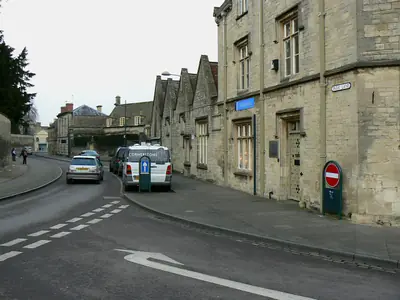
Spital Gate and its attached cottage form a distinctive historic landmark in Cirencester. The building is a Grade I listed site, adding another layer of medieval and later history to the walk through the town.
Theatre, Cirencester
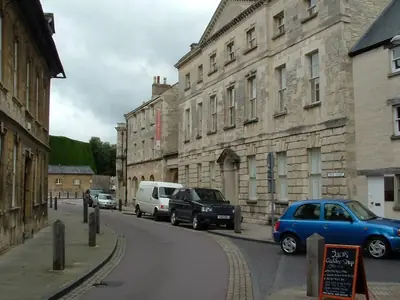
The site known as the Theatre preserves a small piece of Cirencester’s theatrical past. The former theatre operated from 1799 until 1840, after which the building was converted to residential use. Its present function marks a later chapter in the history of a place once used for performance and entertainment.
More historic places around Cirencester
Several other landmarks add detail to the town and its surrounding heritage.
The Church of St Peter is a local place of worship in Stratton, Gloucestershire. The Horse Temple is another architectural structure in the Cotswold area, while Queen Anne’s Monument is a named monument within the town.
In Cirencester Park, The Hexagon is a distinctive folly and a memorable point of interest. Spital Gate, with its attached cottage, is another notable historic structure to look out for while exploring the area.
Explore Cirencester with a self-guided walking tour
Neywo’s free audio guide makes it easy to turn these sights into a Cirencester self-guided walking tour. The app offers one walking tour: Corinium: From Roman Britain’s Second City to Cotswold Wool Town. It covers 2.8 km, takes about 80 minutes and includes eight narrated stops.
The route includes the Church of the Holy Trinity, Cirencester Amphitheatre, Cirencester Castle, Corinium Museum, the Church of St John the Baptist, Cirencester Abbey, Spital Gate and Attached Cottage, and the Theatre.
Download Neywo and explore Cirencester at your own pace. Each story plays as you reach the place, so the app tells you what happened there while you are standing nearby. There is no group and no schedule, and narration is available in 11 languages.
Places with an audio guide in Cirencester
8 places in Cirencester with a Neywo audio guide. Each one starts telling its story as you reach it.

Self-guided tours in Cirencester
1 tour in Cirencester, free in the Neywo app. Each stop tells its story as you reach it.
- Walk
Corinium: From Roman Britain's Second City to Cotswold Wool Town
Cirencester was Corinium, the second largest town in Roman Britain. Start at Holy Trinity in Watermoor, cross to the grassy bowl of the Roman amphitheatre, pass the vanished castle and the Corinium Museum, then follow the story through the huge wool church of St John the Baptist, the grounds of the great Augustinian abbey, its gate, and a Georgian-era theatre.
Church of the Holy Trinity · Cirencester Amphitheatre · Cirencester Castle · Corinium Museum · Church of St John the Baptist, Cirencester · Cirencester Abbey …
Open this tour: Corinium: From Roman Britain's Second City to Cotswold Wool Town
Walk Cirencester with Neywo
Neywo turns Cirencester into a self-guided audio tour. Stories arrive as you reach the place they belong to, and the route reshapes when you wander off it.

