Cambridge, United Kingdom: Self-Guided Walking Tour
Things to Do in Cambridge: Museums, Colleges and Historic Churches
Wondering what to do in Cambridge? This university city brings together historic colleges, riverside bridges, medieval churches and museums ranging from fine art to computing history. Its compact centre offers plenty to explore on foot, while Neywo’s free audio guide for Cambridge tells the stories of 91 narrated places as you reach them.
What to See in Cambridge
Fitzwilliam Museum
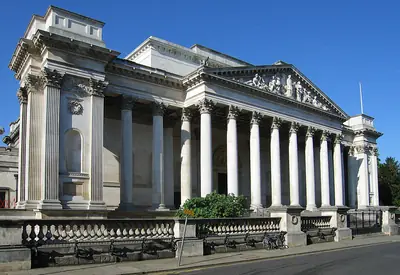
The Fitzwilliam Museum is the art and antiquities museum of the University of Cambridge. Founded in 1816 under the will of Richard FitzWilliam, it now brings together more than half a million objects and artworks, spanning world history from antiquity to the present.
Its collection includes works by Monet, Picasso, Rubens, Vincent van Gogh, Renoir, Rembrandt, Cézanne, Van Dyck and Canaletto. Among its notable antiquities is a winged bas-relief from Nimrud.
St John’s College Bridge
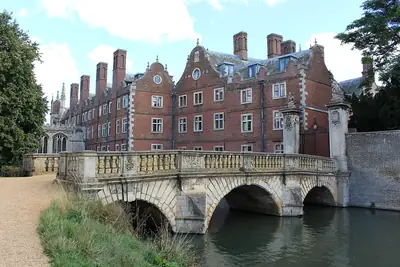
Also known as the Kitchen Bridge, St John’s College Bridge is a Grade I listed Cambridge landmark. It is one of the crossings that make the River Cam and the college grounds such a distinctive part of the city.
Leper Chapel of St Mary Magdalene
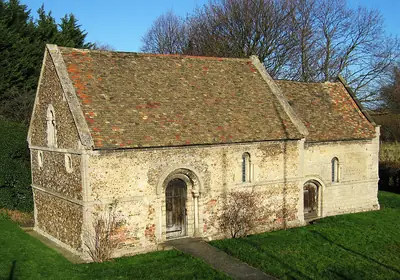
Near the railway crossing at Barnwell Junction, the Leper Chapel of St Mary Magdalene is one of Cambridge’s oldest surviving places of worship. It dates from about 1125 and originally belonged to a leper hospital outside the city, on the road to Bury St Edmunds.
The chapel became closely connected with the medieval fair held on nearby Stourbridge Common. In 1199, King John granted permission for a three-day fair to raise money for the lepers; from 1211, it was held around the Feast of the Holy Cross on 14 September. Parts of the east wall are original, while most of the building was rebuilt in the 13th century, retaining Romanesque features.
Clare College Bridge
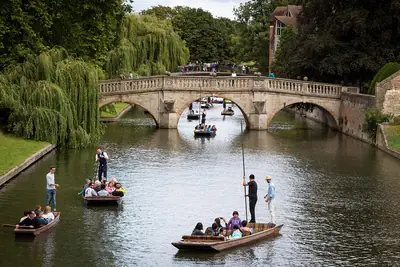
Clare Bridge, or Clare College Bridge, crosses the River Cam between Clare College’s Old Court and Memorial Court. Built in 1639 and 1640 by Thomas Grumbold, it is a Grade I listed building and the oldest bridge in Cambridge still in use.
Its Early Renaissance design includes three spans, ashlar made from Ketton stone and a balustrade decorated with carved relief panels. Stone ball finials complete the design. One of the fourteen balls has a missing section, a small detail that has inspired a long-running story about the bridge’s construction.
Cambridge Museum of Technology
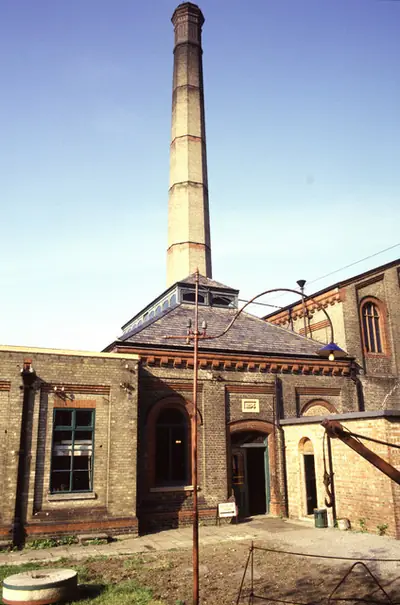
The Cambridge Museum of Technology explores the industries, inventions and working lives that shaped the city beyond the university. Its original building is a scheduled monument: constructed in 1894, it housed a combined sewage pumping and waste destructor station.
The Victorian Pumping Station preserves historic machinery and buildings, while hands-on exhibits and audio-visual displays explain the technology behind this industrial work. Children’s activities and green spaces beside the River Cam add to the museum’s relaxed atmosphere.
Cambridge Science Centre
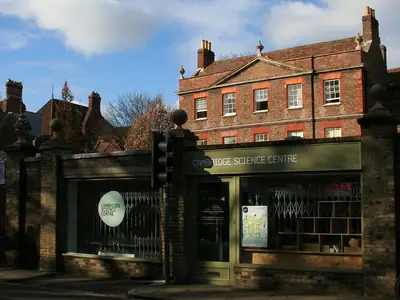
Cambridge Science Centre is Cambridge’s first interactive science museum. It presents science through hands-on discovery, encouraging visitors to explore how the world works.
Its first exhibition, opened in 2013, focused on the electromagnetic spectrum, sound and hearing. After its original exhibition space closed in December 2016, the team brought science to pop-up Street Science events before the museum reopened in April 2018.
Centre for Computing History
The Centre for Computing History is dedicated to the story of the Information Age. Its displays explore how computing has shaped the modern world, offering a different perspective on Cambridge’s continuing relationship with science and innovation.
Great St Mary’s
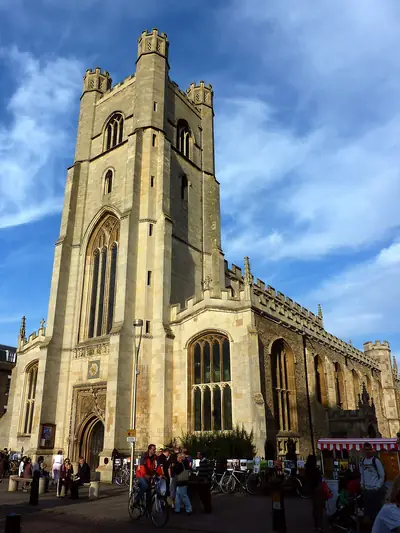
At the north end of King’s Parade, Church of St Mary the Great—known locally as Great St Mary’s—is both a Church of England parish church and the university church of the University of Cambridge. It is a Grade I listed building.
Its clock chimes the Cambridge Quarters, a sequence later used by the clock tower of the Houses of Parliament, known as Big Ben.
Kettle’s Yard and St Peter’s Church
Kettle’s Yard combines an art gallery with the experience of a historic home, making it different from a conventional museum. Its facilities expanded before the gallery and house reopened in February 2018.
Nearby, St Peter’s Church stands on Castle Street between Honey Hill and Kettle’s Yard. The former Church of England church is now cared for by the Churches Conservation Trust.
Museum of Archaeology and Anthropology
The Museum of Archaeology and Anthropology, usually called the MAA, brings together local antiquities with archaeological and ethnographic artefacts from around the world. It is part of the University of Cambridge and stands on the Downing Site, at the corner of Downing Street and Tennis Court Road.
Its exhibition galleries reopened in 2013 after a major refurbishment, with a new public entrance directly onto Downing Street.
Museum of Cambridge
The Museum of Cambridge, formerly known as the Cambridge and County Folk Museum, offers a look at Cambridge and the surrounding county. It is located on Castle Street, close to the historic places explored on the Castle Hill and the Round Church route.
Museum of Classical Archaeology
The Museum of Classical Archaeology is housed on the first floor of the Faculty of Classics at Cambridge’s Sidgwick Site. Its collection focuses on ancient Greek and Roman sculpture, with hundreds of plaster casts gathered in one gallery.
Among the best-known casts are the Laocoön and His Sons, the Farnese Hercules, the Barberini Faun and the Charioteer of Delphi. The Peplos Kore is another notable exhibit: its painted appearance suggests how the original ancient Greek statue may have looked, rather than presenting classical sculpture as plain white marble.
The museum was founded in 1884 and has occupied its purpose-built gallery within the Faculty of Classics since 1982. Alongside the casts, it holds sherds and epigraphic squeezes.
Museum of Zoology
The Museum of Zoology brings together scientifically important collections showing the diversity of the animal world. Part of the University of Cambridge, it is housed in the David Attenborough Building on the New Museums Site, north of Downing Street.
Its collection contains around two million objects and was formally recognised in 1998 as being of outstanding historical and scientific importance. The museum reopened on 23 June 2018 after a major redevelopment that created new displays, improved collection storage and expanded learning programmes and online resources.
Primavera Gallery
At 10 King’s Parade, Primavera Gallery presents contemporary British art and craft. The gallery began in 1945, when Henry Rothschild founded it on Sloane Street in London. Its Cambridge branch opened in 1959.
Sedgwick Museum of Earth Sciences
The Sedgwick Museum of Earth Sciences is the geology museum of the University of Cambridge. Located on the Downing Site, it forms part of the university’s Department of Earth Sciences and is the oldest of the eight museums in the University of Cambridge Museums consortium.
Its collections offer an introduction to the study of the Earth and its history.
Explore Cambridge with a Self-Guided Audio Tour
Neywo offers a Cambridge self-guided walking tour experience with five walking tours, one bus route and one bike route. Narration is available in 11 languages, and each story plays as you reach the place, at your own pace: there is no group and no schedule.
The tours include:
- Kings Parade to the Backs: 1.62 km, 89 minutes and 12 narrated stops.
- Reformation, Cloisters and Fine Art: 1.58 km, 71 minutes and 9 narrated stops.
- Museums of Mind and Matter: 2.74 km, 89 minutes and 10 narrated stops.
- Castle Hill and the Round Church: 1.47 km, 61 minutes and 8 narrated stops.
- Mill Road and the Arts and Crafts house: 2.2 km, 61 minutes and 6 narrated stops.
- Stagecoach 77: Newmarket Road to the heart of Cambridge: a 5.5 km, 24-minute bus route with 8 narrated stops.
- Newmarket Road and the Abbey: Cambridge by bike: a 2.3 km, 12-minute bike route with 4 narrated stops.
Download Neywo and explore Cambridge while the app tells the story of each place as you arrive. You can also continue discovering England, explore the wider United Kingdom, or plan another visit to nearby Bury St Edmunds or Canterbury.
Places with an audio guide in Cambridge
8 places in Cambridge with a Neywo audio guide. Each one starts telling its story as you reach it.

Self-guided tours in Cambridge
7 tours in Cambridge, free in the Neywo app. Each stop tells its story as you reach it.
- Bike ride
Newmarket Road and the Abbey: Cambridge by bike
Ride out along the cycle lanes of east Cambridge, from the computing museum past the Abbey Stadium to the Leper Chapel, a 12th-century building from the days of Stourbridge Fair, and on to Christ the Redeemer church.
Centre for Computing History · Abbey Stadium · Leper Chapel, Cambridge · Christ the Redeemer Church
Open this tour: Newmarket Road and the Abbey: Cambridge by bike - Bus ride
Stagecoach 77: Newmarket Road to the heart of Cambridge
The 77 is the Park & Ride-style city bus that crosses Cambridge from Newmarket Road to Madingley Road. Ride it from the Leper Chapel, the oldest complete building in the city, past Wesley Church and All Saints to the Round Church and Kettle's Yard.
Christ the Redeemer Church · Leper Chapel, Cambridge · Church of St Andrew the Less · Zion Baptist Church · Wesley Church And Attached Library · All Saints Church …
Open this tour: Stagecoach 77: Newmarket Road to the heart of Cambridge - Walk
Kings Parade to the Backs
Start under the tower of Great St Mary's and follow the river-side route of Cambridge's most famous colleges. Meet a grasshopper that eats time, the oldest church tower in town, King's famous chapel with the world's largest fan vault, Trinity's Great Court, and three famous Cam bridges: Clare Bridge, the Kitchen Bridge and the Bridge of Sighs. Allow a couple of hours at an easy pace.
Church of St Michael · Church of St Mary the Great · St Bene't's Church · Corpus Clock · King's College Chapel · King's College …
Open this tour: Kings Parade to the Backs - Walk
Reformation, Cloisters and Fine Art
A walk down Trumpington Street from the market square, where a sermon of 1525 helped light the English Reformation. Pass Christ's College, where Milton and Darwin studied, the open court of St Catharine's, Queens' and Little St Mary's, and finish at the Fitzwilliam, one of the finest free museums in Europe.
Christ's College · St Andrew the Great · Holy Trinity Church, Cambridge · St Edward King and Martyr, Cambridge · St Catharine's College · Queens' College Chapel …
Open this tour: Reformation, Cloisters and Fine Art - Walk
Museums of Mind and Matter
Cambridge's science and collecting museums sit within a few minutes of each other: instruments, fossils, a two-million-object zoological collection and archaeology from around the world. Then walk down Hills Road past the tallest spire in Cambridge to the polar explorers on Lensfield Road and the war memorial at the Botanic Garden.
Whipple Museum of the History of Science · Museum of Zoology · Museum of Archaeology and Anthropology · Sedgwick Museum of Earth Sciences · Downing College Chapel · Our Lady and the English Martyrs Church …
Open this tour: Museums of Mind and Matter - Walk
Castle Hill and the Round Church
Start at the city's only lock on the Cam, then climb the Norman mound where Cambridge began and drop down through the quiet streets of Castle Hill past Kettle's Yard and the Museum of Cambridge to the Round Church, one of only four medieval round churches still in use in England.
Jesus Lock · Cambridge Castle · Castle Street Methodist Church · Church of St Giles · Kettle's Yard · Museum of Cambridge …
Open this tour: Castle Hill and the Round Church - Walk
Mill Road and the Arts and Crafts house
East of the centre, away from the colleges. Walk from Christ's Pieces through the old Barnwell theatre district and Anglia Ruskin's campus to Gwydir Street, where a Victorian decorator spent forty years painting his own terraced house in the style of William Morris.
Wesley Church And Attached Library · Church of Christ Church · Beth Shalom Cambridge · Festival Theatre · Anglia Ruskin University · The David Parr House
Open this tour: Mill Road and the Arts and Crafts house
Walk Cambridge with Neywo
Neywo turns Cambridge into a self-guided audio tour. Stories arrive as you reach the place they belong to, and the route reshapes when you wander off it.

