Things to Do in Brighton, United Kingdom: Walking Guide
Things to Do in Brighton: What to See on England’s Seafront
The best things to do in Brighton range from exploring the extraordinary Royal Pavilion and historic churches to discovering museums, fishing heritage and distinctive neighbourhoods. Brighton brings together royal history, seaside culture, art and local life in a city that rewards independent exploration. Neywo has a free audio guide for Brighton with 126 narrated places, available in 11 languages.
Brighton is part of England, within the United Kingdom, and its attractions extend beyond the central seafront into Hove, Preston Park, Portslade and Rottingdean.
What to see in Brighton
Royal Pavilion
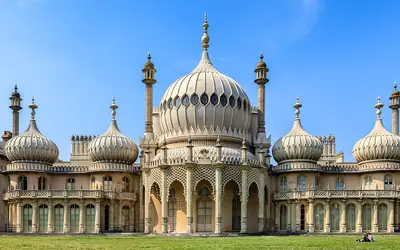
The Royal Pavilion is Brighton’s most distinctive landmark and a former royal residence created for George, Prince of Wales. Development began in 1787, and the building evolved through three stages before architect John Nash extended it from 1815.
Its present appearance reflects the Indo-Saracenic style, with Mughal-inspired domes, minarets topped with chhatris and cusped arches. George became Prince Regent in 1811 and King George IV in 1820. William IV and Queen Victoria also used the Pavilion, but Victoria chose Osborne House as her seaside retreat and the building was sold to the city in 1850. The surrounding gardens add another pleasant pause in the centre of Brighton.
Brighton Fishing Museum
Near Brighton Pier, the Brighton Fishing Museum occupies two beachfront arches in the Fishing Quarter. The independent museum was established in 1994 with the local fishing community to preserve the city’s fishing and seaside heritage.
Its displays include photographs, artefacts, fishing boats, model boats, archive film and recordings of fishing families. They trace Brighton’s sea-fishing industry from the 1800s to the 1990s. Traditional Sussex beach boats and marine engines are also restored on the hard outside the workshop, connecting the museum’s displays with the working waterfront.
Brighton Museum & Art Gallery
Brighton Museum & Art Gallery is an art and history museum and part of Brighton & Hove Museums. Its collections provide another way to explore the city’s cultural and local history after visiting the seafront and Royal Pavilion.
Fabrica
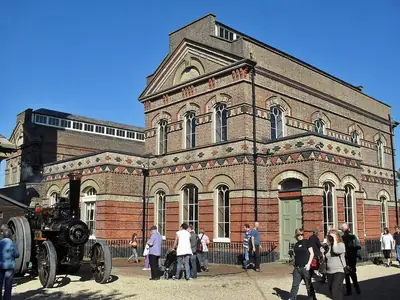
Fabrica occupies the former Holy Trinity Church, a Grade II listed building that has been given a new life as an art space. Holy Trinity began as an independent Nonconformist chapel through the work of Thomas Read Kemp, later becoming an Anglican chapel of ease.
The church closed in 1984. It was subsequently converted first into a museum and later into the gallery now known as Fabrica, making the building itself part of the visit.
Brighton Clock Tower
The Jubilee Clock Tower stands freely in the centre of Brighton and has been one of the city’s recognisable landmarks for well over a century. It was built in 1888 to commemorate the Golden Jubilee of Queen Victoria.
Its unusual structural features were innovative for their time, helping the tower become a memorable part of Brighton’s urban character.
Brighton Toy and Model Museum
Under the forecourt of Brighton railway station, four early Victorian arches contain the Brighton Toy and Model Museum. Founded in 1991, the independent museum brings together more than 10,000 toys and models across 4,000 square feet.
A major highlight is the large 1930s gauge 0 model railway layout. Two smaller pushbutton-operated 00-gauge layouts add to the miniature railway displays, while dollhouses and mechanical penny arcade machines provide a glimpse into other forms of vintage play and entertainment.
Booth Museum of Natural History
The Booth Museum of Natural History is part of the Royal Pavilion and Museums Trust, and admission is free. It is particularly known for Victorian taxidermy, with British birds at the centre of the collection.
The displays also include butterflies and moths, chalk fossils, skeletons and botany, offering a compact introduction to natural history in East Sussex.
Hove Museum of Creativity
Set in Brooker Hall, a late-nineteenth-century Italianate villa surrounded by public parkland, Hove Museum of Creativity combines toys, crafts, fine art, local history and the early story of cinema. The museum opened in 1927 under the Hove Corporation and is now part of Brighton and Hove Museums. Admission is free.
The Wizard’s Attic toy gallery includes dolls, teddy bears, mechanical toys, toy trains, dollhouses, rocking horses and tricycles. The former villa gives the collections a very different atmosphere from a purpose-built gallery.
St John the Baptist’s Church, Brighton
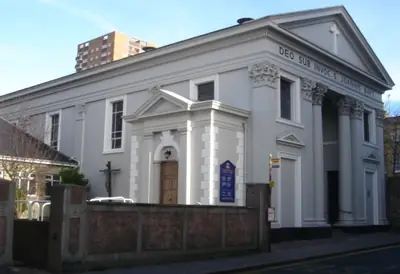
St John the Baptist’s Church on Bristol Road is a Classical-style building with an important place in Brighton’s Catholic history. It was the first Roman Catholic church built in Brighton after Catholic Emancipation in the early nineteenth century.
Maria Fitzherbert’s generosity helped make the project possible, and the church was completed in 1835. Its architectural and historical importance is recognised by a Grade II* listing.
West Blatchington Windmill
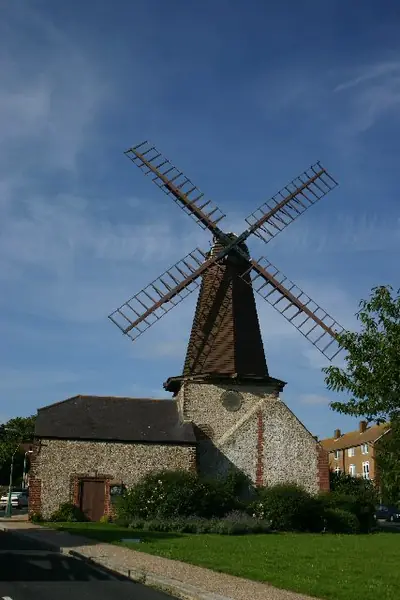
West Blatchington Windmill is a restored Grade II* listed smock mill in Brighton and Hove. Its wooden frame and sloping sides create the familiar silhouette of an English windmill, while its restoration preserves a distinctive piece of Sussex heritage.
Foredown Tower
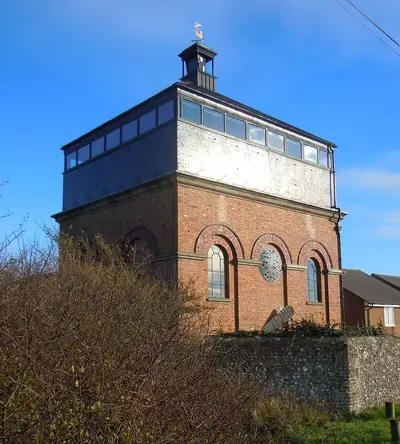
Foredown Tower is a former water tower in Portslade, built in 1909 to supply Foredown Hospital, an isolation sanatorium for patients with infectious diseases. The hospital was demolished in 1988 and 1989, but the tower survived.
A camera obscura was installed in its cupola in 1991, projecting a live optical view of the surrounding area. However, the camera obscura closed during the COVID-19 pandemic and has not reopened.
Beacon Mill
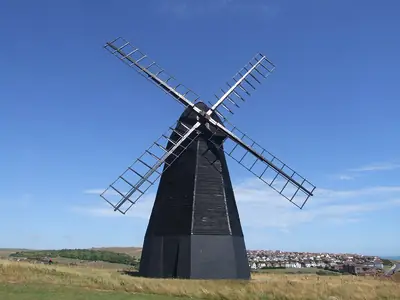
Beacon Mill, also known as New Mill or Rottingdean Windmill, stands within Beacon Hill Local Nature Reserve in Rottingdean. This Grade II listed smock mill has been restored as a seamark and remains a memorable landmark in the surrounding landscape.
Brighton Community Stadium
Brighton Community Stadium is the home of Brighton & Hove Albion and is also known as the American Express Stadium, or the Amex. The club received the stadium on 31 May 2011, and its first competitive match was a 2–0 victory against Eastbourne Borough in the Sussex Senior Cup final.
The stadium’s first league match was against Doncaster Rovers, the same club that had been Brighton’s final opponents at the Goldstone Ground fourteen years earlier. Brighton won that match 2–1. The venue has also hosted matches during the 2015 Rugby World Cup, UEFA Women’s Euro 2022 and the 2025 Women’s Rugby World Cup.
Preston Park Clock Tower
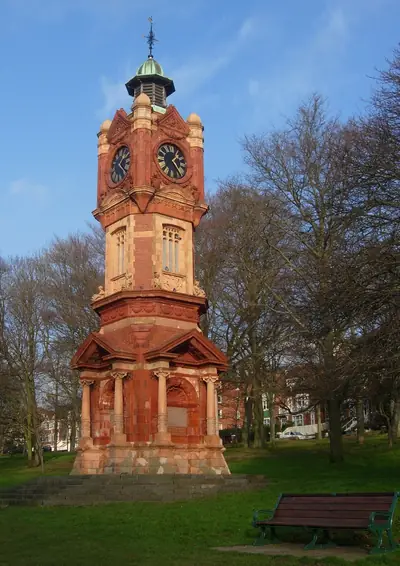
Preston Park Clock Tower is a simple landmark to look out for while exploring Preston Park. It offers a quieter, less central stop among Brighton’s wider collection of historic buildings and public spaces.
Brighton self-guided walking tour with Neywo
Neywo lets you explore Brighton without joining a group or following a fixed schedule. The app tells the story of each place as you reach it, at your own pace, so you can pause, look around and continue when you are ready.
Brighton has six Neywo routes:
- Four walking tours: 2.08 km and 105 minutes with 12 stops; 3.89 km and 109 minutes with 10 stops; 2.44 km and 78 minutes with 8 stops; and 2.36 km and 67 minutes with 6 stops.
- One bus route: 4.5 km and 19 minutes with 10 stops, travelling between Hove and Kemp Town.
- One bike route: 2.9 km and 14 minutes with 6 stops, following the seafront from Sea Life to Hove Lawns.
Together, the tours cover 56 narrated stops, while the full Brighton guide includes 126 narrated places. This makes Neywo a useful alternative to searching for a free walking tour in Brighton: there is no group and no schedule, and every story plays when you arrive at the relevant place.
Download Neywo and explore Brighton
Download Neywo for a free audio guide to Brighton and choose a walk, bus route or bike route. Follow the city’s royal, religious, cultural and seaside history with stories that start as you reach each stop, at your own pace, with no group and no schedule.
Places with an audio guide in Brighton
8 places in Brighton with a Neywo audio guide. Each one starts telling its story as you reach it.
Self-guided tours in Brighton
6 tours in Brighton, free in the Neywo app. Each stop tells its story as you reach it.
- Bike ride
Brighton Seafront Cycle Lane: Sea Life to Hove Lawns
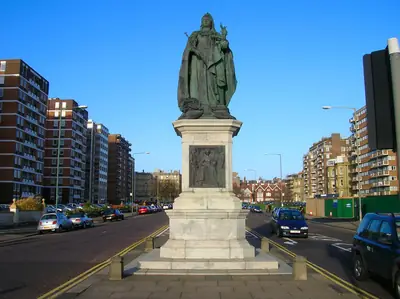
Ride the seafront cycle lane west from the Sea Life Centre, the world's oldest operating aquarium, past the fishermen's arches and the old French Protestant church, then along Hove's Brunswick Terrace to Queen Victoria's statue on Grand Avenue.
Sea Life Centre · Brighton Fishing Museum · French Protestant Church, Brighton · St Andrew's Church, Waterloo Street, Hove · Roof-top synagogue · Statue of Queen Victoria
Open this tour: Brighton Seafront Cycle Lane: Sea Life to Hove Lawns - Bus ride
Bus 2: Hove to Kemp Town
Brighton & Hove's route 2 runs from Hove along the seafront into central Brighton. Ride it east past Hove's churches and Waves of Compassion, the Jubilee Clock Tower, the Chapel Royal, the Old Steine war memorial and the AIDS memorial: a cheap, frequent way to see the Regency core.
Hove Methodist Church · Holy Trinity Church, Hove · St John the Baptist's Church, Hove · St Patrick's Church, Hove · Waves of Compassion · Clock Tower …
Open this tour: Bus 2: Hove to Kemp Town - Walk
A Prince's Playground: Royal Pavilion to the Fishing Arches
George, Prince of Wales built a Mughal-style fantasy by the sea and turned a fishing town into a fashionable resort. Walk from the Royal Pavilion and the Dome, where ABBA won Eurovision, through the Regency streets past a Greek Revival chapel, a theatre royal and a former chapel turned pub to a ruined-glamour music hall, the fishermen's arches on the beach and a Victorian clock tower. End at Brighton's oldest parish church.
Brighton War Memorial · Royal Pavilion · Eurovision Song Contest 1974 · Brighton Unitarian Church · Theatre Royal · Chapel Royal, Brighton …
Open this tour: A Prince's Playground: Royal Pavilion to the Fishing Arches - Walk
Hove's Grand Avenues: Villas, Squares and the Seafront
Brighton's genteel neighbour: walk Hove's wide boulevards from Queen Victoria on the seafront past the war memorial and Palmeira Square to the converted Old Market and the grand curve of Regency Square. Start at the Italianate villa of Hove Museum, and look up at the rooftop synagogue on Brunswick Terrace.
Hove Museum of Creativity · Statue of Queen Victoria · Hove War Memorial · St John the Baptist's Church, Hove · Palmeira Square · Roof-top synagogue …
Open this tour: Hove's Grand Avenues: Villas, Squares and the Seafront - Walk
Kemp Town and the Seafront: Aquarium, Synagogues and Regency Squares
East from the Palace Pier along the seafront and into Kemp Town. Visit the oldest working aquarium in the world, the Regency synagogue, red-brick and Classical churches built for Kemp's new suburb, and end in the grand garden of Sussex Square.
Sea Life Centre · Tay – Brighton & Hove AIDS Memorial · Brighton Regency Synagogue · St Mary the Virgin, Brighton · St John the Baptist's Church, Brighton · St George's Church, Brighton …
Open this tour: Kemp Town and the Seafront: Aquarium, Synagogues and Regency Squares - Walk
Preston Park and Preston Village
A green walk north of the centre: an open-air theatre and Victorian natural history museum on the park's edge, the clock tower in Preston Park, and two of the oldest churches in the city in Preston Village.
Brighton Open Air Theatre · Booth Museum of Natural History · Clock Tower In Preston Park · St Peter's Church, Preston Village, Brighton · St John the Evangelist's Church, Preston Village, Brighton · St Mary's Church, Preston Park
Open this tour: Preston Park and Preston Village
Walk Brighton with Neywo
Neywo turns Brighton into a self-guided audio tour. Stories arrive as you reach the place they belong to, and the route reshapes when you wander off it.

