Bristol, United Kingdom: Self-Guided Walking Tour
Things to Do in Bristol: A Self-Guided Tour of History, Art and the Harbour
Bristol is a historic port city in southwest England, known for its cathedrals, museums, engineering landmarks, public art and former dockside districts. The city is worth visiting for the way these different layers come together, from medieval churches and Georgian townhouses to a preserved steamship and the distinctive neighbourhood of Clifton. Neywo offers a free Bristol audio guide with 187 narrated places.
What to See in Bristol
Bristol Cathedral
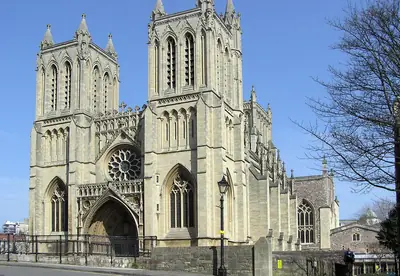
Bristol Cathedral, formally the Cathedral Church of the Holy and Undivided Trinity, began as an abbey dedicated to St Augustine in 1140 and was consecrated in 1148. It became the cathedral of the Diocese of Bristol in 1542 after the Dissolution of the monasteries.
The building preserves several important stages of English architecture. Its late twelfth-century chapter house contains some of the earliest uses of pointed arches in England, while the early thirteenth-century Elder Lady Chapel is the oldest part of the eastern end. Much of that end was rebuilt in the fourteenth-century English Decorated Gothic style. The cathedral is especially notable for its hall-church design, in which the aisles reach the same height as the central choir.
The Georgian House
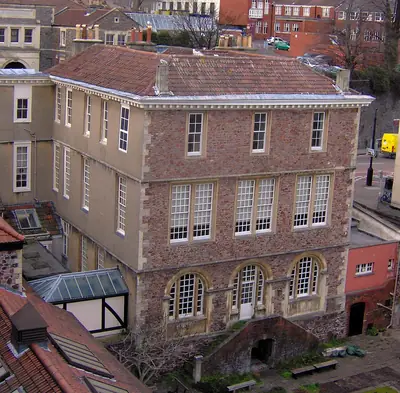
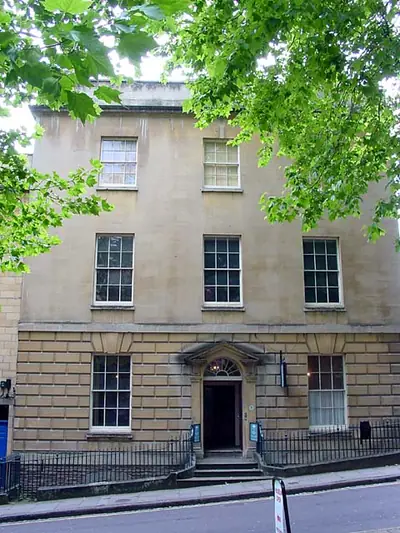
The Georgian House is an eighteenth-century townhouse built around 1790 at 7 Great George Street for John Pinney, a wealthy sugar merchant and slave plantation owner. Its history connects the architecture of Georgian Bristol with the city’s more difficult past.
The rooms present the layout of a typical Georgian English town house. The sequence includes a drawing room, dining room, study, kitchen, laundry and housekeeper’s room, giving the building a concrete sense of how domestic life was organised during the period. Since 1937, Bristol City Council has run the house as a museum.
Red Lodge Museum
Red Lodge Museum preserves a Grade I listed Tudor and Elizabethan house. Construction began in 1579 or 1580, and later alterations in the 1730s and early nineteenth century created the building seen today.
Its original character remains central to the museum. The house may have been designed by Sebastiano Serlio, although this attribution is presented as a possibility. It is one of the places to include when exploring Bristol’s historic centre and its surviving domestic architecture.
St Mary le Port Church
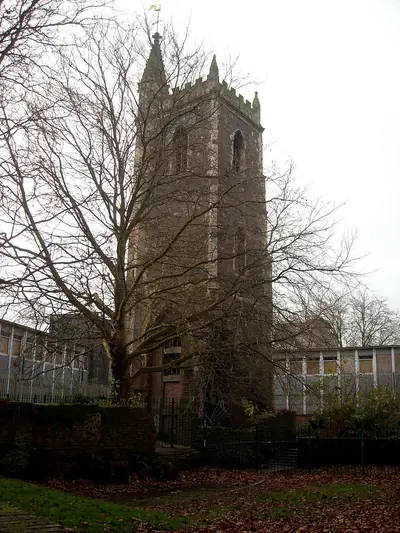
The remains of St Mary le Port Church stand in Castle Park. Also known as Saint Mary-le-Port Church, this ruined parish church offers a glimpse of Bristol’s past in the centre of the modern city.
Its setting makes it especially easy to combine with a walk through Castle Park and the surrounding historic streets.
M Shed
M Shed occupies a former dockside transit shed on Prince’s Wharf beside Bristol’s Floating Harbour. Its exhibitions explore the city’s life and work through around 3,000 objects and stories. The name comes from the system Bristol’s port used to identify its sheds.
The building previously housed the Bristol Industrial Museum, which closed in October 2006. After redevelopment, M Shed opened on 17 June 2011. The museum also includes a shop, learning space and café, and admission is free.
SS Great Britain
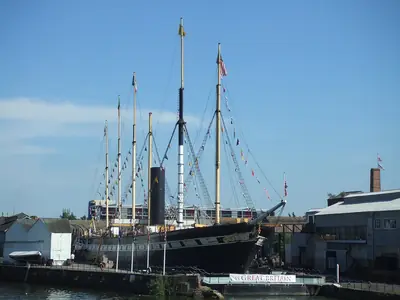
SS Great Britain is preserved as a museum ship in Bristol Harbour. Designed by Isambard Kingdom Brunel for the Great Western Steamship Company’s service between Bristol and New York, it brought together an iron hull and a screw propeller rather than paddle wheels.
At 322 feet, or 98 metres, long, it was an extraordinary ship when launched in 1843. From 1845 to 1853, it was the largest passenger ship in the world, and in 1845 it became the first iron steamer to cross the Atlantic. That voyage took fourteen days.
Inside, visitors can explore the engine rooms, kitchens, cargo holds and passenger cabins. The four decks could accommodate a crew of 120 and 360 passengers, with cabins, dining rooms and promenade saloons. The ship later travelled to Australia and the Falkland Islands before returning to the dry dock where it was built.
Cabot Tower and Brandon Hill
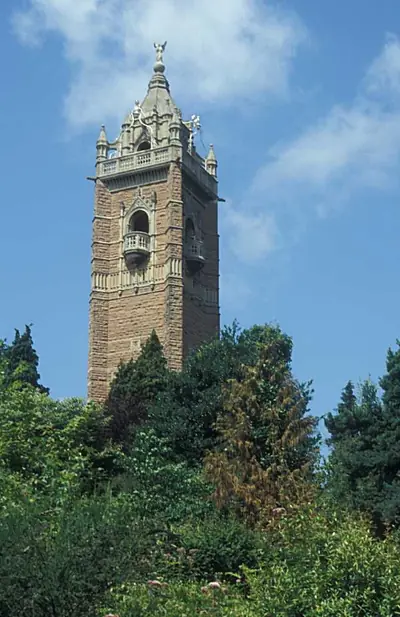
Cabot Tower rises from Brandon Hill between the city centre, Clifton and Hotwells. Built in the 1890s, it commemorates the four hundredth anniversary of John Cabot’s journey from Bristol to land that later became Canada.
The tower is a little over thirty metres high and is recognised as a Grade II listed building. Its elevated position in the public park makes it one of Bristol’s distinctive landmarks.
Bristol City Museum & Art Gallery
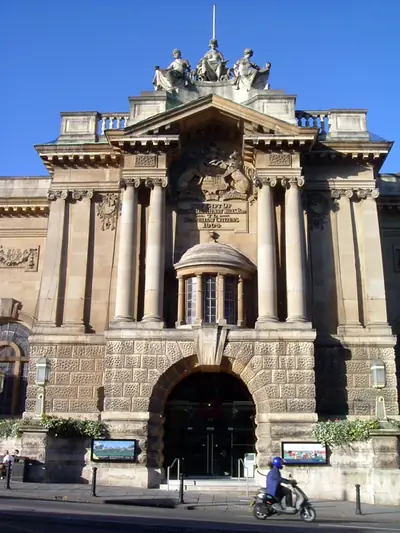
Set in Clifton, about 800 metres from the city centre, Bristol City Museum & Art Gallery brings together natural history, archaeology, geology, Eastern art and Bristol’s own history. The art gallery spans many periods, including works by internationally famous artists and modern paintings of Bristol. Admission is free.
The Edwardian Baroque building is recognised by English Heritage as a Grade Two Star listed building. It also hosted a major Banksy exhibition in summer 2009. Organised in secrecy, the exhibition presented more than seventy works, including installations and animatronics, and became the artist’s largest exhibition.
Clifton Cathedral
Clifton Cathedral is Bristol’s Roman Catholic cathedral and the seat and mother church of the Diocese of Clifton. Approved in 1965 following the Second Vatican Council, it was the first cathedral built under the new guidelines associated with that council.
Ronald Weeks designed the building, which was constructed between 1970 and 1973 and formally opened in 1973. It provides a contrasting experience to the medieval architecture of Bristol Cathedral: modern cathedral design is its defining feature.
Blaise Castle and Blaise Hamlet
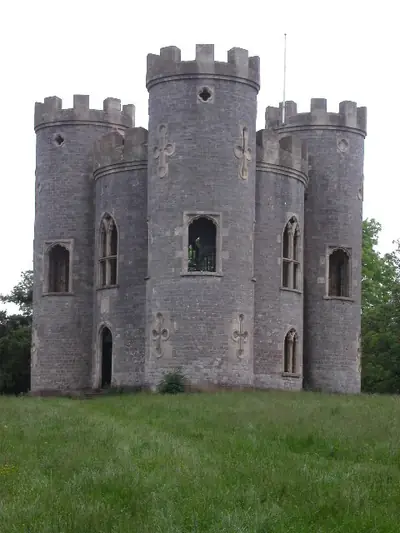
Near Henbury, Blaise Castle is a striking folly dating from 1766. Nearby Blaise Castle House is a historic house museum, while Blaise Hamlet offers one of the area’s most distinctive architectural ensembles.
Blaise Hamlet consists of nine small cottages arranged around a village green. Built around 1811 for retired employees of John Scandrett Harford, the cottages were designed by John Nash. Each has a different shape, with brick chimneys and dormer windows; some also have thatched roofs. A sundial stands at the centre, and the gardens follow a Victorian cottage-garden style.
The cottages and sundial are Grade I listed buildings, and the hamlet and Blaise Castle together form a Grade II star historic park and garden. The National Trust has owned the cottages since 1943. They remain occupied and are not open to the public, but the entire ensemble can be appreciated from the green.
Glenside Hospital Museum
Glenside Hospital Museum occupies the former Glenside Chapel on the University of the West of England’s Glenside Campus. The chapel dates from 1861 and is a Grade II listed building.
The museum examines the history of mental health care and learning disability hospitals in Bristol through objects, photographs and other material. The institution was first known as the Bristol Lunatic Asylum, became the Beaufort War Hospital during the First World War and was later called Bristol Mental Hospital.
The collection began with Dr Donal F. Early, a consultant psychiatrist at Glenside from the 1950s. Among the displays are paintings and drawings by Dennis Reed depicting life at Glenside during the 1950s, as well as early electroconvulsive therapy machines.
Maritime heritage and the city’s layered past
Bristol’s maritime history is also represented by the Maritime Heritage Museum, dedicated to stories connected with the city and the sea. Muller House, a gatehouse in the city, adds another historic point of interest.
Together with the harbourside, M Shed and SS Great Britain, these places show how Bristol’s identity has been shaped by its relationship with water, trade and industry. The city’s history also includes its connection to the transatlantic slave trade, a difficult legacy that remains part of Bristol’s museums, memorials and public discussion.
Explore Bristol with Neywo
A Bristol self-guided walking tour lets you explore without joining a group or following a fixed schedule. Neywo has five walking tours, one bus route and one bike route in the city:
- Five walking tours, covering between 2.09 and 4.56 km and lasting between 96 and 116 minutes, with 9 to 12 narrated stops each.
- One bus route, from Temple Meads to Clifton, covering 5.7 km in 24 minutes with 11 stops.
- One bike route, from the harbour to Castle Park, covering 2 km in 10 minutes with 7 stops.
The walks include routes through Brunel’s harbour, Cathedral and Brandon Hill, Old Bristol, Clifton, and Castle Park and Broadmead. The app tells the story of each place as you reach it, at your own pace, with no group and no schedule. Narration is available in 11 languages.
Download Neywo and explore Bristol with a free audio guide that turns the city’s streets, buildings and waterfront into a narrated journey. You can also continue discovering England and the wider United Kingdom with the app.
Places with an audio guide in Bristol
8 places in Bristol with a Neywo audio guide. Each one starts telling its story as you reach it.
Self-guided tours in Bristol
7 tours in Bristol, free in the Neywo app. Each stop tells its story as you reach it.
- Bike ride
Harbour to Castle Park by Bike
A short city-centre ride on cycle lanes from the Arnolfini on the harbourside through the old centre, past Bristol's oldest Catholic church, the Norman castle site in Castle Park and the great Gothic church of St Philip and St Jacob, to Whitefield's Tabernacle.
Arnolfini · Statue of Queen Victoria · St Mary on the Quay · St Nicholas, Bristol · Bristol Castle · St Philip and St Jacob, Bristol …
Open this tour: Harbour to Castle Park by Bike - Bus ride
Bus 8: Temple Meads to Clifton
First's number 8 runs from Temple Meads through the old city and up Park Street to Clifton. Ride it past Bristol's Neptune and Queen Victoria statues, the Banksy on Park Street and the university quarter, up to the modern Clifton Cathedral, without climbing the hill on foot.
St Philip and St Jacob, Bristol · Lewin's Mead Unitarian meeting house · Bristol Cenotaph · Bristol Neptune Statue · Statue of Queen Victoria · Well Hung Lover …
Open this tour: Bus 8: Temple Meads to Clifton - Walk
Brunel's Harbour: From a Banksy to the Great Britain
Bristol's Floating Harbour is where the city's seafaring story is still moored. Start at a Banksy that appeared overnight, step into Brunel's dry dock beneath the SS Great Britain, then follow the quays past a replica of Cabot's Matthew, the M Shed museum and its working harbour boats, to the spire of St Mary Redcliffe and Brunel's first Bristol station.
Girl with a Pierced Eardrum · SS Great Britain · Millennium Square · Matthew · Fire-float Pyronaut · John King …
Open this tour: Brunel's Harbour: From a Banksy to the Great Britain - Walk
Cathedral, College Green and Brandon Hill
A climb from medieval Bristol to its Georgian hilltop. See the cathedral, the green and a famous Banksy on Park Street, tour an 18th-century townhouse, climb Cabot Tower for the view, then finish among the university buildings, the theatre archive and the statue of Henrietta Lacks.
Bristol Cathedral · College Green · St Mark's Church, Bristol · Well Hung Lover · The Georgian House · St George's Church, Brandon Hill …
Open this tour: Cathedral, College Green and Brandon Hill - Walk
Old Bristol: Queen Square, Theatre Royal and the Merchant Churches
Trace the old merchant city from the elegant Queen Square past the Theatre Royal, the Tudor Red Lodge and the statues of the centre, then through the medieval churches clustered around Corn Street to the ruined tower of St Mary le Port.
Queen Square · Equestrian statue of William III · Bristol Old Vic · Bristol Neptune Statue · Statue of Edmund Burke · Bristol Cenotaph …
Open this tour: Old Bristol: Queen Square, Theatre Royal and the Merchant Churches - Walk
Clifton: From the Village to Brunel's Bridge
Begin at the Pro-Cathedral and walk through the elegant Georgian suburb of Clifton, past its churches and the modern Clifton Cathedral, to the Observatory and Brunel's Clifton Suspension Bridge. Then drop down to the quiet Georgian terraces of Dowry Square in Hotwells.
Pro-Cathedral of the Holy Apostles · St Paul's Church, Clifton, Bristol · Clifton Cathedral · Christ Church, Clifton Down · Buckingham Baptist Chapel · St Andrew's Church …
Open this tour: Clifton: From the Village to Brunel's Bridge - Walk
Castle Park and Broadmead: Bristol's Rebels and Dissenters
Bristol's other history: the Norman castle swept away after the Civil War, the Dominican friars' priory that became a Quaker meeting house, and the chapels where Wesley and Whitefield preached to the poor. A walk through Castle Park and the old Broadmead streets, past some of the oldest surviving fabric in the city.
St James' Priory, Bristol · Broadmead Baptist Church · John Wesley's New Room · St Peter's Church, Bristol · Bristol Castle · Quakers Friars …
Open this tour: Castle Park and Broadmead: Bristol's Rebels and Dissenters
Walk Bristol with Neywo
Neywo turns Bristol into a self-guided audio tour. Stories arrive as you reach the place they belong to, and the route reshapes when you wander off it.

