Visiting Christchurch, United Kingdom: Top Sights on Foot
Things to Do in Christchurch: A Walk Through Its Medieval Heritage
Christchurch is a historic town in Dorset, England, where a Norman castle, a former priory church, riverside landmarks and unusual reminders of public punishment come together. The compact centre makes it especially rewarding to explore on foot. Neywo also offers a free audio guide for Christchurch, with 11 narrated places available in 11 languages.
What to See in Christchurch
The best way to discover Christchurch is to follow its historic centre and riverside, moving between major landmarks and smaller details that reveal how the town developed.
Red House Museum and Gardens
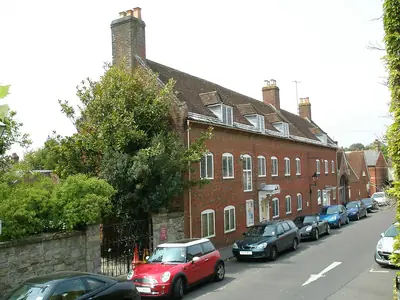
The Red House Museum and Gardens presents Christchurch’s local history inside a building with a story of its own. The red-brick Georgian building was constructed in 1764 as the parish workhouse. In the early twentieth century, local antiquarian Herbert Druitt acquired it, and his collections formed the basis of a public museum that opened in 1951.
The building is now Grade II* listed. Its Georgian character and red-brick exterior remain an important part of the experience, connecting the museum’s collections with the history of the place itself.
Christchurch Priory
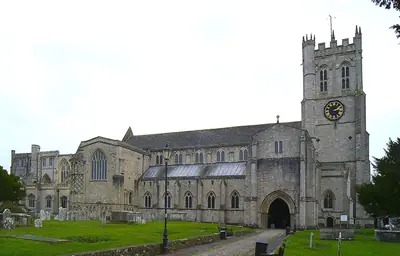
Christchurch Priory is dedicated to the Holy Trinity and is one of the town’s defining landmarks. Although it was once a priory church, it now serves as an ecclesiastical parish church in Dorset and is recognized as a Grade I listed building.
Its scale is particularly striking. Christchurch Priory is one of the longest parish churches in the country and is as large as many Church of England cathedrals. That unusual size reflects its former status as a priory and gives the building a presence far beyond that of an ordinary parish church.
Place Mill Bridge
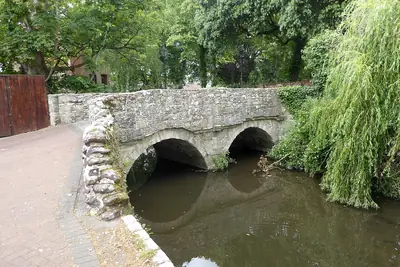
Place Mill Bridge is a Christchurch landmark in a setting shaped by the town’s waterways. It offers a natural point to pause between the priory, the river and the castle, while also providing a closer look at the historic relationship between Christchurch and its watercourses.
Christchurch Castle
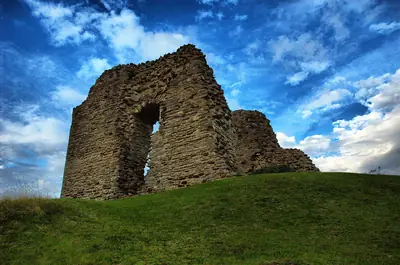
Christchurch Castle is a ruinous Norman castle built within the old Saxon burh. Its position overlooked the lowest crossing of the River Avon, making the site important both defensively and geographically.
The earliest stonework dates from around 1160. The remains of the keep stand within what was once a rectangular ditch, although the ditch has since been filled in. The former bailey is now occupied by gardens and a bowling green.
Next to the castle stands the Constable’s House, added at about the same time. It is a rare surviving example of a Norman domestic dwelling, with much of the building still standing. Together, the castle remains and the house offer a particularly clear view of Christchurch’s medieval past.
The River Avon
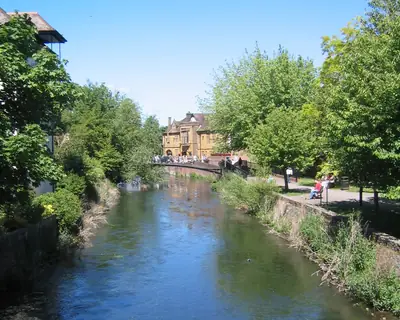
The River Avon crosses southern England before reaching the English Channel through Christchurch Harbour. In Christchurch, it forms part of a landscape that links the town with places as far inland as Salisbury.
The river rises in Wiltshire and flows through Salisbury before continuing through Hampshire and Dorset. It is sometimes called the Salisbury Avon or the Hampshire Avon, names used to distinguish it from other rivers with the same name in Great Britain. Its main tributaries, the Nadder and the Bourne, join it at Salisbury.
The Avon is also notable for its natural history. It is thought to contain more species of fish than any other river in Britain, and it is one of the rivers where anchor ice has been observed. Along its banks, the waterway is both a habitat and a visible thread through the surrounding landscape.
Stocks and the Ducking Stool
Christchurch’s historic centre also includes two reminders of older forms of punishment: the stocks and the Ducking Stool.
The stocks were designed to restrain a person’s feet and turn punishment into a public spectacle. Their usual construction consisted of two wooden blocks, one above the other, with semicircular openings that closed around the ankles. Some versions also included openings for the hands. In England, stocks remained a common form of punishment for more than five hundred years.
The Ducking Stool represents another form of public humiliation. People accused of scolding, backbiting, dishonest trading or other disorderly behaviour could be strapped into a chair and exposed before the community. Some stools were placed at the offender’s door or at the scene of the offence; others were mounted on wheels and dragged around the parish. A stool set on a pole or an oscillating plank could be plunged into water, giving rise to the term “ducking.”
The older name was “cucking-stool,” recorded in written sources from the thirteenth and fourteenth centuries. The term “ducking-stool” appears in written records from 1597. The nearby whipping post was a related but different device, designed to secure the head and arms rather than the feet.
Other Churches and Local Landmarks
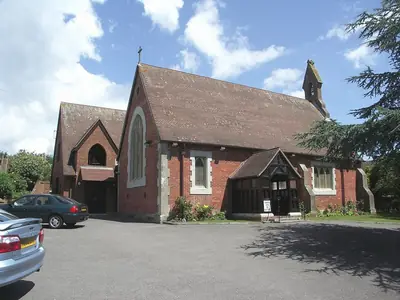
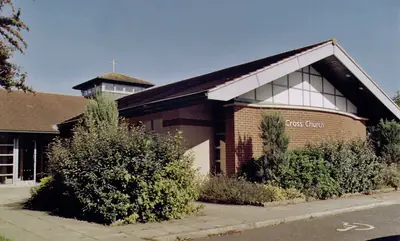
Beyond the main historic centre, Christchurch’s audio-guide route includes several quieter places of worship. The Church of All Saints is in Mudeford, while High Cross is identified in connection with a church in Somerford. St George’s Chapel is in Jumpers.
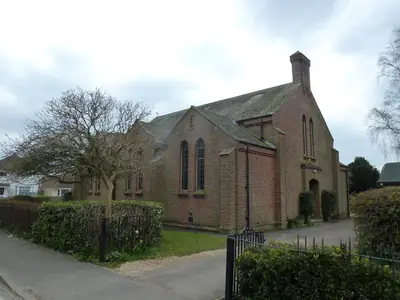
St John’s Church, Purewell, is a Church of England mission church built in 1880 and 1881. These smaller landmarks add local detail to a town better known for its castle and priory, showing how Christchurch’s history extends beyond its most prominent monuments.
Explore Christchurch with Neywo
For a Christchurch self-guided walking tour, download the free Neywo app and explore the town at your own pace. Christchurch has one walking tour: Christchurch Old Town: Priory, Castle and Public Shame, covering 0.83 km in around 45 minutes, with six narrated stops: Red House Museum and Gardens, Christchurch Priory, Place Mill Bridge, Christchurch Castle, Stocks and Ducking Stool.
Each story plays as you reach the place, so you can walk without a group and without a schedule. Use the England guide to continue exploring the region, or discover more destinations across the United Kingdom.
Places with an audio guide in Christchurch
8 places in Christchurch with a Neywo audio guide. Each one starts telling its story as you reach it.
Self-guided tours in Christchurch
1 tour in Christchurch, free in the Neywo app. Each stop tells its story as you reach it.
- Walk
Christchurch Old Town: Priory, Castle and Public Shame
A small Dorset town at the meeting of the Avon and Stour, with a priory as long as a cathedral. Start at the Georgian workhouse that became the town museum, walk past the Priory and the old mill bridge, climb to the Norman castle keep, and finish at the stocks and the ducking stool where Christchurch punished its troublemakers.
Red House Museum and Gardens · Christchurch Priory · Place Mill Bridge · Christchurch Castle · Stocks · Ducking Stool
Open this tour: Christchurch Old Town: Priory, Castle and Public Shame
Walk Christchurch with Neywo
Neywo turns Christchurch into a self-guided audio tour. Stories arrive as you reach the place they belong to, and the route reshapes when you wander off it.

