What to See in Durham, United Kingdom: Free Audio Guide
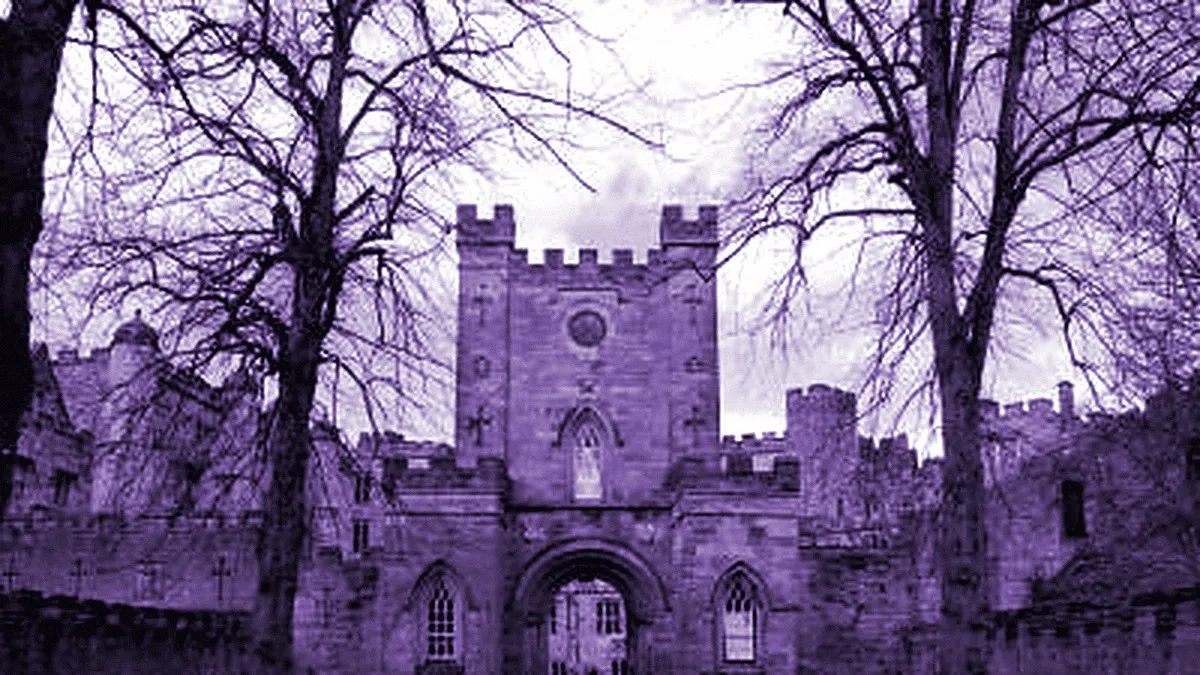
Things to Do in Durham: Cathedral, Castle and Riverside Walks
Looking for things to do in Durham? This compact city in northeast England is built around a dramatic peninsula in the River Wear, where Durham Cathedral and Durham Castle form a UNESCO World Heritage Site. Its medieval buildings, historic bridges, university character and surrounding museums make Durham rewarding to explore on foot. Neywo’s free Durham audio guide includes 345 narrated places, so you can discover the city while its stories play as you arrive.
Durham is part of England, in the United Kingdom. The city centre is small enough to explore through connected walks, but its history reaches beyond the peninsula into the wider county.
What to see in Durham
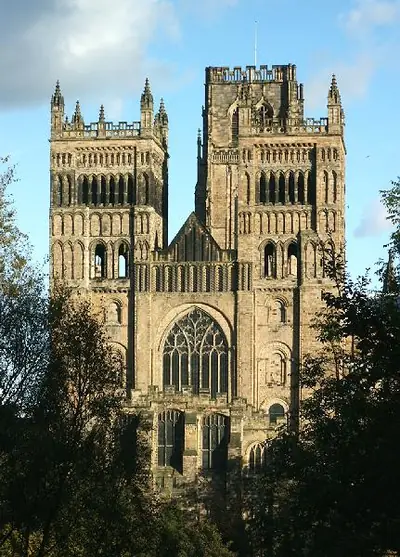
Durham Cathedral
Durham Cathedral is the city’s architectural and spiritual centre. Formally known as the Cathedral Church of Christ, Blessed Mary the Virgin and St Cuthbert of Durham, it is the seat of the Bishop of Durham and the mother church of the Diocese of Durham. It remains a working Church of England cathedral, with daily services.
The cathedral’s story is closely linked with Saint Cuthbert. After Viking raids forced the monks of Lindisfarne to leave in 875, they settled at Chester-le-Street before moving to Durham in 995 with Cuthbert’s body. A small timber chapel, known as the White Church, stood here before the present cathedral began in 1093. Much of the building was completed between 1093 and 1133.
Its massive Norman forms give the interior an almost fortress-like character. Look up in the nave for the pointed rib vault, described as the earliest surviving example of its kind. Durham Cathedral also contains important associations with Saint Cuthbert and the Venerable Bede. Together with the castle, it has formed part of a UNESCO World Heritage Site since 1986.
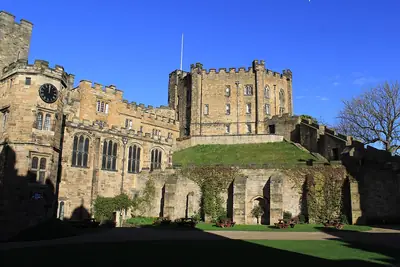
Durham Castle
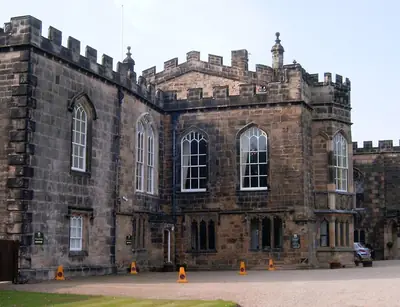
Opposite the cathedral, Durham Castle occupies the highest part of the peninsula above the River Wear. William the Conqueror ordered its construction in 1072, and it later became the residence of the Bishops of Durham, who ruled from the castle for around seven centuries.
The building follows a classic Norman plan: a central mound, walled courtyards known as baileys, a substantial keep, an original gatehouse and a moat. Its character changed over time from military stronghold to bishops’ residence, university and historic house museum.
Inside, several features reveal the castle’s long history. They include a working kitchen around five hundred years old, a Great Hall that appeared in Harry Potter, and a grand staircase made from black oak. Durham Castle now belongs to Durham University, giving the World Heritage peninsula its distinctive combination of medieval architecture and student life.
Palace Green and the historic peninsula
Palace Green lies between Durham Cathedral and Durham Castle and forms the heart of the World Heritage Site. From here, the relationship between the two buildings is especially clear: religious authority on one side and medieval power on the other.
The surrounding streets lead to historic university buildings, churches and viewpoints over the River Wear. This is the best area to begin if you want to understand Durham’s compact historic centre, where ancient stone buildings and university activity occupy the same peninsula.
Framwellgate Bridge and Prebends Bridge
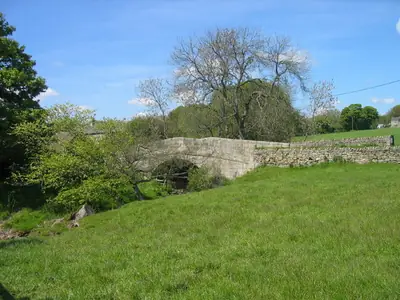
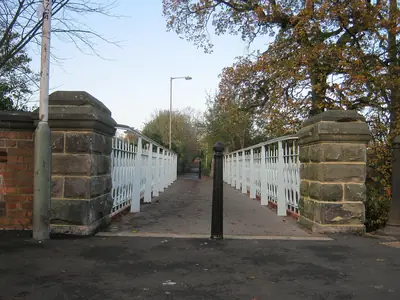
Durham’s bridges are among the best places to appreciate the city’s setting. Framwellgate Bridge crosses the River Wear below the peninsula, while Prebends Bridge offers another perspective on the cathedral and the wooded river gorge.
Walking beside the river reveals how closely Durham’s architecture depends on its landscape. The water curves around the historic centre, while wooded slopes frame views of the cathedral and castle.
St Mary the Less and the peninsula churches
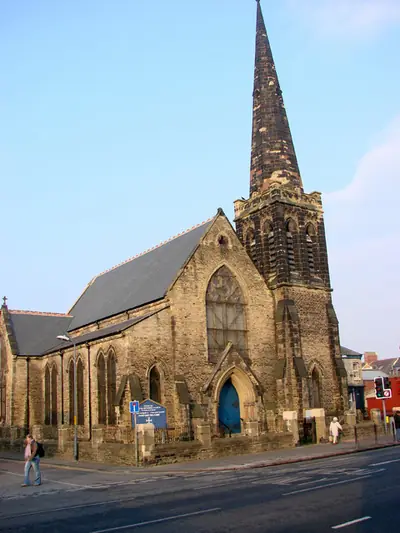
The Church of St Mary the Less stands near Durham Cathedral and is one of the historic churches included in the city’s walking routes. Other notable churches include St Nicholas’ Church, St Margaret’s Church, St Giles Church, St Oswald’s Church and St Cuthbert’s Church.
Together, these buildings show that Durham’s heritage extends beyond its two most famous landmarks. They also make the city well suited to a self-guided walk, with churches, bridges, university buildings and medieval streets appearing close together.
Crook Hall and Old Durham Gardens
For a quieter side of the city, head beyond the peninsula to Crook Hall and Old Durham Gardens. These places add gardens and historic surroundings to Durham’s medieval and university character.
Crook Hall is included in a walking route that also visits the Great Gateway to Kepier Hospital, while Old Durham Gardens provides another peaceful setting on the eastern side of the city. They are useful stops for seeing Durham beyond the cathedral precinct.
Durham University and the Botanic Garden
Durham University is woven into the city’s historic centre. Its buildings occupy parts of the peninsula and the eastern bank, while the university’s wider sites include the Oriental Museum, Observatory and Botanic Garden.
The Botanic Garden offers a more open setting than the medieval centre. A walk combining the university, its boat club, observatory and gardens shows how strongly Durham’s present-day identity is connected with its academic institutions.
Museums and historic places around County Durham
The wider area offers several places for visitors interested in industrial, artistic and maritime history.
At Beamish, The Living Museum of The North, historic buildings, working vehicles, livestock, artefacts and costumed interpreters recreate everyday life in urban and rural northeast England during industrialisation. Its recreated town represents a Victorian urban setting from 1913, while the museum also includes a mining village and traditional farms. The site helped pioneer the idea of a living museum.
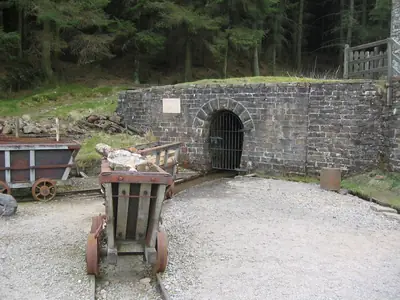
Killhope Museum, also known as the North of England Lead Mining Museum, occupies the former Park Level Mine. Its displays and restored mine setting explain how a nineteenth-century lead mine worked and offer an insight into County Durham’s industrial past.
Auckland Castle, also called Auckland Palace, was a residence of the Bishops of Durham from approximately 1183. Its chapel was once the medieval great hall and was remodelled by Bishop John Cosin between 1661 and 1665. Its woodwork, including the pulpit, stalls and screen, combines Gothic and Baroque forms.
Brancepeth Castle is a Grade I listed fortress in the village of Brancepeth. Its warm sandstone walls and medieval silhouette reflect centuries of rebuilding, including major work by the Nevilles in the late fourteenth century and later transformations in the nineteenth century.
Lumley Castle, at Chester-le-Street, is a four-sided fourteenth-century castle and a Grade I listed building. It now welcomes guests as the Lumley Castle Hotel, while its grounds include a Grade II listed sundial.
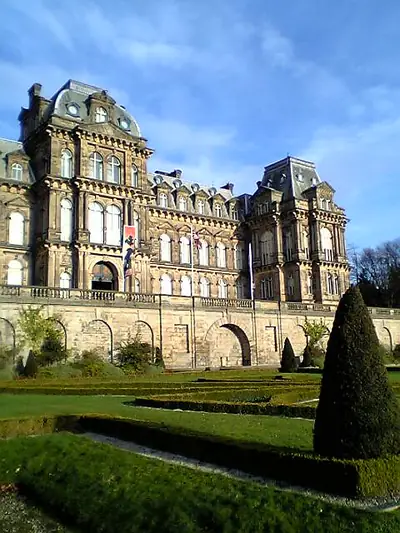
The Bowes Museum in Barnard Castle was built for the collection of John Bowes and Joséphine Benoîte Coffin-Chevallier and opened in 1892. Its galleries contain paintings, porcelain, textiles, tapestries, clocks, costumes and other decorative arts. Works include paintings by El Greco, Francisco Goya, Canaletto, Jean-Honoré Fragonard and François Boucher. The life-size eighteenth-century Silver Swan automaton is one of its most memorable objects.
Further afield, the Museum of Hartlepool explores the town’s connections with shipbuilding, fishing and the sea. Its largest object is PS Wingfield Castle, a paddle steam ship built in 1934 and now displayed as a floating exhibit. The museum also includes a lighthouse, a merman or “sea monster”, and a real coble boat.
The Tees Transporter Bridge spans the River Tees between Middlesbrough and Port Clarence. Its fixed structure is 259 metres long, with a central span of 180 metres, and its suspended gondola was designed to carry passengers and vehicles without obstructing river shipping. Nearby, the Tees Railway Bridge, also known as Croft Viaduct, is an early stone railway viaduct with a distinctive skew arch.
Explore Durham with a free audio guide
A Durham self-guided walking tour lets you explore the city without joining a group or following a fixed schedule. Neywo offers four walking tours and one bus route in Durham, with narration available in 11 languages.
The walks include:
- Durham’s World Heritage Peninsula — 1.57 km, 97 minutes and 12 narrated stops.
- Beyond the Peninsula: Medieval Churches, Gardens and the Miners’ Hall — 4.59 km, 93 minutes and 6 narrated stops.
- Across Elvet Bridge: The Eastern Bank — 1.66 km, 51 minutes and 6 narrated stops.
- Durham University: Boat Club, Observatory and Gardens — 2.18 km, 49 minutes and 4 narrated stops.
The bus route is Durham by Bus 56: Peninsula Churches and Medieval Bridges — 4.3 km, 18 minutes and 6 narrated stops.
Download Neywo and explore Durham at your own pace. The app tells the story of each place as you reach it, with no group and no schedule, turning the city’s cathedral, castle, bridges, churches and university buildings into a self-guided audio experience.
Places with an audio guide in Durham
8 places in Durham with a Neywo audio guide. Each one starts telling its story as you reach it.
Self-guided tours in Durham
5 tours in Durham, free in the Neywo app. Each stop tells its story as you reach it.
- Bus ride
Durham by Bus 56: Peninsula Churches and Medieval Bridges
Arriva's 56 runs from Durham bus station towards Shincliffe and Bishop Auckland, passing the sights of the old city. Ride it past Framwellgate Bridge, the Cathedral and the riverside churches, then on over New Elvet Bridge. A cheap way to see the World Heritage peninsula without the climb.
Durham University · Framwellgate Bridge · Durham Cathedral · Church of St Mary the Less · Church of St Oswald · New Elvet Bridge
Open this tour: Durham by Bus 56: Peninsula Churches and Medieval Bridges - Walk
Durham's World Heritage Peninsula
Walk the rock that the prince-bishops ruled like kings. Start in the Market Place with Neptune and the Londonderry horse, cross Framwellgate Bridge, climb to the Norman castle and Palace Green with its libraries, then enter the cathedral where St Cuthbert and Bede lie. Finish through the Chorister School close and onto Prebends Bridge for the classic view.
St Nicholas' Church, Durham · Statue of Neptune in Market Place · Equestrian statue of the Marquess of Londonderry · Framwellgate Bridge · Durham Castle · Palace Green …
Open this tour: Durham's World Heritage Peninsula - Walk
Beyond the Peninsula: Medieval Churches, Gardens and the Miners' Hall
Leave the cathedral crowds for the quieter parts of Durham. See the Miners' Hall at Redhills, St Margaret's on Crossgate, medieval Crook Hall, the fourteenth-century gateway of Kepier Hospital and the old church of St Giles, ending in the terraces of Old Durham Gardens.
Miners Hall · St Margaret's Church, Durham · Crook Hall · Great Gateway To Kepier Hospital · St Giles Church, Durham · Old Durham Gardens
Open this tour: Beyond the Peninsula: Medieval Churches, Gardens and the Miners' Hall - Walk
Across Elvet Bridge: The Eastern Bank
Cross the medieval New Elvet Bridge to the Elvet side of the river. Pass the Old Shire Hall on Old Elvet, the Catholic church of St Cuthbert, the Assembly Rooms Theatre and St Oswald's, and end at the riverside college of St Cuthbert's Society.
New Elvet Bridge · Old Shire Hall (University Office) · St Cuthbert's Church, Durham · The Assembly Rooms Theatre · Church of St Oswald · St Cuthbert's Society
Open this tour: Across Elvet Bridge: The Eastern Bank - Walk
Durham University: Boat Club, Observatory and Gardens
Follow the river and the hill south of the cathedral to the university's scientific and cultural sites: the school boat club on the Wear, the Victorian observatory on Potters Bank, the Oriental Museum and the botanic garden.
Durham School Boat Club · Durham University Observatory · Durham University, Oriental Museum · Durham University Botanic Garden
Open this tour: Durham University: Boat Club, Observatory and Gardens
Walk Durham with Neywo
Neywo turns Durham into a self-guided audio tour. Stories arrive as you reach the place they belong to, and the route reshapes when you wander off it.

