Visiting Oxford, United Kingdom: Top Sights on Foot
Things to Do in Oxford: What to See in the City of Dreaming Spires
Wondering what to see in Oxford? The city brings together historic university colleges, remarkable museums, medieval streets, literary connections and unusual landmarks such as the Headington Shark. Oxford is worth visiting for the way its architecture and stories unfold across the city, from the Bodleian Library and Christ Church to peaceful gardens and riverside paths.
Neywo has a free audio guide for Oxford with 168 narrated places, available in 11 languages.
What to See in Oxford
Ashmolean Museum
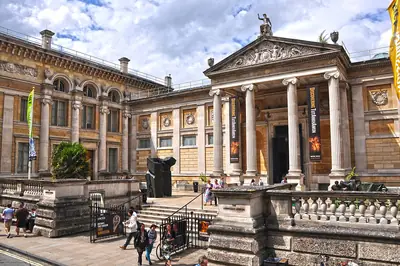
The Ashmolean Museum of Art and Archaeology on Beaumont Street is Britain’s first public museum and is widely regarded as the world’s oldest university museum. Its story began in 1677, when Elias Ashmole donated his collection of natural specimens, archaeological finds, coins, manuscripts and unusual objects to the University of Oxford.
The museum’s collections now span thousands of years and cultures. Highlights include Greek and Minoan pottery, Islamic art, Asian ceramics, European decorative arts, ancient coins, books and engravings. The museum is especially known for its Minoan collection, developed through the work of archaeologist Sir Arthur Evans.
Bodleian Library and the historic university
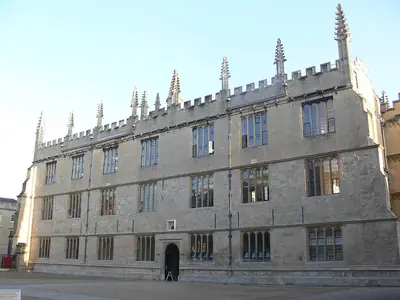
The Bodleian Library is the main research library of the University of Oxford and one of Europe’s oldest libraries. Founded in 1602 by Sir Thomas Bodley, it holds over 13 million printed items. It operates principally as a reference library, so documents generally remain in the reading rooms.
The library forms part of a remarkable group of university buildings. Beside it stand the Convocation House and Divinity School, while the Sheldonian Theatre is immediately to the north. Across Catte Street, Hertford College is known for the Bridge of Sighs, which connects its Old and New Quadrangles.
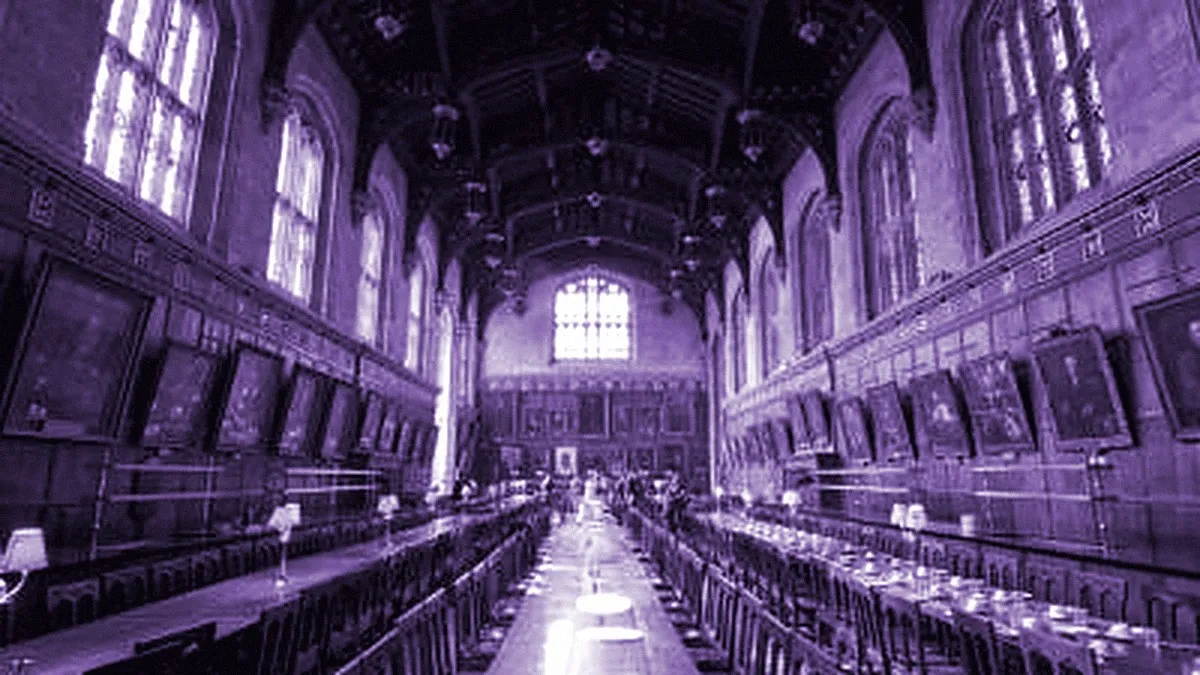
Oxford’s colleges give the city much of its character. Christ Church, founded by King Henry VIII in 1546, combines a university college and a cathedral. Its grounds include Tom Tower, designed by Sir Christopher Wren, Tom Quad and the Great Dining Hall, which served as the seat of the parliament assembled by King Charles I during the English Civil War.
Christ Church Cathedral
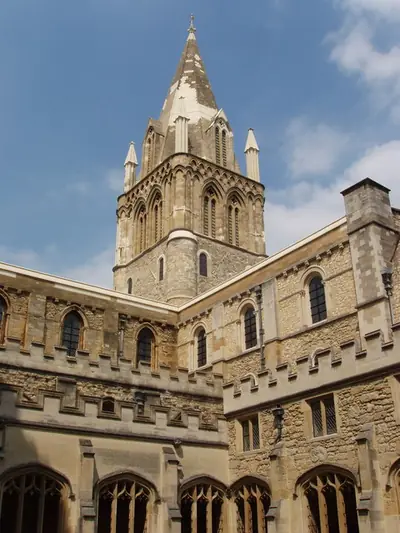
Christ Church Cathedral serves both as the cathedral of the Diocese of Oxford and as the college chapel of Christ Church. This dual role is unique in the Church of England.
The site has a long history. A nunnery and parish church stood here before being destroyed during the St Brice’s Day massacre in 1002. By 1122, it had been re-founded as a priory of Augustinian canons. Elements of the earlier Norman architecture can still be seen in the eastern nave, choir and tower.
Cardinal Thomas Wolsey later took control of the priory buildings to create a new college. After Wolsey fell from favour, Henry VIII refounded the institution as Christ Church in 1546 and elevated the remaining priory church to cathedral status.
Christ Church Picture Gallery
Inside Christ Church, the Christ Church Picture Gallery holds one of the most important privately owned collections of Old Masters in the United Kingdom. The purpose-built gallery opened in 1968 and contains around 300 paintings and nearly 2,000 drawings.
The collection is largely Italian, ranging from the 14th to the 18th centuries. Works by Fra Angelico, Salvator Rosa, Paolo Veronese, Tintoretto, Annibale Carracci, Duccio and Van Dyck are represented. The drawings include works by Leonardo da Vinci, Michelangelo, Raphael, Albrecht Dürer and Peter Paul Rubens. Because the drawings are shown in small rotating exhibitions, the entire collection is not displayed at once.
Oxford University Museum of Natural History
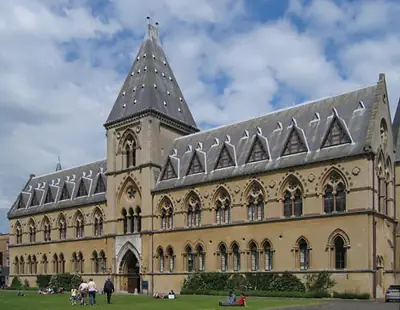
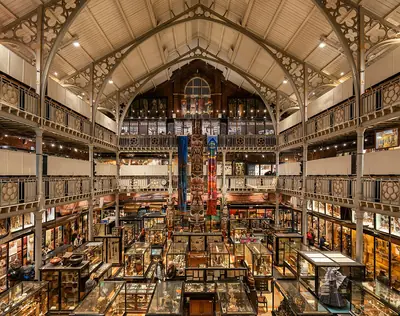
On Parks Road, opposite Keble College, the Oxford University Museum of Natural History presents the university’s natural history collections beneath a striking Neo-Gothic roof. The museum was established in 1850, and the present building was constructed in 1860 through the efforts of Sir Henry Acland, with architects Benjamin Woodward and Thomas Dean.
The main hall is defined by its glass roof and cast iron pillars. Arcades on the ground and first floors contain stone columns carved with natural motifs such as branches and leaves. Statues honour scientists including Aristotle, Darwin, Bacon and Linnaeus.
Pitt Rivers Museum
The Pitt Rivers Museum can be reached by walking through the Oxford University Museum of Natural History. Founded in 1884 by Augustus Pitt Rivers, it houses the University of Oxford’s archaeological and anthropological collections.
Pitt Rivers attached a condition to his donation: the university had to appoint a permanent lecturer in anthropology. This led to Edward Burnett Tylor becoming the first lecturer in anthropology in the United Kingdom in 1885. The original donation contained around 22,000 objects; the collection has since grown to more than 600,000, including substantial photographic holdings.
University of Oxford Botanic Garden
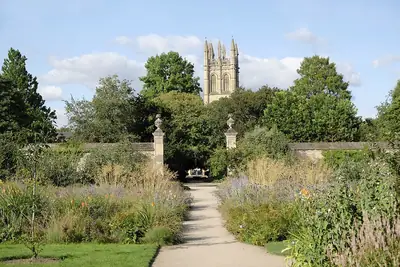
Beside the River Cherwell, the University of Oxford Botanic Garden offers a peaceful contrast to the college buildings. Founded in 1621 as a physic garden, it originally grew plants for medicinal research and helped medical students learn to identify herbs used in remedies.
The entrance is marked by the Danby Gate, a richly decorated 17th-century gateway designed by Nicholas Stone. The garden stands on land that was once part of a medieval Jewish cemetery, while earth and manure were later brought in to raise the ground above flood level before planting began.
Carfax Tower
At the junction of Cornmarket Street, Saint Aldate’s, High Street and Queen Street, Carfax Tower marks what is often considered the geographical centre of Oxford. It is the only surviving part of the medieval Church of Saint Martin, once Oxford’s City Church.
The church was largely demolished in 1896 to ease congestion, and the remaining section was removed in 1900, leaving the tower. Dating largely from the 13th century, it rises 23 metres above street level. Its six bells were cast in 1676, and the tower also has a clock with mechanical quarterboys.
The Story Museum and Oxford’s literary connections
The Story Museum on Pembroke Street explores storytelling through education and community engagement. Founded in 2003, it later moved into its current home at Rochester House, near Pembroke College and Christ Church. The location has a strong literary connection: J. R. R. Tolkien and Lewis Carroll worked at those colleges.
Oxford’s links with literature continue at The Kilns, the former home of C. S. Lewis. Built in 1922 on the site of a former brickworks, the house was where Lewis wrote all his Narnia books and many other works. The lake in the garden is a flooded clay pit from the brick-making days. The property is now owned and operated by the C. S. Lewis Foundation as the Study Centre at the Kilns.
Headington Shark
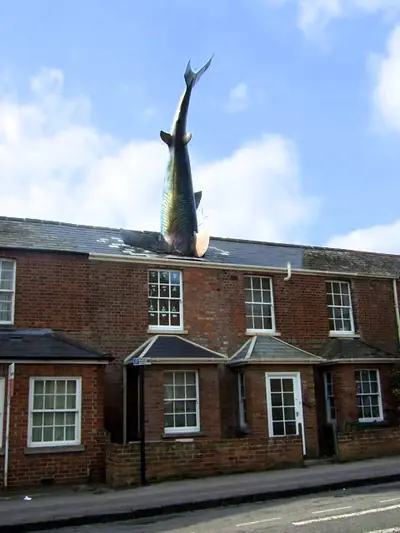
For one of the city’s most unexpected sights, look towards the roof of a house on New High Street in Headington. The Headington Shark, officially titled Untitled 1986, shows a large shark crashing headfirst into the roof of a house at 2 New High Street.
The sculpture was installed without permission as a piece of protest art. Its image was intended to symbolise bombs crashing into buildings, making it one of Oxford’s most surprising landmarks.
Museum of Oxford and the Bate Collection
Inside Oxford Town Hall on St Aldate’s Street, the Museum of Oxford tells the story of the city and its university from prehistoric times to the present. Displays include a mammoth tooth, a Roman pottery kiln and reconstructed rooms such as an Elizabethan inn, a Victorian kitchen, an 18th-century college classroom and a 1930s living room.
The Bate Collection of Musical Instruments, housed in the University of Oxford’s Faculty of Music near Christ Church, traces the development of instruments from the Middle Ages to the present. It has particular strengths in wind and percussion instruments, including examples by English, French and German makers.
Explore Oxford with a self-guided audio tour
An Oxford self-guided walking tour lets you explore the city’s stories without joining a group. Neywo’s Oxford audio guide includes four walking tours, one bus route and one bike route:
- Dreaming Spires: Oxford’s Library Quarter — a 1.19 km walk lasting 80 minutes, with 12 narrated stops.
- Alice’s Oxford: Christ Church to the Meadow — a 1.57 km walk lasting 87 minutes, with 11 narrated stops.
- Martyrs, Scholars and Ashmole’s Treasures — a 1.56 km walk lasting 88 minutes, with 12 narrated stops.
- Museums, Music and Medieval Colleges — a 2.47 km walk lasting 101 minutes, with 11 narrated stops.
- Line 1: Cowley Road to the Station — a 3.7 km bus route lasting 16 minutes, with 8 narrated stops.
- Canal Towpath to Jericho and North Oxford — a 1.9 km bike route lasting 10 minutes, with 4 narrated stops.
Download Neywo and explore Oxford at your own pace. The app tells the story of each place as you reach it, with no group and no schedule.
Places with an audio guide in Oxford
8 places in Oxford with a Neywo audio guide. Each one starts telling its story as you reach it.
Self-guided tours in Oxford
6 tours in Oxford, free in the Neywo app. Each stop tells its story as you reach it.
- Bike ride
Canal Towpath to Jericho and North Oxford
A short, flat spin up the Oxford Canal towpath from Pacey's Bridge near the station into Jericho, the old boatyard and printers' quarter. Stop at the Romanesque campanile of St Barnabas, the 1885 Walton Well fountain at the edge of Port Meadow and St Margaret's Church in North Oxford.
Pacey's Bridge · St Barnabas Church, Oxford · Walton Well Drinking Fountain · St Margaret's Church, Oxford
Open this tour: Canal Towpath to Jericho and North Oxford - Bus ride
Line 1: Cowley Road to the Station
A real city bus, not a sightseeing loop: Stagecoach's 1 runs from the Cowley Road past the Ultimate Picture Palace, over Magdalen Bridge, along the High Street by St Mary's, to Carfax, down St Aldate's by Tom Tower, then on to Oxford Castle and the Frideswide Square gateway to the railway station. Ride it as a cheap way to see the city's sights in one sweep.
Ultimate Picture Palace · Magdalen Bridge · University Church of St Mary the Virgin · Carfax Tower Tower Of The Church Of St Martin Carfax · Tom Tower · Oxford Castle …
Open this tour: Line 1: Cowley Road to the Station - Walk
Dreaming Spires: Oxford's Library Quarter
Begin at Oxford's Saxon tower, the oldest building in the city, and walk down Cornmarket to Carfax, the crossroads at the heart of the city. Then climb into the architectural showpiece of the university: the barley-sugar porch of St Mary's, round Radcliffe Square, the Rad Cam, Brasenose, the Bodleian and Divinity School, Wren's Sheldonian with its stern stone heads, Hawksmoor's Clarendon Building crowned by the nine Muses, and finally the Bridge of Sighs.
City Church · Cornmarket Street · Carfax Tower Tower Of The Church Of St Martin Carfax · University Church of St Mary the Virgin · Radcliffe Square · Radcliffe Camera …
Open this tour: Dreaming Spires: Oxford's Library Quarter - Walk
Alice's Oxford: Christ Church to the Meadow
Follow Alice Liddell's footsteps from the Story Museum past Tolkien's Pembroke College to the little shop where she bought her sweets, then through Wolsey's grand Christ Church, with Tom Tower and its 101 nightly bell strokes, the cathedral and its Old Masters. Medieval Corpus Christi, the royal foundation of Oriel and Merton lead down to Christ Church Meadow, where a balloon first lifted an Englishman into the sky.
The Story Museum · Pembroke College · Alice's Shop · Tom Tower · Christ Church · Christ Church Cathedral, Oxford …
Open this tour: Alice's Oxford: Christ Church to the Meadow - Walk
Martyrs, Scholars and Ashmole's Treasures
Start at Worcester College and the stone marking Beaumont Palace, where two kings were born, then Britain's first public museum, the Ashmolean. Pass the Martyrs' Memorial into St John's and the colleges of Broad Street. Balliol, Jesus, Lincoln, Exeter and Trinity each keep quads, chapels and gardens behind plain gateways.
Worcester College · Beaumont Palace · Ashmolean Museum · Taylor Institution · Martyrs' Memorial · St Mary Magdalen's Church, Oxford …
Open this tour: Martyrs, Scholars and Ashmole's Treasures - Walk
Museums, Music and Medieval Colleges
Start in the Neo-Gothic Natural History Museum and the crowded cabinets of the Pitt Rivers next door, then walk on to Wadham and the Holywell Music Room, said to be the oldest purpose-built music room in Europe. Hertford, New College, Queen's and University College follow, then Britain's oldest botanic garden and the tower of Magdalen College.
Oxford University Museum of Natural History · Pitt Rivers Museum · Rhodes House · Wadham College · Holywell Music Room · Hertford College …
Open this tour: Museums, Music and Medieval Colleges
Walk Oxford with Neywo
Neywo turns Oxford into a self-guided audio tour. Stories arrive as you reach the place they belong to, and the route reshapes when you wander off it.

