What to See in Sheffield, United Kingdom: Free Audio Guide
Things to do in Sheffield: museums, theatres and industrial heritage
Sheffield is a city in England known for its steelmaking history, cultural venues, historic churches and surviving industrial sites. The best things to do in Sheffield include exploring museums such as Kelham Island Museum and Abbeydale Industrial Hamlet, visiting the Crucible Theatre and Millennium Gallery, and discovering landmarks from the city’s medieval and Victorian past. Neywo offers a free audio guide for Sheffield with 222 narrated places.
What to see in Sheffield
Sheffield Cathedral
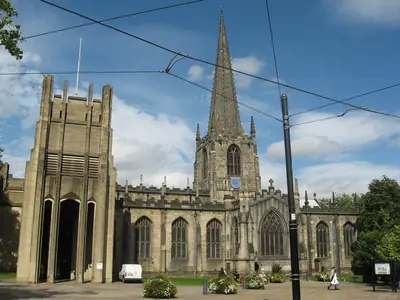
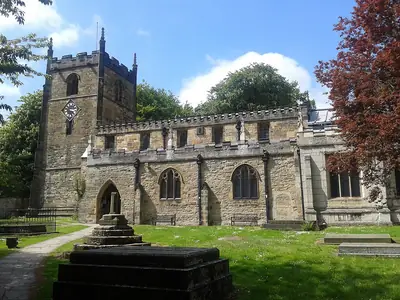
Sheffield Cathedral, formally the Cathedral Church of Saint Peter and Saint Paul, has a history reaching back to around 1200. It began as a parish church and became a cathedral in 1914, when the Diocese of Sheffield was created. Construction continued in stages until 1966, giving the building its unusual mixture of medieval and modern architecture.
The east end wall still contains thirteenth-century stone, while the chancel and sanctuary date from the fifteenth century. The chancel has a hammer-beam roof decorated with golden angels. Other notable spaces include the Shrewsbury Chapel, burial place of the Earls of Shrewsbury, and the Chapel of Saint George, dedicated to the York and Lancaster Regiment.
Cathedral Church of St Marie
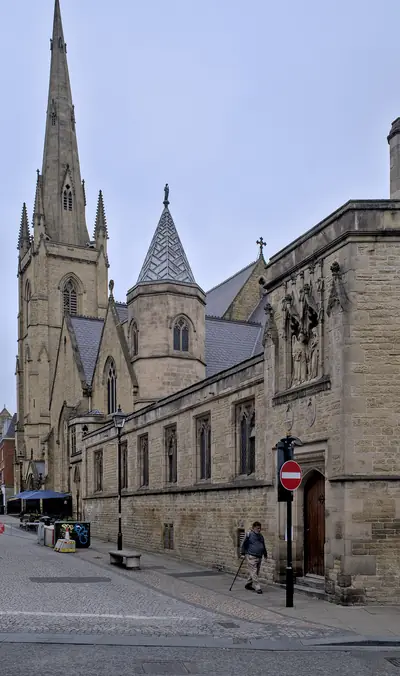
The Cathedral Church of St Marie stands just off Fargate, Sheffield’s busy shopping street. Its 59-metre spire rises above the city, although the building itself is slightly hidden from the street.
Designed by Matthew Ellison Hadfield and completed in 1850, St Marie’s is an example of English Gothic Revival architecture inspired by a fourteenth-century church in Heckington, Lincolnshire. Inside, historic statues, painted tiles and distinctive side altars add to the detailed decoration. The building became Sheffield’s cathedral on 30 May 1980, following the creation of the Diocese of Hallam.
Crucible Theatre
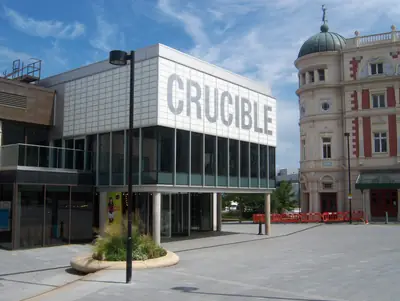
The Crucible Theatre opened in 1971 and is one of Sheffield’s most recognisable cultural venues. Its thrust stage places the audience on three sides, with no spectator more than 20 metres from the stage. The arrangement creates an intimate setting for theatre, dance, music and classical and modern productions.
The building’s name refers to Sheffield’s industrial history: crucible steel was developed in the city in 1740. The Crucible is a Grade II listed building and has hosted the annual World Snooker Championship since 1977. Sheffield Theatres also brings together the Lyceum, the Tanya Moiseiwitsch Playhouse and the Montgomery Theatre.
Millennium Gallery
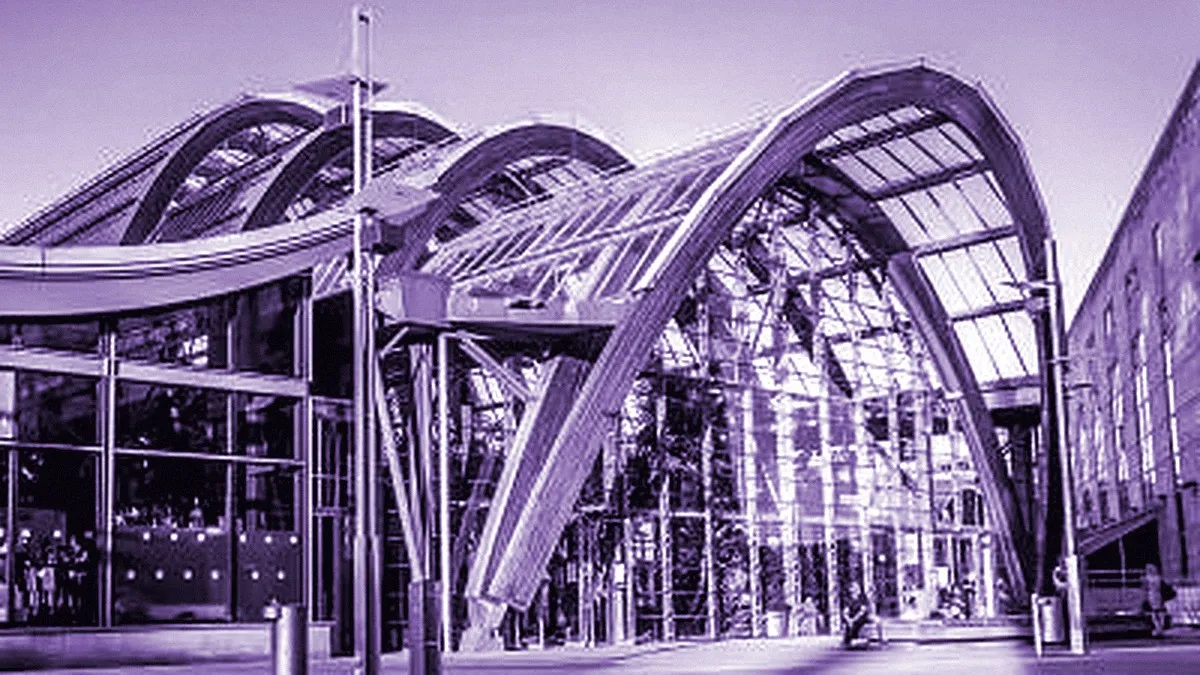
The Millennium Gallery opened in April 2001 as part of Sheffield’s Heart of the City project. Designed by Pringle Richards Sharratt, its concrete and glass structure is organised around a central avenue linking Arundel Gate with Sheffield Winter Garden.
The gallery contains two permanent collections and two spaces for temporary exhibitions. Its displays bring together art and objects from British and European collections, making it a useful stop for anyone interested in Sheffield’s cultural life as well as its industrial past.
Sheffield Central Library and Graves Art Gallery
Sheffield Central Library and Graves Art Gallery occupy the same Grade II-listed building. Designed by W. G. Davies, the Art Deco-style library opened in 1934, with Portland stone facing, a steel frame and decorative mouldings by Alfred and William Tory.
Graves Art Gallery is located on the building’s third floor. It presents permanent displays from Sheffield’s historic and contemporary collections of British and European art, alongside temporary exhibitions. The building was the only part of Patrick Abercrombie’s proposed civic square that was completed; Tudor Square was later built beside it in 1991.
Kelham Island Museum
Kelham Island Museum brings Sheffield’s industrial story together beside the River Don. Opened in 1982, it occupies former industrial buildings on Alma Street and presents machinery, objects, images and working traditions connected with the city’s manufacturing history.
The island began as a man-made channel in the twelfth century, created to divert water from the River Don to power a corn mill. It later took its name from Kellam Homer, the Town Armorer, who owned a grinding workshop here in the seventeenth century. The site subsequently housed an iron foundry and a power station supplying electricity to Sheffield’s trams.
Among the museum’s exhibits are England’s largest surviving Bessemer Converter, the prototype Sheffield-Simplex car and the Benjamin Huntsman Clock. The Ken Hawley Collection of tools is also housed at the museum.
Abbeydale Industrial Hamlet
Abbeydale Industrial Hamlet is a remarkably complete former steel-working site beside the River Sheaf in southern Sheffield. Once a scythe-making plant, it is now a working industrial museum where preserved buildings and machinery explain the city’s industrial heritage.
Iron forging continued here for more than five hundred years. The site includes workshops, workers’ cottages, a counting-house and a manager’s house. The works are Grade I listed, while the cottages, counting-house and manager’s house are Grade II* listed; the entire site is also a scheduled monument. Scythes continued to be produced here until the 1930s, and the site opened as a museum in 1970.
Bishops’ House
At the southern tip of Meersbrook Park, Bishops’ House is one of only three surviving timber-framed houses in Sheffield. The half-timbered building dates from around 1500 and is also known as Bishop’s House.
Despite its name, there is no evidence that the bishops John and Geoffrey Blythe ever lived there. The first known resident was William Blythe, a farmer and scythe manufacturer, recorded at the house in 1627. Later divided into two homes, the building became a museum in 1976 after restoration funded by English Heritage and Sheffield City Council.
Bramall Lane
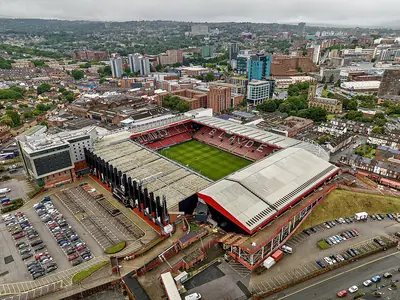
Bramall Lane has been the home of Sheffield United since the club was established in 1889. The stadium began as a cricket ground in the middle of the nineteenth century, and football was played there from 1862. It is described as the oldest major stadium in the world still hosting professional association football matches.
The ground has hosted the final of the world’s first football tournament, an experimental floodlit match and fixtures that helped bring the rules of the Sheffield and London Football Associations together. Bramall Lane has also welcomed rugby league, concerts, boxing and international football, including UEFA Women’s Euro matches in 2022.
Hillsborough Stadium
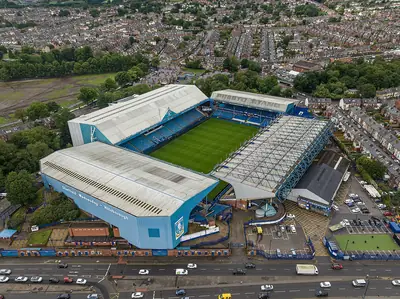
Hillsborough Stadium, in Sheffield’s Owlerton area, has been the home of Sheffield Wednesday Football Club since it opened in 1899. Its four covered stands include two large two-tiered structures and two large single-tiered stands.
The stadium has hosted World Cup football in 1966 and European Championship football in 1996. It is also associated with the Hillsborough disaster of 15 April 1989, when 97 Liverpool fans died during an FA Cup semi-final. The Taylor Report that followed led to major safety changes at Hillsborough and other large stadiums in England.
Historic churches and bridges
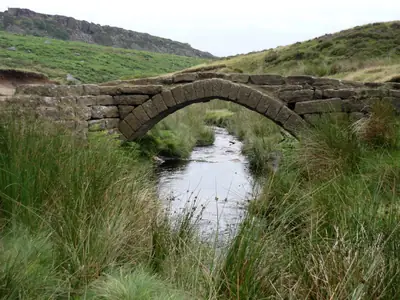
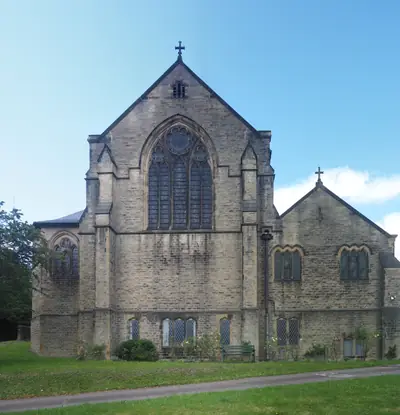
Sheffield’s wider collection of landmarks includes the Church of St Oswald, also known as Saint Peter and Saint Oswald, and St James, Norton, the Church of England parish church of Norton. In the city’s green surroundings, Burbage Brook Bridge—also known as the Packhorse Bridge—offers a smaller historic landmark.
The Alfred Denny Museum provides another museum stop, while the city’s industrial story can be followed through its former workshops, furnaces and manufacturing sites.
Explore Sheffield with a self-guided audio tour
A Sheffield self-guided walking tour lets you explore the city without joining a group or following a fixed timetable. Neywo has six walking tours and one bus route, with narration available in 11 languages.
The walking tours range from 1.24 to 2.85 km and from 41 to 78 minutes:
- Steel City Heart: Squares, Gardens and Stage — 1.24 km, 78 minutes, 12 stops.
- Where Sheffield Began: Cathedral, Castle and River Don — 1.38 km, 76 minutes, 10 stops.
- Forged in Fire: Kelham Island and the Steel Furnaces — 1.93 km, 67 minutes, 9 stops.
- Redbrick and Science: The University Quarter — 2.85 km, 76 minutes, 8 stops.
- Beats, Cholera and Park Hill — 1.47 km, 48 minutes, 6 stops.
- Blades, Cutlers and Bramall Lane — 1.39 km, 41 minutes, 4 stops.
The bus route, Bus 97: From the River Don to the Abbeydale Works, covers 8.9 km in 38 minutes and has 7 narrated stops. Across Sheffield, Neywo covers 222 narrated places. The app tells the story of each place as you reach it, at your own pace, with no group and no schedule.
Download the free Sheffield audio guide
Download Neywo to explore Sheffield with stories that play when you arrive at each place. Choose one of six walking tours or the bus route, pause whenever you like and continue in your own time. With 222 narrated places, 11 languages and no group or schedule, Neywo turns a walk through Sheffield’s cathedrals, theatres, museums and industrial landmarks into a self-guided audio experience.
Sheffield is part of England, within the United Kingdom.
Places with an audio guide in Sheffield
8 places in Sheffield with a Neywo audio guide. Each one starts telling its story as you reach it.
Self-guided tours in Sheffield
7 tours in Sheffield, free in the Neywo app. Each stop tells its story as you reach it.
- Bus ride
Bus 97: From the River Don to the Abbeydale Works
A regular First bus from the old river crossing at Lady's Bridge through Fitzalan Square, the Crucible and the Millennium Gallery, then south along Abbeydale Road past St Oswald's to Abbeydale Industrial Hamlet, a complete working steel-scythe works, and the church beside it. Ride it to see how Sheffield's centre gives way to its industrial valleys.
Lady's Bridge · Fitzalan Square · Crucible Theatre · Millennium Gallery · Church of St Oswald · Abbeydale Industrial Hamlet …
Open this tour: Bus 97: From the River Don to the Abbeydale Works - Walk
Steel City Heart: Squares, Gardens and Stage
Sheffield's reinvented centre in one loop. Start at City Hall and the war memorial, look up at Vulcan on the Town Hall tower, walk the Peace Gardens' river of steel and step into Europe's largest urban glasshouse. Take in the theatre district, the Art Deco library and the Crucible, home of world snooker, and finish at the city's first non-conformist chapel and the spire of St Marie's.
Sheffield City Hall · Women of Steel · Upper Chapel · Sheffield Town Hall · Peace Gardens · Sheffield Winter Garden …
Open this tour: Steel City Heart: Squares, Gardens and Stage - Walk
Where Sheffield Began: Cathedral, Castle and River Don
Trace the city to its roots, from Georgian Paradise Square and the medieval cathedral to the site of the castle where Mary, Queen of Scots was held for fourteen years. End on Lady's Bridge, the oldest bridge over the Don.
National Emergency Services Museum · Paradise Square · Sheffield Cathedral · Statue of James Montgomery · Castle Square · National Videogame Museum …
Open this tour: Where Sheffield Began: Cathedral, Castle and River Don - Walk
Forged in Fire: Kelham Island and the Steel Furnaces
Walk the streets where Sheffield made steel and cutlery. Start at the museum with England's largest surviving Bessemer converter, raise a glass at a national pub of the year, see the ornate gate of Green Lane Works and grand cutlery factories turned apartments, and end at two rare survivors of the furnaces that gave the city its name for steel.
Kelham Island Museum · Kelham Island Tavern · Entrance Gateway to Green Lane Works · Brooklyn Works · Cornish Place · Globe Works …
Open this tour: Forged in Fire: Kelham Island and the Steel Furnaces - Walk
Redbrick and Science: The University Quarter
From the first technical school that became a university to the 1960s Arts Tower with its endless paternoster lift. Pass a glass museum, a Georgian church turned lecture hall, a Gothic women's hospital and Edwardian Firth Court, then cross Weston Park museum to end among the glasshouses of the Botanical Gardens.
Turner Museum of Glass · Sir Frederick Mappin Building · St George's Church, Portobello · Jessop Hospital · Arts Tower · Firth Court …
Open this tour: Redbrick and Science: The University Quarter - Walk
Beats, Cholera and Park Hill
Sheffield's cultural quarter and its eastern edge: artists' studios, the giant steel drums of the old popular-music centre, the contemporary Site Gallery and the Leadmill, then up to a neo-Gothic memorial to the 1832 cholera victims and the concrete bridge at Park Hill whose graffiti love note became a city icon.
Yorkshire ArtSpace · National Centre for Popular Music · Site Gallery · The Leadmill · Cholera Monument · I Love You Will U Marry Me
Open this tour: Beats, Cholera and Park Hill - Walk
Blades, Cutlers and Bramall Lane
A short south-side loop through Sheffield's metal trades and its football: a still-working knife works from 1852, a Georgian church with a 140-foot tower beside the oldest major stadium in the world, and Portland Works, the cutlery factory where stainless steel was first made.
Taylor's Eye Witness Works · St Mary's Church, Bramall Lane · Bramall Lane · Portland Works
Open this tour: Blades, Cutlers and Bramall Lane
Walk Sheffield with Neywo
Neywo turns Sheffield into a self-guided audio tour. Stories arrive as you reach the place they belong to, and the route reshapes when you wander off it.

