Visiting Plymouth, United Kingdom: Top Sights on Foot

Things to Do in Plymouth: What to See in the Maritime City
Plymouth is a coastal city in England shaped by maritime history, naval heritage and stories of exploration. From Plymouth Hoe and the Barbican to museums, galleries and the National Marine Aquarium, there is plenty to see in Plymouth. Neywo has a free audio guide for Plymouth with 76 narrated places, available in 11 languages.
What to See in Plymouth
The Plym Valley Railway
The Plym Valley Railway occupies part of the former South Devon and Tavistock Railway. The original line opened in 1859 as a branch of the Great Western Railway and closed in 1962. Heritage trains began running here in 2001, and the heritage line now extends for roughly 1.9 kilometres.
The railway offers a glimpse of Devon’s railway history and a chance to imagine the trains that once travelled this route as part of the original network.
The Box
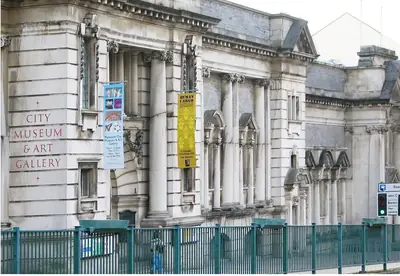
The Box is Plymouth’s museum, gallery and archive. Opened in 2020, it brings together around two million items in a cultural centre created from the former Plymouth City Museum and Art Gallery, the former Central Library and St Luke’s Church on Tavistock Place.
Its original core was built between 1907 and 1910 in the Edwardian Baroque style by Thornely and Rooke. The combination of art, history and archives makes The Box one of the key places to include in a visit to Plymouth.
Plymouth Cathedral
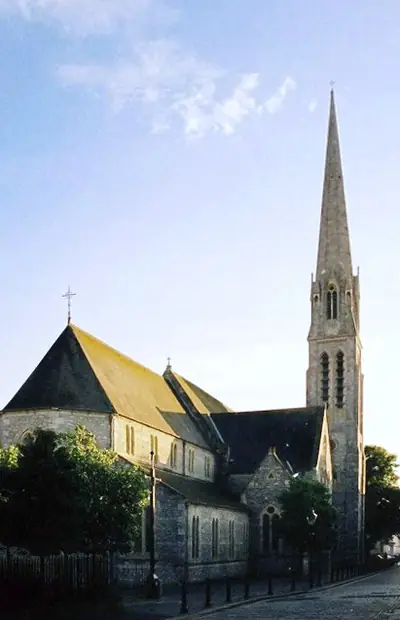
Plymouth Cathedral stands on Eldad Hill and is dedicated to the Virgin Mary and Saint Boniface. It is the mother church of the Diocese of Plymouth and the seat of its bishop.
The Neo-Gothic cathedral was designed by Joseph Hansom and Charles Hansom. Construction began in 1856, and the building opened for Mass on 25 March 1858 before being consecrated in 1880. Its single tower and history of construction setbacks give it a distinctive place in Plymouth’s architectural story.
Plymouth Hoe and the Statue of Francis Drake
Plymouth Hoe is one of the city’s defining open spaces, with views across Plymouth Sound, Drake’s Island and the distant coast of Cornwall. Smeaton’s Tower, the former Eddystone Lighthouse rebuilt on the Hoe in the nineteenth century, is its best-known landmark.
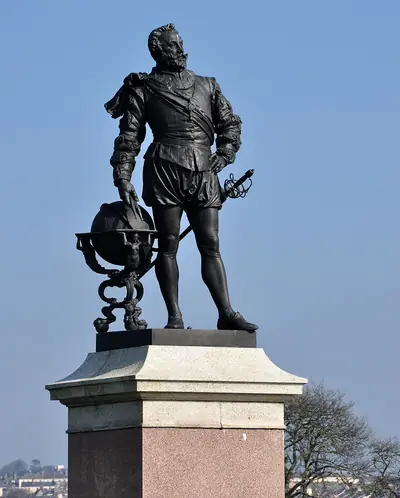
The bronze Statue of Francis Drake stands ten feet high on the Hoe. Drake was the first Englishman to successfully circumnavigate the globe, returning to England in 1580 after his voyage. Queen Elizabeth the First knighted him the following year, and he later became Mayor of Plymouth and a member of parliament.
The Hoe is also associated with the famous story that Drake was playing bowls when news arrived of the approaching Spanish Armada on July 20, 1588. According to the popular version, he finished his game before leading the English fleet to victory.
The Barbican’s galleries
Plymouth’s Barbican is known for its cobbled streets and historic buildings around Sutton Harbour. It is also home to several small galleries and creative spaces.
40rty5ive Southside, inside the Barbican Gallery on Southside Street, combines art and local heritage. Its collection includes prints by Beryl Cook and works by Robert Lenkiewicz, alongside rotating exhibitions and permanent pieces.
Nearby, the Victoria Sewart Contemporary Jewellery Gallery was established in 2006 as Plymouth’s first contemporary jewellery gallery. Its displays use materials including precious metals, stones, acrylic, aluminium, recycled materials and feathers.
Art 2 Frame is presented as ClayArt, a paint-your-own pottery studio for children and adults. Visitors can decorate blank ceramics such as mugs and plates, while the studio handles the glazing and firing.
Kayaya Gallery brings together classic and contemporary art, original works, prints and Plymouth-themed gifts. Its selection includes designs inspired by Smeaton’s Tower, local artisan badges, greeting cards and Cornish-themed coasters.
The Mayflower Museum
The Mayflower Museum is at numbers 3 to 5 in the Barbican, above the Tourist Information Centre. It explores the story of the Mayflower’s explorers and Pilgrims alongside the history and culture of the Wampanoag Nation.
A three-foot-high model of the Mayflower helps visitors picture the ship and the voyage connected with Plymouth’s history.
Plymouth Castle
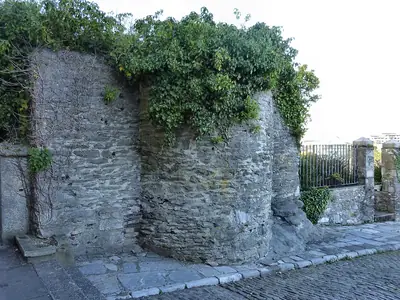
Only part of Plymouth Castle’s outer gatehouse survives today. The castle was built in the early fifteenth century to defend the town and harbour, but by the end of the sixteenth century it no longer had a military role and began to fall into disrepair.
Most of the castle was demolished over the following centuries. The remaining fragment is a reminder of the former fortress and the changing role of Plymouth’s defences.
The National Marine Aquarium
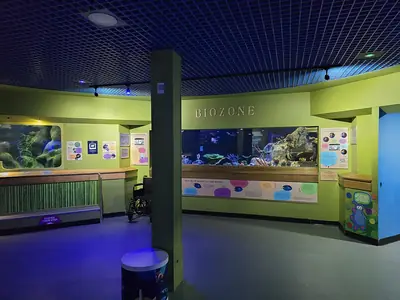
The National Marine Aquarium stands in Sutton Harbour, close to the Barbican and fish market. Opened in May 1998, it is the largest aquarium in the UK and is home to more than 5,000 marine animals.
The Plymouth Sound exhibit presents around 80 species from local waters across 17 tanks, including sharks, rays and octopuses. The Eddystone Reef exhibit recreates the habitat of the reef, which lies 19 kilometres south of Plymouth, while life-size whale and dolphin models convey the scale of the surrounding ocean.
The aquarium also features Ocean Drifters, with moon jellies, Japanese sea nettles and upside-down jellyfish. Its Atlantic Ocean zone contains the largest tank in the aquarium, holding 2.5 million litres of water and more than 1,000 Caribbean fish, as well as lemon sharks and sand tiger sharks.
Plymouth’s historic churches
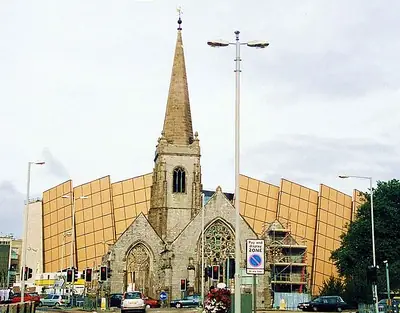
Several churches add depth to Plymouth’s architectural and religious heritage. Charles Church, the city’s second oldest parish church, is now derelict, making its present condition part of its story.
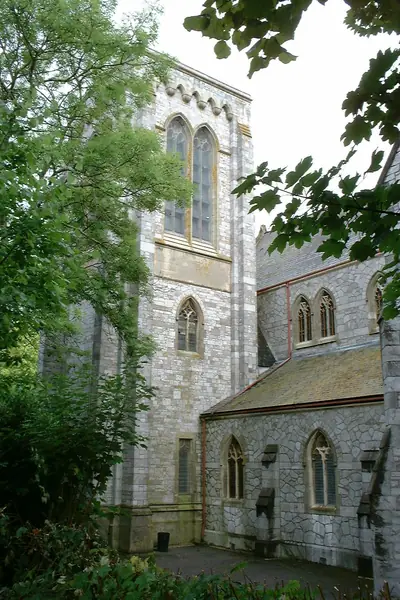
The Church of St Andrew in Stoke, also known as Stoke Damerel Church or the Church of St Andrew with St Luke, has roots reaching back to the fifteenth century. It has been recognised as a Grade II* listed building since 1954. Its northern churchyard gate piers and two nineteenth-century tombs are separately Grade II listed; one of the tombs belongs to Captain Tobias Furneaux.
The Church of Emmanuel, the Church of St Budeaux and the Church of St Edward, King of the West Saxons, offer further points of interest across Plymouth.
Explore Plymouth with Neywo
If you are looking for a Plymouth self-guided walking tour, Neywo lets you explore without joining a group or following a fixed schedule. Plymouth has three walking tours and one bus route, with 76 narrated places in total:
- Plymouth Hoe: Armada, Admirals and Memorials — a 1.64 km walk lasting 73 minutes, with 12 narrated stops.
- The Barbican: Pilgrims, Gin and Medieval Lanes — a 2.14 km walk lasting 84 minutes, with 12 narrated stops.
- Rebuilding Plymouth: Phoenix from the Blitz — a 3.96 km walk lasting 109 minutes, with 11 narrated stops.
- Route 1A: Through Plymouth’s Rebuilt Centre — a 4.5 km bus route lasting 19 minutes, with 7 narrated stops.
The app tells the story of each place as you reach it, at your own pace, with no group and no schedule. Download Neywo’s free Plymouth audio guide and explore the city through its streets, waterfront and historic landmarks.
Places with an audio guide in Plymouth
8 places in Plymouth with a Neywo audio guide. Each one starts telling its story as you reach it.

Self-guided tours in Plymouth
4 tours in Plymouth, free in the Neywo app. Each stop tells its story as you reach it.
- Bus ride
Route 1A: Through Plymouth's Rebuilt Centre
Stagecoach's frequent Route 1A runs through the heart of post-war Plymouth, from St John the Evangelist past Charles Church, the Minster, the Drum Theatre and the university to The Box museum and St Matthias church. Seven sights, one ticket.
Church of St John the Evangelist · Charles Church · Plymouth Minster · Drum Theatre · Arts University Plymouth · The Box …
Open this tour: Route 1A: Through Plymouth's Rebuilt Centre - Walk
Plymouth Hoe: Armada, Admirals and Memorials
Walk the grassy headland where Drake is said to have finished his game of bowls while the Spanish Armada approached. Pass a lighthouse that once stood at sea, an Art Deco lido, the great naval memorials and the walls of the Royal Citadel, all with Plymouth Sound spread out below.
Elliot Terrace Numbers 1 To 8 Including 6a And Walls And Gate Piers · Belvedere Memorial Garden, Plymouth Hoe · Tinside Lido · Smeaton's Tower · Plymouth Dome · Statue of Francis Drake …
Open this tour: Plymouth Hoe: Armada, Admirals and Memorials - Walk
The Barbican: Pilgrims, Gin and Medieval Lanes
Follow the old port from the Guildhall down to the harbour where the Mayflower sailed in 1620. Along the way you pass a Tudor church, the oldest pub, Britain's oldest working gin distillery and a Pilgrim house, ending at Sutton Harbour and its aquarium.
Guildhall Including Great Hall, Assize Courts And Former City Treasury · Plymouth Synagogue · Plymouth Minster · Prysten House · Minerva Inn (Number 31) · Plymouth Gin Distillery …
Open this tour: The Barbican: Pilgrims, Gin and Medieval Lanes - Walk
Rebuilding Plymouth: Phoenix from the Blitz
Plymouth's centre was flattened in 1941 and rebuilt on a grand plan. Pass the shell of Charles Church, Giles Gilbert Scott's last church, the Armada Way boulevard, a Grade II listed market, theatres and the Catholic cathedral.
The Box · Plymouth Library And Museum · Charles Church · MLA College · The Roman Catholic Church of Christ the King · Drum Theatre …
Open this tour: Rebuilding Plymouth: Phoenix from the Blitz
Walk Plymouth with Neywo
Neywo turns Plymouth into a self-guided audio tour. Stories arrive as you reach the place they belong to, and the route reshapes when you wander off it.

