Visiting Portsmouth, United Kingdom: Top Sights on Foot
Things to Do in Portsmouth: Historic Ships, Fortifications and Museums
The best things to do in Portsmouth include exploring its historic dockyard, visiting Southsea’s coastal fortifications and discovering museums dedicated to naval history, literature and local life. The city’s maritime past is especially vivid around HMS Victory, the Mary Rose and HMS Warrior. Neywo also offers a free audio guide for Portsmouth with 93 narrated places.
What to See in Portsmouth
Portsmouth Historic Dockyard and HMS Victory
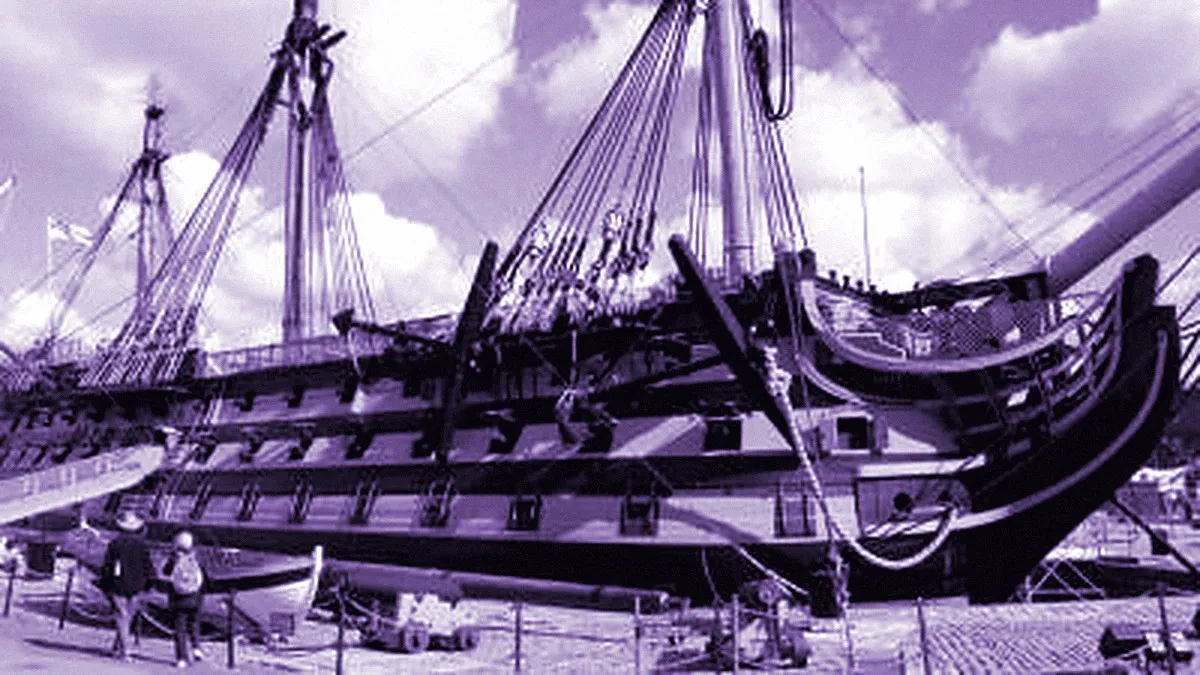
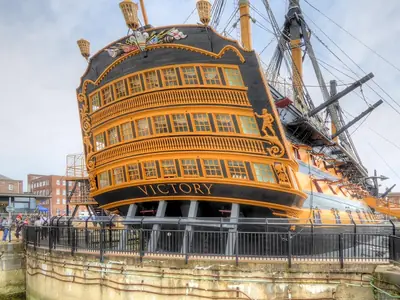
Portsmouth Historic Dockyard is the essential starting point for understanding the city’s naval history. Its most famous vessel is HMS Victory, the preserved wooden warship that served as Admiral Lord Nelson’s flagship at the Battle of Trafalgar.
Launched in 1765 after six years of construction, Victory is a 104-gun first-rate ship of the line with three masts and square sails. Around 6,000 trees were used to build her, with oak making up 90 percent of the timber. She entered service in 1778 during the American Revolutionary War and later took part in operations including the Battle of the Hyères Islands and the Battle of Cape St Vincent.
After her active fighting career, Victory served as a troopship and later as a prison. Her condition eventually deteriorated, but a public campaign saved the vessel from being broken up. She was moved into Portsmouth’s No. 2 Dock in 1922, where she remains preserved.
Mary Rose Ship Hall and Museum
The Mary Rose Museum tells the story of Henry VIII’s warship through the surviving section of the vessel and thousands of objects recovered from the wreck. The ship sank during the Battle of the Solent on 19 July 1545, after attacking French vessels while Henry VIII watched from the area of Southsea Castle.
The Mary Rose had served for 34 years when water entered through open gun ports and the ship sank within minutes. Its recovery came 437 years later, in one of the most complex marine salvage operations in history. Weapons, sailing equipment, stores and personal belongings from the crew help make the museum a detailed portrait of life aboard a Tudor warship.
HMS Warrior
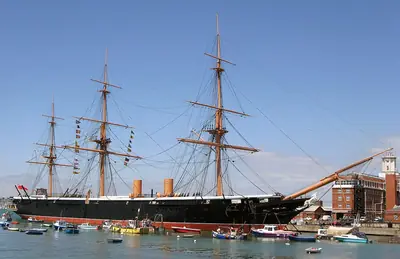
HMS Warrior represents a later transformation in naval technology. Built for the Royal Navy between 1859 and 1861, she was a 40-gun, steam-powered armoured frigate and the first British warship with an iron hull and armour plating.
Her construction responded to France’s launch of the ironclad Gloire in 1859. When Warrior was launched in 1860, she was the biggest, fastest and most powerful warship of her kind. She served with the Channel Squadron and made a publicity tour around Great Britain in 1863, but newer vessels soon made her obsolete. Today, the preserved ship offers a chance to step aboard a major nineteenth-century warship.
Royal Naval Museums
The Royal Naval Museum brings together around 300 years of Royal Navy history within Portsmouth Historic Dockyard. Its original objects place the development of Britain’s navy in the setting where much of that history unfolded.
The wider dockyard also includes the National Museum of the Royal Navy and other historic vessels, making this one of the most concentrated places in Portsmouth for exploring Britain’s maritime past.
Portsmouth Cathedral
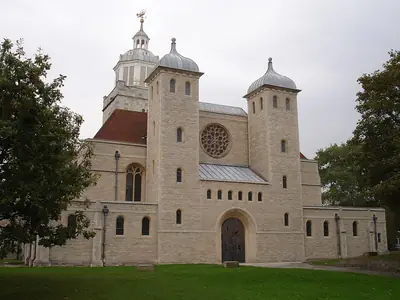
In Old Portsmouth, Portsmouth Cathedral is formally known as the Cathedral Church of St Thomas of Canterbury. Its story reaches back to 1180, when Jean de Gisors donated land for a chapel dedicated to Thomas of Canterbury. The church was dedicated in 1188.
The original tower and nave were ruined during the Civil War. The nave and western tower were rebuilt between 1683 and 1693, followed by a lantern and dome in 1703. Later expansion for the cathedral role introduced a Neo-Byzantine design by architect Charles Nicholson. A western extension was completed in 1991.
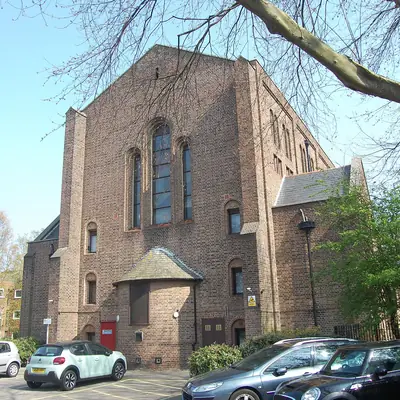
Portsmouth has another important cathedral: the Roman Catholic Cathedral of St John the Evangelist. Built in phases between 1879 and 1906, it combines red brick, Portland stone and Gothic Revival details. Inside, a wooden-vaulted ceiling and stained-glass windows shape the building’s atmosphere.
Southsea Castle
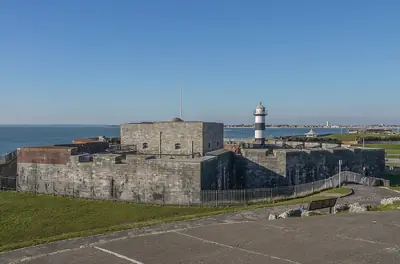
Southsea Castle was built in 1543 as part of Henry VIII’s artillery fortifications, known as the Henrician Castles. Standing at the southern end of Portsea Island, it helped watch the approaches to Portsmouth Harbour and the eastern entrance to the Solent.
The castle was once also called Chaderton Castle, and the surrounding area later took the name Southsea from it. The site is closely connected with the story of the Mary Rose: in 1545, Henry VIII watched the ship sink from near this fortification.
The D-Day Story
The D-Day Story in Southsea explores Operation Overlord and the Normandy landings through objects, films and interactive displays. The museum is arranged around three stages: the preparations, D-Day and the fight for Normandy, and the legacy of the invasion.
Its central displays include the Overlord Embroidery, made up of 34 hand-stitched panels stretching 273 feet. The museum presents the events through the experiences of the people involved, giving the history a personal perspective rather than treating it only as a military timeline.
Charles Dickens Birthplace Museum
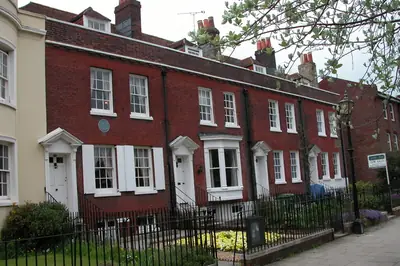
Charles Dickens Birthplace Museum occupies the Georgian townhouse in Landport where Charles Dickens was born on 7 February 1812. Dickens spent only his first three years in Portsmouth, but the house preserves the domestic setting of his earliest life.
The three-storey building has a Regency-style interior, including the parlour, dining room and bedroom where he was born. Period glassware, ceramics and family photographs evoke the household, while personal objects in the Exhibition Room connect the birthplace with Dickens’s later life.
Portsmouth Museum and Art Gallery
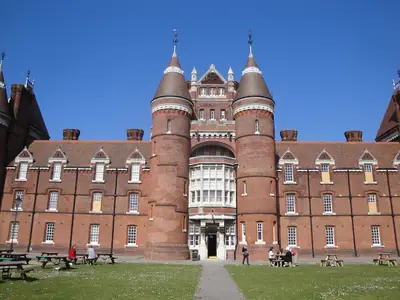
Portsmouth Museum and Art Gallery, also known as the City Museum, occupies a Grade II listed red-brick building on Museum Road. Dating from the 1890s, it was once part of the Clarence and Victoria Barracks compound.
Its collections combine fine and decorative arts with local history and everyday stories. Displays include material connected with Portsmouth from the seventeenth century through the 1950s, making the museum a useful place to explore the city beyond its naval landmarks.
Cumberland House Natural History Museum
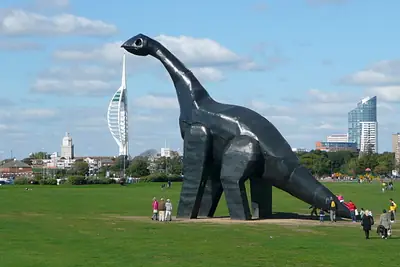
Cumberland House Natural History Museum presents the natural history of Portsmouth and its surroundings in a Georgian house. Its collections include geological artefacts, fossils and a large Iguanodon skeleton.
The museum also has a Butterfly House, where tropical butterflies move among exotic plants from May to September, as well as aquariums containing aquatic species including two axolotls named Ebony and Ivory.
Aspex Gallery
Aspex Gallery is a contemporary visual art gallery in the Gunwharf Quays area. It supports artists at the early stages of their careers and presents bold, experimental exhibitions.
The gallery occupies the Vulcan Building, a former Royal Navy storehouse. Alongside its exhibition spaces, it hosts artist-led workshops and late-night events, and has an on-site café. Its history began in 1981 as the exhibitions arm of Art Space Portsmouth before it moved to the Vulcan Building in 2006.
Eastney Beam Engine House
Eastney Beam Engine House reveals the engineering behind Portsmouth’s Victorian sewage system. Built in 1887, the Grade II listed building contains two 150-horsepower beam engines made by James Watt and Company.
The engines formed part of a system in which large holding tanks stored sewage until it could be discharged into the ebb tide. Although later technology made them unnecessary, the historic machinery was restored in 1980.
Church of St John the Baptist
The Church of St John the Baptist is a local place of worship in Portsmouth and another stop to include when exploring the city’s religious architecture.
Explore Portsmouth with Neywo
Neywo’s Portsmouth audio guide includes five walking tours, one bus route and one bike route, covering 93 narrated places in total. The walks range from 1.73 to 5.22 km and take between 55 and 105 minutes:
- Ships of the Royal Navy: Victory, Warrior and the Mary Rose — 1.99 km, 80 minutes and 10 stops.
- Old Portsmouth: Towers, Cathedral and Nelson’s Farewell — 2.89 km, 89 minutes and 10 stops.
- Southsea: Castle, D-Day and the Seafront — 1.73 km, 55 minutes and 6 stops.
- Victorian Landport: Guildhall, Park and Dickens — 2.61 km, 80 minutes and 9 stops.
- Eastney: Marines, Forts and Beam Engines — 5.22 km, 105 minutes and 6 stops.
The bus route, from Eastney to Old Portsmouth, covers 14 km in 60 minutes and has 9 narrated stops. The bike route around Southsea Common covers 1.5 km in 8 minutes and has 5 stops.
Download Neywo and explore Portsmouth at your own pace: the app tells the story of each place as you reach it, with no group and no schedule. Narration is available in 11 languages. You can also continue exploring England and the wider United Kingdom with Neywo.
Places with an audio guide in Portsmouth
8 places in Portsmouth with a Neywo audio guide. Each one starts telling its story as you reach it.
Self-guided tours in Portsmouth
7 tours in Portsmouth, free in the Neywo app. Each stop tells its story as you reach it.
- Bike ride
Southsea Common by Bike
Ride the seafront cycle path across Southsea Common from the funfair at Clarence Pier past the naval memorial and Crimean obelisk to the D-Day Story.
Portsmouth Garrison church · Clarence Pier · Portsmouth Naval Memorial · Crimean Monument · The D-Day Story
Open this tour: Southsea Common by Bike - Bus ride
Stagecoach 25: Eastney to Old Portsmouth
A local bus from the Eastney seafront through Southsea to the harbour. Ride it for the Victorian beam engines at Eastney, Georgian St George's Church, Gunwharf Quays, the cathedral and the medieval Square Tower.
Church of St Simon · St Swithun · Our Lady of Lourdes · Eastney Beam Engine House · The Astoria · Church of St George …
Open this tour: Stagecoach 25: Eastney to Old Portsmouth - Walk
Ships of the Royal Navy: Victory, Warrior and the Mary Rose
Walk through Victory Gate into the world's oldest naval dockyard. Climb aboard Nelson's Trafalgar flagship, the first iron-hulled warship, a dazzle-painted First World War monitor and Henry VIII's raised Tudor warship, with a naval chapel on the way.
Victory Gate And Dockyard Wall · St Ann's Church, HMNB Portsmouth · Portsmouth Historic Dockyard · National Museum of the Royal Navy · HMS M33 · HMS Victory …
Open this tour: Ships of the Royal Navy: Victory, Warrior and the Mary Rose - Walk
Old Portsmouth: Towers, Cathedral and Nelson's Farewell
Follow the medieval harbour defences of the Point. Climb the Round and Square Towers, visit the cathedral and the Domus Dei garrison church, and stand where Nelson left for Trafalgar before the Spinnaker Tower closes the loop.
Church of St George · Spinnaker Tower · Gunwharf Quays · Aspex Gallery · Round Tower, Broad Street · Square Tower …
Open this tour: Old Portsmouth: Towers, Cathedral and Nelson's Farewell - Walk
Southsea: Castle, D-Day and the Seafront
Walk Southsea Common from the funfair to Henry VIII's castle, past the naval memorial, the Crimean obelisk and the museum that tells the D-Day story.
Clarence Pier · Portsmouth Naval Memorial · Crimean Monument · The D-Day Story · Southsea Castle · Southsea Castle lighthouse
Open this tour: Southsea: Castle, D-Day and the Seafront - Walk
Victorian Landport: Guildhall, Park and Dickens
Leave the harbour for the civic heart of the island city. Visit the Guildhall and the war memorial, Victoria Park, the Catholic cathedral and the house where Charles Dickens was born.
Portsmouth Museum And Art Gallery · New Theatre Royal · Ellie Jays · Portsmouth Guildhall · Portsmouth War Memorial · Victoria Park …
Open this tour: Victorian Landport: Guildhall, Park and Dickens - Walk
Eastney: Marines, Forts and Beam Engines
Head east through Southsea to the Royal Marines' old home and the Yomper statue, after a stop at Frank Matcham's Kings Theatre. Visit a Victorian pumping station with its restored beam engines and finish at Fort Cumberland, the pentagonal bastion guarding Langstone Harbour.
Kings Theatre · Lumps Fort · Royal Marines Museum · The Yomper · Eastney Beam Engine House · Fort Cumberland
Open this tour: Eastney: Marines, Forts and Beam Engines
Walk Portsmouth with Neywo
Neywo turns Portsmouth into a self-guided audio tour. Stories arrive as you reach the place they belong to, and the route reshapes when you wander off it.

