Things to Do in Stamford, United Kingdom: Walking Guide
Things to Do in Stamford: A Self-Guided Walk Through Its Historic Churches
The best things to do in Stamford include exploring its historic churches, listed buildings, theatres and streets around the town centre. Known for its remarkable collection of historic architecture, Stamford offers plenty to see on foot, from medieval churches to Victorian Gothic design and elegant municipal buildings. Neywo has a free audio guide for Stamford with 14 narrated places, available in 11 languages.
Stamford is in England, in the United Kingdom, and its compact centre makes it well suited to a self-guided walking tour. The town’s landmarks reveal different layers of its history, with churches, civic buildings and former religious sites appearing throughout the streets.
What to see in Stamford
St Martin’s Church
St Martin’s Church is a Grade I listed parish church south of the River Welland, in the area once known as Stamford Baron or St Martin’s. The church dates from the 12th century, although much of the present building was rebuilt in the 15th century.
Its interior also has a connection with Daniel Lambert, known as the fattest man in Britain during the late 18th and early 19th centuries, who is buried here. The church’s organ was built by Bevington in 1800.
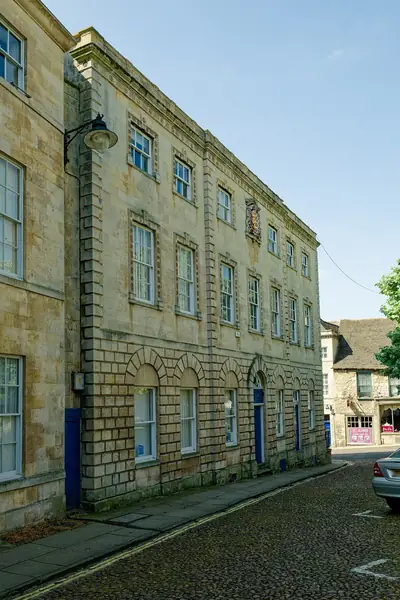
Stamford Town Hall
On St Mary’s Hill, Stamford Town Hall is a handsome municipal building and the long-standing home of Stamford Town Council. It is a Grade II* listed structure, a designation reflecting its particular architectural and historical importance.
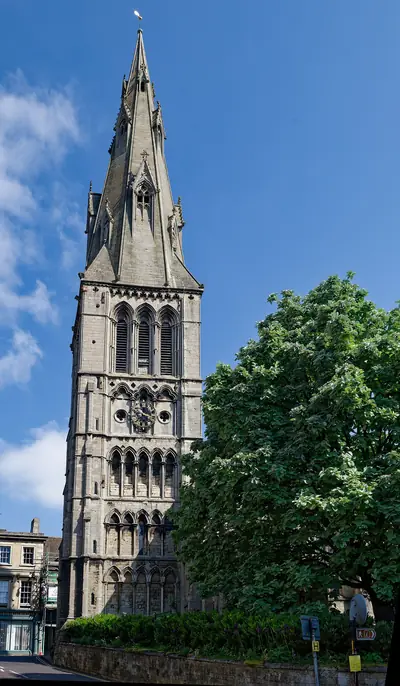
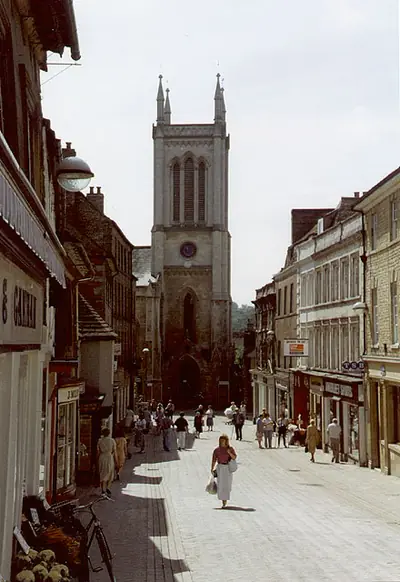
St Mary’s Church
St Mary’s Church is a Church of England parish church in the centre of Stamford. Its position is closely tied to the street on which it stands: St Mary’s Hill takes its name from the church.
The hill was once part of the old Great North Road and leads down towards the river crossing opposite The George Hotel, linking the church with one of the historic routes through the town.
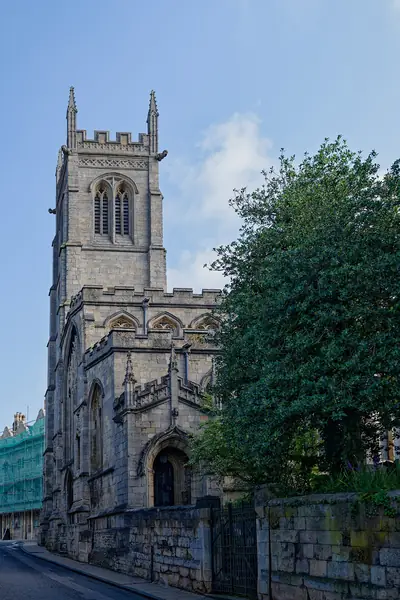
St John the Baptist’s Church
St John the Baptist’s Church is a Grade I listed former Anglican church. It is no longer used for regular worship and is now cared for by the Churches Conservation Trust.
Its status and preservation make it an important stop for anyone interested in Stamford’s historic churches and the buildings that have shaped the town centre.
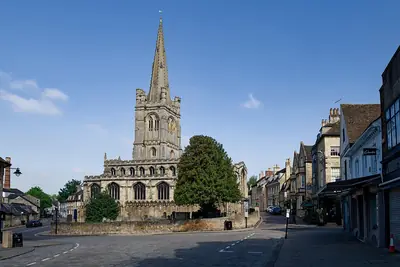
All Saints’ Church
All Saints’ Church stands on the north side of Red Lion Square. This Church of England parish church is a Grade I listed building, recognising its exceptional historical and architectural importance.
Its position makes it easy to include while walking through the central streets and squares.
Corn Exchange
The Corn Exchange on Broad Street is now a theatre. The building began as a place connected with commerce and community life before being transformed into its present cultural role.
A major refurbishment between 2001 and 2008 created the venue that stands today, giving the historic commercial building a new purpose as a place for entertainment.
Church of St Mary and St Augustine
Known generally as St Augustine’s, the Church of St Mary and St Augustine is a Roman Catholic parish church belonging to the Roman Catholic Diocese of Nottingham.
Designed by George Goldie, it was built between 1862 and 1864 in a robust High Victorian Early English style. Its architecture reflects the Victorian revival of Early English Gothic ideas and adds a different period and tradition to Stamford’s collection of churches.
Church of St Michael the Greater
The Church of St Michael the Greater stands on the south side of Stamford High Street. It is a Grade II listed late-Georgian Gothic church built on the site of an older medieval predecessor.
The building is no longer used as a church and has been converted for commercial use. Its churchyard wall is separately Grade II listed, so both the building and its surrounding historic fabric are part of the story.
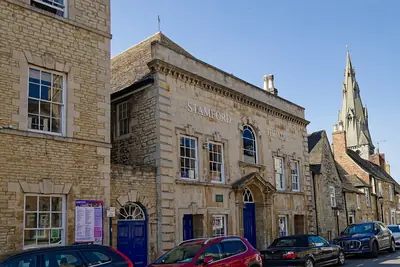
Stamford Arts Centre
In the heart of Stamford, the Stamford Arts Centre is a theatre and a place to experience the town’s creative life. It offers a contrast to the churches and civic buildings along the walking route, showing how historic Stamford also supports contemporary cultural activity.
St George’s Church
St George’s Church is an Anglican church and a Grade I listed building. Its architectural and historical importance makes it one of the central landmarks to look out for while exploring Stamford.
The church rewards a closer look, particularly for visitors interested in the detail of the town’s historic buildings.
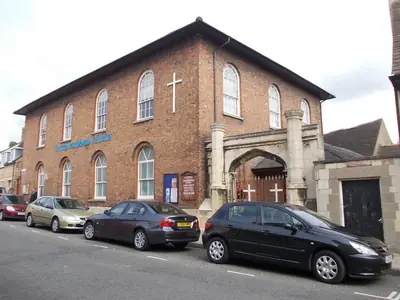
United Reformed Church
The United Reformed Church on Star Lane has roots in Stamford’s Congregational tradition. Its late-Georgian architecture gives it a distinctive appearance among the town’s historic buildings.
It is another example of how different religious traditions have left their mark on Stamford’s streets.
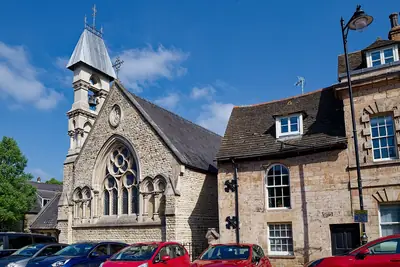
St Paul’s Church
St Paul’s Church is a Grade II listed building with an unusually varied history. It was once one of fourteen medieval parish churches serving Stamford. During the Reformation, it was deconsecrated and largely demolished.
The surviving medieval elements include the eastern part of the south aisle and fragments of the nave. The building later became the schoolroom of Stamford School, and was restored and extended between 1929 and 1930 to serve as the school chapel. It was dedicated as a memorial to former pupils and staff of Stamford School who died in the First World War.
Christ Church
Christ Church is a historic church in the heart of Stamford. Its stonework is a notable feature and provides another opportunity to appreciate the craftsmanship found throughout the town.
Barn Hill House
Barn Hill House is a notable historic house in Stamford, in South Kesteven. It forms part of the town’s architectural character alongside its churches, theatres and civic buildings.
Stamford self-guided walking tour
Neywo’s Stamford: A Town of Many Steeples is a 1.87-kilometre walking tour lasting 87 minutes, with 12 narrated stops. It includes St Martin’s Church, Stamford Town Hall, St Mary’s Church, St John the Baptist’s Church, All Saints’ Church, the Corn Exchange, the Church of St Mary and St Augustine, the Church of St Michael the Greater, Stamford Arts Centre, St George’s Church, the United Reformed Church and St Paul’s Church.
This route brings together many of the places that make Stamford distinctive: medieval and Victorian churches, a listed town hall, a former commercial building now used as a theatre, and buildings connected with the town’s religious and civic history.
Explore Stamford with Neywo
Download Neywo to explore Stamford with one walking tour covering 1.87 km in around 87 minutes, with 12 narrated stops. The app tells the story of each place as you reach it, at your own pace, with no group and no schedule.
Neywo’s Stamford audio guide includes 14 narrated places, and narration is available in 11 languages. It is a simple way to turn a walk through Stamford into a self-guided visit, while keeping the freedom to stop, look around and continue when you are ready.
Places with an audio guide in Stamford
8 places in Stamford with a Neywo audio guide. Each one starts telling its story as you reach it.
Self-guided tours in Stamford
1 tour in Stamford, free in the Neywo app. Each stop tells its story as you reach it.
- Walk
Stamford: A Town of Many Steeples
Once home to fourteen medieval parish churches, Stamford still rewards anyone who looks up. Wander from the riverside church where Daniel Lambert lies, through the streets of the country's first conservation area, past a Georgian corn exchange and a school chapel built from medieval ruins.
St Martin's Church, Stamford · Stamford Town Hall · St Mary's Church, Stamford · St John the Baptist's Church, Stamford · All Saints' Church, Stamford · Corn Exchange, Stamford …
Open this tour: Stamford: A Town of Many Steeples
Walk Stamford with Neywo
Neywo turns Stamford into a self-guided audio tour. Stories arrive as you reach the place they belong to, and the route reshapes when you wander off it.

