Visiting Spalding, United Kingdom: Top Sights on Foot
Things to do in Spalding: Fenland history, churches and riverside heritage
Spalding is a market town in England shaped by the River Welland, fertile fenland and a long connection with agriculture, food processing, floristry and tulip growing. The best things to do in Spalding include visiting historic churches and museums, discovering the town’s blacksmithing and Romany heritage, and exploring the relationship between the town and its managed waterways. Neywo offers a free audio guide for Spalding with 9 narrated places, available in 11 languages.
What to see in Spalding
The main sights are concentrated around the town and bring together listed buildings, religious history, traditional crafts and local culture.
St John the Baptist
St John the Baptist is an Anglican church and one of Spalding’s places of worship. It is also one of the stops on the town’s self-guided walking route, making it a useful starting point for discovering Spalding’s religious heritage.
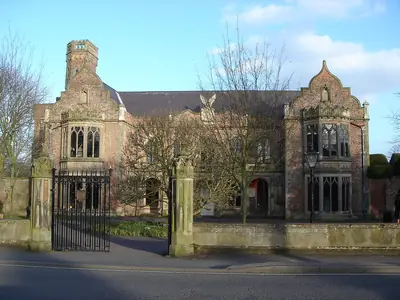
Ayscoughfee Hall Museum
Ayscoughfee Hall Museum is a Grade I listed historic house in central Spalding. Set within a modest area of parkland, it combines the character of an old house with an introduction to the local history of Spalding.
The hall’s Grade I listing reflects its particular historic importance. Its setting also makes it one of the town’s distinctive landmarks: a historic building and associated parkland within the centre of the fenland town.
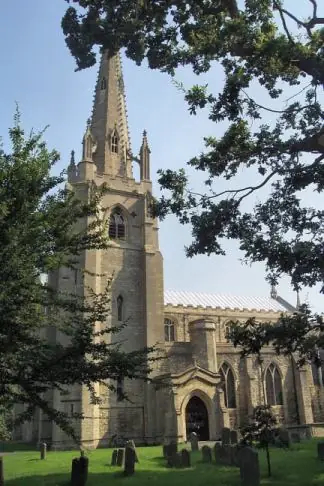
St Mary and St Nicolas
St Mary and St Nicolas is Spalding’s parish church and an active Church of England church. The present building was constructed around 1284 on the site of an earlier church, giving it a layered history that connects the current parish with an older place of worship.
The church is recognised as a Grade I listed building and is one of the most important historic places to see in Spalding.
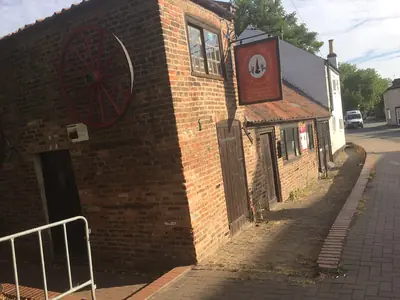
Chain Bridge Forge Museum
On Spalding’s High Street, on the south bank of the River Welland, Chain Bridge Forge Museum occupies an early nineteenth-century blacksmith’s workshop. The building is believed to have been purpose-built as a forge in the first half of the nineteenth century, when it was owned and run by Francis South.
Today, it is a living museum of both local history and blacksmithing. Displays, guides and videos explain the forge’s story, while demonstrations show the craft in action. Visitors can also try blacksmithing and see or buy iron-forged products.
The name comes from the footbridge beside the building, which was originally made of chains. Watercolours by Hilkiah Burgess suggest that the bridge was a drawbridge, allowing boats and barges to travel farther upriver from the Wash. Spalding had a working port at the time, and accounts from 1850 to 1860 show that the blacksmith at Chain Bridge Forge serviced the boats using it.
The forge later became closely connected with the surrounding community. From 1899, it belonged to George Dodd and remained in his family for three generations, mainly serving local needs such as shoeing horses.
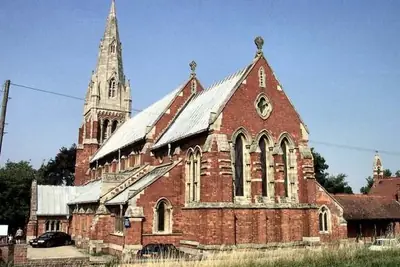
Church of St Paul Including Attached Former Sunday Schoolroom
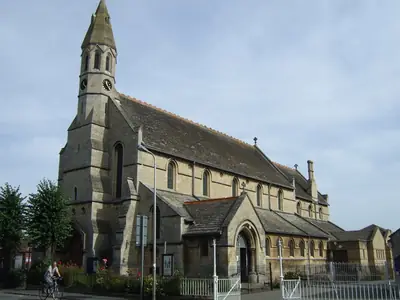
In Fulney, the Church of St Paul is a Grade I listed Anglican church designed by George Gilbert Scott in 1877 and 1878. Scott also designed the attached former Sunday schoolroom, creating a closely connected pair of buildings.
The nearby vicarage formed part of Scott’s wider design, although it was not built until 1880, after his death. It is listed separately at Grade II star. Together, these buildings offer a specific example of nineteenth-century church architecture in Spalding.
Gordon Boswell Romany Museum
At Clay Lake, the Gordon Boswell Romany Museum presents artefacts, photographs and traditional horse-drawn wagons known as vardos. The collection was assembled over many years by Gordon Boswell and offers a glimpse into Romany life.
The vehicles are central to the museum. Alongside the Romany wagons, the collection includes several non-Romany vehicles, including a horse-drawn hearse. These displays give the museum an unusual place among Spalding’s visitor attractions.
Spalding Gentlemans Society
The Spalding Gentlemans Society is another museum to include when exploring the town. It forms part of Spalding’s visitor experience and adds to the range of local cultural and historical places found around the town.
Spalding Quaker Meeting House
The Spalding Quaker Meeting House is a historic building and a quieter point of interest in Spalding. It adds another dimension to the town’s religious heritage alongside its Anglican churches.
Spalding, the River Welland and the Fens
Spalding’s identity is closely tied to the River Welland and the surrounding landscape of Lincolnshire. The town stands within the fenland environment, where agriculture, food processing, floristry and tulip growing have played an important role.
The Flower Parade is one of Spalding’s best-known traditions. It celebrates the area’s large-scale tulip production and the cultural links between the Fens and the landscape and people of South Holland. The parade ran annually from 1959 until 2013 and returned each year from 2022. At its height, it attracted crowds of more than one hundred thousand people.
For broader context, Spalding is part of England within the United Kingdom. Travellers exploring the region can also discover historic places such as Stamford.
Explore Spalding with a free audio guide
Neywo’s free Spalding audio guide turns a visit into a self-guided walking tour. The app offers 1 walking tour with 5 narrated stops: “Spalding: Fenland Churches, a Forge and a Grade I Hall.” The walk covers 4.01 km and takes 82 minutes.
Its route includes St John the Baptist, Ayscoughfee Hall Museum, St Mary and St Nicolas, Chain Bridge Forge Museum, and the Church of St Paul Including Attached Former Sunday Schoolroom. Each story plays as you reach the place, at your own pace, with no group and no schedule. Download Neywo and explore Spalding while the app tells the story of each stop as you arrive.
Places with an audio guide in Spalding
6 places in Spalding with a Neywo audio guide. Each one starts telling its story as you reach it.
Self-guided tours in Spalding
1 tour in Spalding, free in the Neywo app. Each stop tells its story as you reach it.
- Walk
Spalding: Fenland Churches, a Forge and a Grade I Hall
Spalding is the market town at the heart of the Lincolnshire fens, home of the tulip Flower Parade. Walk along the River Welland from a quiet parish church to Ayscoughfee Hall and its gardens, the 1284 parish church, the chain-bridge blacksmith's forge, and finish at George Gilbert Scott's Victorian church of St Paul.
St. John the Baptist · Ayscoughfee Hall Museum · St Mary and St Nicolas · Chain Bridge Forge Museum · Church of St Paul Including Attached Former Sunday Schoolroom
Open this tour: Spalding: Fenland Churches, a Forge and a Grade I Hall
Walk Spalding with Neywo
Neywo turns Spalding into a self-guided audio tour. Stories arrive as you reach the place they belong to, and the route reshapes when you wander off it.

