What to See in St Albans, United Kingdom: Free Audio Guide
Things to Do in St Albans: Roman History, Medieval Landmarks and Museums
The best things to do in St Albans include exploring Roman Verulamium, visiting one of England’s largest cathedrals, and discovering medieval landmarks in the historic centre. The city brings together archaeological sites, churches, museums, a long-established street market and cultural venues, making it a rewarding destination for a day of sightseeing. Neywo has a free audio guide for St Albans with 25 narrated places.
St Albans is in England, within the United Kingdom. Its history reaches from the Iron Age and Roman Britain to the medieval town and the modern city.
What to see in St Albans
Verulamium and the Roman city
Verulamium was one of the most important Roman cities in ancient Britain. Before Roman rule, the site was home to Verlamion, the capital of the Catuvellauni, a powerful Celtic tribe. The Roman city later stood on Watling Street, the major road linking London with the northwest, and became an important centre for trade and travel.
Its history was turbulent. Boudicca sacked the city in 61 AD, and a major fire destroyed it around 155. Verulamium was rebuilt again near 250, but gradually declined as the Roman Empire weakened. Much of the ancient city remains unexcavated beneath parkland and agricultural fields, while other remains can be explored around the site.
Verulamium Museum
Verulamium Museum is a natural starting point for understanding the Roman settlement. Its galleries tell the story of the city and the people who lived, worked and traded here nearly two thousand years ago.
The museum places St Albans’ Roman heritage in context, helping visitors make sense of the archaeological remains spread across the surrounding landscape.
The Hypocaust
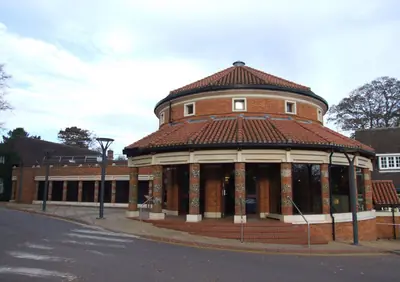
In Verulamium Park, the Hypocaust Museum protects an ancient Roman underfloor heating system in its original location. The hypocaust heated a mosaic floor by circulating hot air beneath it through raised supports and channels.
The system warmed residential accommodation built around 200 CE. It was uncovered during excavations in the 1930s led by Sir Mortimer Wheeler and Tessa Wheeler. The present museum building, replaced in 2004, was designed to conserve the remains where they were found.
St Albans Cathedral
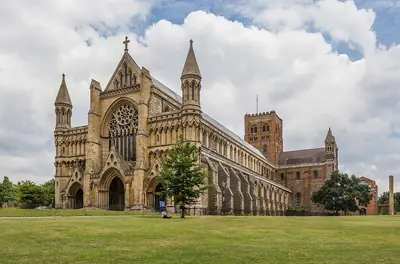
St Albans Cathedral, officially the Cathedral and Abbey Church of St Alban, stands on Holywell Hill, a site that has been sacred for more than a thousand years. Archaeological evidence points to monastery remains dating from around 793, and the earlier foundation was probably established by Offa, King of Mercia, in the eighth century.
The present church was begun in 1077 and is largely Norman or Romanesque, with later Gothic and nineteenth-century additions. Its nave stretches 84 metres, making it the longest cathedral nave in England.
Inside, the chapel and shrine of St Alban recall the martyr who gave his name to both the cathedral and the city. The monastery was dissolved in the sixteenth century, but the church survived and became a cathedral in 1877, when it became the seat of the Diocese of St Albans in the Province of Canterbury.
Clock Tower
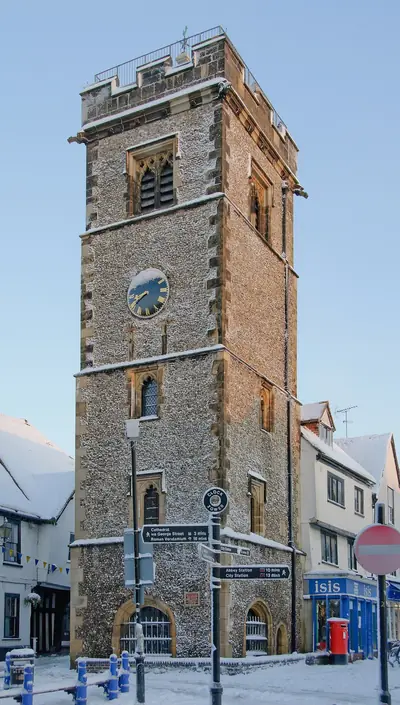
The Clock Tower is one of St Albans’ most distinctive medieval landmarks. Built between 1403 and 1412, it is believed to be the only surviving medieval town belfry in England.
The tower represented the townspeople’s independence from the local abbey, which had long controlled time-keeping in the area. During the Napoleonic Wars, it formed part of an early warning system using mirrors. After falling into poor condition, it was restored by Sir Gilbert Scott. Its roof was rebuilt in 2004, and the tower later opened to visitors as a viewing point.
St Albans Market
St Albans Market runs along the historic route from Market Place up St Peter’s Street to the junction with Catherine Street. Stretching for about 485 metres, it is the oldest market in England still held on its original site and the country’s oldest English street market.
The market became England’s second-oldest market after Canterbury Market closed in 2022. In 2024, it was named Best Large Outdoor Market by the National Association of British Market Authorities. Walking along St Peter’s Street connects today’s shoppers with centuries of local trading.
St Peter’s Church
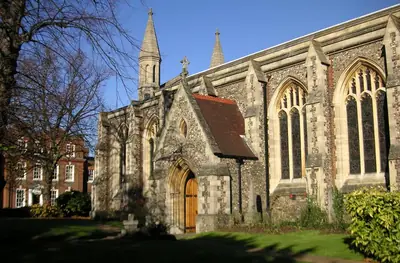
At the northern end of the town centre, St Peter’s Church is one of St Albans’ historic Church of England parish churches. It has been a fixture of the town for centuries and adds another layer to the city’s religious heritage.
Other historic churches include the Church of St Saviour and Christ Church, both of which offer quieter places to pause while exploring St Albans.
St Alban’s Museum + Gallery
St Alban’s Museum and Gallery, in the heart of the city, explores the story of St Albans from its Roman beginnings to the present day. Its galleries offer a broader local perspective after a visit to Verulamium and the Hypocaust Museum.
St Albans South Signal Box
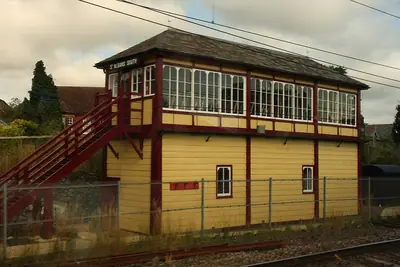
St Albans South Signal Box offers a glimpse into Britain’s railway heritage. Signal boxes were the nerve centres of the railway network: signallers operated points and signals from inside to guide trains safely along the tracks.
The building provides an impression of the concentration and manual work involved in managing railway lines with a lever frame.
St Albans Organ Theatre
The St Albans Organ Theatre is dedicated to theatre organs and brings together music, history and craftsmanship. Its instruments demonstrate the engineering and musical design behind these distinctive machines.
Alban Arena
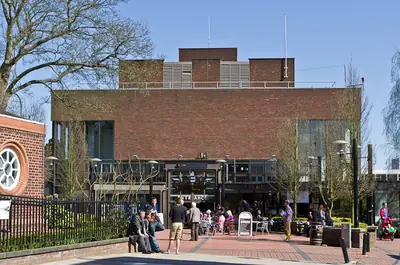
The Alban Arena is St Albans’ main theatre and music venue. Formerly known as St Albans City Hall or the Civic Hall, it serves as a cultural gathering place for concerts, theatre productions and community events.
Beech Bottom Dyke
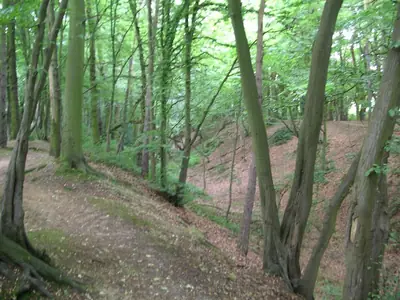
At the northern edge of St Albans, Beech Bottom Dyke is an Iron Age earthwork formed by a massive ditch and banks. It runs for almost a mile, reaching up to 30 metres wide and 10 metres deep.
The scale of the earthwork shows how extensively people shaped this landscape more than two thousand years ago, long before the Roman city developed nearby.
Graphics Plus
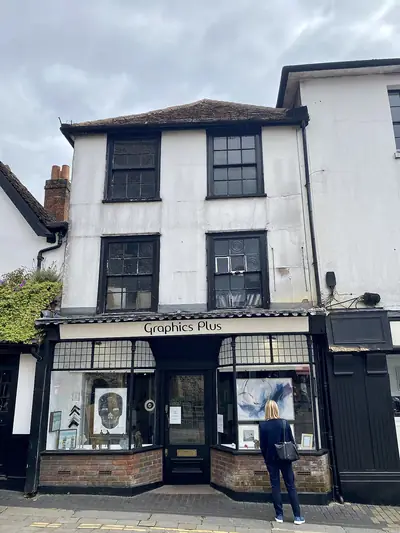
Graphics Plus is a modest stop in the historic city. It is one of the smaller places included in the city’s collection of museums and cultural points of interest.
Explore St Albans with a self-guided audio tour
A St Albans self-guided walking tour with Neywo lets you discover the city without joining a group or following a fixed timetable. The app offers one walking tour and one bike route:
- From Roman Verulamium to the Abbey: St Albans in Layers: a 4.2-kilometre walk lasting 120 minutes, with 9 narrated stops.
- Verulamium Park: Abbey to the Roman City by Bike: a 1.7-kilometre bike route lasting 8 minutes, with 4 narrated stops.
Download Neywo and explore St Albans at your own pace. The app tells the story of each place as you reach it, with no group and no schedule. Narration is available in 11 languages, and the free St Albans audio guide includes 25 narrated places.
Places with an audio guide in St Albans
8 places in St Albans with a Neywo audio guide. Each one starts telling its story as you reach it.
Self-guided tours in St Albans
2 tours in St Albans, free in the Neywo app. Each stop tells its story as you reach it.
- Bike ride
Verulamium Park: Abbey to the Roman City by Bike
Cycle the permitted paths of Verulamium Park from the Abbey down the Ver valley to the Roman museum, the preserved hypocaust mosaic and the line of the Roman city walls and theatre. Cyclists share the paths with walkers and must dismount outside the marked cycling routes.
St Albans Cathedral · Verulamium Museum · The Hypocaust · Verulamium
Open this tour: Verulamium Park: Abbey to the Roman City by Bike - Walk
From Roman Verulamium to the Abbey: St Albans in Layers
Follow the story of St Albans from the market streets to the Roman city that came before it. Pass England's oldest market and its only surviving medieval town belfry, climb to the Abbey with the longest nave in the country, then cross the park to the Roman mosaic floor, the Anglo-Saxon church and the walls of Verulamium.
Church of SS Alban and Stephen · Alban Arena · St Albans Market · Clock Tower · St Albans Cathedral · Verulamium Museum …
Open this tour: From Roman Verulamium to the Abbey: St Albans in Layers
Walk St Albans with Neywo
Neywo turns St Albans into a self-guided audio tour. Stories arrive as you reach the place they belong to, and the route reshapes when you wander off it.

