Visiting New Orleans, United States: Top Sights on Foot
Things to Do in New Orleans: Historic Streets, Jazz and Creole Culture
Looking for things to do in New Orleans? Start with the French Quarter, where colonial architecture, historic squares and museums meet the city’s distinctive music and cultural traditions. From Jackson Square and St. Louis Cathedral to Tremé, City Park and the cemeteries, New Orleans offers layers of history to discover on foot.
Neywo has a free audio guide for New Orleans with 90 narrated places, available in 11 languages.
What to See in New Orleans
The French Quarter and Jackson Square
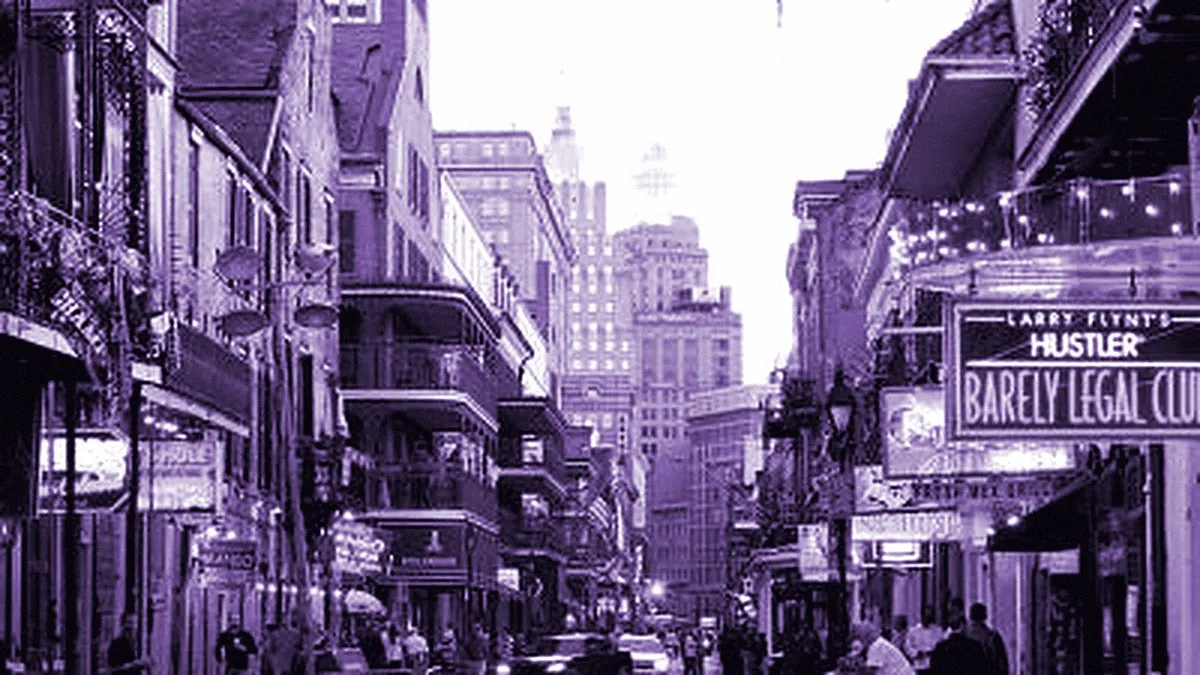
The French Quarter, also known as the Vieux Carré, is New Orleans’ oldest neighborhood. Founded in 1718 by Jean-Baptiste Le Moyne de Bienville, it is both a residential district and one of the city’s main visitor destinations. Much of its architecture dates from the late 1700s, during Spanish rule, or from the early 1800s after the Louisiana Purchase.
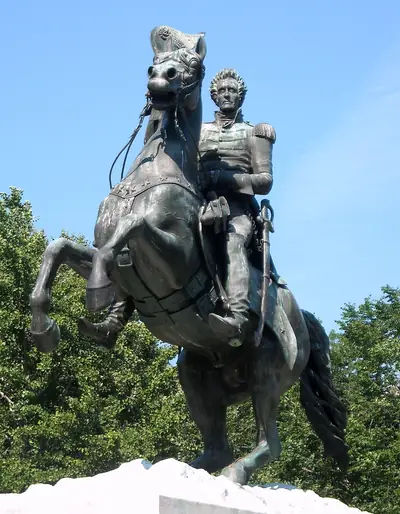
At its historic center, Jackson Square was once called Place d’Armes in French and Plaza de Armas in Spanish. The square marks the place where Louisiana became United States territory in 1803. Its central monument is a bronze equestrian statue of Andrew Jackson by Clark Mills, set on a white marble base.
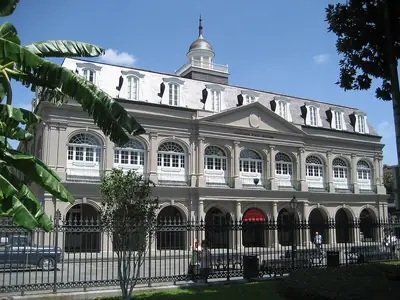
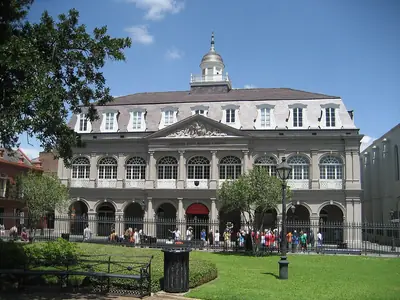
The square is framed by several important buildings. The Cabildo served as the Spanish colonial city hall and now forms part of the Louisiana State Museum. Across from it, The Presbytere was built in 1813 to mirror the Cabildo. Its formal Spanish colonial architecture includes neo-Renaissance details, and it is also part of the Louisiana State Museum.
St. Louis Cathedral
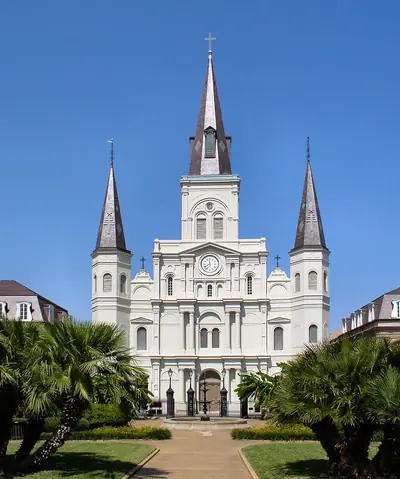
Facing the Mississippi River from Place John Paul II, St. Louis Cathedral stands between The Cabildo and The Presbytere. The first church on this site was built in 1718. After its successor was destroyed in the fire of 1788, a third church was constructed in 1789 under Spanish rule and later expanded and largely rebuilt in the 1850s.
It is the oldest cathedral in continuous use in the United States. Nearby, the Louisiana State Museum preserves thousands of artifacts and works of art documenting Louisiana’s history and cultural diversity.
The 1850 House
Close to Jackson Square, the 1850 House occupies a preserved antebellum row house. Operated by the Louisiana State Museum, it is furnished as it would have been in the mid-nineteenth century, offering a focused look at domestic life in the French Quarter during that period.
Cemeteries and above-ground vaults
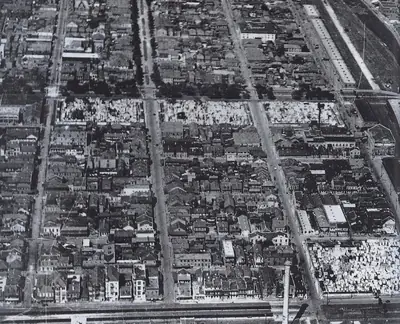
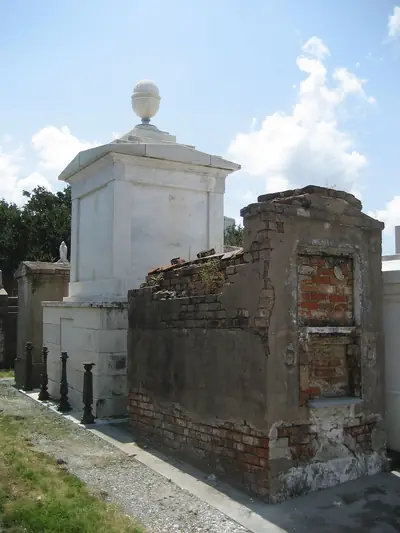
Saint Louis Cemetery is the oldest burial ground in New Orleans. It opened in 1789, during the period of French Louisiana, and the name actually refers to three Catholic cemeteries north of the French Quarter. Most of the graves are housed in distinctive above-ground vaults built mainly during the eighteenth and nineteenth centuries, creating the site’s labyrinth-like appearance.
Saint Louis Cemetery No. 2 is another historic cemetery in New Orleans. Together, these burial grounds illustrate the city’s distinctive burial traditions.
Tremé and African American heritage
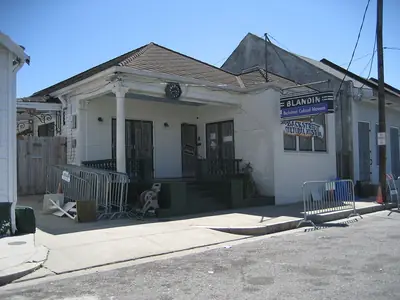
Tremé is central to understanding New Orleans’ African American traditions. The Backstreet Cultural Museum focuses on second lines, jazz funerals and the Mardi Gras Indians. Founded by local resident Sylvester “Hawk” Hawkins, the museum includes intricate hand-sewn suits worn by Mardi Gras Indians during their annual processions.
The New Orleans Jazz National Historical Park, also in Tremé near the French Quarter, explores the origins and development of jazz. National Park Service staff interpret the people and places that shaped the music, and live jazz performances often take place at the park’s concert venue.
Congo Square is another essential stop. It recalls cultural traditions that helped shape New Orleans music, religion and dance. The city’s African American heritage also includes the history of voodoo, including the legacy of Marie Laveau.
The New Orleans Mint
The New Orleans Mint stands near the New Orleans Jazz National Historical Park. Known locally as the Monnaie de La Nouvelle-Orléans, it operated as a branch of the United States Mint from 1838 to 1861 and again from 1879 to 1909. During those years, it produced more than 427 million gold and silver coins.
Canal Street and the United States Custom House
The United States Custom House is a National Historic Landmark at 423 Canal Street. Construction began in 1848, but redesigns and the American Civil War delayed completion until 1881. Its Egyptian Revival columns give the building a particularly distinctive façade.
Downtown also contains several historic theaters and churches, including the Joy Theater, Saenger Theatre, State Palace Theatre, Orpheum Theater, Immaculate Conception Church and St. Patrick’s Church. Piazza d’Italia adds another architectural landmark to the area.
The Karnofsky Tailor Shop–House
The Karnofsky Tailor Shop–House was a modest two-story building in the Central Business District, in the neighborhood once known as “Back of Town.” The shop played an important role in the early promotion of jazz. Hurricane Ida destroyed the building in 2021, removing a tangible link to that formative period of New Orleans music history.
City Park and the New Orleans Museum of Art
City Park provides a different setting from the historic streets downtown. The New Orleans Museum of Art, the city’s oldest fine arts museum, opened in 1911 as the Delgado Museum of Art. Its galleries cover more than 20,000 square meters, in addition to the surrounding gardens.
The park also includes the New Orleans City Park Carousel and Pavilion and the New Orleans Botanical Garden. Together, these places make City Park an important destination for art, gardens and outdoor exploration.
The Caesars Superdome
The Caesars Superdome rises above the city’s business district. Known locally as the Superdome, it is home to the New Orleans Saints and hosts major events including the Sugar Bowl and Super Bowls.
The stadium opened in 1975 as the Louisiana Superdome. Its steel frame covers a 13-acre area, while its 273-foot-high fixed dome has a diameter of 680 feet. In 2005, it sheltered thousands of people during Hurricane Katrina, sustained extensive damage and reopened for the Saints’ 2006 home opener.
Civil War and Southern art museums
Confederate Memorial Hall presents artifacts and stories of the American Civil War from a Confederate perspective. The building was completed in 1888 in the Richardsonian Romanesque style, and the museum holds the second-largest collection of Confederate Civil War items in the world.
Nearby, the Ogden Museum of Southern Art focuses on artists from the southern United States. It was established in 1999 and includes permanent collections and changing exhibitions.
Explore New Orleans with a Self-Guided Audio Tour
Neywo offers four walking tours, one bus route and one bike route in New Orleans. The app tells the story of each place as you reach it, at your own pace, with no group and no schedule.
The walks include:
- Jackson Square: Heart of the Vieux Carré — 1.62 km, 90 minutes and 11 narrated stops.
- Voodoo, Convents and Congo Square — 3.71 km, 114 minutes and 11 stops.
- Downtown New Orleans: Canal Street to the WWII Museum — 4.02 km, 110 minutes and 10 stops.
- City Park and Bayou St. John — 3.3 km, 72 minutes and 5 stops.
The bus route, Route 91: Congo Square to the Cemeteries, covers 13.5 km in 58 minutes and includes 8 stops. The bike route, City Park by Bike: Carousel, Garden and Museum, covers 0.6 km in 3 minutes and includes 3 stops.
Download Neywo and explore New Orleans through its streets, museums, cemeteries and music history—choosing your route and moving through the city at your own pace. You can also continue discovering Louisiana and the wider United States with Neywo.
Places with an audio guide in New Orleans
8 places in New Orleans with a Neywo audio guide. Each one starts telling its story as you reach it.
Self-guided tours in New Orleans
6 tours in New Orleans, free in the Neywo app. Each stop tells its story as you reach it.
- Bike ride
City Park by Bike: Carousel, Garden and Museum
Rent a bike at Big Lake and ride the paths of City Park, one of the largest urban parks in the country, from the antique carousel to the botanical garden and the New Orleans Museum of Art.
New Orleans City Park Carousel and Pavilion · New Orleans Botanical Garden · New Orleans Museum of Art
Open this tour: City Park by Bike: Carousel, Garden and Museum - Bus ride
Route 91: Congo Square to the Cemeteries
NORTA's Jackson-Esplanade line carries you from Congo Square past Canal Street's theatres to the Southern Food and Beverage Museum and the city of the dead at Saint Louis Cemetery. A cheap local ride past the music, theatre and burial traditions of New Orleans.
Congo Square · Our Lady of Guadalupe Chapel · Saenger Theatre · Saint Louis Cemetery No. 2 · Civic Theatre · Southern Food and Beverage Museum …
Open this tour: Route 91: Congo Square to the Cemeteries - Walk
Jackson Square: Heart of the Vieux Carré
Start where the French Opera House once stood and stroll past the hurricane cocktail's birthplace, a lost opera theatre and America's first licensed pharmacist's shop to Jackson Square. See the oldest cathedral in continuous use, the twin Spanish colonial buildings that frame it, a rearing bronze Andrew Jackson and the red-brick Pontalba apartments.
French Opera House · Pat O'Brien's Bar · Théâtre d'Orléans · New Orleans Pharmacy Museum · Le Petit Theatre du Vieux Carre · The Cabildo …
Open this tour: Jackson Square: Heart of the Vieux Carré - Walk
Voodoo, Convents and Congo Square
Follow the spiritual and musical roots of New Orleans from the Old Mint's jazz museum and the oldest Ursuline convent to a tiny voodoo museum, a Federal mansion, the city's oldest church building, the city of the dead at Saint Louis Cemetery and Congo Square, where jazz began. Then cross Louis Armstrong Park into Tremé, with its African American museum, the oldest Black Catholic parish in the country and the Mardi Gras Indians' home museum.
New Orleans Jazz Museum · Old Ursuline Convent · New Orleans Historic Voodoo Museum · Hermann–Grima House · Our Lady of Guadalupe Chapel · Saint Louis Cemetery …
Open this tour: Voodoo, Convents and Congo Square - Walk
Downtown New Orleans: Canal Street to the WWII Museum
Start at the Custom House on Canal Street with its Egyptian columns, then cross the business district past a Jesuit church and the neon marquees of Canal Street's grand theatres to a postmodern Italian plaza, a Gothic Revival parish church, the Civil War hall and the National WWII Museum, where the landing craft that won D-Day were designed.
United States Custom House · Immaculate Conception Church · Joy Theater · Saenger Theatre · State Palace Theatre · Orpheum Theater …
Open this tour: Downtown New Orleans: Canal Street to the WWII Museum - Walk
City Park and Bayou St. John
Leave the French Quarter for the green heart of the city. Ride the antique carousel, wander the botanical garden and the art museum in City Park, then follow Bayou St. John to a Creole plantation house and the monument to a French duelling hero.
New Orleans City Park Carousel and Pavilion · New Orleans Botanical Garden · New Orleans Museum of Art · Pitot House · Dreux Monument
Open this tour: City Park and Bayou St. John
Walk New Orleans with Neywo
Neywo turns New Orleans into a self-guided audio tour. Stories arrive as you reach the place they belong to, and the route reshapes when you wander off it.

