What to See in Fredericksburg, United States: Free Audio Guide
Things to do in Fredericksburg, Virginia
The best things to do in Fredericksburg include visiting historic houses, churches and Civil War sites in the city’s historic center. Kenmore, The Chimneys, the James Monroe Law Office and several historic congregations reveal different parts of Fredericksburg’s past, while the Battle of Fredericksburg explains the conflict that shaped the city. Neywo also offers a free audio guide for Fredericksburg, with 10 narrated places.
Fredericksburg is in Virginia, not Texas. It is a historic city whose landmarks connect the colonial era, the American Revolution, the Civil War and the religious history of its downtown.
What to see in Fredericksburg
Kenmore
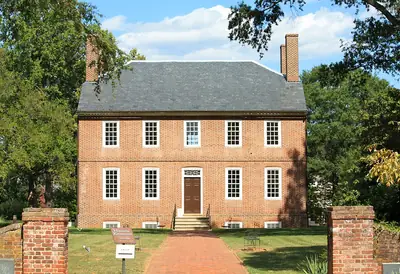
Kenmore is a historic plantation house built between 1769 and 1775 in the Georgian style. It was the home of Fielding Lewis and Elizabeth, or Betty, Washington Lewis, the sister of George Washington.
The house is the only surviving structure from the 1,300-acre Kenmore plantation. The former farm produced tobacco, wheat and corn and included wooden outbuildings and a small shipyard. Fielding Lewis also operated an arms factory during the American Revolutionary War, an undertaking that consumed much of his fortune.
Kenmore is particularly known for its decorative plasterwork. The designs on the walls and ceilings were based largely on a pattern book by English landscape gardener Batty Langley. Comparable plasterwork has not been identified in another North American private house from this building period. The property was acquired by the Gordon family in 1819, who gave it the name Kenmore.
James Monroe Law Office
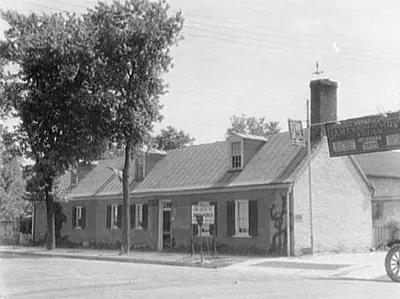
The James Monroe Law Office is a historic commercial building associated with James Monroe, who later became president of the United States. Monroe used the law office from 1786 to 1789.
The building is now home to the James Monroe Museum and Memorial Library. It was declared a National Historic Landmark in 1966, making it an important stop for anyone interested in the early political history of the United States.
The Chimneys
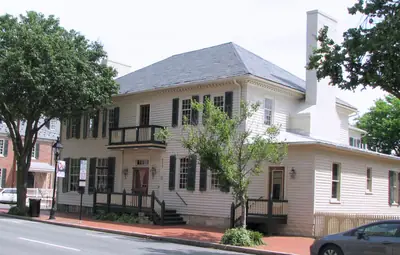
The Chimneys is a historic house named for the stone chimneys at either end of the building. Constructed around 1771 to 1773, it offers an example of Georgian design from that period.
Its interior woodwork is especially notable. The moldings, millwork and paneling reflect the building styles of the time, while the carved mantelpiece and decorated door and window frames add further detail. The Chimneys was added to the National Register of Historic Places in April 1975.
Presbyterian Church of Fredericksburg
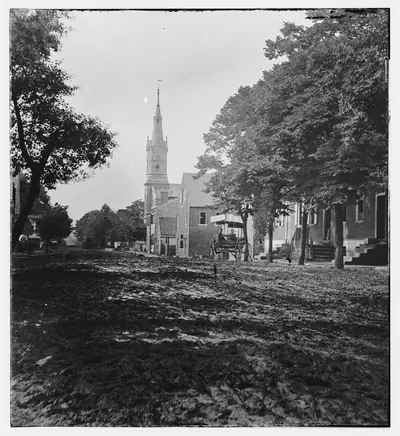
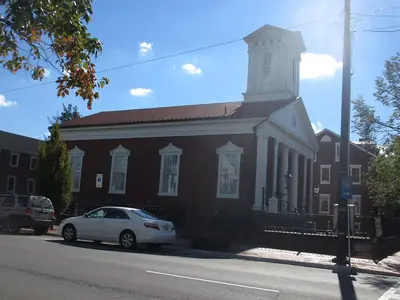
The Presbyterian Church of Fredericksburg has stood in the city since 1833. Its symmetrical brick façade follows a Jeffersonian Roman Revival design, with a triangular pediment, a broad entablature, four wooden Doric pilasters and two round Doric columns framing the recessed portico.
The church was badly damaged during the American Civil War and restored in 1866. It later became part of the National Register of Historic Places in 1984. During the war, the building served both Union and Confederate soldiers. After the Battle of Fredericksburg in 1862, Clara Barton came here to nurse the wounded.
Fredericksburg Baptist Church
Fredericksburg Baptist Church has been part of the city’s historic downtown since its founding in 1804. Its long history makes it a meaningful stop among the churches and buildings that define the historic district.
The congregation’s story is also connected with Shiloh Baptist Church. In 1849, most of Shiloh’s white members left to establish Fredericksburg Baptist Church at Princess Anne and Amelia Streets.
St. George’s Episcopal Church
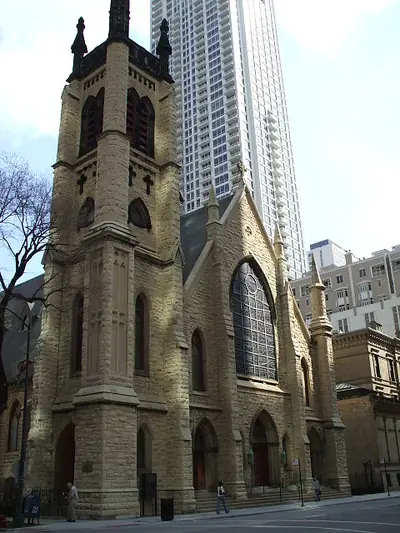
St. George’s Episcopal Church belongs to the Episcopal Diocese of Virginia and stands at 905 Princess Anne Street. Its history reaches back to the eighteenth century.
The present building reflects several stages of construction. It was built in the eighteenth century, then rebuilt in 1815 and again in 1849. These successive changes form an important part of the church’s historical character.
Shiloh Baptist Church
Shiloh Baptist Church, also known as Shiloh Baptist Church Old Site, stands at 801 Sophia Street. Its history is closely connected with an African American congregation whose roots reach back to 1804.
The congregation began as a mixed-race Baptist church and divided around 1815. One group continued worshipping at this site, where a new building became known as Shiloh Baptist Church in the 1830s. Most of the white members later left in 1849 to establish Fredericksburg Baptist Church.
The present two-story brick church was built in 1890. Its design is predominantly Classical Revival and was influenced to some degree by the Presbyterian Church of Fredericksburg. The building replaced an earlier church that collapsed in 1886 after being damaged during the Civil War.
St. Mary of the Immaculate Conception Roman Catholic Church
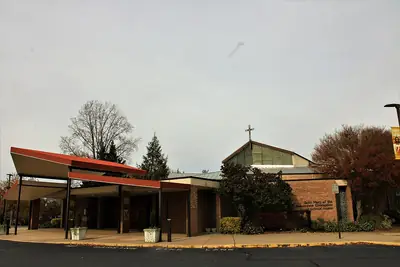
St. Mary of the Immaculate Conception Roman Catholic Church, also known as Saint Mary of the Immaculate Conception Catholic Church, is another historic religious landmark in Fredericksburg, Virginia.
Its presence adds to the variety of congregations and traditions represented in the city’s historic landscape.
Battle of Fredericksburg
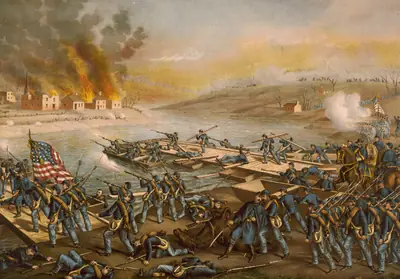
The Battle of Fredericksburg took place in and around Fredericksburg, Virginia, from December 11 to 15, 1862. It was one of the American Civil War’s most unequal battles and ended with heavy Union losses and the collapse of another campaign toward Richmond.
The Union Army of the Potomac, commanded by Major General Ambrose Burnside, planned to cross the Rappahannock River at Fredericksburg and advance toward the Confederate capital before General Robert E. Lee could intervene. Delays in receiving pontoon bridges allowed Lee to position his army and block the crossings.
When the bridges arrived, Union troops built them under fire and crossed into the city. The fighting continued in Fredericksburg before Union forces attacked Confederate positions south of the city and on Marye’s Heights. The repeated frontal assaults on the fortified ridge, including the position remembered as the sunken wall, were repulsed.
The planned United States National Slavery Museum
The United States National Slavery Museum was proposed as a place to commemorate American slavery in Fredericksburg. The proposal remained unfunded, so it is the story of a planned museum rather than an established institution.
Explore Fredericksburg with a free audio guide
For a Fredericksburg self-guided walking tour, Neywo offers one walk covering 1.91 km in 62 minutes, with 7 narrated stops. The route includes Kenmore, the James Monroe Law Office, the Presbyterian Church of Fredericksburg, Fredericksburg Baptist Church, St. George’s Episcopal Church, Shiloh Baptist Church and The Chimneys.
Download Neywo and explore Fredericksburg at your own pace. The app tells the story of each place as you reach it, with no group and no schedule. The Fredericksburg audio guide has 10 narrated places, and narration is available in 11 languages.
Fredericksburg is part of Texas according to the destination structure, while the city described here is in Virginia. For other journeys in the country, continue exploring the United States and nearby Texas destinations such as San Antonio, New Braunfels and Austin.
Places with an audio guide in Fredericksburg
8 places in Fredericksburg with a Neywo audio guide. Each one starts telling its story as you reach it.
Self-guided tours in Fredericksburg
1 tour in Fredericksburg, free in the Neywo app. Each stop tells its story as you reach it.
- Walk
Washington's Sister, Monroe and the War-Scarred Spires
Fredericksburg sat between two armies in the Civil War, and its churches and houses still carry the scars and the stories. Start at Kenmore, the plasterwork showpiece home of George Washington's sister Betty, then follow Monroe's law office, the church where Clara Barton nursed the wounded and the congregation that rebuilt itself after the war. End at The Chimneys, a Georgian house named for its stone stacks.
Kenmore · James Monroe Law Office · Presbyterian Church of Fredericksburg · Fredericksburg Baptist Church · St. George's Episcopal Church · Shiloh Baptist Church …
Open this tour: Washington's Sister, Monroe and the War-Scarred Spires
Walk Fredericksburg with Neywo
Neywo turns Fredericksburg into a self-guided audio tour. Stories arrive as you reach the place they belong to, and the route reshapes when you wander off it.

