San Antonio, United States: Self-Guided Walking Tour
Things to Do in San Antonio: History, Art and the River Walk
The best things to do in San Antonio include exploring Spanish colonial history, walking beside the San Antonio River, visiting museums and discovering historic neighborhoods. From the Alamo and La Villita to contemporary art spaces and unusual local museums, the city offers plenty to see at your own pace. Neywo has a free audio guide for San Antonio with 76 narrated places.
San Antonio is the county seat of Texas, and its history reflects Indigenous communities, Spanish missionaries, Mexican influence, German immigration and modern Texas culture. The city’s most famous landmarks sit close to one another downtown, while its museums and historic districts reveal more of the stories behind the city.
What to See in San Antonio
The Alamo and the Battle of the Alamo
The Alamo is one of San Antonio’s defining historic sites. Originally Mission San Antonio de Valero, it became the setting for the Battle of the Alamo in February and March 1836. After a thirteen-day siege, Mexican troops under General Antonio López de Santa Anna reclaimed the mission on March 6.
The defeat of the Texian defenders helped inspire support for the Texas cause. The conflict ended after the Texian victory at San Jacinto on April 21, 1836, and the capture of Santa Anna. Today, the Alamo remains closely connected with the history and identity of Texas.
The San Antonio River Walk
The San Antonio River Walk is a network of paths along the river, passing through the center of the city. Restaurants, shops, cultural venues and historic places line the waterfront, making it one of the most accessible ways to experience San Antonio.
The River Walk also connects several important sights. La Villita, the Alamo, the Henry B. Gonzalez Convention Center and downtown hotels are all within a short walk of one another in the central area.
La Villita
La Villita is San Antonio’s historic arts village on the south bank of the river. Its story began with a Native American settlement and later included brush huts known as jacales, built for Spanish soldiers and their families near Mission San Antonio de Valero.
After a flood destroyed much of the original settlement in 1819, adobe houses replaced the huts. German, French and Italian immigrants later brought new trades and architectural influences to the neighborhood. La Villita declined in the early twentieth century, but restoration projects during the Great Depression helped preserve its historic character and support its arts and crafts traditions.
Spanish Governor’s Palace
The Spanish Governor’s Palace is an adobe residence in downtown San Antonio and the last visible trace of the eighteenth-century Presidio San Antonio de Béxar complex. Dating from 1749, it is the only remaining example in Texas of an aristocratic Spanish Colonial townhouse.
The city of San Antonio owns and operates the building as a public museum. Its traditional adobe construction and eighteenth-century Spanish Colonial design make it an important reminder of the city’s colonial past.
Norton-Polk-Mathis House
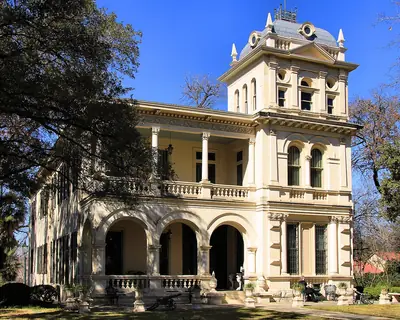
The Villa Finale Museum & Gardens occupies a historic house on King William Street. The 6,500-square-foot home contains a collection of more than 12,800 objects and was the first National Trust Historic Site in Texas.
The house and collection were donated to the National Trust for Historic Preservation in 2004, and the museum opened to the public in 2010. It offers a closer look at the architecture and domestic history of King William.
Artpace
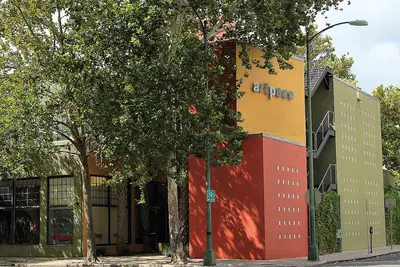
Artpace is a nonprofit contemporary art foundation in downtown San Antonio. Founded by artist, collector and philanthropist Linda Pace, it opened in 1995 in a former 1920s Hudson automobile dealership.
The 18,000-square-foot space includes five exhibition areas, artist studios, apartments for visiting creators, an archives and research library, a workshop and spaces for lectures and gatherings. Its programs are designed to encourage exchange between artists and the wider community.
Contemporary at Blue Star
Contemporary at Blue Star presents rotating exhibitions by local and regional artists rather than maintaining a collection. It occupies a former warehouse within the Blue Star Art Complex, a group of historic buildings once connected with the city’s rail transportation network.
The organization began in 1986 after local artists sought a new venue for contemporary work. Its first exhibition featured 27 artists and attracted more than 3,000 visitors. Although the institution adopted the name Contemporary at Blue Star in 2022, many people still know it by its original title, Blue Star Contemporary Art Center.
Majestic Theatre
The Majestic Theatre is San Antonio’s oldest and largest atmospheric theatre. Designed by architect John Eberson for Karl Hoblitzelle’s Interstate Theatres, it opened in 1929 and was later recognized as a National Historic Landmark.
Its interior is designed to resemble an outdoor night sky, with a dome painted with stars and drifting clouds. The theatre was also the first in Texas to be completely air-conditioned. From 1989 to 2014, it served as the home of the San Antonio Symphony.
San Antonio Museum of Art
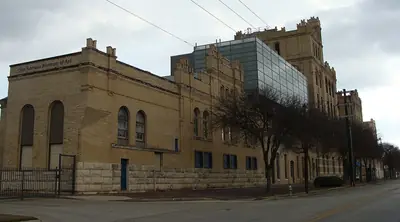
The San Antonio Museum of Art occupies a former Lone Star Brewery along the Museum Reach of the San Antonio River Walk. Its collections span 5,000 years of global culture.
The museum is particularly strong in pre-Columbian, colonial and Latin American art, as well as American and European works from the eighteenth through twentieth centuries. It also holds the most important Asian art collection in the southern United States, together with Egyptian, Greek, Roman, Chinese and Iranian art.
McNay Art Museum
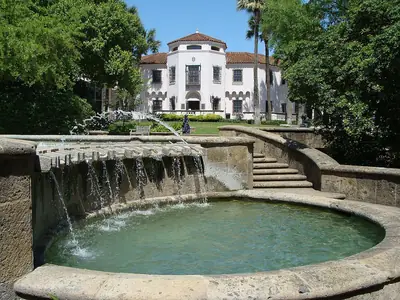
The McNay Art Museum was San Antonio’s first modern art museum. It opened in 1954 in the former home of Marion Koogler McNay, a 24-room Spanish Colonial Revival-style mansion designed in 1927 by Atlee Ayres and his son Robert M. Ayres.
The house stands within 23 acres of gardens, fountains and a Japanese-inspired pond. A later glass-filled exhibition center, the Jane and Arthur Stieren Center for Exhibitions, opened in 2008. The museum also holds the Tobin Collection of Theatre Arts, a research library with more than 30,000 volumes and a collection exceeding 20,000 objects.
Witte Museum
The Witte Museum explores Texas natural history, art and culture. Opened in 1926 after a bequest from local businessman Alfred G. Witte, it was created as a museum of art, science and natural history.
Its permanent collection includes dinosaur bones, ancient cave drawings, Texas wildlife dioramas, historic objects, photographs and textiles. Travelling exhibitions add further subjects to the museum’s programme.
Buckhorn Saloon & Museum
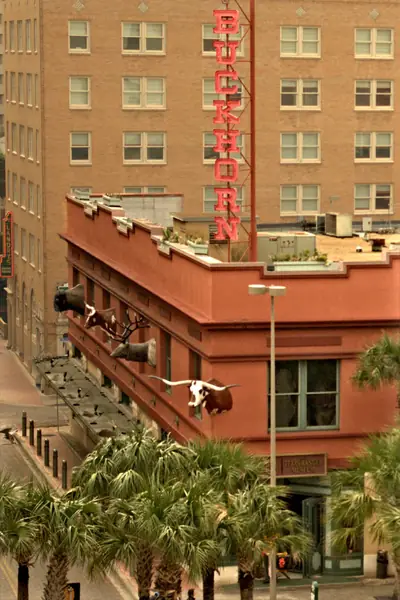
The privately run Buckhorn Saloon & Museum offers an unusual combination of wildlife displays, a classic shooting gallery and exhibitions about the Texas Rangers. Its history goes back to Albert Friedrich, who turned his collection into a tourist attraction.
The collection was housed at the Old Lone Star Brewery in 1956 before moving to its current location on East Houston Street. The museum remains in the hands of Friedrich’s heirs.
United States Army Medical Department Museum
The United States Army Medical Department Museum, also known as the AMEDD Museum, presents more than two centuries of Army medical history at Fort Sam Houston. Its galleries cover the period from the Revolutionary War era to modern medicine.
Displays include medical equipment, uniforms, medals, insignia and artwork. Audio-visual presentations, documents, photographs and unit insignia add personal stories to the history of military medical care.
Texas Transportation Museum
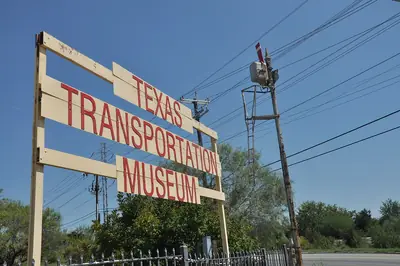
The Texas Transportation Museum shows how trains, cars and other vehicles shaped everyday life. Its attractions include the working Longhorn and Western Railroad, model train layouts and a collection of antique automobiles.
The museum was created in 1964 to preserve information and objects connected with San Antonio’s transportation history. Outdoor features include a remodelled caboose, picnic tables, a children’s play area and a pavilion.
Fence at Alamo Cement Company
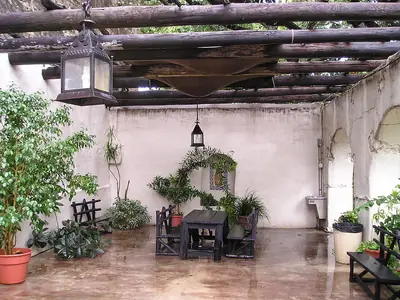
The Fence at Alamo Cement Company is a 125-foot-long concrete sculpture designed to look like wood. Its bark-like surface uses the Faux Bois technique, while two sculpted tree trunks form the entrance.
Nearby, the Fountain at Alamo Cement Company uses concrete to imitate a pond and a traditional palapa-style thatched shelter. Both sculptures were added to the National Register of Historic Places on August 9, 2005.
Explore San Antonio with a Self-Guided Audio Tour
Neywo’s San Antonio audio guide includes five walking tours and one bike route, with narration available in 11 languages. The walks range from 1.22 to 5.02 km and take between 52 and 97 minutes:
- Remember the Alamo: Mission, Hotels and the River — 1.61 km, 68 minutes, 9 narrated stops
- Plazas and Palaces: Spanish San Antonio — 1.68 km, 62 minutes, 7 narrated stops
- King William: Victorian Mansions and Artists’ Warehouses — 2.44 km, 68 minutes, 6 narrated stops
- Houston Street Marquees — 1.22 km, 52 minutes, 7 narrated stops
- Pearl Brewery to Brackenridge Park: Beer, Art and a Quarry Garden — 5.02 km, 97 minutes, 5 narrated stops
The bike route, The Mission Reach: From King William to the Southern Missions, covers 15 km, takes 75 minutes and has 3 narrated stops.
Download Neywo and explore San Antonio without a group or a schedule. The app tells the story of each place as you reach it, at your own pace, so you can pause, look around and continue when you are ready.
Places with an audio guide in San Antonio
8 places in San Antonio with a Neywo audio guide. Each one starts telling its story as you reach it.

Self-guided tours in San Antonio
5 tours in San Antonio, free in the Neywo app. Each stop tells its story as you reach it.
- Bike ride
The Mission Reach: From King William to the Southern Missions
Ride south along the San Antonio River's paved cycle path from the Blue Star arts complex to two of the four World Heritage missions: Mission San José, founded in 1720, and Mission Espada, a living piece of Spanish colonial Texas. About 15 km each way, mostly flat and traffic-free.
Blue Star Contemporary Art Center · Mission San José · Mission San Francisco de la Espada
Open this tour: The Mission Reach: From King William to the Southern Missions - Walk
Remember the Alamo: Mission, Hotels and the River
Stand where Texas legend was made. Begin at the Alamo and its cenotaph, hear about the forgotten defender Toribio Losoya, then wander past the Menger Hotel and a church that refused to sell to a mall. End on the River Walk's open-air theatre in La Villita.
The Emily Morgan Hotel · Alamo Mission · Alamo Cenotaph · Toribio Losoya · Menger Hotel · St. Joseph Catholic Church …
Open this tour: Remember the Alamo: Mission, Hotels and the River - Walk
Plazas and Palaces: Spanish San Antonio
The colonial heart of the city, a few blocks west of the Alamo. Visit the 1738 cathedral, the plaza where Spanish soldiers drilled, the only aristocratic Spanish townhouse left in Texas and the biggest Mexican market in the United States.
Cathedral of San Fernando · Military Plaza · Spanish Governor's Palace · O. Henry House Museum · Market Square · Alameda Theatre …
Open this tour: Plazas and Palaces: Spanish San Antonio - Walk
King William: Victorian Mansions and Artists' Warehouses
The German merchants' quarter south of downtown: limestone mansions from the 1880s, a house museum packed with 12,800 objects and the railway warehouses that became the city's contemporary art centre.
Alamo Methodist Church · Carl Wilhelm August Groos House · Norton-Polk-Mathis House · J.M. and Birdie Nix House · Blue Star Contemporary Art Center · Ruby City
Open this tour: King William: Victorian Mansions and Artists' Warehouses - Walk
Houston Street Marquees
San Antonio's golden age of cinema and stage: an atmospheric theatre with a painted night sky, two historic playhouses, Victorian commercial buildings and the old municipal auditorium that hosted a presidential candidate.
Tobin Center for the Performing Arts · St. Mark's Episcopal Church · Majestic Theatre · Brady Building-Empire Theater · Aztec Theatre · Staacke Brothers Building …
Open this tour: Houston Street Marquees
Walk San Antonio with Neywo
Neywo turns San Antonio into a self-guided audio tour. Stories arrive as you reach the place they belong to, and the route reshapes when you wander off it.

