Visiting Galveston, United States: Top Sights on Foot
Things to Do in Galveston: Historic Churches, Mansions, and Maritime Heritage
Galveston is a Texas Gulf Coast city shaped by Victorian architecture, religious communities, maritime history, and stories of resilience. The best things to do in Galveston include exploring historic houses, churches, cemeteries, railway collections, and wartime vessels. Neywo offers a free audio guide for Galveston with 55 narrated places, available in 11 languages.
As part of Texas, Galveston is especially rewarding to explore on foot: many of its landmarks preserve the history of the city’s prosperous years, its diverse communities, and the events that transformed the island.
What to See in Galveston
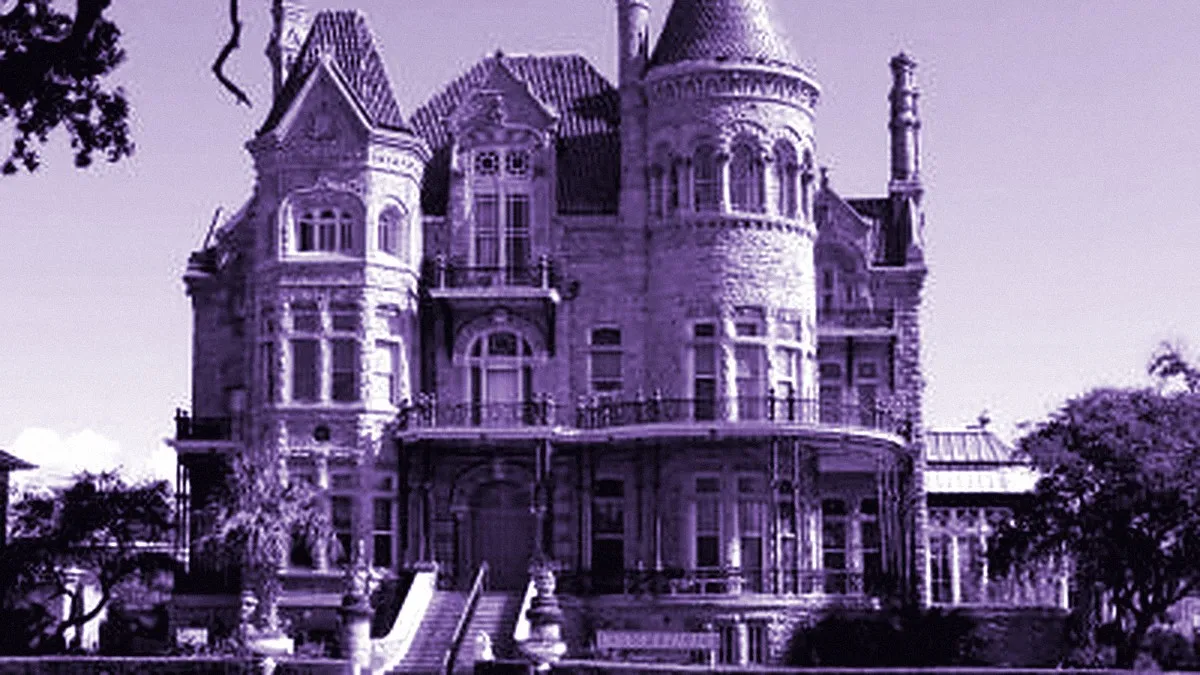
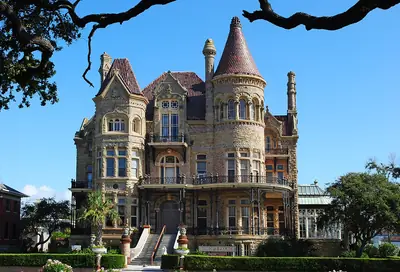
Bishop’s Palace
Bishop’s Palace, also known as Gresham’s Castle, is one of Galveston’s most ornate historic houses. Located in the East End Historic District at Broadway and 14th Street, the Victorian-style residence was designed by Galveston architect Nicholas J. Clayton for lawyer and politician Walter Gresham and completed in 1892.
The house covers about 19,082 square feet, giving it the scale of a palace. In 1923, the Archdiocese of Galveston purchased the property and used it as its headquarters for four decades. It also served as the residence of Bishop Christopher E. Byrne before eventually opening for tours.
Moody Mansion
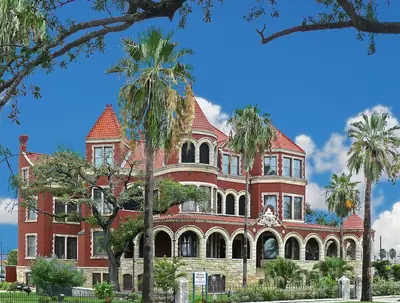
Completed in 1895, Moody Mansion is a four-story home connected with William Lewis Moody, Jr., a financier and cotton entrepreneur. The house survived the Galveston Storm of 1900 and remained in the Moody family until 1983, when Hurricane Alicia caused severe damage.
British architect William H. Tyndall designed the building, while Pottier and Stymus of New York created its interior decoration. French Rococo and Classical Revival elements appear throughout the house, whose rooms contain original Moody family heirlooms. After restoration, Moody Mansion opened as a museum in 1991.
St. Mary Cathedral Basilica
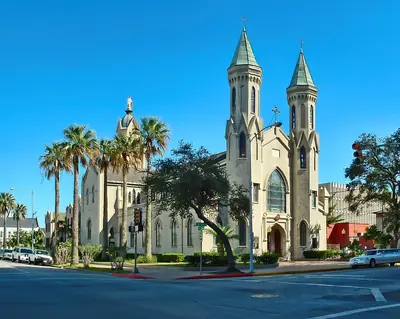
St. Mary Cathedral Basilica is the primary cathedral of the Archdiocese of Galveston-Houston and is known as the mother church of Catholics in Texas. Its origins reach back to a small wooden church established in Galveston in 1842. The present cathedral was completed in 1848 and dedicated to the Blessed Virgin.
The Gothic Revival building follows a Latin cross plan inspired by King’s College Chapel in Cambridge. Its construction used 500,000 bricks imported from Belgium. Inside are wooden columns, intricate wooden trusses, a large crucifix, a Pietà, and a three-thousand-pipe organ. Galveston architect Nicholas J. Clayton later added a transept tower in 1876.
Reedy Chapel A.M.E. Church
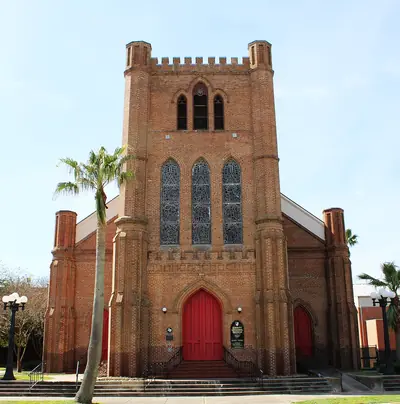
Reedy Chapel A.M.E. Church is closely connected with Black history in Texas. Its congregation traces its origins to enslaved African Americans who founded it in 1848. After emancipation, it was formally organized in 1866 as Texas’s first A.M.E. congregation.
The church was one of the places where Union General Gordon Granger’s General Order Number Three was publicly read on June 19, 1865. The order declared emancipation in Texas, and the continued celebration of that declaration became Juneteenth. The present Gothic Revival structure dates from 1886 and survived the 1900 Galveston hurricane.
Galveston Railroad Museum
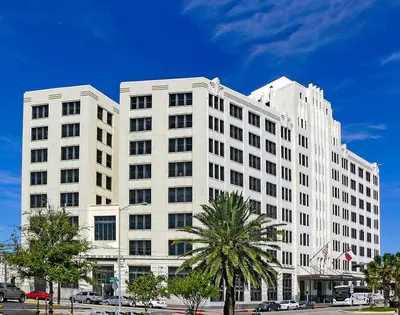
The Galveston Railroad Museum occupies the former Santa Fe Railroad station at 25th and Strand. Built in 1913 for the Atchison, Topeka and Santa Fe Railroad, the station became the central passenger station for Galveston’s railway system. An eleven-story Art Deco tower and an eight-story wing were added in 1932.
The site remained a major rail hub until the last Santa Fe passenger train departed in 1967. Today, the museum preserves more than 40 restored locomotives and pieces of rolling stock. Visitors can see vintage passenger cars, railway memorabilia, and detailed model train displays.
Galveston Naval Museum
On Pelican Island, the Galveston Naval Museum brings U.S. naval history to life through two preserved World War II vessels: the USS Cavalla and the USS Stewart. Walking aboard the ships offers a close look at wartime service, from crew quarters and working decks to the confined conditions experienced by sailors.
The USS Cavalla is a Gato-class submarine remembered for sinking the Japanese aircraft carrier Shōkaku. Its keel was laid down on March 4, 1943, it was launched on November 14 of that year, and it entered service on February 29, 1944. The USS Stewart is an Edsall-class destroyer escort that protected Allied convoys and fought enemy submarines.
Grace Episcopal Church
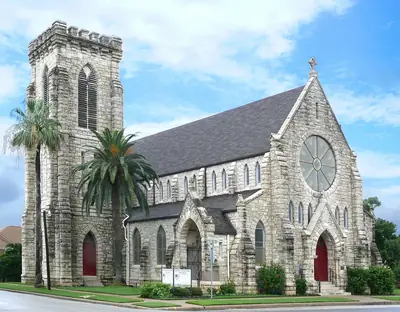
Grace Episcopal Church is a distinctive architectural landmark with stone walls, pointed arches, and stained glass. A mission Sunday School served the growing suburban community in the 1840s, and by 1876 it had become an independent parish.
The present stone church was designed by Nicholas J. Clayton in the High Victorian Gothic style and built in the 1890s. Its original wooden chapel was moved farther down the street.
St. Joseph’s Church
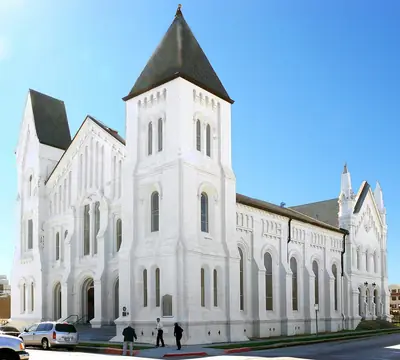
St. Joseph’s Church, at 2202 Avenue K, is the oldest German Catholic church in Texas and one of the oldest buildings in Galveston. It reflects the presence of German Catholic communities in the city and forms part of Galveston’s historic religious landscape.
Broadway Cemetery Historic District
The Broadway Cemetery Historic District, also called the Broadway Cemeteries, brings together seven separate cemeteries across six blocks. The district covers 15.27 acres and contained an estimated 6,000 burials as of 2014, including those of prominent Galveston citizens.
Listed on the National Register of Historic Places in 2014, the cemeteries remain an important place for understanding the people and communities that shaped the city.
Congregation Beth Jacob
Congregation Beth Jacob is a Conservative Jewish synagogue serving Galveston Island. The present building was constructed in 1931 by Austrian, Russian, and Hungarian immigrants. Its history reflects the different communities that came together to establish Jewish life on the island.
City National Bank
The City National Bank building is a historic downtown landmark founded in December 1907 by William Lewis Moody Jr. The building was completed in 1920 and renamed Moody National Bank in 1953.
It later housed the Galveston County Historical Museum, but Hurricane Ike badly damaged the building in 2008. The museum’s assets were moved to the Galveston County Courthouse, and the former bank has remained unused since then.
SS Selma
North of Galveston Island, the SS Selma is a concrete-hulled oil tanker and the only permanent, prominent wreck along the Houston Ship Channel. It was one of only twelve concrete ships completed for the World War One Emergency Fleet.
The tanker saw little service before it was wrecked and later scuttled. Today, it rests approximately one mile north of Galveston Island, offering an unusual reminder of wartime shipbuilding.
Trinity Protestant Episcopal Church and First Presbyterian Church
Trinity Protestant Episcopal Church and First Presbyterian Church are two historic church buildings that contribute to Galveston’s architectural character. First Presbyterian Church stands at 1903 Church Street, while Trinity Protestant Episcopal Church forms part of the city’s historic religious landscape.
Together with St. Mary Cathedral Basilica, Grace Episcopal Church, Reedy Chapel A.M.E. Church, and St. Joseph’s Church, they show how different congregations helped shape Galveston’s built environment.
Explore Galveston with Neywo
Neywo turns a visit into a Galveston self-guided walking tour: the app tells the story of each place as you reach it, at your own pace, with no group and no schedule. The free Galveston audio guide includes 55 narrated places, and the narration is available in 11 languages.
Galveston currently has:
- 3 walking tours
- 1 bus route
- Walks of 2.9 km and 94 minutes, 4.31 km and 108 minutes, and 3.18 km and 83 minutes
- A bus route of 7.3 km and 31 minutes
- 11, 8, 8, and 5 narrated stops respectively
The walks cover landmarks including Moody Mansion, Reedy Chapel A.M.E. Church, Bishop’s Palace, Grace Episcopal Church, the Broadway Cemetery Historic District, Congregation Beth Jacob, St. Mary Cathedral Basilica, City National Bank, and the Galveston Railroad Museum. The bus route connects Texas Heroes Monument, the Bryan Museum, Bishop’s Palace, League-Kempner House, and Open Gates Conference Center.
Download Neywo and explore Galveston’s historic streets, churches, homes, cemeteries, and ships while the city’s stories unfold exactly where they happened.
Places with an audio guide in Galveston
8 places in Galveston with a Neywo audio guide. Each one starts telling its story as you reach it.

Self-guided tours in Galveston
4 tours in Galveston, free in the Neywo app. Each stop tells its story as you reach it.
- Bus ride
Broadway by Bus: Texas Heroes to the Sealy Mansion
Island Transit route 4 runs along Galveston's historic Broadway. Ride it from the Texas Heroes Monument past the Bryan Museum and the Bishop's Palace and League-Kempner House to the Sealy family's Open Gates, the island's grandest Victorian mansions in one cheap ride.
Texas Heroes Monument · Bryan Museum · Bishop's Palace · League-Kempner House · Open Gates Conference Center
Open this tour: Broadway by Bus: Texas Heroes to the Sealy Mansion - Walk
The Strand and Broadway: Galveston's Boom Years
Galveston was Texas's richest city before the 1900 storm, and the money still shows. Walk from a Gilded Age mansion past a monument to the Texas Revolution, the Sealy family's Open Gates, historic synagogue and churches, the 1894 opera house and the drilling-rig museum in the harbour to the old Santa Fe station.
Moody Mansion · Texas Heroes Monument · Open Gates Conference Center · Congregation Beth Jacob · St. Joseph's Church · Trinity Protestant Episcopal Church …
Open this tour: The Strand and Broadway: Galveston's Boom Years - Walk
East End Beauties: From Juneteenth to the Bishop's Palace
Broadway's east end holds the island's finest Victorian houses. Start at the church where emancipation was read in 1865, pass the homes of contractors and cotton families, and finish at the Bishop's Palace and the seafront Hotel Galvez.
Bryan Museum · Reedy Chapel A.M.E. Church · First Presbyterian Church · Isabella Offenbach Maas Residence · League-Kempner House · Isaac Heffron House …
Open this tour: East End Beauties: From Juneteenth to the Bishop's Palace - Walk
West End: Oldest House, Old Cemeteries and Victorian Gothic
Walk the quieter west side of the island: the Reform synagogue B'nai Israel, the Greek Revival Menard House, Galveston's oldest surviving home, Grace Episcopal's Victorian Gothic stonework, the haunted-legend graves of Old City Cemetery and the Broadway Cemeteries, and Ball High School.
Congregation B'nai Israel · Michel B. Menard House · Powhatan House · Grace Episcopal Church · Old City Cemetery · Broadway Cemetery Historic District …
Open this tour: West End: Oldest House, Old Cemeteries and Victorian Gothic
Walk Galveston with Neywo
Neywo turns Galveston into a self-guided audio tour. Stories arrive as you reach the place they belong to, and the route reshapes when you wander off it.

