What to See in El Paso, United States: Free Audio Guide
Things to do in El Paso
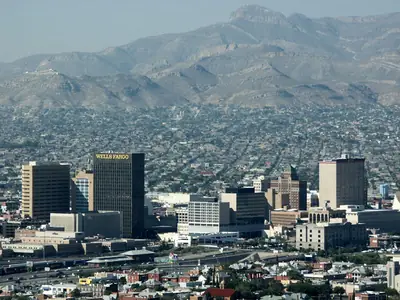
When looking for things to do in El Paso, visitors find a border city located in the far western edge of Texas, where the Rio Grande separates the United States from Ciudad Juárez, Mexico, and the Franklin Mountains rise above the urban landscape. This blend of cultures, history, and desert scenery makes El Paso worth visiting for its museums, historic sites, and outdoor opportunities. Neywo offers a free audio guide for El Paso with 51 narrated places.
Explore El Paso’s highlights
El Paso Holocaust Museum and Study Center
Founded by Holocaust survivor Henry Kellen with local community members, the museum is devoted to remembrance, education, and reflection. Its permanent exhibition traces the rise of Nazism in Germany and the persecution of Jews and other groups during World War II, explaining how ghettos, concentration camps, and extermination camps were established across Europe. Visitors see photographs, documents, personal belongings, and survivor testimonies, and can examine a model of the Auschwitz complex that shows how the camp system was organized. Exhibition panels also highlight the Nuremberg Laws of 1935 and Kristallnacht in 1938. The museum is located at 715 North Oregon and admission is free, supported by donations and grants.
El Paso Museum of Art
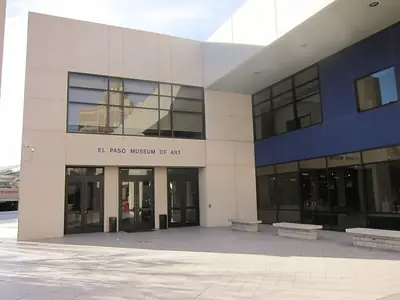
Situated in the city’s cultural district, the museum brings together European masters, American works, and contemporary art linked to the Southwest and the border region. Founded in 1959, it grew from a small community collection into a leading visual arts institution; its current building was completed in 1998. The museum was first accredited in 1972 and remains the only accredited art museum within a 250‑mile radius. Its permanent collection holds more than 7,000 works, with a notable European collection drawn from the Samuel H. Kress Collection, spanning the 13th to the 18th centuries and illustrating changing approaches to religious subjects, portraiture, and technique. Galleries follow a clear, accessible layout, and temporary exhibitions throughout the year often pair regional artists with national and international names.
El Paso Museum of History
Also known as Museo de Historia de El Paso, this downtown museum explores roughly four hundred years of life in the Paso del Norte region, where communities on both sides of the Rio Grande have shaped one another. Established in 1974, it presents history through the lives of the people who shaped the border region, placing local events within the wider North American story of migration, trade routes, changing borders, and political change. The main exhibition, Changing Pass: People, Land, and Memory, takes visitors on a chronological journey from early settlement to the twentieth century, examining Indigenous cultures, the arrival of Spanish missions in the late sixteenth century, and the growth of communities linked to agriculture and river trade. Artifacts, photographs, maps, and recorded testimonies bring everyday life along the Rio Grande into view, while later sections cover the Mexican‑American War (1846‑1848), the redrawing of the international boundary, the arrival of the railroad in the 1880s, and the effects of the Mexican Revolution.
International Museum of Art
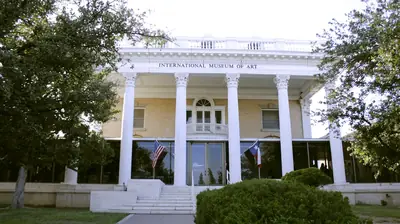
Housed in a historic residence built for lawyer, state legislator, and rancher William Ward Turney, the building was designed by Henry C. Trost in a Neoclassical style with a broad porch featuring six Corinthian columns. Former living rooms have been turned into galleries, while original details such as carved woodwork, fireplaces, beamed ceilings, and a stained‑glass window on the staircase remain. After Iva Turney donated the house to the city in 1939, it opened as the International Museum in May 1947; from 1960 to 1998 it housed the El Paso Museum of Art, and after that museum moved, the International Museum of Art reopened here in 1999. The collection spans European paintings, Mexican and Latin American art, African works, and objects from India and China, with solo exhibitions, changing presentations, and a Red Room that showcases contemporary local artists.
Cathedral Parish of Saint Patrick
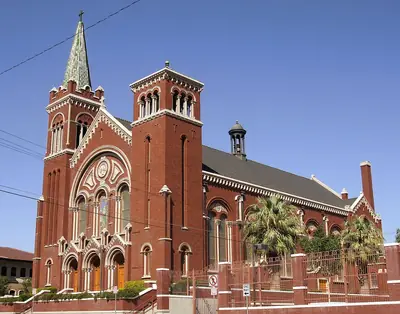
As the seat of the Roman Catholic Diocese of El Paso and its mother church, the cathedral was designed by Barnett, Haynes and Barnett of St. Louis, Missouri. Its form blends a Byzantine basilica with Italian Renaissance influences. Inside, Roman columns frame the central nave and draw the eye toward the altar, while frescoes of biblical scenes cover the upper walls and ceiling and the Stations of the Cross appear as bas‑relief carvings along the interior walls. Painted surfaces, sculpted details, and filtered light give the space a calm character for daily worship and major celebrations. Groundbreaking took place on April 8, 1914, the cornerstone was blessed on November 12, 1916, and the church became the cathedral of the newly created Diocese of El Paso when it was completed in 1917.
First Presbyterian Church of El Paso
Located at 1340 Murcheson Road in El Paso, Texas, this church is a place of worship whose simple brick façade invites visitors to pause and reflect.
El Paso County
The westernmost county in Texas, El Paso County takes its name from the natural mountain passage known as El Paso del Norte, “the Route of the North.” Its seat is the city of El Paso, and in 2020 it had a population of 865,657, making it the tenth most populous county in Texas. Created in 1850 and organized in 1871, the county is part of the El Paso metropolitan area and, together with Hudspeth County, is one of only two Texas counties that lie entirely in the Mountain Time Zone. The landscape combines eastern mountains—including the Franklin and Hueco ranges—with flatter land to the west, and includes landmarks such as Mount Franklin, McKelligon Canyon, the Mesilla Valley, and the Rio Grande passage that gives the city its name.
Centennial Museum
Opened in 1936 during a university centennial celebration, the Centennial Museum was the first teaching museum in Texas, with a mission to share research and make the border region’s story easier for the public to understand. Inside, visitors can move from displays of the Chihuahuan Desert to exhibits on the region’s human history, which present Indigenous communities, Spanish missions, trade, migration, and modern border life through pottery, tools, textiles, and photographs. The building’s design follows the university’s Bhutanese‑inspired style, modeled on traditional dzongs from Bhutan, and the surrounding Chihuahuan Desert Gardens continue the experience with more than six hundred native plant species.
Hal Marcus Gallery
Set in a welcoming blue house in the historic Sunset Heights District, the Hal Marcus Gallery opened in 1996 to present the work of Hal Marcus while supporting other artists connected to the region. Its collection includes paintings, prints, and mixed‑media pieces inspired by Southwest life, border culture, and desert landscapes. Rather than feeling like a formal museum, the gallery has the atmosphere of a home, with several rooms filled with colorful works on different themes that make the visit feel personal and residential.
La Nube (La Nube Science Discovery Center)
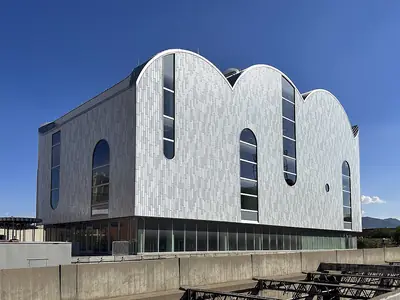
This children’s museum and science center brings hands‑on discovery to Downtown El Paso. The space is divided into nine zones, each focused on a scientific topic, and its centerpiece is the Anything’s Possible Climber—a fifty‑foot‑tall climbing structure built around geometric shapes. La Nube opened on August 10, 2024, after several years of delays, with funding in part from El Paso bonds approved in 2012. The center occupies seventy‑seven thousand square feet and cost seventy‑two million dollars to build.
2019 El Paso shooting memorial
The site of the August 3, 2019, mass shooting at a Walmart near the Cielo Vista shopping center is now a place of remembrance for the twenty‑three people who were killed and the more than twenty who were injured. The attack, which disproportionately affected members of the Latino community, has been described as the deadliest assault on Latinos in modern American history. Investigated by the FBI as both an act of domestic terrorism and a hate crime, the case proceeded through federal and state courts, resulting in life sentences for the perpetrator.
Magoffin Home State Historic Site
This park lies just outside El Paso, with the city about one kilometre to the west. It preserves the historic Magoffin Home, offering visitors a glimpse into domestic life in the border region.
Abundant Church
A place of worship in the United States, Abundant Church welcomes visitors to its simple sanctuary.
Abundant Living Faith Center
Located in El Paso, Texas, this church building serves a broad, international community as a place of worship.
Alhambra Theatre
Also known as the Palace Theatre, the Alhambra Theatre opened on August 1, 1914. Designed by Henry C. Trost in the Spanish Colonial Revival style with a Moorish theme, the building was prepared to function either as a playhouse or as a movie house and originally housed a large organ to accompany silent films. Its construction cost 150,000 dollars.
Explore El Paso with Neywo
Neywo provides a free audio guide for El Paso featuring 51 narrated places. The app includes one walking tour—“Trost’s Downtown: Hotels, Plazas and the Pass of the North”—covering 2.7 km in about 95 minutes with 12 stops, and one bus route—“Downtown El Paso on the Free Union Plaza Circulator”—spanning 9.9 km in roughly 42 minutes with 5 stops. Each story plays automatically as you reach a location, letting you explore at your own pace without a group or a fixed schedule, and narration is available in 11 languages. Download Neywo to start your self‑guided adventure.
Places with an audio guide in El Paso
8 places in El Paso with a Neywo audio guide. Each one starts telling its story as you reach it.

Self-guided tours in El Paso
2 tours in El Paso, free in the Neywo app. Each stop tells its story as you reach it.
- Bus ride
Downtown El Paso on the Free Union Plaza Circulator
Sun Metro Route 4 is a free downtown circulator linking Union Depot with the museum district. Ride it past the 1914 Alhambra Theatre, the Federal Courthouse, the El Paso Museum of History and the Museum of Art, and get off at the Union Depot, where the railroad history of the Pass of the North began.
Alhambra Theatre · United States Court House · El Paso Museum of History · El Paso Museum of Art · Railroad and Transportation Museum of El Paso
Open this tour: Downtown El Paso on the Free Union Plaza Circulator - Walk
Trost's Downtown: Hotels, Plazas and the Pass of the North
Henry Trost shaped downtown El Paso in the early 1900s, and this walk follows his Spanish Colonial and Moorish buildings between two plazas. Start at the cathedral and four centuries of border history in the museums, then see the Plaza Theatre, the first Jewish congregation's home, the plaza that once kept alligators, a bronze friar of 1659, a stained-glass hotel lobby where presidents and Pancho Villa stayed, and finish at the steam locomotive of 1857.
Cathedral Parish of Saint Patrick · El Paso Museum of History · La Nube Science Discovery Center · El Paso Museum of Art · Plaza Theatre · San Jacinto Plaza …
Open this tour: Trost's Downtown: Hotels, Plazas and the Pass of the North
Walk El Paso with Neywo
Neywo turns El Paso into a self-guided audio tour. Stories arrive as you reach the place they belong to, and the route reshapes when you wander off it.

