Visiting Shenzhen, China: Top Sights on Foot
Things to do in Shenzhen
Shenzhen is a fast‑growing metropolis in Guangdong province that pairs a striking skyline of skyscrapers with green hills, coastal views and a vibrant cultural scene. Visitors come to see its record‑breaking towers, explore museums that tell the story of reform and innovation, and wander historic sites that reveal the city’s deeper roots. Neywo offers a free audio guide for Shenzhen with 45 narrated places, letting you discover each spot at your own pace.
Explore Shenzhen’s highlights
Shun Hing Square (viewpoint)
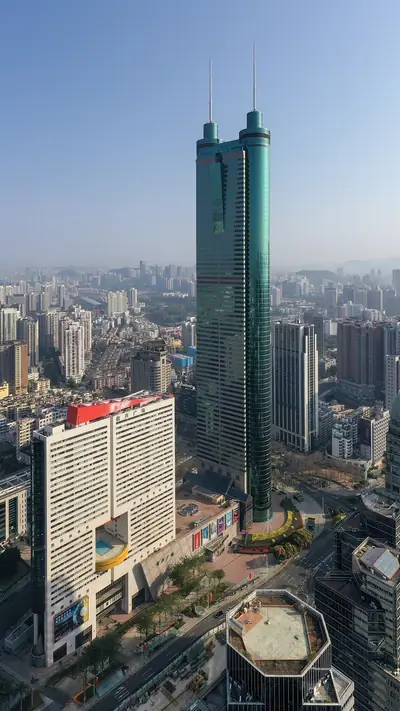
Shun Hing Square, also known as Di Wang Tower, is a 69‑story skyscraper that rises nearly 384 meters above Luohu District. Built between 1993 and 1996, it held the title of Shenzhen’s tallest building for 15 years until Kingkey 100 surpassed it in 2011. The name Di Wang means “land king,” reflecting the record land price paid for the site. While most floors house offices, the 69th‑floor Di Wang Sightseeing observatory, opened in 1998, provides panoramic views of Shenzhen and Hong Kong and shares the city’s development story. The tower was added to Shenzhen’s first group of historic buildings in 2017.
Kingkey 100 (building)
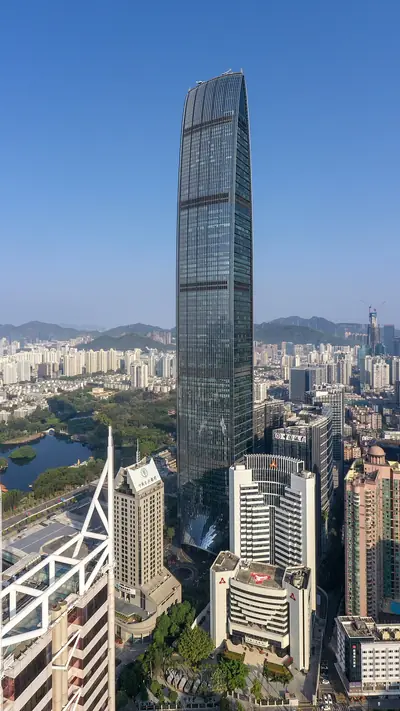
Kingkey 100, or KK100, dominates the Luohu skyline at 441.8 meters with 100 floors, completed in 2011. Designed by Arup and Terry Farrell, the tower combines office space, a luxury hotel and a shopping base. Floors 1‑4 form a hotel lobby, floor 5 hosts an international conference centre, and floors 6‑72 provide Grade A offices, including seven trading floors for the securities sector. The upper floors 75‑100 contain the St. Regis hotel with 270 rooms. At the base, KK Mall spans about 83,500 square metres across four aboveground levels and one underground. Kingkey 100 surpassed the previous record‑holder, the Diwang Building, when it topped out.
Shenzhen Science & Technology Museum
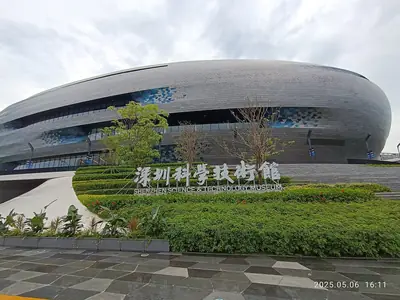
Opened on May 1, 2025, the Shenzhen Science and Technology Museum is striking for its spaceship‑shaped façade. The museum focuses on science and popular science education and is an off‑site upgrade of the original Shenzhen Science Museum, counting among the city’s Ten Major Cultural Facilities of the New Era. Its bold architecture signals the innovative spirit inside, where visitors can explore exhibits on technology, research and scientific discovery.
China Merchants Group History Museum
This corporate museum traces the development of China Merchants Group, one of China’s oldest state‑owned enterprises. A prominent slogan sign inside reads “Time is money, efficiency is life,” linking the museum’s narrative to the company’s operational philosophy. The exhibits present milestones, photographs and artifacts that illustrate how the group has shaped shipping, finance and logistics over more than a century.
Guan Shanyue Art Museum
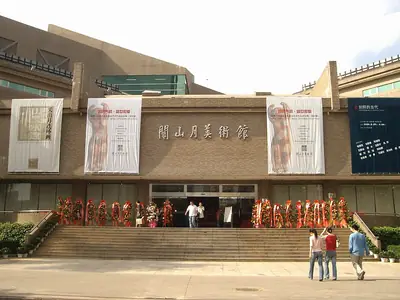
Set at the foot of Lianhua Mountain in Futian District, the Guan Shanyue Art Museum is a key venue for art in Shenzhen. The museum showcases works by the renowned painter Guan Shanyue alongside rotating exhibitions of contemporary Chinese and international artists. Its location amid greenery offers a tranquil setting for viewing paintings, calligraphy and sculpture.
Shenzhen Mosque
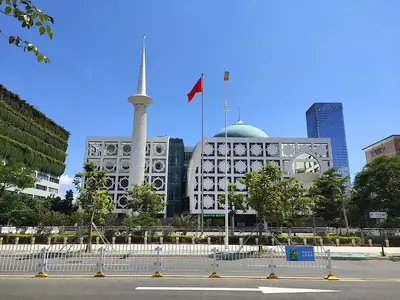
Located on Meilin Road in Futian District, Shenzhen Mosque serves as a major centre for Muslim worship in the city. After the original building could no longer accommodate the growing Muslim community, reconstruction began with a ceremony on April 25, 2014. The new complex covers more than 6,000 square metres, rises five floors above a basement and cost nearly 50 million yuan. Its main prayer hall can host over 5,000 worshippers for congregational prayer, and the facility includes classrooms, a library and community spaces.
Nantou Ancient City Museum
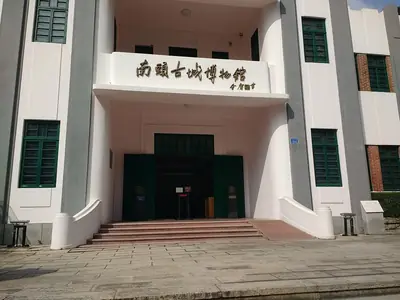
The Nantou Ancient City Museum occupies the former government house of Bao’an County, once known as Xin’an. It presents the county’s history from the Neolithic period to modern times through artifacts, photographs and informational panels. The museum has two stories and three exhibition halls. It opened in September 2004, offers free admission, and is open daily from 9:30 a.m. to 5:30 p.m., except on public holidays. Its setting ties the displays to the administrative past of the area.
Shenzhen Grand Theater
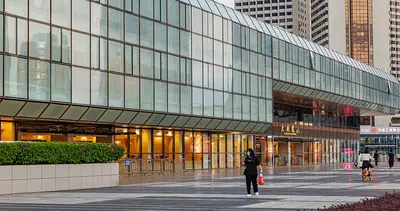
The Shenzhen Grand Theater stands at the crossing of Shennan East Road and Hongling Middle Road in Luohu District. Its glass‑clad, folded cubic form houses a theatre, concert hall, exhibition spaces, restaurants, dance halls and an underground commercial street. Completed in 1989 as one of the Eight Major Cultural Facilities funded during the early SEZ period, the venue launched the Shenzhen Grand Theater Arts Festival in 1992. After upgrades to fire safety, utilities and acoustics, performances resumed on March 22, 2006. The main auditorium seats more than 1,600 spectators.
Museum of Contemporary Art & Planning Exhibition
Opened in 2016, this museum in Futian District blends contemporary art, urban planning and the story of Shenzhen’s development. Designed by Coop Himmelb(l)au, the complex covers 29,688 square metres of site area with a total construction area of 88,185 square metres. Permanent exhibitions examine Shenzhen’s urban planning, its landmarks and the reform and opening‑up policies that began in the 1980s. The venue also hosts the Shenzhen Reform and Opening‑up Exhibition Hall and is linked to the broader Shenzhen Museum network, which includes four sites across the city.
HQB Museum
Situated on Huaqiang North, the HQB Museum tells the story of this famous electronics street and its role in Shenzhen’s reform and opening‑up era. Through exhibitions, science‑education displays and interactive activities, the museum connects Huaqiang North’s entrepreneurial spirit with the growth of China’s electronics industry. Visitors can trace how market dynamics, innovation and policy shaped the bustling commercial corridor.
Dafen Art Museum
The Dafen Art Museum was created to reshape perceptions of Dafen Village, known worldwide for its production of painted replicas. Designed by the Urbanus architectural firm and completed in 2007 with a 100‑million‑yuan government investment, the museum mixes exhibition galleries with spaces where local vendors sell their work. This combination turns the building into both a showcase for art and a marketplace that supports the village’s artistic community.
Gankeng Hakka Town
In Longgang District, Gankeng Hakka Town presents Hakka architecture, culture and cuisine in one compact destination. Visitors can walk through traditional Hakka dwellings, sample regional dishes and learn about the customs that have been preserved by the Hakka community in Shenzhen.
Longgang Museum of Hakka Culture
Also in Longgang District, this museum offers a glimpse into Hakka life through a collection of traditional‑style buildings originally erected by Hakka migrants from Xingning. The exhibits illustrate how these structures were built, how they functioned in daily life and which cultural practices—such as festivals, clothing and craftsmanship—accompany them. The museum helps visitors understand the Hakka contribution to Shenzhen’s cultural mosaic.
Ping An Finance Centre
Rising from Futian’s central business district, the Ping An Finance Centre reaches 599 meters, making it one of the tallest buildings in the world. The complex comprises a main tower with 118 floors (office space up to the 115th), an eleven‑level podium 55 meters high and a five‑level underground section extending 29.8 meters below ground. Completed in March 2017, it became the headquarters of China Ping An and was originally named Ping An International Finance Centre. The project was conceived as a financial hub linking mainland China and Hong Kong via the Guangzhou‑Shenzhen‑Hong Kong high‑speed rail corridor.
Dapeng Fortress (Dapengsuocheng)
Dapeng Fortress is an ancient walled village in Dapeng Subdistrict, facing Daya Bay. Its character is defined by stone walls, four city gates and a network of historic residences. Notable sites within the walls include the former homes of the Lai family, the residence of Liu Qilong, the Fude and Zhaogong Ancestral Halls, Huaguang Temple, Tianhou Temple and Yiwen Tower. Most of the original residents later relocated to Hong Kong, the Netherlands or the United Kingdom, and the local community continues to speak the distinctive Dapeng dialect.
Discover Shenzhen with Neywo
Neywo provides four self‑guided walking tours in Shenzhen, each narrated in 11 languages and designed for you to follow at your own pace, with no group and no schedule:
- Lotus Hill and the Civic Centre: Deng’s Shenzhen – 4.4 km, 91 minutes, 5 stops (Ping An Finance Centre, Museum of Contemporary Art & Planning Exhibition, Shenzhen Concert Hall, Guan Shanyue Art Museum, Lianhuashan Park)
- Luohu and Huaqiangbei: Shenzhen’s Skyline of Firsts – 4.38 km, 94 minutes, 5 stops (HQB Museum, SEG Plaza, Shenzhen Grand Theater, Shun Hing Square, Kingkey 100)
- Nantou Ancient City: Shenzhen Before Shenzhen – 1.99 km, 51 minutes, 4 stops (Zhongshan Park (Nanshan, China), 东莞会馆, Nantou Ancient City Museum, Nanshan Museum)
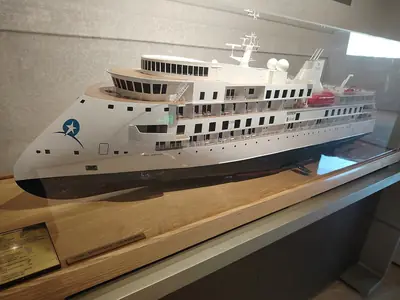
- Shekou: Sea World, a Landlocked Liner and the Last Song Emperor – 5.21 km, 102 minutes, 5 stops (Sea World Culture and Arts Center, MS Ancerville, China Merchants Group History Museum, Chiwan Tianhou Temple, Tomb of Emperor Shao of Song)
As you walk, the app plays the story of each location exactly when you reach it, letting you linger where you like and skip what doesn’t interest you. Download Neywo for free and let the city reveal itself, one narrated stop at a time.
Places with an audio guide in Shenzhen
8 places in Shenzhen with a Neywo audio guide. Each one starts telling its story as you reach it.
Self-guided tours in Shenzhen
3 tours in Shenzhen, free in the Neywo app. Each stop tells its story as you reach it.
- Walk
Lotus Hill and the Civic Centre: Deng's Shenzhen
Start at Ping An Finance Centre, one of the tallest towers in the world, then follow the green Central Axis past a museum that tells how a fishing county became a metropolis and a concert hall by Arata Isozaki. End on Lianhuashan, where a bronze Deng Xiaoping looks over the city he launched into the future.
Ping An Finance Centre · Museum of Contemporary Art & Planning Exhibition, Shenzhen · Shenzhen Concert Hall · Guan Shanyue Art Museum · Lianhuashan Park
Open this tour: Lotus Hill and the Civic Centre: Deng's Shenzhen - Walk
Luohu and Huaqiangbei: Shenzhen's Skyline of Firsts
The commercial heart of old Shenzhen: the electronics boom street of Huaqiangbei and its museum, the SEG Plaza tower, the Grand Theater built as one of the first cultural facilities of the new Special Economic Zone, then the two towers that each once held the title of tallest in the city, Shun Hing Square and Kingkey 100.
HQB Museum · SEG Plaza · Shenzhen Grand Theater · Shun Hing Square · Kingkey 100
Open this tour: Luohu and Huaqiangbei: Shenzhen's Skyline of Firsts - Walk
Nantou Ancient City: Shenzhen Before Shenzhen
Before the skyscrapers there was Nantou, seat of the old Bao'an County. Walk from Zhongshan Park, with its 1394 city wall and the Neilingding monument, to the Nantou Ancient City Museum and on to the largest museum building in the city.
Zhongshan Park (Nanshan, China) · Nantou Ancient City Museum · Nanshan Museum
Open this tour: Nantou Ancient City: Shenzhen Before Shenzhen
Walk Shenzhen with Neywo
Neywo turns Shenzhen into a self-guided audio tour. Stories arrive as you reach the place they belong to, and the route reshapes when you wander off it.

