Visiting Bale, Croatia: Top Sights on Foot
Things to do in Bale
Bale is a quiet Istrian village of stone streets, olive groves and a deep connection to local food and wine, offering a relaxed alternative to Croatia’s busier coastal spots. Visitors come to wander its medieval centre, taste truffle‑infused dishes and explore the surrounding countryside at their own pace. Neywo provides a free audio guide for Bale with three narrated places, available in 11 languages, so you can hear the story of each site as you reach it.
Key Sites in Bale
Fort Forno (castle)
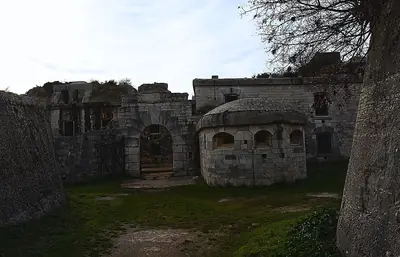
The Austro‑Hungarian Monarchy erected Fort Forno in 1904 to guard the northern entrance of the Fažana Channel. Built as part of Sector Nine’s defensive line, it featured two powerful gun batteries—the Benedetto battery with 305 mm guns and the Caluzzi battery with 280 mm pieces—set within a concrete ring, high stone walls, loopholes and a deep dry moat. Although retreating German forces damaged it in 1945 and it later served as a Yugoslav fodder store, the shattered walls still convey its original strength. From its elevated position you can look out over the water toward Rovinj, Barbariga, Fažana and Pula, explaining why the site was chosen to control the channel. In summer the courtyard sometimes hosts performances, giving the ruins a new lease on life.
Holy Spirit Church (church)
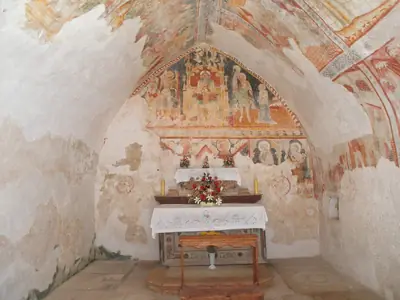
Tucked into Bale’s quiet lanes, the Holy Spirit Church dates back to the fifteenth century. While its stone architecture is modest, the interior is covered in vivid frescoes that span the vaulted ceiling and walls. Biblical scenes, saints and decorative patterns create a colourful “picture book” that once taught a largely illiterate community. The artwork has survived centuries, offering a rare glimpse into medieval religious art in a small Istrian town.
crkva svetog Antona opata (Church of St. Anthony the Abbot)
Located in the heart of Bale, the Church of St. Anthony the Abbot stands as another testament to the town’s long religious heritage. Though the source notes provide few details, its presence in the historic centre underscores Bale’s layers of spiritual and communal life.
Food, Wine and the Countryside
Bale’s identity is tightly linked to the surrounding agriculture. Olive groves, vineyards and truffle‑rich woodlands shape both the landscape and the local cuisine. Restaurants and family‑run taverns serve dishes that highlight Istrian olive oil, distinctive wines and the prized truffles that grow nearby. The village’s relaxed pace makes it easy to enjoy a leisurely meal before setting out on foot or bike to explore the rolling fields, forests and rural hamlets that encircle Bale. The Adriatic coast is also within easy reach for those who wish to combine inland charm with a day at the sea.
Explore Bale with Neywo
Download the Neywo app and let it guide you through Bale’s three narrated spots. Each story begins automatically when you arrive at a place, allowing you to move at your own pace without a group or a set schedule. The audio is offered free of charge and is available in eleven languages, making the village’s history, art and scenery accessible to every visitor. Whether you’re following the stone lanes of the old centre, pausing at the frescoed Holy Spirit Church or gazing out from Fort Forno, Neywo tells the story of each site as you reach it.
Places with an audio guide in Bale
2 places in Bale with a Neywo audio guide. Each one starts telling its story as you reach it.
Walk Bale with Neywo
Neywo turns Bale into a self-guided audio tour. Stories arrive as you reach the place they belong to, and the route reshapes when you wander off it.


More in Istria County
Elsewhere in Croatia
- CresPrimorje-Gorski Kotar County
- Mali LošinjPrimorje-Gorski Kotar County
- RabPrimorje-Gorski Kotar County
- RijekaPrimorje-Gorski Kotar County
- BolSplit-Dalmatia County
- HvarSplit-Dalmatia County
- MakarskaSplit-Dalmatia County
- OmišSplit-Dalmatia County
- SplitSplit-Dalmatia County
- TrogirSplit-Dalmatia County
- Karlovac
- Ozalj