Things to Do in Zagreb, Croatia: Walking Guide
Things to do in Zagreb
Zagreb, Croatia’s landlocked capital, blends medieval streets, Austro‑Hungarian architecture, leafy parks and a lively café culture into a compact city that rewards slow exploration. Its historic Upper Town and Lower Town, linked by the Green Horseshoe of parks, offer churches, museums and everyday charm that make the city worth a visit. Neywo provides a free audio guide for Zagreb with 202 narrated places, letting you hear the story of each sight as you walk.
Top sights in Zagreb
Archbishop’s Palace and Zagreb Cathedral
Rising over Kaptol, Zagreb Cathedral’s twin spires are visible from much of the city and stand over 108 metres tall, making it the tallest sacral building in Croatia and the most monumental Gothic church southeast of the Alps. The original Romanesque cathedral dates from 1217, was damaged in the Tatar invasion of 1242, rebuilt in Gothic style and later restored after the 1880 earthquake by Hermann Bollé, who gave it the Neo‑Gothic form seen today. Beside it, the Archbishop’s Palace—a baroque building from 1729 with later work by Antun Steindl and Bollé—houses an older Romanesque‑Gothic chapel of Saint Stephen first erected in 1250.
Croatian National Theatre
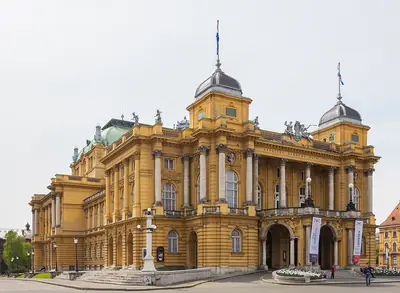
The Croatian National Theatre (HNK Zagreb) dominates Republic of Croatia Square with its bright yellow façade. The institution opened on 24 November 1860, while the present neo‑Baroque building was inaugurated on 14 October 1895 to designs by Ferdinand Fellner and Hermann Helmer, offering seating for about 750 spectators. A typical season features more than 220 stage performances, including over twelve premieres and twenty repeat titles; a second stage in Trešnjevac opened in 2025 and the complex also contains the theatre’s workshops.
Art Pavilion
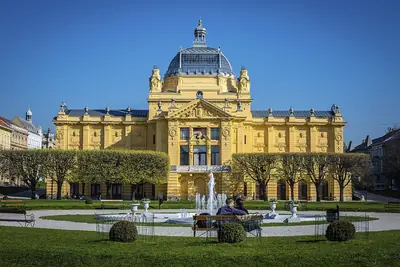
On King Tomislav Square, the Art Pavilion’s domed hall greets visitors arriving by train. Established in 1898, it is the oldest gallery in Southeast Europe and the only building in Zagreb created specifically for large‑scale exhibitions. Protected as a first‑category monument, it is also one of Europe’s earliest prefabricated structures; although often credited to Fellner and Helmer, the design actually comes from Hungarian architects Floris Korb and Kálmán Giergl.
Lotrščak Tower
Lotrščak Tower rises above Strossmayer Promenade as a historic symbol of Zagreb’s fortified past. Built in the thirteenth century to protect the southern gate of Gradec’s town wall, its Romanesque foundations are still evident in the wall’s proportions. After its defensive role faded, the tower was altered in the nineteenth century by Kuno Waidmann, reaching a height of 19 metres plus a five‑metre roof and a six‑metre dome for a total of 30 metres. The dome includes a viewing platform, and the Grič cannon fires at noon as a daily reminder of the tower’s former function.
St. Mark’s Church
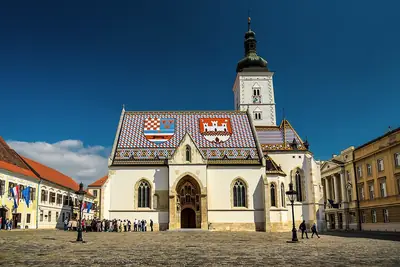
St. Mark’s Church gives its name to the central square of Zagreb’s Upper Town. Its most striking feature is the colourful tiled roof displaying the coats of arms of Croatia, Dalmatia, Slavonia and the emblem of Zagreb. Dating back to the thirteenth century, the church combines Gothic and Romanesque elements and is protected as a cultural good of the Republic of Croatia. The surrounding square houses the Croatian Parliament, the Government of Croatia and the Constitutional Court.
Nikola Tesla Technical Museum
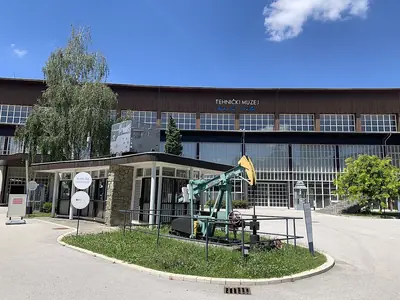
The Nikola Tesla Technical Museum is one of Zagreb’s most popular museums, presenting the history of technology through real objects and working equipment. Visitors can examine historic aircraft, cars, machinery and various technical devices that illustrate how scientific and technical achievements have shaped Croatia’s history.
Bishop Haulik Mansion
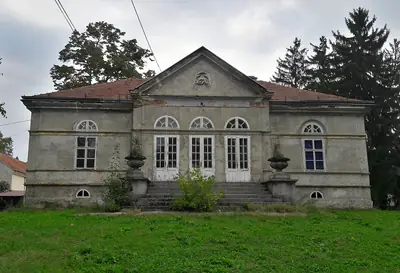
Set in the southeastern part of Maksimir park‑forest, the Bishop Haulik Mansion (Ljetnikovac biskupa Haulika) was built between 1839 and 1840 to a design by Franz Schücht, with construction overseen by Andrija Leitner. Its restrained classical façade features a central projecting section with a richly moulded triangular pediment marked by the monogram G.H., a terrace in front, and a two‑arm staircase at the rear leading to the basement. Inside, the salon opens onto the terrace and is articulated with pilasters and niches; the bedroom contains a striking floor‑set bathtub.
Bishop Haulik New Mansion
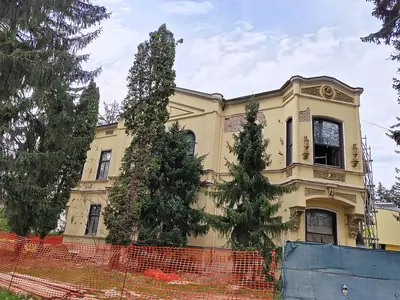
Also in Maksimir Park, the Bishop Haulik New Mansion (Novi ljetnikovac biskupa Haulika) is believed to have been erected around 1855, though reliable sources for that date are lacking. Its façade reflects early Romantic historicism: a shallow projection ends in a low triangular pediment, large slightly recessed windows, bay windows and a three‑window motif give the building a distinctive character, while the roof cornice treatment completes the design. Today the mansion serves as the parish office of the Parish of Saint Jerome.
Meštrović Pavilion
Standing on the Square of the Victims of Fascism, the Meštrović Pavilion was designed by Ivan Meštrović and built in 1938 as an art gallery. During the Independent State of Croatia it was converted into a mosque (work began 1942, finished 1944); three minarets were demolished in 1947, leaving only a well before the entrance. After serving as the Museum of the Revolution in socialist Yugoslavia, the building returned to the Croatian artists’ association in 1990 and, following extensive renovation, has hosted exhibitions and concerts since 2006.
Meštrović Atelier
A few steps from the Pavilion lies the Meštrović Atelier (Atelijer Meštrović), an art museum dedicated to the work of Ivan Meštrović. The space preserves the artist’s studio environment and offers insight into his creative process.
Saint George Killed the Dragon Statue
The Saint George Killed the Dragon Statue (Sveti Juraj ubija zmaja) depicts the legendary scene of the saint confronting and slaying the dragon. Located near the Zagreb 80’s museum, it invites visitors to explore a different facet of the city’s recent history, particularly its 1980s cultural scene.
Basilica of the Heart of Jesus
Situated on Palmotićeva Street, the Basilica of the Heart of Jesus (Bazilika Srca Isusova) is an important Catholic landmark used by the Jesuits. Its neo‑Baroque design was conceived by Croatian architect Janko Holjac, and it is regarded as the second‑largest church in Zagreb after the cathedral.
St. Roch Chapel
Just above Britanski trg, St. Roch Chapel rests in Rokov Park, which takes its name from the chapel itself. The modest church serves as a quiet point of reflection within the green space.
Church of St. Emeric
In the Šestine area of Podsljeme, the Church of St. Emeric (Crkva svetog Mirka) is recognisable by its distinctive roof. An earlier church stood on the site from 1622; the present building took shape through reconstruction in 1909 and was consecrated in September 1927 by auxiliary bishop Franjo Salis‑Seewis. Damaged in the March 2020 earthquake, structural restoration began in July 2022 and continued until summer 2023, with particular attention to the roof under strict conservation supervision.
Church of the Assumption of the Blessed Virgin Mary (Stenjevec)
In Stenjevec, the Church of the Assumption of the Blessed Virgin Mary (Crkva Uznesenja Blažene Djevice Marije) was built between 1758 and 1769 and is now a protected cultural property of the Republic of Croatia. Its long history makes it an important landmark of the Stenjevec neighbourhood.
Explore Zagreb with Neywo
If you have time for a day trip, the nearby town of Samobor offers a charming baroque centre and easy hiking trails. For a contrast to Zagreb’s inland vibe, the Dalmatian city of Zadar lies a few hours away, while north of the capital Varaždin is known for its well‑preserved baroque architecture.
Neywo’s free audio guide turns your walk into a self‑guided discovery. Choose from five walking tours, one bus route and one bike route—each narrated at 202 locations across the city. As you reach a place, the app tells its story, allowing you to explore at your own pace with no group and no schedule. Narration is available in eleven languages, so you can enjoy Zagreb’s history, architecture and everyday life in the language that suits you best.
Download Neywo, press play, and let the city reveal itself step by step.
Places with an audio guide in Zagreb
8 places in Zagreb with a Neywo audio guide. Each one starts telling its story as you reach it.
Self-guided tours in Zagreb
7 tours in Zagreb, free in the Neywo app. Each stop tells its story as you reach it.
- Bike ride
Theatre Square and Mimara by Bike
A short ride on a cycle lane through Zagreb's Lower Town: from the Mimara Museum past Marulic Square to the yellow National Theatre and the domed church of Saint Blaise.
Mimara Museum · Marko Marulić Square · Croatian National Theatre in Zagreb · Church of Saint Blaise, Zagreb
Open this tour: Theatre Square and Mimara by Bike - Bus ride
Line 150: The Upper Town Minibus
A small public ZET minibus that links Tuškanac with Ban Jelačić Square through Gornji Grad, passing the Natural History Museum, the Poor Clares complex, Lotrščak Tower and the St George statue. Ride it to save the climb to the old town.
Croatian Natural History Museum · Lotrščak Tower · Kompleks samostana klarisa · Saint George Killed the Dragon Statue in Zagreb
Open this tour: Line 150: The Upper Town Minibus - Walk
Gradec: The Medieval Upper Town
Climb to Zagreb's hilltop old town. See the tower that fires a cannon at noon, a museum of failed romances, Baroque churches, the colourful tiled roof of St Mark's and the Stone Gate, where a painting of the Virgin survived a great fire. Add a Jesuit gallery, the Poor Clares complex with its 12th-century tower, the Natural History Museum and the museum of naive art.
Lotrščak Tower · St. Catherine's Church, Zagreb · Klovićevi dvori · Stone Gate · Saint George Killed the Dragon Statue in Zagreb · Kompleks samostana klarisa …
Open this tour: Gradec: The Medieval Upper Town - Walk
Kaptol: Cathedral Spires and the Market
Start on Ban Jelacic Square, then climb to Kaptol, the church-town that once rivalled Gradec. Browse the red umbrellas of Dolac market, the market church and the Franciscan monastery, stand beneath the twin Neo-Gothic spires of Zagreb Cathedral and finish on Europe Square.
Zagreb · Dolac Market · Church of St. Mary in Zagreb · Monastery of St. Francis in Zagreb · Kaptol Street, 9 · Zagreb Cathedral …
Open this tour: Kaptol: Cathedral Spires and the Market - Walk
Lenuci's Green Horseshoe: Pavilions, Parks and Museums
Stroll the 19th-century chain of parks in the Lower Town: the King Tomislav monument and the domed Art Pavilion at the station end, the puppet theatre, Strossmayer Square with its academy, the grand mansions housing Croatia's modern art and archaeology collections, the Tesla statue, the Serbian Orthodox cathedral and flowery Preradovic Square.
King Tomislav Square in Zagreb · Art Pavilion in Zagreb · Zagrebačko kazalište lutaka · Strossmayer square · Palace of the Croatian Academy of Sciences and Arts · National Museum of Modern Art …
Open this tour: Lenuci's Green Horseshoe: Pavilions, Parks and Museums - Walk
Theatre Square, Mimara and the Botanical Garden
Zagreb's Austro-Hungarian west side: the Mimara Museum full of masters, the ethnographic and applied-arts museums, the yellow Neo-Baroque National Theatre with Mestrovic's Well of Life, the oldest university in continuous operation, a neo-Gothic Lutheran church and the quiet botanical garden with its water-lily ponds.
Mimara Museum · Ethnographic Museum of Zagreb · Museum of Arts and Crafts · Croatian National Theatre in Zagreb · Well of Life · University of Zagreb …
Open this tour: Theatre Square, Mimara and the Botanical Garden - Walk
Mirogoj: Zagreb's Garden of the Dead
Visit one of Europe's most beautiful cemeteries, the Croatian Pantheon, with its arcades, chapels and war memorials, reached through Gupceva zvijezda square.
Gupčeva zvijezda · Mirogoj Cemetery · Mirogoj Christ the King Chapel · Holy Apostles Peter and Paul Chapel in Mirogoj · Spomenik palim hrvatskim vojnicima u Prvom svjetskom ratu · Voice of Croatian Victims – Wall of Pain
Open this tour: Mirogoj: Zagreb's Garden of the Dead
Walk Zagreb with Neywo
Neywo turns Zagreb into a self-guided audio tour. Stories arrive as you reach the place they belong to, and the route reshapes when you wander off it.


More in Croatia
Elsewhere in Croatia
- DubrovnikDubrovnik-Neretva County
- KorčulaDubrovnik-Neretva County
- StonDubrovnik-Neretva County
- BaleIstria County
- MotovunIstria County
- PorečIstria County
- PulaIstria County
- RovinjIstria County
- UmagIstria County
- CresPrimorje-Gorski Kotar County
- Mali LošinjPrimorje-Gorski Kotar County
- RabPrimorje-Gorski Kotar County