Visiting Troyes, France: Top Sights on Foot
Things to do in Troyes: the best places to see
Troyes is a historic city in northeastern France, known for its Gothic churches, Renaissance mansions, stained glass and museums. The old centre is especially rewarding on foot, with important religious buildings and historic houses gathered in a compact urban setting. Neywo has a free audio guide for Troyes with 40 narrated places, helping you discover the city as you walk.
Troyes is in Grand Est, a region with a rich architectural and cultural heritage. Its churches and former religious buildings reveal the city’s long history, while its museums connect medieval and Renaissance art with more recent creative traditions.
What to see in Troyes
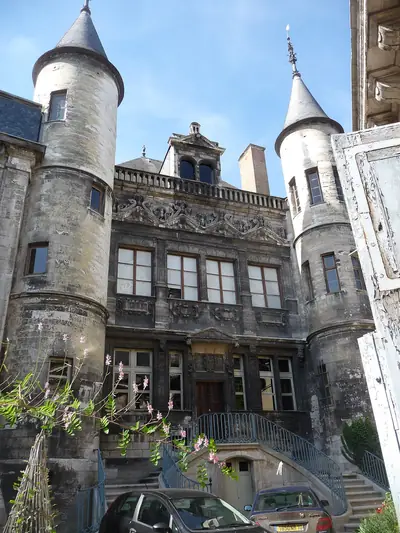
Maison du Dauphin
The Maison du Dauphin, also known as the Hôtel du Dauphin, is a historic townhouse in Troyes’ old quarter. It is a French hôtel particulier: a grand private residence built for a wealthy family. Its presence adds to the distinctive architectural character of the city’s historic streets.
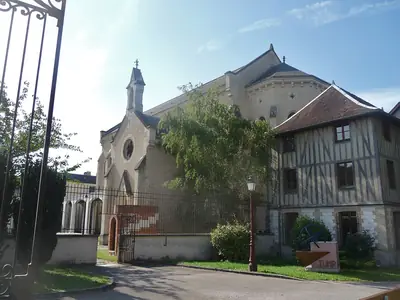
Église Saint-Martin-ès-Aires
The Église Saint-Martin-ès-Aires stands on the site of a former abbey founded in the ninth century. The abbey was established to house the relics of Lupus, the bishop of Troyes, who became known as Saint Loup. Remembered as the defender of Troyes against Attila the Hun, Saint Loup remains the city’s patron saint.
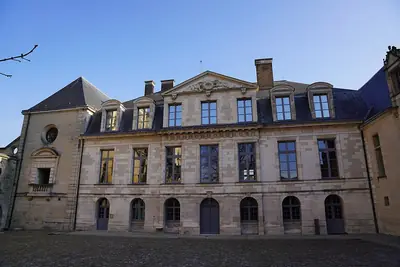
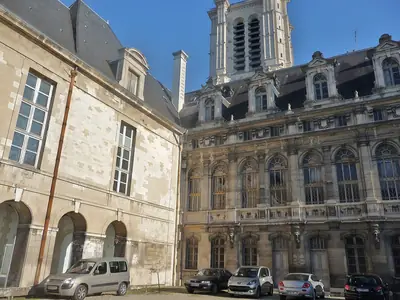
Palais épiscopal de Troyes
The Palais épiscopal de Troyes, or Ancien Evêché, was formerly the episcopal palace and residence of the bishops of Troyes. Since 1982, it has housed the Musée d’Art moderne de Troyes. The building therefore brings together historic architecture and modern art in the centre of the city.
It has been classified as a monument historique since February 10, 1909.
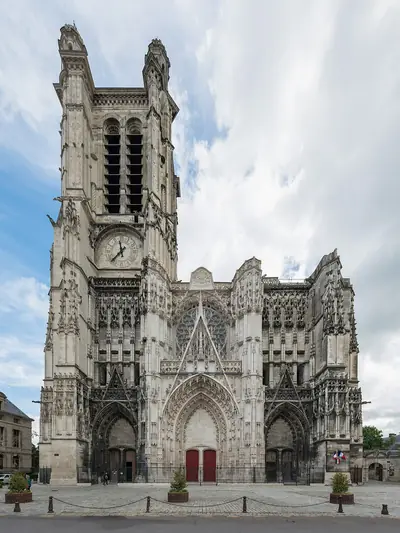
Troyes Cathedral
Troyes Cathedral, officially the Cathédrale Saint-Pierre-et-Saint-Paul, is the seat of the Bishop of Troyes and one of the finest examples of French Gothic architecture in the Champagne region. Dedicated to Saints Peter and Paul, it has been the spiritual heart of Troyes for centuries.
The cathedral was officially classified as a monument historique in 1862, making it one of the earliest buildings in France to receive this protected status. Its scale and Gothic design make it one of the essential places to see in Troyes.
Abbey of Saint Loup
The Abbey of Saint Loup was founded in the ninth century to house the relics of Bishop Lupus of Troyes, later known as Saint Loup. It was built on the site of a Gallo-Roman villa beside the Via Agrippa, the ancient Roman road that corresponds to today’s rue de la Cité.
The abbey originally stood outside the Gallo-Roman city before the expanding medieval town surrounded it. Charlemagne later gave it to the scholar Alcuin, and the abbey developed a celebrated library and scriptorium. Its long history makes it one of Troyes’ most significant religious and cultural sites.
Cité du Vitrail
The Cité du Vitrail is a museum devoted to the art and history of stained glass. It opened in 2022 and occupies the Hôtel-Dieu-le-Comte, a historic building that has been transformed into a museum space.
Stained glass is one of the defining artistic features of Troyes, and the Cité du Vitrail offers a focused way to understand this part of the city’s heritage.
Hôtel-Dieu-le-Comte
The Hôtel-Dieu-le-Comte is a historic site in Troyes that today serves as a museum. It is also the home of the Cité du Vitrail, creating a direct connection between the building’s history and the city’s stained-glass tradition.
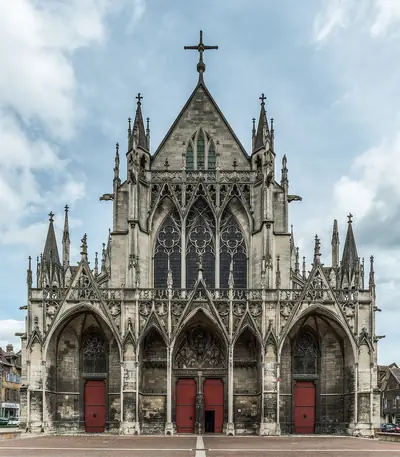
Basilica of St. Urbain
The Basilica of Saint Urban of Troyes is a major example of late Gothic architecture and a reference monument of the radiant Gothic style. Pope Urban IV, who was born in Troyes around 1195, founded the church in 1262 on the site of his childhood home.
The basilica is particularly notable for its stained glass. Its walls are almost entirely made of glass, and some windows in the choir date from the thirteenth century. The unified design is striking, especially given that construction continued over several centuries and was interrupted by war and a lack of funding.
Hôtel de Vauluisant
The Hôtel de Vauluisant is a sixteenth-century mansion and a remarkable example of a French hôtel particulier. Since 1904, it has been classified as a Monument historique.
The building houses the Musée du Vauluisant, which explores two important parts of Troyes’ identity. Its collections include sixteenth-century art from the region and exhibits devoted to bonneterie, the hosiery and knitwear industry that made Troyes famous across Europe. Here, the architecture and the museum collections together tell the story of the city’s Renaissance heritage and industrial tradition.
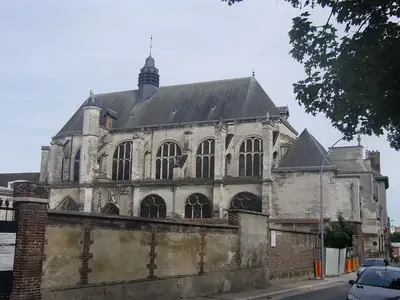
Église Saint-Pantaléon
The Église Saint-Pantaléon is one of the notable churches in the Aube region. It is also part of the historic centre’s rich collection of religious buildings, making it a worthwhile stop while exploring Troyes on foot.
Église Saint-Nicolas
The Église Saint-Nicolas is a sixteenth-century Catholic church and an example of Renaissance craftsmanship. Inside, it contains an important collection of Renaissance stained-glass windows and sculpture, including some of the finest examples of their kind in the region.
Église Saint-Rémy
The Église Saint-Rémy is one of Troyes’ oldest churches and has been listed as a historic monument since 1908. It contains paintings from the sixteenth and seventeenth centuries, as well as stained-glass windows from the nineteenth and early twentieth centuries.
The church was the baptismal church of the artists François Girardon and Jacques de Létin, also known as Ninet de Létin. It houses numerous important works by both artists.
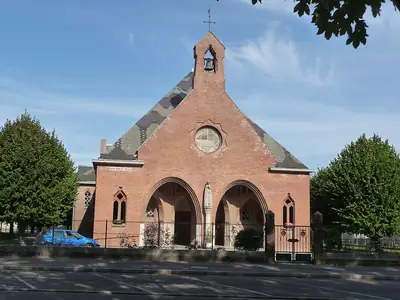
Église Notre-Dame-des-Trévois
The Église Notre-Dame-des-Trévois is a Catholic church in the heart of Troyes. It is one of the city’s religious landmarks to look out for while walking through the historic streets.
Église Saint-Martin-ès-Vignes
The Église Saint-Martin-ès-Vignes is another Catholic church in the centre of Troyes. Its name recalls the vineyards that once surrounded this part of the city, offering a reminder of the landscape and history beyond the modern streets.
Théâtre de Champagne
The Théâtre de Champagne is a distinctive cultural venue with an unusual past. It was originally known as the municipal circus before being officially renamed the Théâtre de Champagne in 1978.
Explore Troyes with a free audio guide
A Troyes self-guided walking tour is a practical way to connect the city’s churches, mansions and museums without following a group. Neywo’s free audio guide includes 40 narrated places, with two walking tours and one bus route.
The two walks are:
- Saint Loup, Counts and Cathedral: Troyes’ Medieval Heart — 2.05 km, 115 minutes and 12 narrated stops.
- Renaissance Mansions and Rashi’s Troyes — 1.86 km, 96 minutes and 12 narrated stops.
There is also one bus route:
- Line 1 Through the Heart of Troyes — 2.2 km, 9 minutes and 5 narrated stops.
The app tells the story of each place as you reach it, at your own pace, with no group and no schedule. Narration is available in 11 languages, making it an easy way to explore Troyes independently.
Download Neywo and explore Troyes at your own pace
Download Neywo to turn your visit into a free walking tour of Troyes with stories that play when you arrive at each stop. Choose a route through the medieval heart, discover Renaissance mansions, or use the bus line to connect more landmarks. When you have finished exploring Troyes, continue through Reims, Strasbourg or another city in France.
Places with an audio guide in Troyes
8 places in Troyes with a Neywo audio guide. Each one starts telling its story as you reach it.
Self-guided tours in Troyes
3 tours in Troyes, free in the Neywo app. Each stop tells its story as you reach it.
- Bus ride
Line 1 Through the Heart of Troyes
TCAT's Bus 1 cuts straight through the old town. Ride it from the Renaissance quarter by Saint-Pantaléon past the market church of Saint-Jean and the Théâtre de Champagne to the Abbey of Saint-Loup and the Maison du Dauphin by the cathedral.
Église Saint-Pantaléon (Troyes) · Église Saint-Jean de Troyes · Théâtre de Champagne · Abbey of Saint Loup, Troyes · Maison du Dauphin, Troyes
Open this tour: Line 1 Through the Heart of Troyes - Walk
Saint Loup, Counts and Cathedral: Troyes' Medieval Heart
Start where Saint Loup is said to have faced down Attila, then climb through the Gothic cathedral quarter to the abbey-turned-museum, the stained-glass city of Saint-Urbain and the old seat of the Counts of Champagne. A walk through the churches, convents and courts that made Troyes a medieval capital.
Maison du Dauphin, Troyes · Église Saint-Martin-ès-Aires (Troyes) · Palais épiscopal de Troyes · Troyes Cathedral · Abbey of Saint Loup, Troyes · Musée des Beaux-Arts de Troyes …
Open this tour: Saint Loup, Counts and Cathedral: Troyes' Medieval Heart - Walk
Renaissance Mansions and Rashi's Troyes
After the great fire of 1524 the merchants of Troyes rebuilt in brick, stone and timber. Walk the rebuilt quarter past half-timbered houses, carved mansions and a rood screen like lace, and stop at the house where the medieval sage Rashi is remembered.
Église Saint-Rémy de Troyes · Église Saint-Jean de Troyes · Hôtel Juvénal des Ursins · Église de la Madeleine (Troyes) · Synagogue Rachi · Hôtel de la Croix d'Or …
Open this tour: Renaissance Mansions and Rashi's Troyes
Walk Troyes with Neywo
Neywo turns Troyes into a self-guided audio tour. Stories arrive as you reach the place they belong to, and the route reshapes when you wander off it.

