Things to Do in Querétaro, Mexico: Walking Guide
Things to Do in Querétaro: Historic Churches, Museums and Places That Made History
Looking for things to do in Querétaro? The capital of the state of Querétaro brings together colonial churches and convents, museums in historic buildings, and places connected with Mexico’s independence, the execution of Emperor Maximilian, and the 1917 Constitution. Its historic center is the ideal place to discover this layered history on foot. Neywo’s free audio guide for Querétaro covers 23 narrated places.
Querétaro is part of Mexico, and its story reaches well beyond the city itself. Three places in the state are UNESCO World Heritage sites: the historic monuments zone of Querétaro, listed in 1996; the Franciscan missions of the Sierra Gorda, listed in 2003; and the Camino Real de Tierra Adentro, added in 2010.
What to See in Querétaro’s Historic Center
The best way to understand what to see in Querétaro is to move through its religious buildings, museums, and historic public spaces. The following places reveal the city’s architecture and its role in the history of Mexico.
Templo y exconvento de San Francisco de Asís de Querétaro
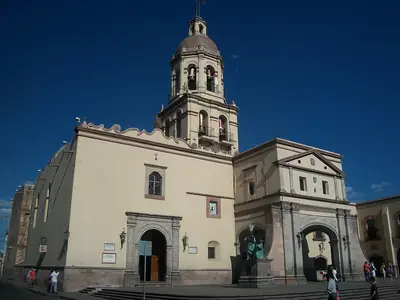
The former Franciscan convent of San Francisco once extended across areas that now include the city’s principal plaza and Zenea Garden. The convent began in 1589, the church was completed in 1640, and the cloister followed in 1698. For a time, the church also served as Querétaro’s cathedral.
Inside, surviving details include a Baroque lectern and eighteenth-century choir stalls created by architect Francisco Eduardo Tresguerras. Sculptures by Mariano Montenegro and Mariano Arce are also preserved there. The current main altarpiece is Neoclassical and replaced the original one in 1990.
Jardín Zenea
Jardín Zenea occupies part of the area once connected with the former Franciscan convent. Its position in the historic center makes it a useful point from which to continue exploring Querétaro’s churches, museums, and public buildings.
Teatro de la República
Teatro de la República is one of Querétaro’s most important historic buildings. Its Neoclassical design houses three floors and 500 seats, while the names of the signatories of the 1917 Constitution appear in gold letters at the back of the stage.
The theater was built between 1845 and 1852 under the direction of architect Camilo San Germán. Originally called Teatro Iturbide, it later became the setting for the trial of Maximilian I of Mexico in 1867 and for the drafting of Mexico’s Constitution in 1917. The building also contains a museum dedicated to the Constituent Congress of 1917.
Museo Regional de Querétaro
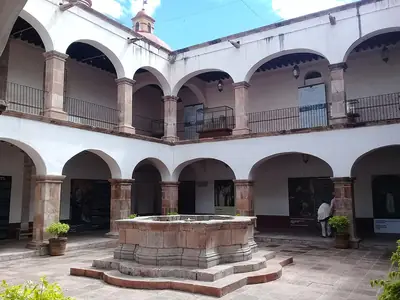
The Regional Museum of Querétaro occupies the former Great Convent of San Francisco. The building was constructed during the sixteenth century, between the 1540s and 1550s, and housed the Province of Saint Peter and Saint Paul of Michoacán for about two centuries.
The convent expanded at the beginning of the seventeenth century as part of a larger complex devoted to evangelization. It later served as Querétaro’s cathedral, and part of its façade was altered in 1879 when several chapels were demolished during the Reform War. In the twentieth century, the building became a museum of colonial religious art and a school for arts and crafts.
Museum of Sacred Art of Querétaro
The Museum of Sacred Art, or Museo de Arte Sacro, is devoted to sacred art. It adds another perspective to Querétaro’s religious heritage and fits naturally into a walk through the city’s former convents and churches.
Queretaro Art Museum
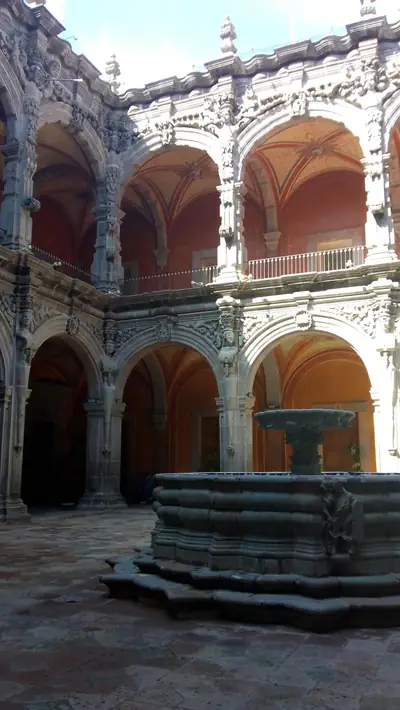
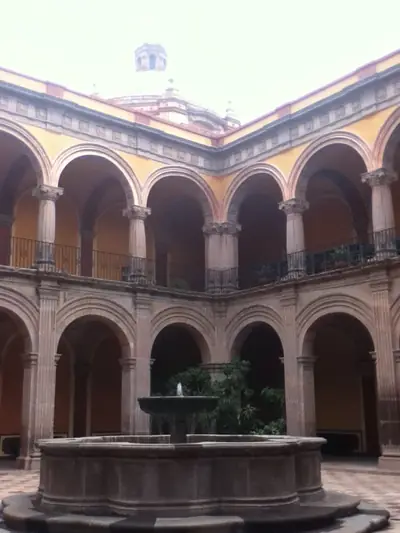
The Queretaro Art Museum is housed in the cloister of the former San Agustín convent. Founded there on September 22, 1988, it belongs to the Queretaro Institute of Culture and the Arts.
Its fifteen exhibition rooms contain temporary displays and a permanent collection of paintings and sculptures. The permanent collection covers the period from the beginning of the seventeenth century to the middle of the nineteenth century, tracing changes in artistic styles in Mexico.
Temple and Convent of Saint Clare of Assisi
The Temple and Convent of Saint Clare of Assisi is a Baroque Catholic church and former convent founded in the seventeenth century. It became one of the most important women’s convents in New Spain and is especially notable for its Baroque altarpieces.
The complex lost part of its original facilities after the War of the Reform, but the surviving temple and convent remain within Querétaro’s Historic Monuments Zone, recognized as a UNESCO World Heritage Site in 1996.
Museo de la Ciudad de Querétaro
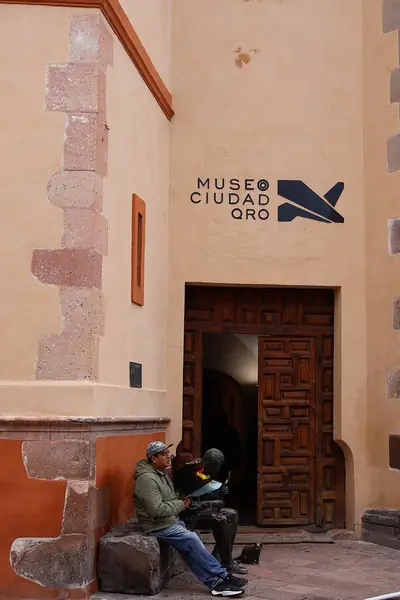
The Museo de la Ciudad de Querétaro occupies a former Capuchin convent dating from the eighteenth century. The Baroque building now brings contemporary visual arts, music, film, and theater together in the historic center.
Its changing artistic program creates an interesting contrast between the building’s religious past and its present-day cultural role.
St. Philip Neri Cathedral
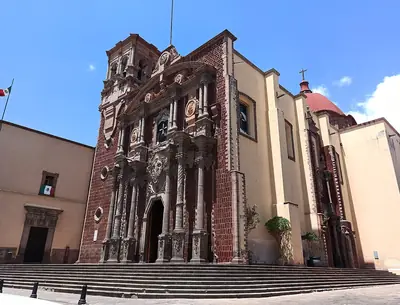
Also known as Querétaro Cathedral, St. Philip Neri Cathedral began as an Oratory of Saint Philip Neri. The Order of Saint Philip Neri constructed it between 1786 and 1804 at the request of Father Martin de San Cayetano.
The church was blessed by Father Miguel Hidalgo on September 19, 1805. It is considered one of the last buildings constructed during the colonial period, and its design marks a transition from Baroque to Neoclassicism. Its exterior combines quarry stone and tezontle. In 1921, Pope Benedict the Fifteenth declared it a cathedral; it was consecrated in 1931.
Saint Rose of Viterbo Church and Convent
Saint Rose of Viterbo Church and Convent is one of the most representative examples of New Spanish Baroque in Mexico. The Catholic church in Santiago de Querétaro is dedicated to Saint Rose of Viterbo, an Italian saint of the Third Order of Saint Francis.
The church and convent are known in Spanish as Santa Rosa de Viterbo, a name that preserves the saint’s connection with the complex.
Museums and Other Places to Visit in Querétaro
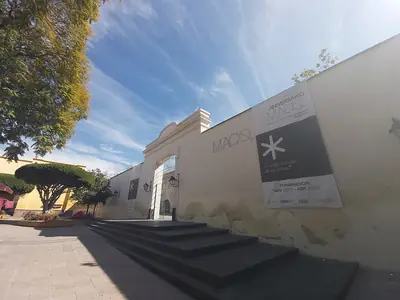
Querétaro’s historic center also includes museums with very different subjects. The Contemporary Art Museum of Queretaro, or MACQ, is dedicated to artistic work from the present day. The Museo de Bichos offers another type of visit, with a name that invites a closer look at the world of “bichos”.
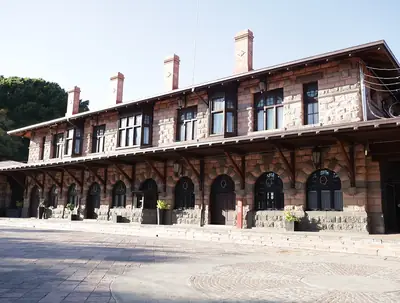
For railway history, visit the Cultural Center of the Old Train Station of Querétaro. Also known as Centro Cultural Antigua Estación del Ferrocarril de Querétaro, the building preserves the memory of the city’s railway era. The station was inaugurated on October 3, 1904, and stands on Héroe de Nacozari Street in the historic center.
College of Santa Cruz de Querétaro
The College of Santa Cruz, also known as the Convento de la Santa Cruz and Templo La Cruz, combines a sanctuary, convent, and university college. The sanctuary and convent date from the seventeenth century, during the period of New Spain.
Founded in 1683 by Antonio Llinás as a Franciscan missionary college, it was the second Roman Catholic missionary college created in the New World to train missionaries. Damián Massanet was among its other founders.
Emperor Maximilian Memorial Chapel
The Emperor Maximilian Memorial Chapel stands on Cerro de las Campanas, or Hill of the Bells. It marks the place where Emperor Maximilian I of Mexico and his generals Miguel Miramón and Tomás Mejía were executed on June 19, 1867.
Commissioned by Maximilian’s brother, Emperor Franz Joseph I of Austria, the chapel was inaugurated in 1901. Its quiet setting preserves the memory of an event that changed the course of Mexico’s history.
Explore Querétaro with Neywo
Neywo offers two walking tours in Querétaro, with 23 narrated places across the city:
- Querétaro’s colonial heart: convents, a garden and a theatre that made history — 2.08 km, 85 minutes, and 11 stops.
- From the aqueduct to Maximilian’s hill — 5.64 km, 119 minutes, and 7 stops.
The free audio guide tells the story of each place as you reach it, at your own pace. There is no group and no schedule: simply follow the walks and listen as Querétaro’s churches, museums, historic buildings, and memorials unfold around you.
Places with an audio guide in Querétaro
8 places in Querétaro with a Neywo audio guide. Each one starts telling its story as you reach it.
Self-guided tours in Querétaro
2 tours in Querétaro, free in the Neywo app. Each stop tells its story as you reach it.
- Walk
Querétaro's colonial heart: convents, a garden and a theatre that made history
Querétaro's UNESCO-listed centre packs the story of New Spain into a few blocks. Start at the Franciscan convent and the Jardín Zenea, enter the theatre where Maximilian was sentenced and the 1917 Constitution was drafted, then wander through baroque cloisters turned museums, past Santa Clara and the cathedral, ending at the exuberant church of Santa Rosa de Viterbo.
Monumento a los Concheros · Templo y exconvento de San Francisco de Asís de Querétaro · Jardín Zenea · Teatro de la República · Museo Regional de Querétaro · Museum of Sacred Art of Querétaro …
Open this tour: Querétaro's colonial heart: convents, a garden and a theatre that made history - Walk
From the aqueduct to Maximilian's hill
Walk the length of Querétaro's best-known symbol, the 74-arch aqueduct, and continue to the Santa Cruz convent and the Contemporary Art Museum beside it, the old railway station and the places tied to Emperor Maximilian's last days. The route ends on the Hill of the Bells, where the Second Mexican Empire fell in 1867.
Querétaro Aqueduct · College of Santa Cruz de Querétaro · Contemporary Art Museum of Queretaro · Monumento a Ignacio Pérez · Cultural Center of the Old Train Station of Querétaro · Emperor Maximilian Memorial Chapel …
Open this tour: From the aqueduct to Maximilian's hill
Walk Querétaro with Neywo
Neywo turns Querétaro into a self-guided audio tour. Stories arrive as you reach the place they belong to, and the route reshapes when you wander off it.

