Visiting Mexico City, Mexico: Top Sights on Foot
Things to Do in Mexico City: What to See and Explore
Mexico City is a capital built in layers, where the Mexica city of Tenochtitlan, the colonial period, and modern Mexican culture meet. The best things to do in Mexico City include exploring the Historic Downtown, visiting world-class museums, discovering Coyoacán and Chapultepec, and seeing landmarks connected with Mexico’s political, religious, artistic, and sporting history. Neywo offers a free audio guide for Mexico City with 307 narrated places.
What to See in Mexico City
Historic Downtown, the Zócalo, and the National Palace
The Historic Downtown of Mexico City is the city’s architectural and urban heart. Covering about 9.7 square kilometres and 668 blocks, it contains around 1,500 buildings of artistic or historic value, from the sixteenth to the twentieth centuries.
Its central square, Plaza de la Constitución—better known as the Zócalo—stands on the site of the former ceremonial centre of Mexico-Tenochtitlan. Around it are some of the capital’s most important landmarks, including the National Palace and the Mexico City Metropolitan Cathedral.
The National Palace occupies about 40,000 square metres and has been at the centre of political life for centuries. Hernán Cortés began building a palace here in 1522, over the ruins of the Mexica ruler Moctezuma Xocoyotzin’s residence. The complex later served as the seat of the viceroys of New Spain and of different republican and monarchical governments.
On the northern side of the Zócalo, the Mexico City Metropolitan Cathedral combines Gothic, Baroque, Churrigueresque, and Neoclassical elements. Construction began in 1573, the interior was completed in 1667, and the exterior in 1813. Its long building history is visible in its five naves, 51 vaults, 74 arches, and 40 columns.
Templo Mayor and the Aztec Sun Stone
The Templo Mayor preserves part of the sacred precinct of Tenochtitlan. Nearby, the Templo Mayor Museum helps explain the archaeological remains and the Mexica capital that once stood beneath the modern city.
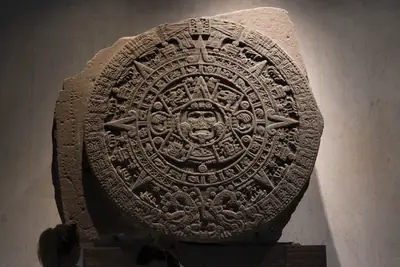
The Aztec Sun Stone, or Piedra del Sol, is displayed in the National Museum of Anthropology. Carved from a single block of olivine basalt, the disk measures about 3.6 metres across and weighs more than 24 tonnes. Its carved surface refers to Mexica ideas about the cosmos, the sun, time, days, eras, and calendrical cycles.
The stone was buried in the Zócalo after the Spanish conquest and rediscovered on 17 December 1790 during repairs to Mexico City Cathedral. It remained mounted on the cathedral’s exterior wall until 1885, when it eventually moved to its present home.
Museums around Plaza Manuel Tolsá and the Alameda
The historic centre also offers a concentrated group of museums and monumental buildings. Museo Nacional de Arte, known as MUNAL, occupies the former Palace of the Secretariat of Communications and Public Works in Plaza Manuel Tolsá. Its collection spans five centuries of Mexican art, from the viceregal era to the first half of the twentieth century, with painting and sculpture associated with artists including Diego Rivera, Frida Kahlo, José Clemente Orozco, and David Alfaro Siqueiros.
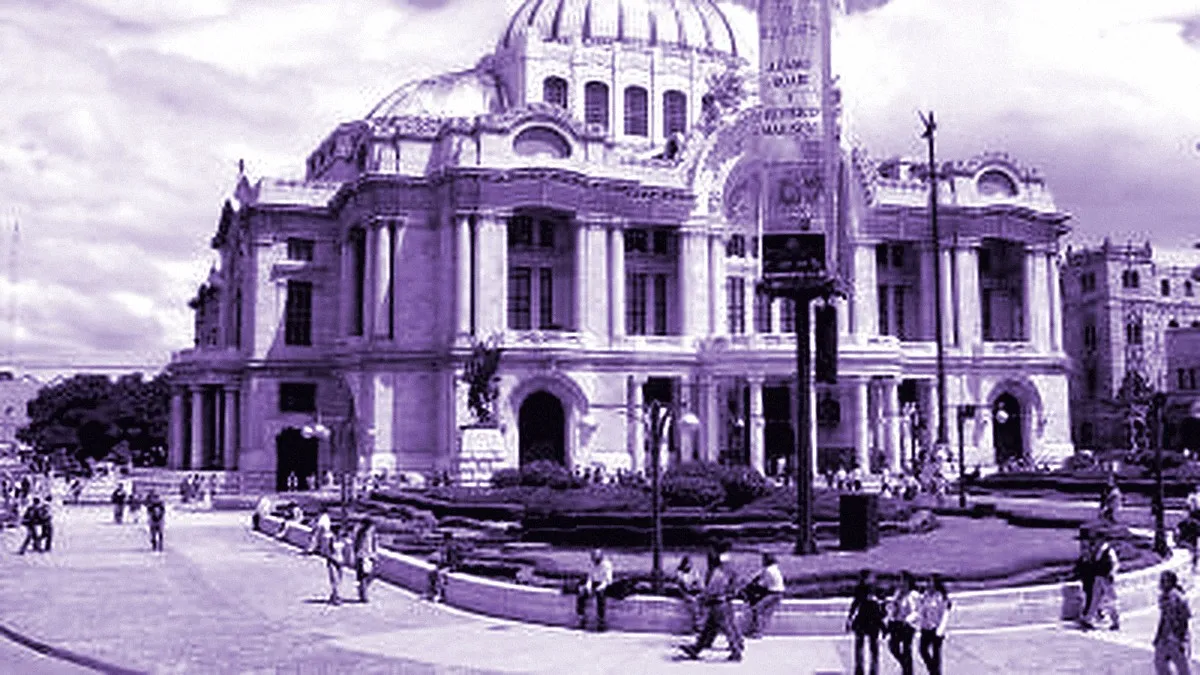
Other notable places in this area include the Palace of Fine Arts, the House of Tiles, Torre Latinoamericana, Alameda Central, and the Museo Mural Diego Rivera. Together, they show the changing architectural and artistic character of the capital.
Chapultepec Castle and the National Museum of Anthropology
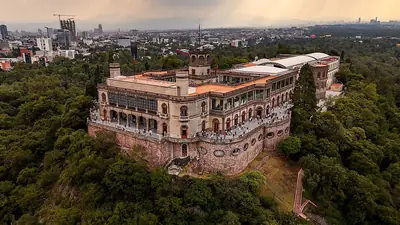
Chapultepec Park brings together wooded paths, museums, monuments, and Chapultepec Castle. The castle stands on a hill 2,325 metres above sea level and now houses the National Museum of History.
Its changing roles are part of its story. It began as a summer residence for the viceroy, then served as a gunpowder store, military academy, imperial palace, presidential residence, and observatory. Its architecture combines Baroque and Neoclassical elements, with later influences connected to the Second Mexican Empire.
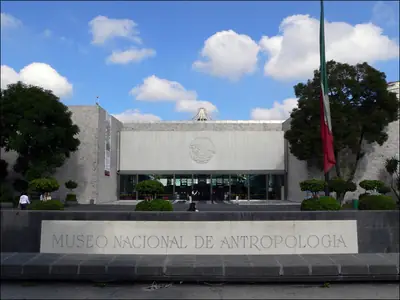
The National Museum of Anthropology, also in Chapultepec Park, presents the archaeological heritage of Mesoamerica and the cultural diversity of Mexico’s Indigenous peoples. Its collection includes the Stone of the Sun, colossal Olmec heads, monumental Teotihuacan sculptures, the tomb of Pakal, funerary offerings from Monte Albán, stelae from Xochicalco, and a Toltec atlante from Tollan-Xicocotitlan. The museum contains 22 permanent exhibition galleries, two temporary-exhibition galleries, and three auditoriums.
Luis Barragán House and Studio
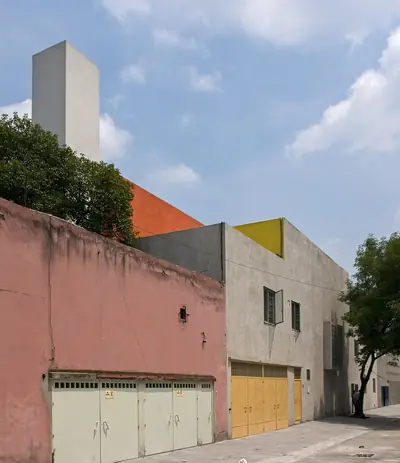
The Luis Barragán House and Studio offers an intimate way to understand one of the most influential examples of modern Mexican architecture. Built in 1948 in the west of Mexico City, it was the architect’s home and studio until his death in 1988.
The residence became a museum in 1994, preserving the house, studio, original furnishings, and personal objects rather than presenting Barragán’s work as a separate collection. The building and its green areas cover 1,162 square metres and show the architect’s style during the period after the Second World War. Visits are available only through guided tours and must be arranged by appointment.
Museo Soumaya and art in Polanco
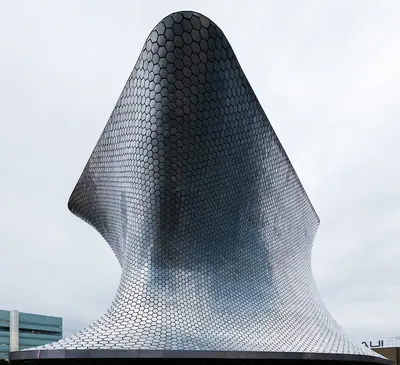
Museo Soumaya is a non-profit cultural institution devoted to sharing the collection of the Fundación Carlos Slim. Across its venues, it holds more than 60,000 works spanning 30 centuries, with art from Mexico, Latin America, and Europe.
The collection includes Pre-Hispanic Mesoamerican sculpture, Mexican art of the nineteenth and twentieth centuries, European Old Masters, and modern Western art. Artists represented include Auguste Rodin, Monet, Renoir, Degas, El Greco, Tintoretto, Brueghel, Murillo, and Dalí. Its group of Rodin sculptures and its portraits, landscapes, and religious paintings from the New Spanish Baroque are particular strengths.
Coyoacán and the Frida Kahlo Museum
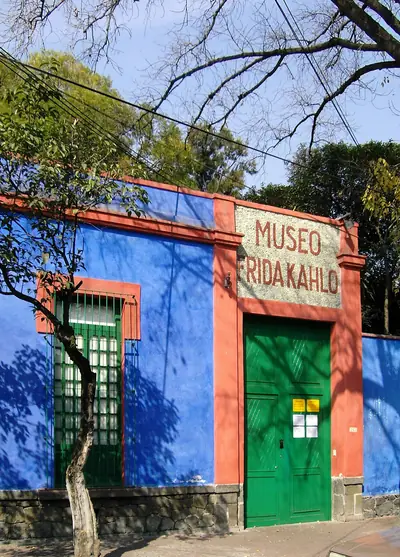
Coyoacán is one of the best places to experience Mexico City’s artistic and historic side. The Frida Kahlo Museum, known as La Casa Azul because of its cobalt-blue walls, stands in Colonia del Carmen.
This is the house where Frida Kahlo was born, grew up, spent much of her life, and lived for several years with Diego Rivera. The museum displays her work in the rooms of her former home, alongside Mexican folk art, pre-Hispanic artefacts, photographs, documents, books, furniture, and objects from her daily life. The house opened to the public as a museum in July 1958, four years after Kahlo’s death.
Coyoacán also features plazas, colonial buildings, the Iglesia de San Juan Bautista, the Museo Nacional de Culturas Populares, and the Museo de las Intervenciones.
The Angel of Independence and Monumento a la Revolución
Paseo de la Reforma is home to the Angel of Independence, officially the Monumento a la Independencia. Inaugurated in 1910 by President Porfirio Díaz, it commemorates the centenary of the beginning of Mexico’s War of Independence. The column is crowned by a gold-leaf-covered statue of Winged Victory holding a laurel wreath and a broken chain.
At Plaza de la República, the Monumento a la Revolución commemorates the Mexican Revolution. Its story began as a planned Federal Legislative Palace in 1897, but the unfinished project was transformed into a revolutionary monument after construction stopped. Completed in 1938, it rises 67 metres and forms part of an ensemble with the Museo Nacional de la Revolución.
Basilica of Our Lady of Guadalupe
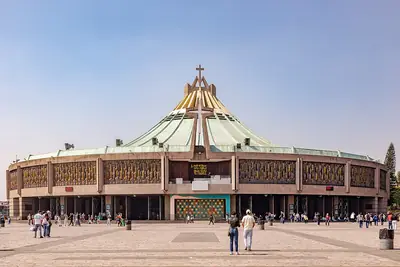
At the foot of Tepeyac Hill, the Basilica of Our Lady of Guadalupe is one of Mexico City’s most important Catholic sanctuaries. Its circular building is about 100 metres across and is covered by a copper-plated, tent-like roof that has gradually turned green.
The basilica was designed to welcome more pilgrims than the Old Basilica could accommodate. Inside, it displays the tunic of Juan Diego Cuauhtlatoatzin, on which the image of Our Lady of Guadalupe is said to have appeared.
Estadio Azteca and UNAM
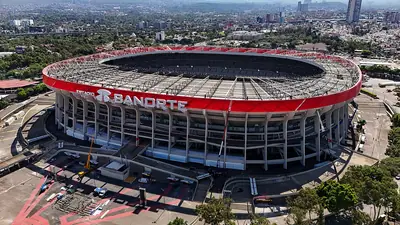
Football enthusiasts can visit Estadio Azteca, officially known as Estadio Banorte for sponsorship reasons. With room for about 87,000 spectators, it is Mexico’s largest stadium and home to Club América and the Mexican national team. It hosted World Cup finals in 1970 and 1986, as well as the 1970 semifinal known as the “Game of the Century.”
The National Autonomous University of Mexico, or UNAM, adds another major cultural landmark. Its Ciudad Universitaria campus combines architecture and art, with murals by artists including Diego Rivera and David Alfaro Siqueiros. A portion of the campus is recognized as a UNESCO World Heritage site, and the university played an important role in Mexico’s public life, including the 1968 student movement.
Explore Mexico City with Neywo
Neywo turns a visit into a Mexico City self-guided walking tour: the app tells the story of each place as you reach it, at your own pace, with no group and no schedule. The city guide includes 7 walking tours, 1 bus route, and 1 bike route, with 307 narrated places in total. Narration is available in 11 languages.
The walks include:
- Historic Downtown: 2.54 km, 111 minutes, and 12 stops covering the Zócalo, National Palace, Templo Mayor, the Metropolitan Cathedral, and other landmarks.
- Plaza Tolsá to the Alameda: 2.19 km, 94 minutes, and 12 stops, including MUNAL, the House of Tiles, Torre Latinoamericana, and Alameda Central.
- Chapultepec Park: 2.92 km, 98 minutes, and 8 stops, including the National Museum of Anthropology and Chapultepec Castle.
- Coyoacán: 3.68 km, 86 minutes, and 6 stops, including the Frida Kahlo Museum.
- San Ángel: 3.83 km, 85 minutes, and 6 stops.
- Paseo de la Reforma: 3.02 km, 84 minutes, and 7 stops, including the Angel of Independence.
- Tlatelolco: 1.19 km, 47 minutes, and 6 stops.
- Metrobús Line 7: 5.8 km, 25 minutes, and 9 stops along Reforma.
- Polanco and Chapultepec by bike: 9.7 km, 48 minutes, and 6 stops.
Download Neywo and explore Mexico City independently, from the foundations of Tenochtitlan to Chapultepec, Coyoacán, Reforma, and beyond. You can also continue discovering Mexico through its other cities, including Puebla, Oaxaca, Guanajuato, and Morelia.
Places with an audio guide in Mexico City
8 places in Mexico City with a Neywo audio guide. Each one starts telling its story as you reach it.
Self-guided tours in Mexico City
9 tours in Mexico City, free in the Neywo app. Each stop tells its story as you reach it.
- Bike ride
Polanco and Chapultepec by Cycle Lane
Ride the cycle lanes from the national cartography museum and the children's museum in Chapultepec's second section, past Aztlán park to Polanco's oil fountain, the Soumaya museum and the British chapel.
Museo Nacional de Cartografía, Mexico City · Papalote Museo del Niño · Aztlán Parque Urbano · Fuente de Petróleos · Museo Soumaya · British Chapel
Open this tour: Polanco and Chapultepec by Cycle Lane - Bus ride
Metrobús Line 7: Along Reforma from Chapultepec to the Historic Centre's Edge
Ride Line 7 down Paseo de la Reforma, the capital's grand avenue. It passes the Korean pagoda in Chapultepec, the Tláloc monolith, the Light Stele, Diana the Huntress, the Angel of Independence and the monument to Cuauhtémoc, a fast and cheap way to see the city's showpiece monuments.
Korean Friendship Pavilion · Monolito de Tláloc · Estela de Luz · Diana the Huntress fountain · Angel of Independence · How Doth the Little Crocodile …
Open this tour: Metrobús Line 7: Along Reforma from Chapultepec to the Historic Centre's Edge - Walk
Tenochtitlan Beneath Your Feet: The Zócalo and the Aztec Capital
Stand in the largest plaza in Latin America, where the Aztec capital became the capital of New Spain. Visit the old city hall, the palace Cortés raised on Moctezuma's home, the first print shop of the Americas and the excavated Templo Mayor with its goddess monolith. Then see the cathedral built over 250 years, Santo Domingo square with its scribes' arcades, the Inquisition palace and the mural-covered San Ildefonso college.
Zócalo · Antiguo Palacio del Ayuntamiento · National Palace · House of the First Print Shop in the Americas · Palacio de la Autonomía · Templo Mayor Museum …
Open this tour: Tenochtitlan Beneath Your Feet: The Zócalo and the Aztec Capital - Walk
Grand Boulevards: From Plaza Tolsá to the Alameda
Follow the avenues of Porfirian Mexico City, from the national art museum and the mining palace to the tile-covered Casa de los Azulejos and the baroque Iturbide palace. You climb the Latin American Tower, pass the marble Palacio de Bellas Artes and the Franz Mayer museum, and cross the Alameda to reach Diego Rivera's famous Sunday-in-the-park mural.
Palacio de Minería · El Caballito · Museo Nacional de Arte · Palace of Iturbide · Casa de los Azulejos, Mexico City · Church of San Francisco …
Open this tour: Grand Boulevards: From Plaza Tolsá to the Alameda - Walk
Chapultepec Park: Castle, Museums and the Rain God
Wander Latin America's great city park, where Aztec rulers once had a hilltop retreat. See the giant Tláloc monolith and the anthropology museum, the lake house and the modern art museums, then the monument to the boy cadets. Climb to Chapultepec Castle, once the home of an emperor, and finish at the Gallery of History.
Monolito de Tláloc · National Museum of Anthropology · Casa del Lago Juan José Arreola · Museo Tamayo Arte Contemporáneo · Museo de Arte Moderno · Monumento a los Niños Héroes …
Open this tour: Chapultepec Park: Castle, Museums and the Rain God - Walk
Coyoacán: Frida, Trotsky and a Village Square
Leave the centre for the cobbled lanes of Coyoacán. Visit the house where Leon Trotsky spent his last year and the Blue House of Frida Kahlo, then drift to the museum of popular cultures, the village square and the old church. End at the museum of foreign interventions in a former convent.
Leon Trotsky House Museum · Frida Kahlo Museum · Museo Nacional de Culturas Populares · Coyoacán · Iglesia de San Juan Bautista · Museo de las Intervenciones
Open this tour: Coyoacán: Frida, Trotsky and a Village Square - Walk
San Ángel: Gardens, Convents and Diego Rivera's Studio
Visit the colonial village of San Ángel on its hill. Start at Diego Rivera's studio museum, see the Casa del Risco and the Carmelite convent, cross the Bombilla park and finish at the watercolour museum.
Museo Diego Rivera · Museo Casa del Risco · El Carmen complex · Carrillo Gil Art Museum · Parque de la Bombilla · Alfredo Guati Rojo National Watercolor Museum
Open this tour: San Ángel: Gardens, Convents and Diego Rivera's Studio - Walk
Paseo de la Reforma: Angel, Fountains and Monuments
Walk the grand avenue Emperor Maximilian modelled on the Champs-Élysées. See the Light Stele and Torre Mayor, Diana the Huntress, the golden Angel of Independence and the monument to Cuauhtémoc, the last Aztec ruler.
Estela de Luz · Torre Mayor · Diana the Huntress fountain · Angel of Independence · How Doth the Little Crocodile · Museo Casa de Carranza, Mexico City …
Open this tour: Paseo de la Reforma: Angel, Fountains and Monuments - Walk
Tlatelolco: Three Cultures in One Square
Walk where Aztec, Spanish and modern Mexico stand side by side. Start at the excavated Aztec market city of Tlatelolco, see the Plaza of the Three Cultures and the Franciscan college, then the 1968 memorial and cultural centre.
Tlatelolco · Plaza de las Tres Culturas · Colegio de Santa Cruz de Tlatelolco · Centro Cultural Universitario Tlatelolco · Memorial del 68 · Iglesia de Santa Ana
Open this tour: Tlatelolco: Three Cultures in One Square
Walk Mexico City with Neywo
Neywo turns Mexico City into a self-guided audio tour. Stories arrive as you reach the place they belong to, and the route reshapes when you wander off it.

