Visiting Utrecht, Netherlands: Top Sights on Foot
Things to do in Utrecht
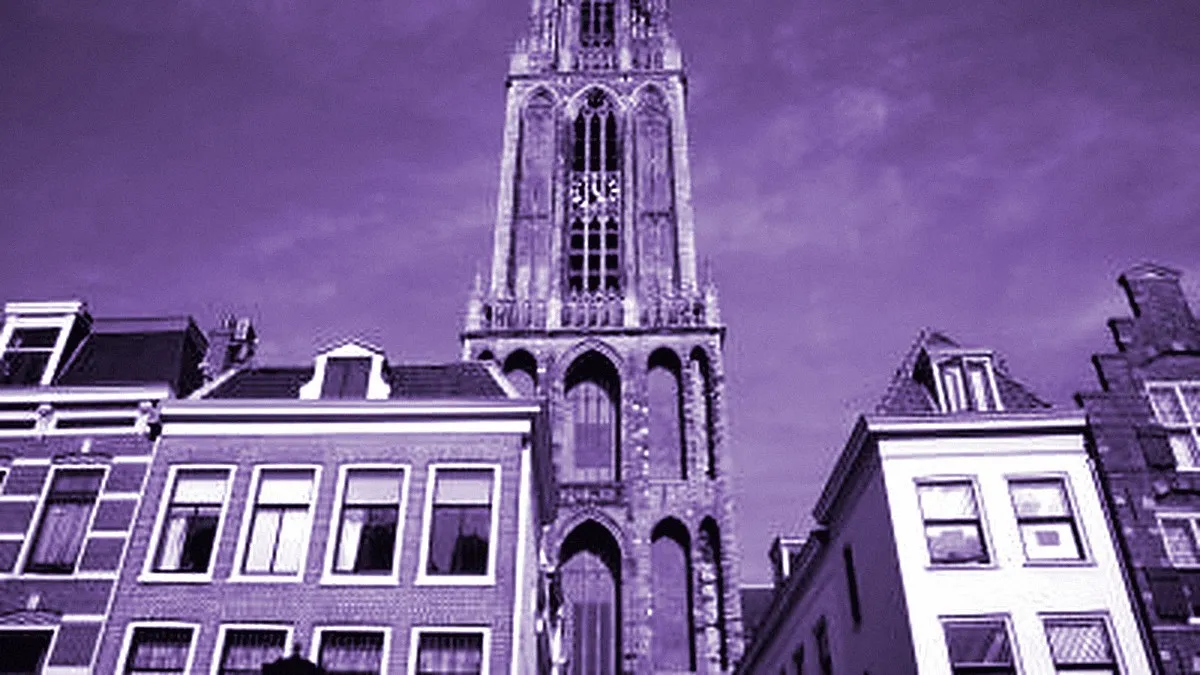
Utrecht is a historic city in the heart of the Netherlands, famed for its medieval canals, the towering Dom Tower, and a lively blend of Roman heritage, Gothic architecture, and contemporary culture. Its mix of ancient sites, vibrant student life, and creative neighbourhoods makes it a rewarding destination for travellers seeking an authentic Dutch experience without the crowds of larger cities. Neywo offers a free audio guide for Utrecht with 182 narrated places, letting you explore the city’s stories at your own pace.
Explore Utrecht’s highlights
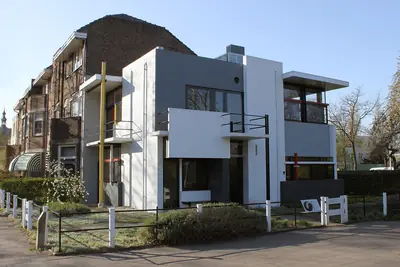
Rietveld Schröder House
This iconic residence looks more like a architectural diagram than a traditional house, embodying the De Stijl vision of Theo van Doesburg. Recognised as the only truly De Stijl building ever constructed, it has been a protected monument since 1976 and a UNESCO World Heritage Site since 2000. Truus Schröder‑Schräder lived here from 1925 until her death in 1985, and today the Centraal Museum runs it as a museum accessible by guided tour.
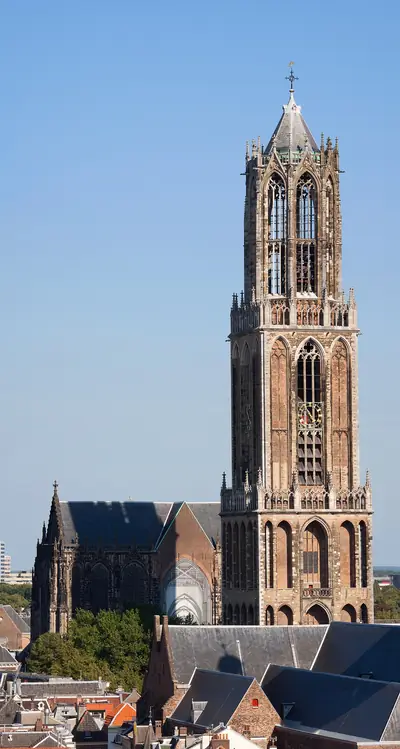
St. Martin’s Cathedral (Dom Church)
The Dom Church stands as the Netherlands’ only pre‑Reformation cathedral and a masterpiece of Gothic architecture inspired by French models. Although it was once the country’s largest church, its nave collapsed in a storm in 1674 and was never rebuilt, leaving the 112‑metre Dom Tower detached from the rest of the building. The tower remains the city’s most recognizable landmark.
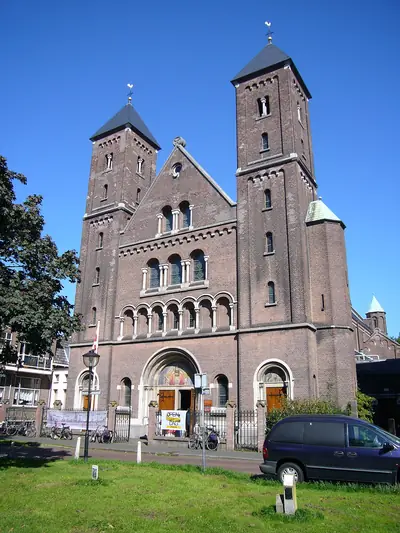
St. Gertrude’s Cathedral
Built between 1912 and 1914 to a design by E.G. Wentink, this neo‑Romanesque church serves as the mother church of the Old Catholic Church. Its twin towers frame the facade overlooking Willemsplantsoen, and the nave is covered by a painted wooden barrel vault depicting Christ as the Good Shepherd. The altar houses more than seventeen hundred relics in small boxes, including a reputed fragment of a rib of St. Willibrord.
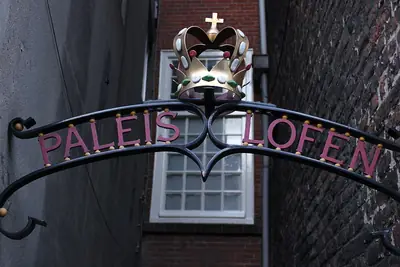
Paleis Lofen
Beneath the streets around Domplein lie the buried remains of Lofen, an imperial palace erected circa 1020 for German emperors. A charter from 1122 refers to it as “the imperial palace at Utrecht, commonly called Lofen.” The palace likely perished in a nine‑day fire in 1253 and had vanished by 1285, with fragments surviving today in the cellars of buildings on the Vismarkt and Domplein.
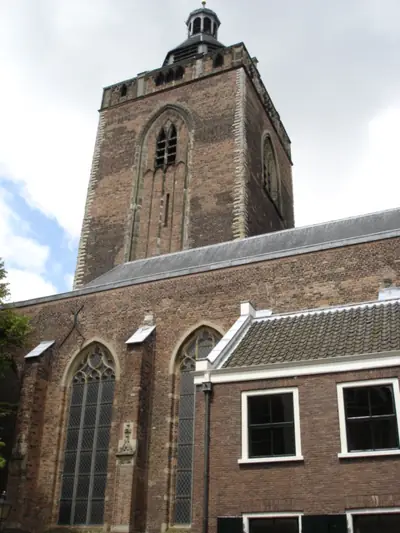
Buurkerk
Tucked tightly among surrounding houses, the Buurkerk is the oldest of Utrecht’s four medieval parish churches. Originally dedicated to Mary and known as Maria Minor, it no longer functions as a church; instead it houses the Museum Speelklok, whose entrance is on the Steenweg.
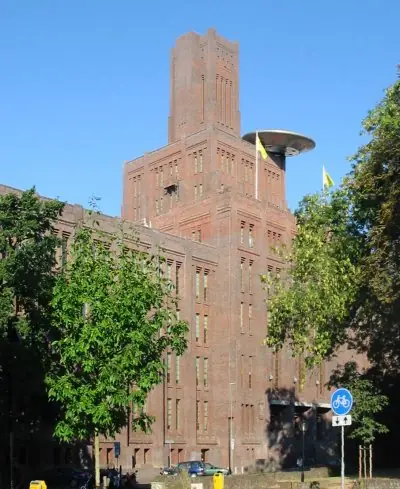
De Inktpot
Standing near Utrecht Centraal station, De Inktpot is the largest brick building in the Netherlands. Designed by George van Heukelom for the Dutch Railways, it has served as the headquarters of ProRail—the national rail infrastructure manager—since 1995 and is a protected monument.
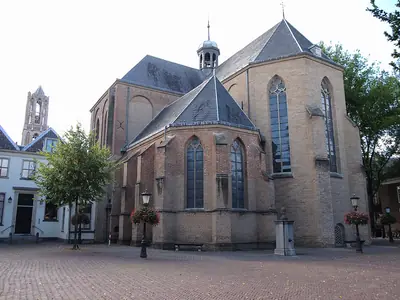
St. Peter’s Church (Pieterskerk)
One of Utrecht’s oldest churches, the Pieterskerk began construction in 1039 and was consecrated by Bishop Bernold in 1048, with its west towers completed roughly a century later. It formed the eastern point of the city’s Kerkenkruis (church cross) centred on the Dom. Its Romanesque character is evident in the nave’s massive pillars, each hewn from a single block of red sandstone, and in the crypt beneath the choir.
Antoniuskerk
Located in the Lombok neighbourhood, the Antoniuskerk was built between 1902 and 1903 and dedicated to Anthony of Padua. Designed by Jan Stuyt and Joseph Cuypers in an Italian Romanesque style, its tower was finished in 1924. Over the twentieth century the building passed from the Archdiocese of Utrecht to Dominican friars in 1939, then into a merged parish with five other Utrecht churches in 2010; the last sister of the original community departed for Limburg in November 2022.
Fort Blauwkapel
Situated just outside Utrecht, Fort Blauwkapel was constructed between 1818 and 1821 as part of the New Dutch Waterline. It ranks among the largest forts in that defensive system, and its townscape enjoys protected status today.
Fort de Bilt
Also known as Fort op de Biltstraat, this fort is another component of the New Dutch Waterline within the Utrecht municipality, dating from the early nineteenth century.
New Dutch Waterline works at Hoofddijk
East of the city, Fort Hoofddijk was built between 1877 and 1879 to defend the elevated Hoofddijk road, which was designed to stay above water when the surrounding land was deliberately flooded. The fort provided supporting fire to neighbouring positions at Rijnauwen and Voordorp. Measuring roughly 200 by 100 metres and surrounded by a wet moat, it features a bomb‑proof barracks and ammunition depot buried under thick earth, heavy vaulted brick ceilings inside, and a postern tunnel linking the two structures.
De Ster
Known locally as Houtzaagmolen De Ster, this windmill is a reminder of Utrecht’s industrial heritage and can be found within the city limits.
St. Catherine’s Cathedral (Catharijnekerk)
Serving as the seat of the Roman Catholic Archdiocese of Utrecht, the Catharijnekerk originated as a Carmelite friary in 1456. After the Knights Hospitaller took over construction following 1529, the large church was completed by the mid‑16th century. It functioned as a Protestant church from 1580 to 1815 before being returned to Catholic use in 1842. In 1898 architect Alfred Tepe added a western bay and façade copying the original, and in 1900 he erected a tower modelled on the town hall tower in Kampen. Relics of Saint Willibrord rest beneath the main altar. Financial difficulties threatened its closure in 2018, but the archbishop reversed the plan the following year after strong opposition from the faithful.
Hefbrug in de Kruisvaart
This lift bridge over the Kruisvaart sits in a park‑like setting and recalls Utrecht’s industrial past. Erected around 1928 to a design by the Frans Smulders machine works on Croeselaan, it once carried a rail spur to the market and auction grounds that later became the Jaarbeurs district. Building the bridge required a slight V‑shaped rerouting of the waterway. The rail line was removed in 1981, but the bridge was retained and is now protected as a municipal monument.
Metaal Kathedraal
Originally the Roman Catholic Onze‑Lieve‑Vrouw‑ten‑Hemelopnemingkerk serving the hamlet of Oudenrijn near De Meern, the building housed the Hollandia sidecar factory from 1941 and later a metal works from 1977, which gave it its current name.
Explore Utrecht with Neywo
Neywo’s free audio guide for Utrecht includes 182 narrated places and offers six walking tours, one bus route and one bike route. The walks range from 1.2 km to 2.1 km (lasting 60 to 116 minutes with 8 to 12 stops), the bus route is 4.1 km and takes about 18 minutes with 9 stops, and the bike route covers 7.7 km in roughly 38 minutes with 5 stops. As you walk, the app plays the story of each site exactly when you reach it, letting you go at your own pace without a group or a fixed schedule. Narration is available in 11 languages, so you can choose the language that suits you best. Download Neywo today and let the city reveal itself step by step.
Places with an audio guide in Utrecht
8 places in Utrecht with a Neywo audio guide. Each one starts telling its story as you reach it.
Self-guided tours in Utrecht
8 tours in Utrecht, free in the Neywo app. Each stop tells its story as you reach it.
- Bike ride
Canal-Side Ride from Overvecht to the Jutphase Bridge
A north-south ride along Utrecht's cycle lanes, from a hidden Carthusian monastery through the old centre to the bridge over the Amsterdam-Rhine canal.
Chartreuse Saint-Sauveur de la Nouvelle-Lumière · Oranjekerk, Utrecht · Ulu Mosque · Jaarbeursplein · Jutphase bridge
Open this tour: Canal-Side Ride from Overvecht to the Jutphase Bridge - Bus ride
Bus 2: A Ring Round the Old City
Local bus 2 loops from the station through Vredenburg and Neude, past the Dom and the cathedrals, then down to the Centraal Museum and the southern gate. A cheap way to see the centre's headline sights in one go.
Vredenburg · Neude · Janskerk · St. Martin's Cathedral, Utrecht · Het Utrechts Archief · St Catherine's Cathedral …
Open this tour: Bus 2: A Ring Round the Old City - Walk
Where Utrecht Began: Dom Square and the Canal Wharves
Start at the Dom, the tower and church that split in a storm, and drop under the square to the vanished chapels and an imperial palace. Then wander the sunken wharves of the Oudegracht, past a city castle, a water pump that saved lives during cholera and a handful of arched bridges.
St. Martin's Cathedral, Utrecht · Dom Tower of Utrecht · DOMunder · St. Salvator's Church · Verzetsmonument, Utrecht · Paleis Lofen …
Open this tour: Where Utrecht Began: Dom Square and the Canal Wharves - Walk
Monasteries, Mysteries and a Giant Brick Inkpot
From the largest brick building in the Netherlands to a playful pink teapot, this loop crosses the old Mary quarter and the Springweg, where the Teutonic Knights still keep their house. Cloisters turned apartments, a Roman graveyard and one of the city's smallest medieval churches are all on the way.
De Inktpot · Celestial Teapot · Mariaplaats · Mariahoek · St. Gertrude's Cathedral · Duitse Huis …
Open this tour: Monasteries, Mysteries and a Giant Brick Inkpot - Walk
The Church Cross: Convents, Cathedrals and Bishops' Churches
Follow the eastern arm of Utrecht's medieval Church Cross, from the museum in a former convent to the Catholic cathedral and the Romanesque Pieterskerk. Along the way meet a Mennonite church disguised as a townhouse, a Benedictine abbey founded around 1050, and the palace of Napoleon's brother.
Museum Catharijneconvent · St Catherine's Cathedral · Doopsgezinde Kerk (Utrecht) · Ursuline Convent Utrecht · Het Utrechts Archief · St. Paul's Abbey …
Open this tour: The Church Cross: Convents, Cathedrals and Bishops' Churches - Walk
Pilgrims, Gates and Working-Class Wijk C
Walk the northern Oudegracht from the lively Neude square to the Jacobikerk, where Dutch pilgrims set out for Santiago, and peer through a viewing hole into the cellar of a medieval city gate. Finish at the Saturday flower market on the Janskerkhof.
Neude · Walk of Fame · Sint-Augustinuskerk, Utrecht · Dutch Museum of working-class districts · Jacobikerk · Weerdpoort …
Open this tour: Pilgrims, Gates and Working-Class Wijk C - Walk
Museums, Miffy and the Last Bastion
A southern city-gate square, a monastery that became a workhouse, and the Centraal Museum, home of the world's biggest Wtewael collection. Visit the Miffy museum across the street, the old botanical garden and the bastion where Utrecht's observatory still watches the sky.
Tolsteegbarrière · Sint Nicolaasklooster · St. Nicholas Church · Centraal Museum · Nijntje museum · Oude Hortus …
Open this tour: Museums, Miffy and the Last Bastion - Walk
Wilhelminapark, De Stijl and Street Sculptures
Begin at the Rietveld Schröder House, the UNESCO-listed De Stijl icon, then stroll the leafy Wilhelminapark district. Bronze statues, fighting turkeys, a rose garden and a wartime bunker line the route.
Rietveld Schröder House · Wilhelminapark · Gaia · Wilhelmina of the Netherlands · Bunker Wilhelminapark · Holy Trinity Church (Utrecht) …
Open this tour: Wilhelminapark, De Stijl and Street Sculptures
Walk Utrecht with Neywo
Neywo turns Utrecht into a self-guided audio tour. Stories arrive as you reach the place they belong to, and the route reshapes when you wander off it.

