What to See in Whitby, United Kingdom: Free Audio Guide
Things to do in Whitby: the abbey, museums and historic churches
The best things to do in Whitby include exploring Whitby Abbey, climbing the 199 steps to the Church of Saint Mary, visiting museums linked to Captain Cook and the town’s maritime heritage, and discovering distinctive landmarks such as the Whale Bone Arch. Whitby’s history stretches from its early Christian monastery to its seafaring traditions and literary connection with Bram Stoker’s Dracula. Neywo offers a free audio guide for Whitby with 19 narrated places.
Whitby is a memorable destination in England, where the River Esk meets the North Sea. Its sights are concentrated enough to explore on foot, but there is plenty of detail to discover beyond the town’s most famous viewpoints.
What to see in Whitby
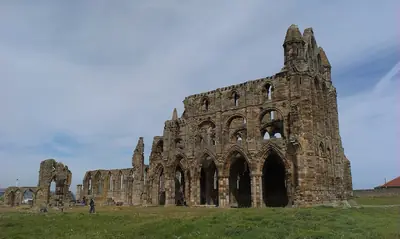
Whitby Abbey and Church of Saint Mary
Whitby Abbey is the town’s defining landmark, standing in dramatic ruins on the East Cliff above the North Sea. It began as a Christian monastery in the 7th century and later became a Benedictine abbey. Its story changed during the dissolution of the monasteries under Henry VIII, between 1536 and 1545, when the abbey and its possessions were confiscated by the crown.
The ruins later served as a landmark for sailors navigating the headland. Today, the substantial remains of the church are a Grade I Listed building cared for by English Heritage. The site museum is housed in Cholmley House, a 17th-century banqueting hall that was repurposed in 2002.
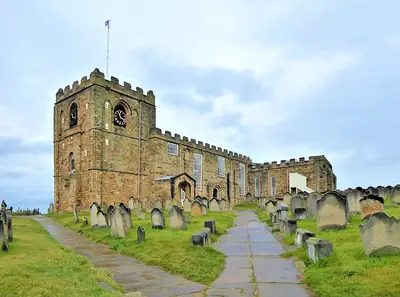
Close to the abbey, the Church of Saint Mary occupies the East Cliff above the mouth of the River Esk. The church was founded around 1110, although its interior dates chiefly from the late 18th century. Its graveyard is used as a setting in Bram Stoker’s Dracula, adding to the atmosphere of this historic clifftop.
The church and abbey are reached from the town by the famous Church Steps: a flight of 199 steps leading uphill. The climb rewards visitors with views over Whitby, the river and the coast.
Cholmley House
Cholmley House has medieval origins and was originally built as accommodation for the abbot of Whitby Abbey. After the English Reformation, it was leased to the Cholmley family, who purchased it in 1555.
The building’s early history is debated. Some accounts suggest that it was first built in wood and not reconstructed in stone until 1626, while others date most of the structure to the 1580s. In 1672, Sir Hugh Cholmeley added the north wing, including a grand banqueting hall. The forecourt created in front of this wing is now known as the Stone Garden and contains a replica of the Borghese Gladiator.
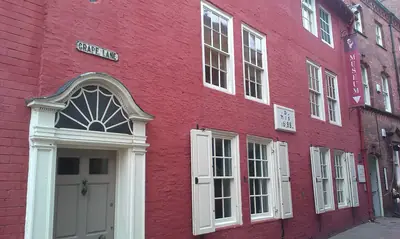
Captain Cook Memorial Museum
The Captain Cook Memorial Museum occupies Walker’s House, a Grade I listed historic house named after local shipowner Captain John Walker. In 1746, the young James Cook was apprenticed to Walker and lodged here while learning the seafaring trade.
Cook later returned to the house in the winter of 1771 to 1772, after completing his first great voyage. The museum offers a direct connection with the years he spent in Whitby before beginning his career as an explorer.
Whitby Harbour and maritime heritage
Whitby’s harbour reflects the town’s long relationship with the sea. The RNLI Whitby Lifeboat Museum focuses on the local lifeboat service and the crews who launched from these shores to save lives at sea.
The town’s maritime traditions can also be seen in its churches. The Church of St Ninian has interior woodwork made by men who worked in Whitby’s shipyards, the same shipyards associated with ships used by Captain Cook on his explorations.
Whale Bone Arch
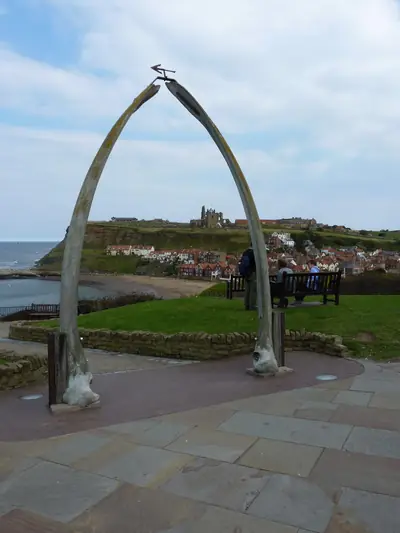
The Whale Bone Arch is one of Whitby’s most recognizable symbols. The gateway is made from two lower jawbones of a whale. The original arch was erected sometime after 1853 and has been replaced at least twice because of weathering from the coastal elements.
It is a simple but striking reminder of Whitby’s connection with the sea and an easy landmark to include while exploring the town.
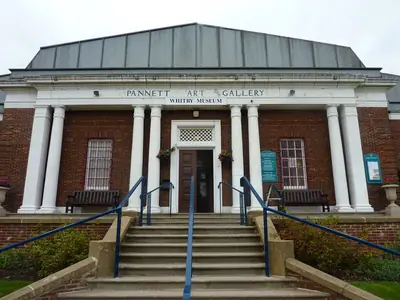
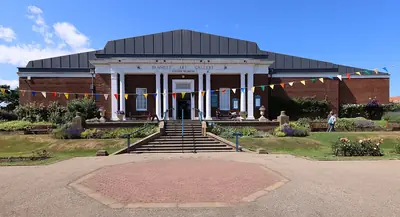
Whitby Museum and Pannett Art Gallery
Pannett Park is home to two institutions run by the Whitby Literary and Philosophical Society, a learned society and registered charity established in 1823.
Whitby Museum is an independent museum with collections focused on local history and curiosities. The building opened in 1931 and also houses the Society’s Library and Archive.
The Pannett Art Gallery shares the same cultural setting. It opened in 1931 and combines art and local heritage within the peaceful surroundings of Pannett Park.
Whitby Jet Heritage Centre
The Whitby Jet Heritage Centre explores one of the town’s most distinctive crafts: the deep black jewellery carved in Whitby for generations. The small museum explains the importance of jet to the town’s identity and offers a different perspective on its history beyond the abbey and the harbour.
Whitby’s churches
Whitby has several historic churches worth seeking out.
The Church of St John the Evangelist was built between 1848 and 1849 and consecrated in 1850. Designed by J. B. and W. Atkinson in the 13th-century Gothic style, it retains wooden pews, a wooden pulpit, an altar and an altar rail from the church’s early period. Its reredos includes a mosaic of the Last Supper added in 1904.
The Church of St Ninian was once a proprietary chapel and was the only one of its kind in Yorkshire. It was originally a chapel of ease to St Mary’s Church and was the second-oldest Anglican church in Whitby.
St Hilda’s Priory Chapel is a smaller historic church and a quiet place to pause while exploring the town. The former Church of St Patrick, on Church Street, began as an 18th-century house. Part of it became an infant school in 1886, and the left half was converted into a Roman Catholic church in 1930. The church closed in 2003 after the building required major repairs.
Whitby Castle and Sneaton Castle
Whitby Castle stands on the cliffs at the edge of town, about 27 metres above sea level. Its position beside the sea gives it an atmospheric setting, with open views over the water and a bracing coastal breeze.
Sneaton Castle lies in the North Yorkshire countryside a short distance from Whitby. The castle stands about 73 metres above sea level, and the coast lies to the northeast, making it possible to catch a glimpse of the sea from the grounds on a clear day.
Explore Whitby with a self-guided walking tour
Neywo’s free Whitby audio guide includes 19 narrated places and two walking tours. The app tells the story of each place as you reach it, at your own pace, with no group and no schedule. Narration is available in 11 languages.
The two walks are:
- Dracula, Cook and the 199 Steps: Whitby’s East Side — 1.26 km, 46 minutes and 5 narrated stops. It includes the Church of St Patrick, Captain Cook Museum Whitby, the Church of Saint Mary, Whitby Abbey and Cholmley House.
- Whale Jawbones and Victorian Whitby on the West Cliff — 2.23 km, 72 minutes and 8 narrated stops. It includes the Whale Bone Arch, Whitby Pavilion, the Church of St Hilda, the Church of St Hilda (Roman Catholic), the Church of St John the Evangelist, Whitby Museum, Pannett Art Gallery and the Church of St Ninian.
Download Neywo and turn your visit into a Whitby self-guided walking tour: the story starts when you arrive at each place, so you can explore independently and at your own pace. Whitby is one of the distinctive coastal destinations of the United Kingdom, with historic ruins, maritime museums and atmospheric streets to discover along the way.
Places with an audio guide in Whitby
8 places in Whitby with a Neywo audio guide. Each one starts telling its story as you reach it.

Self-guided tours in Whitby
2 tours in Whitby, free in the Neywo app. Each stop tells its story as you reach it.
- Walk
Dracula, Cook and the 199 Steps: Whitby's East Side
Start in the house where a teenage James Cook lodged with a shipowner, follow the old town up Church Street and climb the 199 Church Steps to St Mary's and its graveyard, the setting Bram Stoker used for Dracula. Finish at the ruined Benedictine abbey on the cliff and the Cholmley House beside it.
Church of St Patrick (Roman Catholic) · Captain Cook Museum Whitby · Church of Saint Mary, Whitby · Whitby Abbey · Cholmley House
Open this tour: Dracula, Cook and the 199 Steps: Whitby's East Side - Walk
Whale Jawbones and Victorian Whitby on the West Cliff
The town the Victorians built for seaside visitors: the Whale Bone Arch above the harbour, the Pavilion theatre, the Gothic churches of the West Cliff and Pannett Park with its museum and gallery, ending at St Ninian's with its woodwork carved by shipyard men.
Whale Bone Arch · Whitby Pavilion · Church of St Hilda · Church of St Hilda (Roman Catholic) · Church of St John the Evangelist · Whitby Museum …
Open this tour: Whale Jawbones and Victorian Whitby on the West Cliff
Walk Whitby with Neywo
Neywo turns Whitby into a self-guided audio tour. Stories arrive as you reach the place they belong to, and the route reshapes when you wander off it.

