Wells, United Kingdom: Self-Guided Walking Tour
Things to Do in Wells: England’s Smallest City
The best things to do in Wells include visiting Wells Cathedral, exploring its medieval gates, discovering the Bishop’s Palace and Gardens, and walking through the historic centre. Compact and rich in architectural detail, Wells is an excellent city to explore on foot. Neywo offers a free audio guide for Wells with 9 narrated places, available in 11 languages.
What to See in Wells
Church of St Thomas
A 19th-century church in the heart of Wells, the Church of St Thomas dates from the 1850s. It is a Grade II* listed building, recognised for its particular architectural and historic importance.
Wells and Mendip Museum
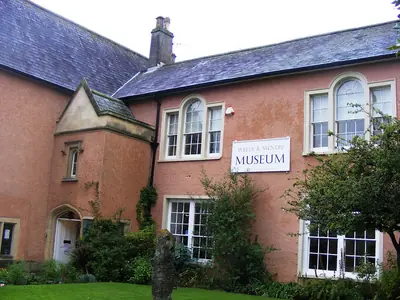
The Wells and Mendip Museum introduces the history of Wells and the surrounding Mendip Hills. Its collections include local-history exhibits and archaeological finds from the region, making it a useful stop for understanding the area beyond its cathedral and medieval buildings.
Penniless Porch
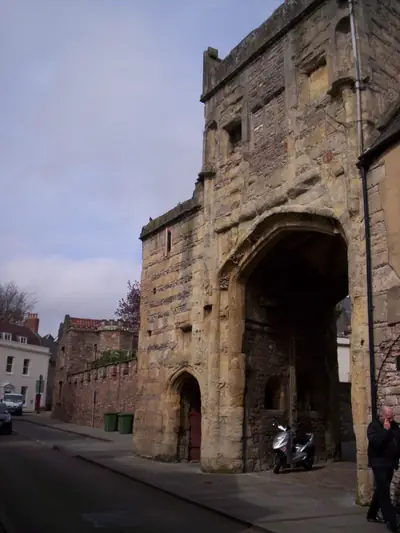
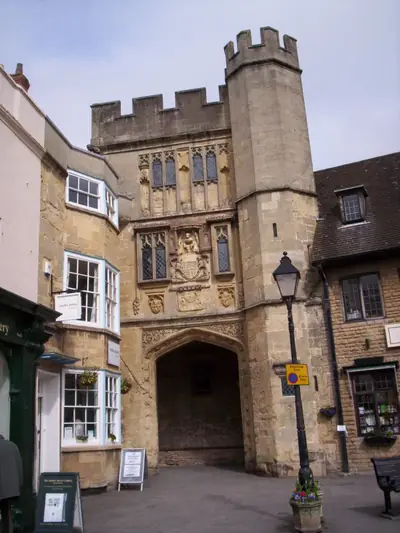
The Penniless Porch is a striking medieval gateway into the Liberty of St Andrew, the walled precinct containing the cathedral, Bishop’s Palace, Vicar’s Close and clergy residences. Built around 1450 by Bishop Thomas Beckington, the three-storey structure is made from Doulting ashlar stone and has a battlemented parapet.
Look towards the cathedral side for Beckington’s carved personal badge. The porch forms one of a pair with the Bishop’s Eye, the gateway from the Market Place into the Bishop’s Palace. Its name refers to the beggars who once worked in this area, while the building also appeared in a 1795 painting by Joseph Mallord William Turner.
The Bishop’s Palace and Gardens
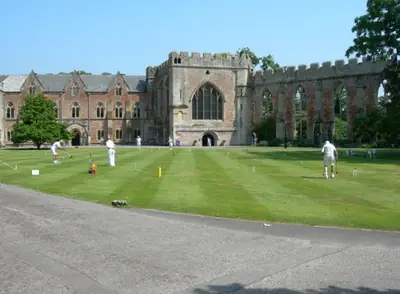
Beside Wells Cathedral stands the Bishop’s Palace and Gardens, the medieval residence of the bishops of Bath and Wells since the early thirteenth century. Construction began around 1210 under Jocelin of Wells and Reginald Fitz Jocelin. The chapel and great hall were added between 1275 and 1292 by Bishop Robert Burnell.
The palace gained its defensive appearance in the fourteenth century, when Bishop Ralph of Shrewsbury added the walls, gatehouse and moat. Streams were diverted to form the moat, which also served as a reservoir and still surrounds the palace.
Inside the walls, the gardens include pleasure grounds and a reflecting pond near the springs. These features reflect the transformation of the grounds by Bishop George Henry Law in the 1820s and provide a calmer setting alongside the more imposing medieval architecture.
Wells Cathedral
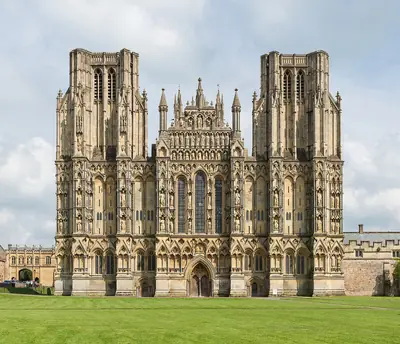
Wells Cathedral, formally the Cathedral Church of St Andrew, is the seat of the Bishop of Bath and Wells and the mother church of the diocese. A church was recorded on this site as early as 766, while a bishopric was established here in 909. The cathedral of the diocese moved to Bath Abbey in 1090, and Wells became a co-cathedral in 1218.
Most of the building seen today comes from two major campaigns: approximately 1180 to 1260 and 1285 to 1345. The nave and western transepts display Early English Gothic design, while the east end, including the lady chapel, eastern transepts, chapter house and central tower, shows Decorated Gothic features and preserves much of its medieval stained glass.
The west front is one of the cathedral’s most memorable details. It is covered with around 300 sculpted figures, creating an extraordinary stone façade and a powerful introduction to the cathedral complex.
Chain Gate
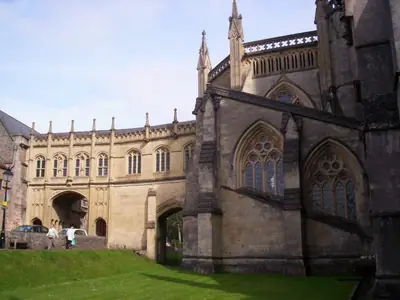
The Chain Gate stands beside the north side of Wells Cathedral. Built around 1460, this Grade I listed gateway links the cathedral directly with Vicar’s Close and provides the historic passage between St Andrew Street and Cathedral Green.
It is part of the Liberty of St Andrew, the precinct associated with the cathedral, palace, Vicar’s Close and the homes of the cathedral clergy. Its position makes it an essential part of the architectural connection between the city and the cathedral grounds.
Brown’s Gatehouse
Brown’s Gatehouse, also known as the Dean’s Eye, marks another entrance into the Liberty of St Andrew. Built around 1451 by Bishop Thomas Beckington, it is both a Grade I listed building and a scheduled monument.
The two-storey archway is built from Doulting ashlar stone and has a Welsh slate roof with coped gables behind parapets. Its arch has a ribbed vault, and a doorway within the porch leads to a staircase to the first floor. The name Brown’s Gatehouse comes from Richard Brown, a shoemaker who was the neighbouring tenant in 1553. In the nineteenth century, the building was known as the Dean’s Eye.
Wells United Church
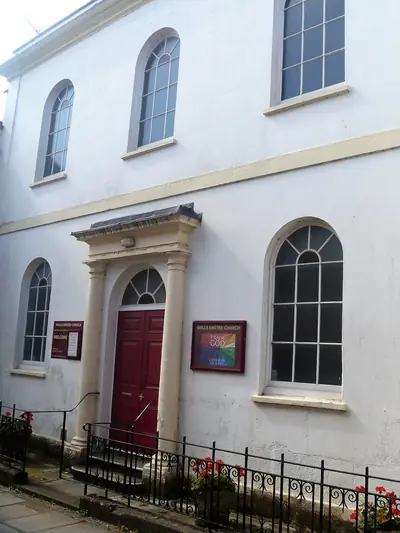
Wells United Church is another place of worship in the city centre. It offers a contrast with the medieval cathedral and historic gateways, forming part of the wider religious character of Wells.
Church of St Cuthbert
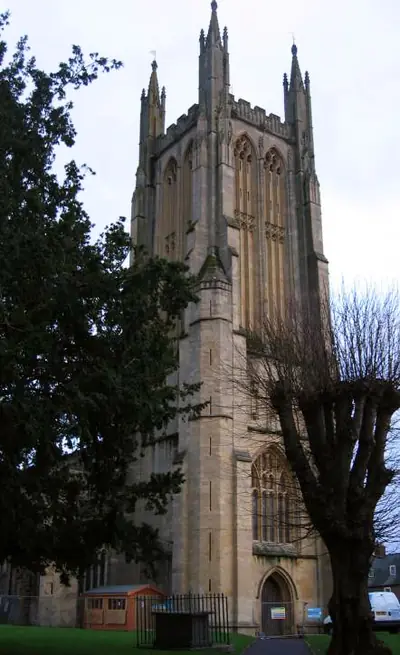
The Church of St Cuthbert is a 13th-century Anglican parish church with a fine Somerset stone tower standing 46 metres high. Its scale and appearance are so impressive that visitors sometimes mistake it for Wells Cathedral.
The building was rebuilt in the 15th century, and its interior contains a superb carved roof. Until 1561, the church also had a central tower, giving an indication of how its form has changed over the centuries.
Explore Wells with a Self-Guided Walking Tour
A Wells self-guided walking tour is a natural way to experience the city’s closely grouped landmarks. Neywo’s walk, “England’s Smallest City: Gates, a Moated Palace and a Gothic Masterpiece”, covers 2.12 km in approximately 102 minutes and includes 9 narrated stops.
The route brings together the Church of St Thomas, Wells and Mendip Museum, Penniless Porch, the Bishop’s Palace and Gardens, Wells Cathedral, Chain Gate, Brown’s Gatehouse, Wells United Church and the Church of St Cuthbert. It is designed for exploring at your own pace rather than following a group.
Wells is part of England, within the United Kingdom, and its compact historic centre makes walking the most direct way to connect these places.
Download Neywo and Explore Wells at Your Own Pace
Download Neywo to explore Wells with its free audio guide and one walking tour. The route is 2.12 km long, takes 102 minutes and includes 9 narrated stops.
The app tells the story of each place as you reach it, at your own pace, with no group and no schedule. Narration is available in 11 languages, so you can discover Wells Cathedral, its medieval gateways, the Bishop’s Palace and the city’s churches while walking independently through the historic centre.
Places with an audio guide in Wells
8 places in Wells with a Neywo audio guide. Each one starts telling its story as you reach it.
Self-guided tours in Wells
1 tour in Wells, free in the Neywo app. Each stop tells its story as you reach it.
- Walk
England's Smallest City: Gates, a Moated Palace and a Gothic Masterpiece
Wells is England's smallest cathedral city, and almost everything worth seeing sits behind medieval gates. Pass the Penniless Porch that Turner painted, circle the moated Bishop's Palace, study the sculpted west front of the cathedral and slip through the Chain Gate and Brown's Gatehouse before ending at St Cuthbert's, a parish church often mistaken for the cathedral.
Church of St Thomas · Wells and Mendip Museum · Penniless Porch, Wells · The Bishop's Palace and Gardens · Wells Cathedral · Chain Gate, Wells …
Open this tour: England's Smallest City: Gates, a Moated Palace and a Gothic Masterpiece
Walk Wells with Neywo
Neywo turns Wells into a self-guided audio tour. Stories arrive as you reach the place they belong to, and the route reshapes when you wander off it.

