Things to Do in Warwick, United Kingdom: Walking Guide
Things to Do in Warwick: Historic Churches, Museums and a Medieval Castle
Warwick is a historic town in England, known for its medieval architecture, important churches and Warwick Castle above the River Avon. The town is worth visiting for its unusually rich concentration of historic buildings, from a medieval courtyard and centuries-old chapels to museums tracing Warwickshire’s past. Neywo offers a free audio guide for Warwick with 17 narrated places.
What to See in Warwick
Warwick Castle
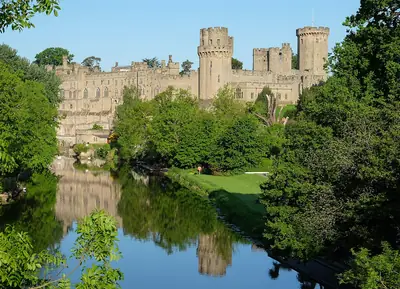
Warwick Castle is the town’s defining landmark and one of England’s most impressive medieval fortresses. William the Conqueror ordered a wooden fort here in 1068, shortly after the Norman Conquest. It was rebuilt in stone during the 12th century, and the side facing the town was strengthened during the Hundred Years War.
The castle remained a stronghold until the early 1600s. In 1604, King James I granted it to Sir Fulke Greville, who transformed the fortress into a country house. Its grounds were later shaped by the landscape architect Capability Brown in the 18th century. The castle stands above a bend in the River Avon, combining military architecture, historic interiors and landscaped gardens.
Lord Leycester Hospital
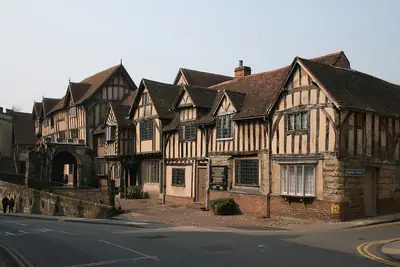
On Warwick’s High Street, beside the old West Gate, Lord Leycester Hospital is one of England’s finest surviving examples of medieval courtyard architecture. Buildings have occupied the site for almost 900 years, beginning with a chapel built in 1126.
The 12th Earl of Warwick gave the site to the United Guild of the Holy Trinity and St George in the 14th century. The Guild Hall, Great Hall and Master’s House were built in the late 15th century, while the gardens have been admired by visitors including Charles Dickens, Oscar Wilde, King George V and the Queen Mother.
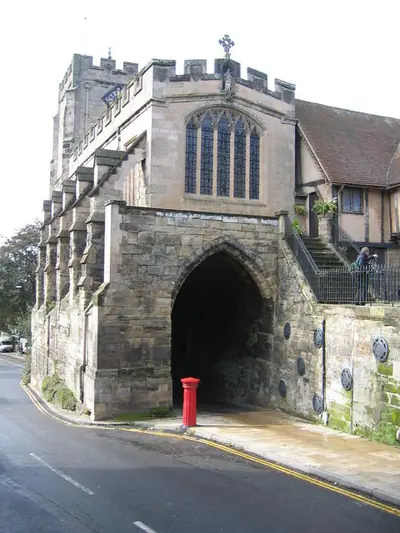
St James Chapel and the West Gate
St James Chapel is a Grade I listed building in the heart of Warwick. The West Gate is an important feature of the site and adds another layer to this part of the town’s historic streetscape.
Market Hall Museum
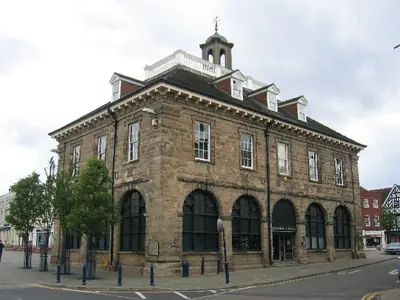
Market Hall Museum sits in the centre of Warwick and forms part of the Warwickshire Museum. Its collections focus on archaeology, geology and natural history, with particular attention to objects from Warwickshire.
It is a useful stop for understanding the wider county, whether your interest is in ancient artefacts, rocks and fossils, or the region’s natural world.
Collegiate Church of St Mary
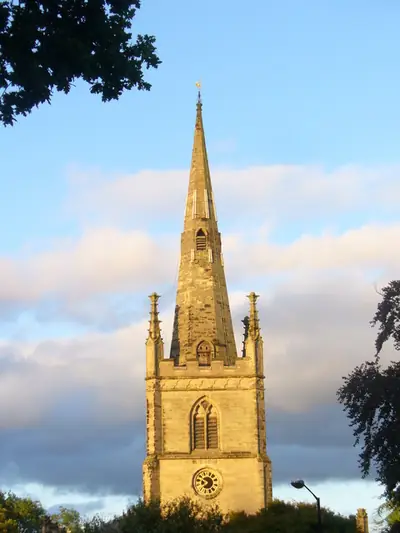
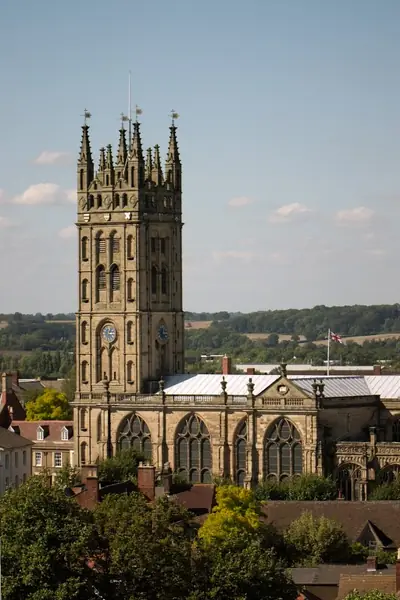
The Collegiate Church of St Mary stands just east of the market place and is one of Warwick’s most significant buildings. It is a Church of England parish church with the status of a collegiate church, reflecting its former community of secular canons.
Although it was never the seat of a bishop, its governance and religious life were once similar in some ways to those of a cathedral. The church is Grade I listed and belongs to the Major Churches Network.
St. Mary Immaculate Roman Catholic Church
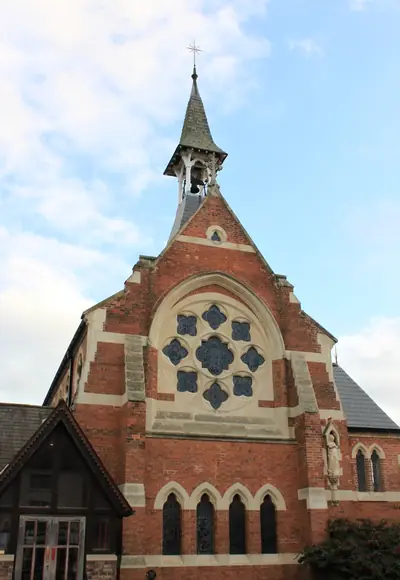
Just outside Warwick’s West Gate on West Street, St Mary Immaculate is a red brick and Bath stone church in the Decorated Gothic style. It was designed by Edward Welby Pugin, the eldest son of Augustus Pugin, and opened on 12 May 1860. It was the first permanent Roman Catholic church in Warwick.
The church is also connected with one of the town’s most notable literary associations. On 22 March 1916, J. R. R. Tolkien married Edith Mary Bratt here. A blue plaque commemorating the marriage was unveiled in July 2018. Inside, the three central windows in the east apse date from 1861, while the West Window was designed by John Hardman Studios in the 1960s.
St John’s House and the Fusilier Museum Warwick
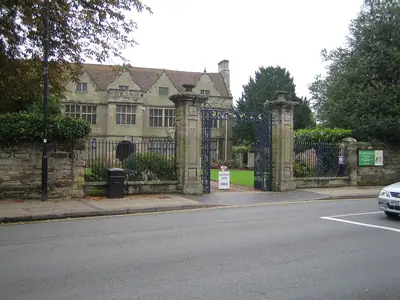
St John’s House is a Grade I listed building whose history stretches back almost 900 years. The current building dates from around 1666, and the site includes a small garden. St. Nicholas’ Park lies behind the house.
The Royal Regiment of Fusiliers Museum is housed at Pageant House on Jury Street. Its collection is dedicated to the Royal Warwickshire regiment and includes uniforms, medals, weapons and personal accounts relating to the regiment’s history.
Warwickshire Yeomanry Museum
The Warwickshire Yeomanry Museum explores the history of the county’s yeomanry, the volunteer cavalry units that served in major conflicts. Its displays include uniforms, medals, weapons and personal accounts, following the regiment from its origins as mounted volunteers through its later service.
Castle Bridge
Castle Bridge crosses the River Avon around 400 metres east of Warwick Castle. This Grade II* listed road bridge was built between 1790 and 1793 for the Earl of Warwick, George Greville. Its elegant sandstone design consists of a single arch.
The bridge replaced an older medieval crossing farther downstream, now known as the Old Castle Bridge, which survives as a ruin.
Church of Saint Nicholas
The Church of Saint Nicholas is another historic church to look for while exploring Warwick. It offers a quieter pause among the town’s larger landmarks and adds to the concentration of religious heritage in the centre.
Friends Meeting House
The Friends Meeting House is a modest chapel with a long history of worship and community life. Its simple character reflects the Quaker tradition of quiet contemplation and unassuming buildings.
Other places of worship
Warwick’s religious heritage extends beyond its medieval and historic churches. St Paul’s Church is an Anglican church built in 1844 in a Tudor Gothic Revival style. The Gurdwara Sahib Leamington and Warwick on Tachbrook Drive serves Sikh communities in Leamington, Warwick and Kenilworth. It opened in 2009 and is the third largest purpose-built Sikh gurdwara in the United Kingdom.
All Saints in Emscote, Heathcote Parish Church in the village of Heathcote and the town’s other churches provide further places to explore away from the main castle route.
Explore Warwick with a Self-Guided Audio Guide
A Warwick self-guided walking tour can make it easier to connect the town’s landmarks while keeping your own pace. Neywo has one walking tour and one bus route in Warwick, with stories that play as you reach each place. There is no group and no schedule.
The walking route, Gates, Guilds and the Great Castle, covers 2.49 km in 113 minutes and includes 10 narrated stops. It visits St. Mary Immaculate Roman Catholic Church, Lord Leycester Hospital, St James Chapel, Market Hall Museum, Market Place, Collegiate Church of St Mary, Castle Hill Baptist Church, Warwick Castle, Castle Bridge and St John’s House Museum.
The bus route, Stagecoach 15 through Warwick’s Old Town, covers 13.2 km in 57 minutes and has four narrated stops: St. Mary Immaculate Roman Catholic Church, Castle Hill Baptist Church, Castle Bridge and Gurdwara Sahib Leamington and Warwick.
Download Neywo and Explore Warwick at Your Own Pace
Download Neywo for a free Warwick audio guide and explore the town without joining a group or following a fixed schedule. Choose the 2.49 km walking tour or the 13.2 km bus route, then let the app tell the story of each place as you reach it. The 17 narrated places are available in 11 languages, so you can discover Warwick at your own pace while moving from its churches and museums to the castle and the River Avon.
Places with an audio guide in Warwick
8 places in Warwick with a Neywo audio guide. Each one starts telling its story as you reach it.
Self-guided tours in Warwick
2 tours in Warwick, free in the Neywo app. Each stop tells its story as you reach it.
- Bus ride
Stagecoach 15 through Warwick's Old Town
A public bus that runs through the historic centre of Warwick: past the Pugin church on West Street, up to Castle Hill, over the sandstone Castle Bridge above the Avon and out to the Sikh gurdwara on Tachbrook Drive. A cheap way to see the town's different layers.
St. Mary Immaculate Roman Catholic Church, Warwick · Castle Hill Baptist Church · Castle Bridge · Gurdwara Sahib Leamington and Warwick
Open this tour: Stagecoach 15 through Warwick's Old Town - Walk
Gates, Guilds and the Great Castle
Start at the Pugin-designed church where Tolkien married, pass beneath the medieval West Gate and the courtyard of the Lord Leycester Hospital, then cross the market square and the old town to the castle William the Conqueror founded in 1068. Cross the sandstone Castle Bridge for the best view of the fortress over the Avon and end at the 17th-century St John's House.
St. Mary Immaculate Roman Catholic Church, Warwick · Lord Leycester Hospital · St James Chapel · Market Hall Museum · Market Place · Collegiate Church of St Mary, Warwick …
Open this tour: Gates, Guilds and the Great Castle
Walk Warwick with Neywo
Neywo turns Warwick into a self-guided audio tour. Stories arrive as you reach the place they belong to, and the route reshapes when you wander off it.

