What to See in Windsor, United Kingdom: Free Audio Guide
Things to Do in Windsor: What to See in the Royal Town
The best things to do in Windsor include exploring Windsor Castle, visiting St George’s Chapel, crossing Windsor Bridge and discovering the town’s civic museums, churches and royal monuments. Windsor’s history is especially easy to experience on foot, from the castle’s medieval origins to the riverside link with Eton. Neywo has a free audio guide for Windsor with 20 narrated places, available in 11 languages.
What to See in Windsor
Windsor Castle and the Round Tower
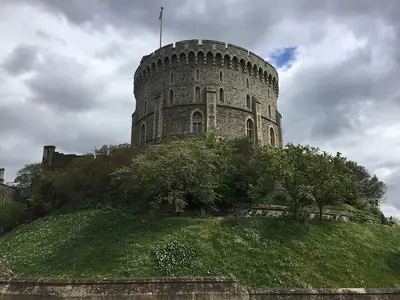
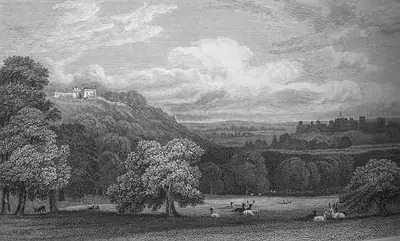
Windsor Castle is the central landmark for anyone deciding what to see in Windsor. Its origins date to shortly after 1066, when William the Conqueror ordered a motte-and-bailey fortress to protect the western approach to London. The original wooden castle stood on the mound where the Round Tower now rises.
By the reign of Henry I in the early 1100s, Windsor had become a royal home. It has housed every monarch since, making it the longest-occupied palace in Europe. Henry III and Edward III later replaced the timber defences with stone, while Edward’s rebuilding became the most expensive secular building project of the Middle Ages in England.
The castle’s Upper and Lower Wards contain some of Windsor’s most important sights, including the State Apartments and St George’s Chapel. The Round Tower remains a defining feature of the skyline and a reminder of the castle’s transformation from Norman stronghold to royal residence.
St George’s Chapel
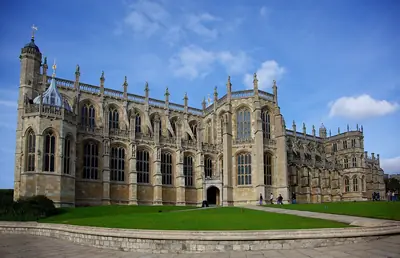
St George’s Chapel stands in the Lower Ward of Windsor Castle and is the spiritual home of the Order of the Garter, Britain’s oldest and most senior order of chivalry. It is also a royal peculiar, meaning that it answers directly to the monarch rather than to a bishop.
The present building is a major example of Perpendicular Gothic architecture, with strong vertical lines, large windows and intricate stone fan vaulting. King Edward III founded the chapel, while the soaring structure seen today largely dates from an expansion under Edward IV and Henry VII in the late fifteenth century. It has hosted royal services and is the final resting place of many sovereigns.
The Equestrian Statue of Charles II
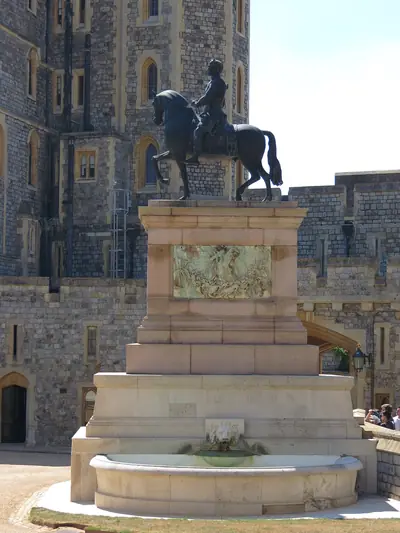
Beneath the Round Tower in the Upper Ward, an equestrian bronze statue depicts Charles II on horseback. Cast in 1679, it was commissioned by Tobias Rustat, the king’s valet.
The statue presents Charles II in Roman-style armour and a laurel wreath rather than a British crown. The horse has no spurs or stirrups, and the sculpture omits familiar symbols such as the Order of the Garter. Its design was an innovative depiction of a British monarch as a Roman emperor, inspired in part by the ancient statue of Marcus Aurelius in Rome.
Windsor Bridge and the River
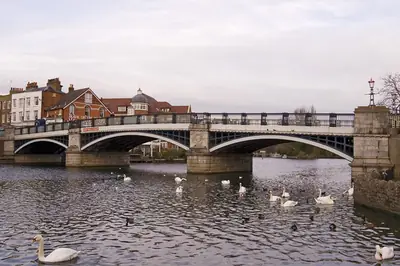
Windsor Bridge connects Windsor and Eton across the River Thames, just above Romney Lock. The Grade II listed cast-iron structure is about forty-nine metres long and has three arches supported by hewn granite piers.
Originally used by horse-drawn traffic and later by cars, the bridge has been reserved for pedestrians and cyclists since 1970. Its original cast-iron balustrade remains visible, while the paving still shows the layout of the former roadway and footpaths. Crossing the bridge offers a direct way to experience the relationship between Windsor, Eton and the river.
Windsor and Royal Borough Museum
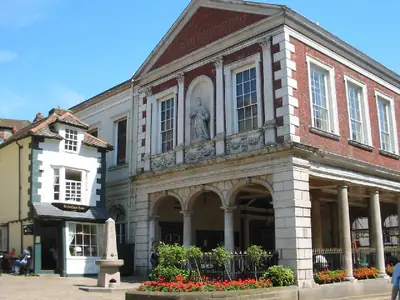
Inside the historic Windsor Guildhall, the Windsor and Royal Borough Museum presents the story of the town and the wider Royal Borough of Windsor and Maidenhead. The Grade I listed Guildhall is part of the experience, having served as a civic landmark for centuries.
The collection covers local history from early settlements to the present day. The first museum exhibition opened in 1951, launched by Princess Elizabeth during the Festival of Britain celebrations. In 2011, the Queen returned to the same building. The museum also includes a work by Alix Jennings and is run by the Royal Borough, giving it the character of a community telling its own story.
Church of St John the Baptist
The Church of St John the Baptist is Windsor’s civic church and has long been associated with the town’s mayors. Former mayors are buried in the church and churchyard, reinforcing its role in Windsor’s civic history.
The current building dates from 1822, when it was completely rebuilt in the Gothic Revival style. It is a Grade II* listed building. The site also recalls a difficult period in Windsor’s religious history: in 1543, three Protestant martyrs were burnt at the stake in the town, two of them closely associated with this church.
Berkshire Yeomanry Museum
The Berkshire Yeomanry Museum preserves the history of the Berkshire Yeomanry, a volunteer cavalry regiment whose roots go back to the late eighteenth century. It adds a military dimension to Windsor’s royal and civic heritage.
Other Churches and Memorials
Several other places reflect Windsor’s varied local history. The Church of Holy Trinity, the Church of All Saints, All Saints Church in Dedworth, the Church of St Andrew in Clewer and the Church of St Stephen in Clewer are historic religious buildings within Windsor and its surrounding areas.
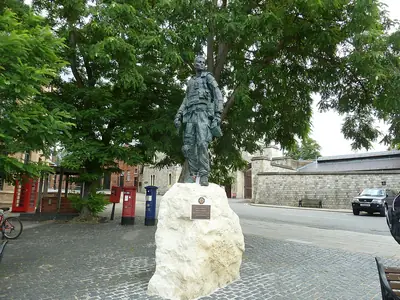
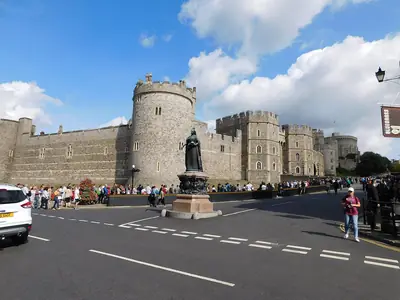
The town also has an Irish Guards memorial and a statue of Queen Victoria, the monarch who gave her name to an entire era of British history. At St Leonard’s Hill near Clewer, only the name remains of the large mansion that once stood there.
A Windsor Self-Guided Walking Tour with Neywo
Neywo’s free walking tour in Windsor covers 2.67 km in 108 minutes and includes 12 narrated stops. The route begins at The Fire Station Centre For Arts And Culture, then visits the Church of Holy Trinity, the Roman Catholic Church of St Edward, the Statue of Queen Victoria, the Windsor and Royal Borough Museum, the Church of St John the Baptist, the Irish Guards memorial, Windsor Castle, the equestrian statue of Charles II, St George’s Chapel, Windsor, Theatre Royal, Windsor and Windsor Bridge.
This Windsor self-guided walking tour lets you explore without joining a group or following a fixed timetable. The app tells the story of each place as you reach it, at your own pace, with no group and no schedule. It is a practical alternative to a conventional free walking tour in Windsor, especially when you want to pause, look around and continue when you are ready.
Download Neywo and Explore Windsor at Your Own Pace
Download Neywo to explore Windsor with a free audio guide covering 20 narrated places. The app includes one walking tour: a 2.67 km route lasting 108 minutes, with 12 narrated stops. Each story plays as you reach the place, at your own pace, with no group and no schedule. Narration is available in 11 languages.
Windsor is part of England, in the United Kingdom.
Places with an audio guide in Windsor
8 places in Windsor with a Neywo audio guide. Each one starts telling its story as you reach it.
Self-guided tours in Windsor
1 tour in Windsor, free in the Neywo app. Each stop tells its story as you reach it.
- Walk
Royal Windsor: From the Old Fire Station to the Castle and the Thames
Start in the quiet streets south of the castle at a Victorian fire station turned arts centre, then climb through the town past the Guildhall museum, the civic church and Queen Victoria's statue. Enter the world's oldest inhabited castle, meet Charles II dressed as a Roman emperor and look up at the fan vaults of St George's Chapel, then drift back down to an Edwardian theatre and the iron bridge to Eton.
The Fire Station Centre For Arts And Culture · Church of Holy Trinity · Roman Catholic Church of St Edward · Statue of Queen Victoria · Windsor and Royal Borough Museum · Church of St John the Baptist …
Open this tour: Royal Windsor: From the Old Fire Station to the Castle and the Thames
Walk Windsor with Neywo
Neywo turns Windsor into a self-guided audio tour. Stories arrive as you reach the place they belong to, and the route reshapes when you wander off it.

