What to See in Windermere, United Kingdom: Free Audio Guide
Things to Do in Windermere: Lake Views, Walks and Local Heritage
Looking for things to do in Windermere? This Lake District destination combines a railway town, England’s largest natural lake, memorable viewpoints and historic churches. Windermere town and Bowness-on-Windermere have grown into one continuous urban area, but they retain distinct identities: Windermere developed around its railway station, while Bowness grew beside the water. Neywo has a free audio guide for Windermere with 11 narrated places.
Windermere is in England, at the heart of the United Kingdom. It makes a rewarding base for discovering lake landscapes, fells, gardens and the history of tourism in the Lake District.
What to see in Windermere
Lake Windermere
Lake Windermere is England’s largest natural lake. It stretches for 11 miles through a glacial valley, reaches about a mile at its widest point and has a maximum depth of 64 metres. The lake lies 39 metres above sea level, with water flowing out through the River Leven towards Morecambe Bay.
The lake has long shaped the identity of the area. When the railway branch from Kendal reached Windermere in 1847, it made the landscape accessible to day-trippers and holidaymakers. Today, the lake remains the centre of the region’s visitor experience. Boats leave from the piers at Bowness-on-Windermere, about a 20-minute walk from the upper end of Windermere, with routes travelling towards Ambleside or Lakeside.
Windermere also has an important scientific history. The Freshwater Biological Association established a lakeshore base in 1929, helping pioneer research into lake ecology, freshwater biology and limnology.
Windermere town and Bowness-on-Windermere
Windermere town does not directly meet the lake: the shore belongs to Bowness-on-Windermere, the older settlement beside the water. Before the railway arrived, Windermere was known as Birthwaite. The station and its hotel opened in 1847, and the town expanded around them, eventually adopting the name of the lake.
The two centres now form a connected visitor hub. Windermere offers a town setting with historic streets, while Bowness provides direct access to the lake and its piers.
Orrest Head
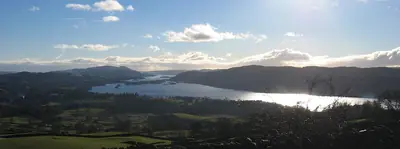
Orrest Head is one of the best places to visit in Windermere for a wide panorama with relatively little effort. The hill has a special place in Lake District history: it was the first fell Alfred Wainwright climbed during his first visit to the area.
A panorama plate at the summit identifies peaks including the Old Man of Coniston, Scafell Pike, Great Gable, Fairfield and the Langdale Pikes. The main route follows a reinstated Victorian carriageway that is wide, surfaced and steady. It has been designated as the Lake District National Park’s 50th “Miles Without Stiles” route, making it suitable for pushchairs and off-road mobility scooters.
Brant Fell
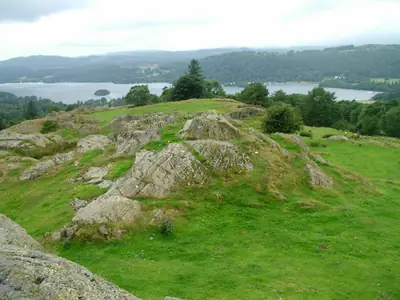
Brant Fell offers another impressive view over Lake Windermere. The hill stands 629 feet, or approximately 192 metres, high and was included in Alfred Wainwright’s The Outlying Fells of Lakeland, where he praised its prospect.
A route described by Wainwright leaves Bowness along the Dales Way, passes the viewpoint at Post Knott and continues in an anticlockwise loop to the summit. The walk can return by the same path or descend through woodland towards Helm Road. A detour leads to Biskey Howe, another viewpoint before the route returns towards Bowness.
The summit also reveals slabs of Silurian rock, probably smoothed by glacial ice moving out of the Windermere basin thousands of years ago. The rocky top is used by boulderers for natural climbing problems.
Holehird Gardens
Above Windermere, Holehird Gardens is a 10-acre garden maintained by the Lakeland Horticultural Society. The site has been recognised by BBC gardeners as one of the nation’s favourite gardens.
Its planting areas include extensive rock gardens, heather gardens, alpine houses and a walled garden with herbaceous borders. The hillside setting adds a distinctly Lakeland character to the garden visit.
Windermere Jetty: Museum of Boats, Steam and Stories
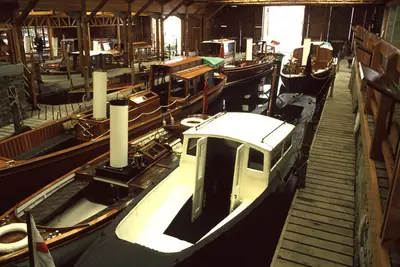
On the eastern shore of Lake Windermere, between Windermere and Bowness-on-Windermere, Windermere Jetty explores the region’s boating heritage. The museum was formerly known as the Windermere Steamboat Museum.
The collection spent 12 years in storage while the site underwent a complete redevelopment. Windermere Jetty reopened in March 2019 in a purpose-built home, with a new identity and a focus on boats, steam and stories connected with the lake.
St Mary’s Church, Windermere
St Mary’s Church is an active Anglican parish church in Windermere. The building is listed at Grade II, reflecting its architectural and historic interest.
Its quiet position in the town provides a contrast to the busier lakeside atmosphere at Bowness. It is one of the places included on Neywo’s Windermere route.
Church of Our Lady of Windermere and St. Herbert
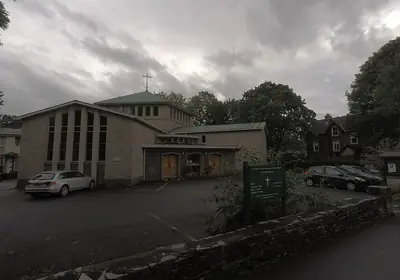
The Church of Our Lady of Windermere and St. Herbert is another church building in Windermere, Cumbria. It forms part of the town’s religious and architectural landscape and is included among the narrated places on Neywo’s audio guide.
St Martin’s Church, Bowness-on-Windermere
St Martin’s Church stands in the centre of Bowness-on-Windermere. It is an active Anglican parish church and has served as a focal point for the local community for generations.
The church holds Grade I listed status, recognising its exceptional architectural and historic importance. It belongs to the deanery of Windermere, within the archdeaconry of Westmorland and Furness and the diocese of Carlisle.
Black Moss Bridge and Droomer Bridge
Black Moss Bridge and Droomer Bridge are two crossings in Windermere, within the Lake District and the Westmorland and Furness area of Cumbria. They offer smaller-scale points of interest away from the main lakefront and viewpoint routes.
Explore Windermere with Neywo
Neywo’s free audio guide turns a visit into a Windermere self-guided walking tour. The app includes one walking route: “Wainwright’s First Fell to the Shore of England’s Longest Lake.” It covers 5.39 km, takes around 107 minutes and includes six narrated stops, including Orrest Head, St Mary’s Church, Windermere Jetty, St Martin’s Church, Bowness-on-Windermere and Brant Fell.
The app tells the story of each place as you reach it, at your own pace, with no group and no schedule. Narration is available in 11 languages. Download Neywo and explore Windermere as you walk from the town to the shore of its famous lake.
Places with an audio guide in Windermere
8 places in Windermere with a Neywo audio guide. Each one starts telling its story as you reach it.



Self-guided tours in Windermere
1 tour in Windermere, free in the Neywo app. Each stop tells its story as you reach it.
- Walk
Wainwright's First Fell to the Shore of England's Longest Lake
Start on Orrest Head, the hill where Alfred Wainwright first saw the Lakeland mountains and fell in love with them. Come down through Windermere town and its Victorian churches to Bowness, visit the boats and steamers of the Jetty Museum, and finish on Brant Fell with the whole lake spread out below you.
Orrest Head · St Mary's Church, Windermere · Church of Our Lady of Windermere and St. Herbert · Windermere Jetty: Museum of Boats, Steam and Stories · St Martin's Church, Bowness-on-Windermere · Brant Fell
Open this tour: Wainwright's First Fell to the Shore of England's Longest Lake
Walk Windermere with Neywo
Neywo turns Windermere into a self-guided audio tour. Stories arrive as you reach the place they belong to, and the route reshapes when you wander off it.

