Things to Do in Anchorage, United States: Walking Guide
Things to do in Anchorage: what to see in Alaska’s largest city
Looking for things to do in Anchorage? Alaska’s largest city brings together museums, Indigenous culture, aviation history, historic landmarks, performing arts and places connected to the state’s unusual geography. It is also a practical starting point for discovering Alaska, with a free Neywo audio guide covering 38 narrated places around the city.
What to see in Anchorage
Alaska Aviation Museum
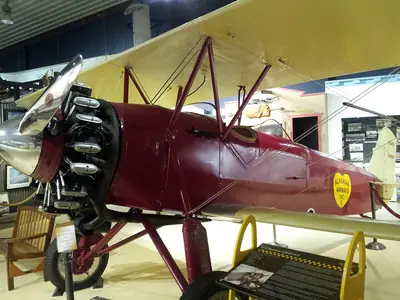
The Alaska Aviation Museum sits beside Lake Hood Seaplane Base, one of the defining settings for understanding Alaska’s reliance on aircraft. Opened in 1988, the museum preserves the state’s aviation heritage, from bush pilots who landed on glaciers, rivers and improvised airstrips to wartime aviation.
More than thirty vintage aircraft are displayed across four hangars. The Restoration Hangar shows volunteers bringing historic planes back to life, including the Grumman Goose, which returned to the skies in May 2024 after extensive restoration.
Alaska Museum of Science and Nature
For a look at Alaska’s natural history, the Alaska Museum of Science and Nature focuses particularly on fossils. Its collection offers a window into the ancient past of the region and makes the museum a useful stop for visitors interested in science as well as Anchorage’s more recent history.
Alaska Native Heritage Center
About ten miles from downtown, the Alaska Native Heritage Center presents the living cultures of Alaska’s Indigenous peoples on twenty-six wooded acres around Lake Tiulana. It is the only statewide organization representing all eleven of Alaska’s major Native cultural groups, including peoples from the interior, Arctic coast, southeast, western coast and Aleutian chain.
The grounds contain six life-sized traditional dwellings, each representing a different cultural region. They include a Southeast Alaska longhouse, an Athabascan winter house, an Inupiaq sod house, a Yup’ik/Cup’ik qasgiq, an Aleut ulax and an Alutiiq ciqlluaq. Youth interns often lead tours through the villages and explain the artifacts and traditions connected with them.
Anchorage Museum
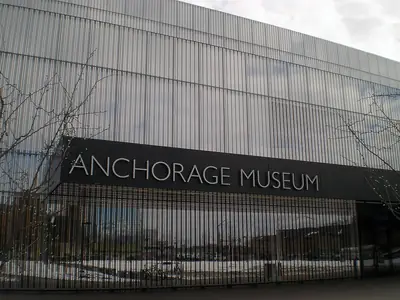
The Anchorage Museum is Alaska’s largest museum and one of the best places to understand the state’s land, peoples, art and history in one visit. Its permanent galleries include the Alaska History Gallery and the Smithsonian Arctic Studies Center, whose long-term loan includes hundreds of Alaska Native artifacts from cultures across the circumpolar north.
The museum also includes the Imaginarium Discovery Center. Visitors can experience a simulated earthquake, touch live marine animals from the Alaska coast and explore the night sky in the planetarium. With exhibits spanning history, culture and science, it is one of the strongest answers to the question of what to see in Anchorage.
Cathedral of the Holy Family
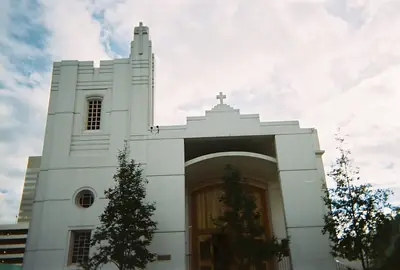
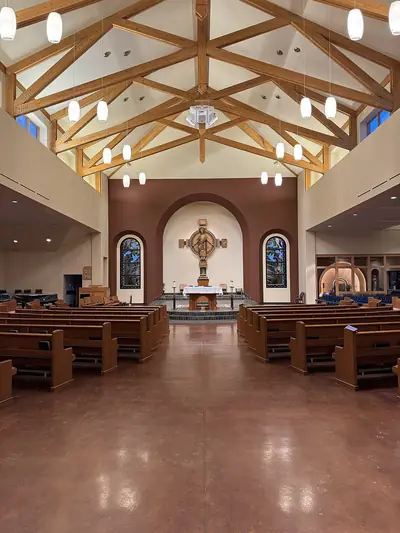
The Cathedral of the Holy Family, also known as Holy Family Old Cathedral, has been connected with Anchorage since the city’s founding. Its original parish was established in 1915, and the present Romanesque Revival building began rising in 1946. Services started in 1947, while construction was completed in 1952.
The cathedral was substantially rebuilt after the Good Friday earthquake of 1964. In 1966, it became the mother church of the newly created Archdiocese of Anchorage. Its history also includes a 1981 papal audience held by Pope John Paul II, attended by an estimated 80,000 people.
Our Lady of Guadalupe Co-Cathedral
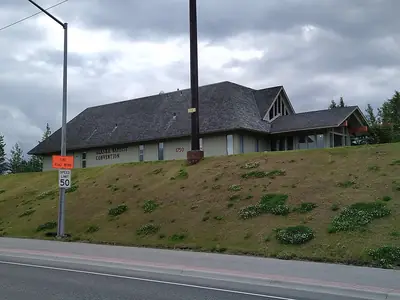
The Cathedral of Our Lady of Guadalupe serves both as a parish church and as the seat of the archbishop for the Archdiocese of Anchorage–Juneau. From 2014 to 2020, it held the title of co-cathedral for the Archdiocese of Anchorage before the two dioceses merged.
Alaska Law Enforcement Museum
The Alaska Law Enforcement Museum traces policing in the state from the early Territorial Police to today’s Alaska State Troopers. Its collection includes a restored 1952 Hudson Hornet, an eighteen-pound Oregon boot once used to restrain prisoners during transport, weapons ranging from sap pistols to Tommy guns, and vintage communication equipment.
Displays also cover notable investigations, including the case of serial killer Ed Krause. Together, the exhibits show how law enforcement adapted to vast distances and demanding conditions in Alaska.
4th Avenue Marketplace
The 4th Avenue Marketplace is an indoor downtown hub combining shopping, dining and local history. Alongside boutiques and restaurants, it houses the Historical Veterans Museum and the Alaska Experience Theatre. Local artisans also set up stalls with native carvings, handmade jewelry, clothing, prints and toys.
The marketplace provides a compact way to browse local crafts, eat and find cultural attractions under one roof. During the summer months, some artisans give outdoor demonstrations of their work.
Captain Cook Monument at Resolution Park
At Resolution Park, a life-sized bronze statue of Captain James Cook looks across the inlet that bears his name. Cook charted these waters in 1778 while searching for the Northwest Passage, although he never set foot in what is now Anchorage; his ship’s master, William Bligh, carried out much of the exploration.
The statue was sculpted by Derek Freeborn and installed in 1976. It is a replica of the monument in Whitby, England, Anchorage’s sister city. The landmark also reflects ongoing debate about colonial expansion and the history of exploration in the region.
Eisenhower Alaska Statehood Monument and Ship Creek Overlook
The Eisenhower Alaska Statehood Monument commemorates Alaska becoming the 49th state. The associated historic house recalls the civic leaders who helped Anchorage develop from a railroad camp into a governing center and is listed on the National Register of Historic Places.
Nearby, Ship Creek Overlook connects the city’s modern story to its beginnings. A government-owned railroad project funded by the U.S. Congress in 1914 led to the growth of a construction camp at Ship Creek. That camp became Anchorage, now Alaska’s largest city.
Alaska Center for the Performing Arts
Since opening in 1988, the Alaska Center for the Performing Arts has been a major part of Anchorage’s cultural life. Its programme includes Broadway musicals, symphony concerts, opera, ballet, chamber music, theatre, dance and film screenings.
The complex contains three venues: the 2,000-seat Evangeline Atwood Concert Hall, the 700-seat Discovery Theatre and the 340-seat Sydney Laurence Theatre. Their different sizes accommodate both large productions and more intimate performances.
Ted Stevens Anchorage International Airport
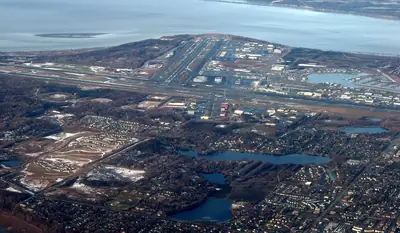
Ted Stevens Anchorage International Airport is Alaska’s primary gateway and a major global cargo hub. Located five miles southwest of downtown, it opened in 1951 as Anchorage International Airport.
During the Cold War, Anchorage became an important refuelling stop between the United States and Asia because Western aircraft could not fly over Soviet airspace and lacked the range for nonstop trans-Pacific flights. The airport remains one of the city’s most significant connections with the wider world.
Explore Anchorage with a free audio guide
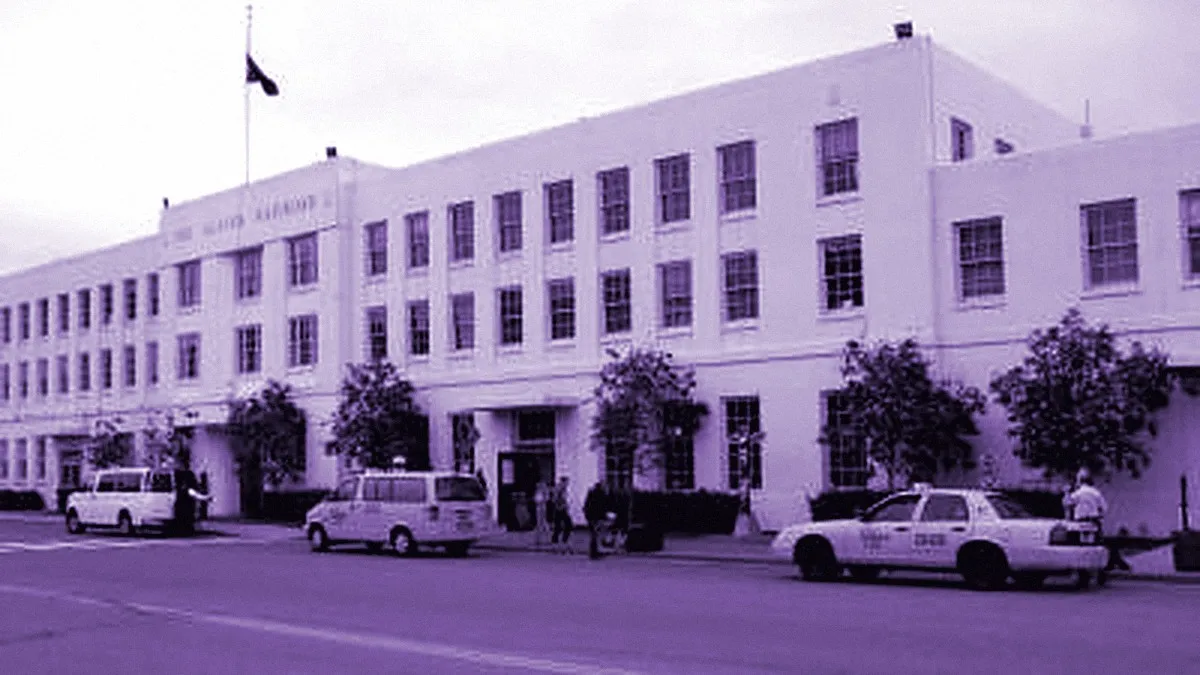
Neywo’s Anchorage audio guide includes 38 narrated places and offers one walking tour and one bus route. The walking tour, Anchorage’s First Century: Tent City to Alaska’s Largest City, covers 3 km in about 95 minutes and has 12 stops, including Anchorage Depot, Anchorage Museum, Downtown Anchorage, Alaska Center for the Performing Arts, Cathedral of the Holy Family and Oscar Anderson House Museum.
The bus route, People Mover 41 Through Downtown Anchorage, covers 1.7 km in about 7 minutes and has four stops: Loussac-Sogn Building, Alaska Center for the Performing Arts, Cathedral of the Holy Family and Anchorage Museum.
Download Neywo and explore at your own pace: each story plays as you reach the place, with no group and no schedule. Narration is available in 11 languages. If you are continuing through the state, you can also compare Anchorage with Fairbanks, Homer or Juneau.
Places with an audio guide in Anchorage
8 places in Anchorage with a Neywo audio guide. Each one starts telling its story as you reach it.


Self-guided tours in Anchorage
2 tours in Anchorage, free in the Neywo app. Each stop tells its story as you reach it.
- Bus ride
People Mover 41 Through Downtown Anchorage
A short ride on the municipal People Mover Route 41, the Government Hill loop, along downtown's grid: a Moderne landmark, the Performing Arts Center, the Old Cathedral and Alaska's largest museum. A cheap way to sample the city centre.
Loussac-Sogn Building · Alaska Center for the Performing Arts · Cathedral of the Holy Family · Anchorage Museum
Open this tour: People Mover 41 Through Downtown Anchorage - Walk
Anchorage's First Century: Tent City to Alaska's Largest City
Start at the Alaska Railroad depot that built the city in 1915, visit Alaska's largest museum, then stroll the downtown grid: a whale mural, a Moderne landmark, the Anchorage Hotel's Gothic annex, the first reinforced-concrete city hall, the Egan Center and the Performing Arts Center. Finish at the Old Cathedral, a famous hotel and Anchorage's very first wood-frame house.
Anchorage Depot · Anchorage Museum · J. C. Penney Store · Loussac-Sogn Building · Downtown Anchorage · Fourth Avenue Theatre …
Open this tour: Anchorage's First Century: Tent City to Alaska's Largest City
Walk Anchorage with Neywo
Neywo turns Anchorage into a self-guided audio tour. Stories arrive as you reach the place they belong to, and the route reshapes when you wander off it.

