What to See in Chattanooga, United States: Free Audio Guide

Things to Do in Chattanooga: Bridges, Museums, and Historic Landmarks
Looking for things to do in Chattanooga? This Tennessee city combines the Tennessee River, historic bridges, museums, churches, and Civil War-era landscapes in a compact destination with plenty to explore. Its landmarks reveal how river traffic, railways, military history, art, and engineering have shaped Chattanooga.
Neywo has a free audio guide for Chattanooga with 48 narrated places, available in 11 languages. The stories play as you reach each place, making it easy to explore independently.
Chattanooga is part of Tennessee, in the United States.
What to See in Chattanooga
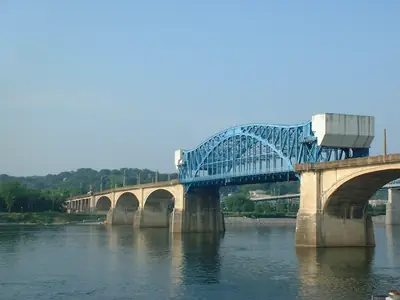
Market Street Bridge
The Market Street Bridge spans the Tennessee River between downtown Chattanooga and the Northshore District. Officially named the Chief John Ross Bridge, it opened in 1917 and was formally renamed in honor of the Cherokee chief in 1950.
Its structure combines concrete arch spans with a steel center truss. The middle section is a double-leaf rolling lift span: two leaves rise above the water to let river traffic pass. The main span measures 300 feet and was the world’s longest rolling-lift bascule span when completed. Streetcars once crossed the bridge, though service ended in the 1930s. After renovation, the bridge reopened on August 4, 2007.
Walnut Street Bridge
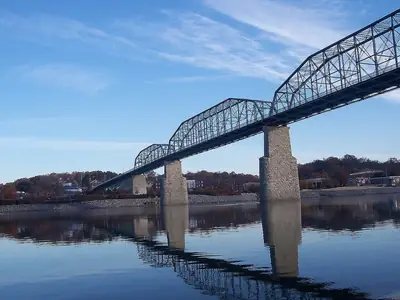
Built in 1890, the Walnut Street Bridge connects downtown with North Chattanooga across the Tennessee River. At 2,376 feet, or 724 meters, it is an imposing landmark and an exceptionally long and old example of its type.
The bridge uses pin-connected Pennsylvania through trusses, with top chords arranged in five sections. The design resembles the Camelback truss form. It is also historically significant as apparently the first non-military highway bridge across the Tennessee River.
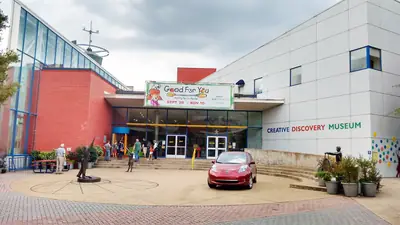
Creative Discovery Museum
Families looking for things to do in Chattanooga with children can explore the Creative Discovery Museum, a hands-on museum designed for visitors from 18 months to 12 years. Its exhibits use play to introduce art, music, and science.
RiverPlay is one of the museum’s central areas. This two-story, water-themed space includes a swinging bridge, a twisting tunnel, a toddler-sized riverboat area, and a water table where children can investigate how lock and dam systems work. Other areas include The Little Yellow House for younger children, creative spaces for art and music, a field science area with fossils and prehistoric creatures, an inventor’s workshop, and an interactive rooftop exhibit.
Hunter Museum of American Art
Overlooking the Tennessee River from the Bluff View Art District, the Hunter Museum of American Art presents American art from the colonial period to the present. Its collection includes Hudson River School landscapes, nineteenth-century genre painting, American Impressionism, Ashcan School realism, early modernism, regionalism, and modern and contemporary works created after the Second World War.
The building itself is part of the experience. The museum combines a 1904 Classical Revival mansion designed by Abram Garfield, a 1975 Brutalist addition, and a contemporary wing designed by Randall Stout in 2005. Together, the three stages create a striking meeting of classical, Brutalist, and contemporary architecture.
Houston Museum of Decorative Arts
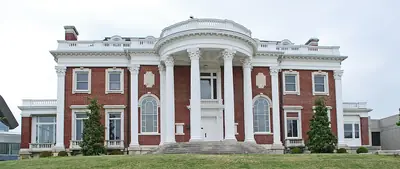
The Houston Museum of Decorative Arts occupies the Faxon-Thomas Mansion, a Georgian Revival residence with Federal elements. Built between 1906 and 1908, the mansion was designed by the Cincinnati firm Mead and Garfield and stands on a knoll overlooking the Tennessee River.
Its exterior features a symmetrical two-story brick façade, one-story wings, a circular bay, oval hooded dormers, and a grand portico with fluted Corinthian columns. Inside, a double staircase, Roman Doric columns, intricate moldings, marble and wood mantels, wainscoting, and hand-carved woodwork give the first floor a richly detailed character.
Coolidge National Medal of Honor Heritage Center
In Aquarium Plaza, the Coolidge National Medal of Honor Heritage Center tells the stories behind the nation’s highest military award for valor. Life-sized exhibits, audio-visual presentations, and interactive storytelling connect military history with individual acts of courage.
Chattanooga’s connection to the Medal of Honor began on March 25, 1863, when Private Jacob Parrott received the first award for his role in the Great Locomotive Chase. Nineteen of the twenty-four Andrews’ Raiders later received the medal, while Civil War battles in the region produced thirty-three more recipients. The center’s collection includes more than six thousand artifacts spanning conflicts from the Civil War to modern times.
Moccasin Bend
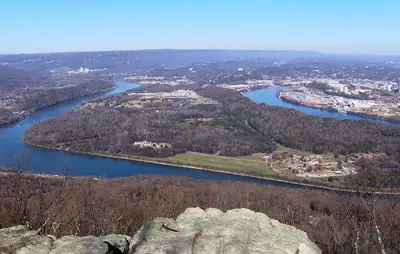
Across the Tennessee River toward Lookout Mountain, Moccasin Bend forms one of the most distinctive landscapes connected with the National Park Service. The Moccasin Bend Archeological District preserves evidence of human history reaching back 12,000 years.
The area contains remains and artifacts associated with important Native American sites. It also formed part of the Trail of Tears and played a role in the American Civil War. After years in which industrial development affected archaeological sites, preservation efforts led to its official recognition as a National Archeological District in 2003.
Tennessee Valley Railroad Museum
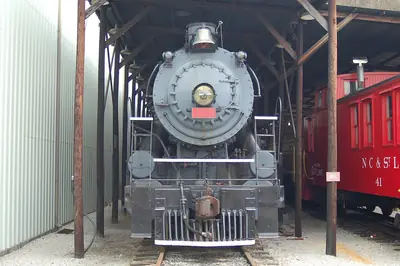
The Tennessee Valley Railroad Museum brings railway history to life through preserved locomotives, railway equipment, and heritage train excursions. It began in 1960, when local railway preservationists founded a chapter of the National Railway Historical Society to protect locomotives and equipment that had become obsolete.
At the museum’s Grand Junction site, visitors can explore a historic rail yard, board a restored passenger car, and ride a vintage train. The collection includes steam and diesel engines, some of which still operate. The Missionary Ridge Local is a six-mile journey that crosses three bridges and passes through the Civil War-era Missionary Ridge Tunnel, listed on the National Register of Historic Places.
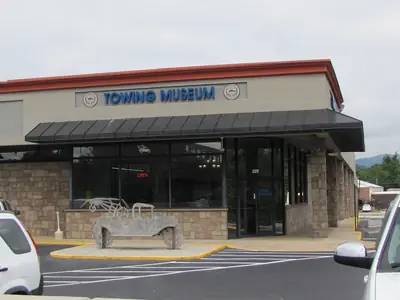
International Towing and Recovery Hall of Fame and Museum
Chattanooga is recognized as the birthplace of the U.S. tow truck, and this museum explores the history, innovation, and people behind the towing industry. Its two galleries trace the field from modest garage beginnings to a worldwide industry.
The collection includes 24 antique tow trucks, two Model T automobiles, towing equipment, tools, photographs, memorabilia, and collectible toy tow trucks. The story began locally in 1916, when Ernest Holmes Sr. designed the first tow truck. The museum found a permanent home in Chattanooga in 1995 after beginning as a mobile museum housed in a semi-trailer.
Historic churches and downtown buildings
Chattanooga’s historic center also rewards a closer look at its architecture. The Basilica of Saints Peter and Paul, built in 1888, has a Gothic design with a brick façade, limestone foundation, twin towers, stained-glass windows, and a steeply pitched gable roof. Its interior includes a groined vault ceiling and ornate suspended pendants.
Christ Church Episcopal combines neo-Gothic architecture with a parish history that began in 1900. The present building was remodeled by the Boston firm of Ralph Adams Cram. The First Baptist Church Education Building, at 317 Oak Street, dates from 1928 and uses Romanesque elements to harmonize with the nearby church. It was added to the National Register of Historic Places in 1980.
Other places connected with Chattanooga’s past include Orchard Knob Reservation, a park of open ground, wooded areas, and low hills, and Red Bank, a city in Hamilton County entirely surrounded by Chattanooga’s city limits.
Explore Chattanooga with Neywo
Neywo gives you a Chattanooga self-guided walking tour experience without a group or a fixed schedule. The city guide includes 3 walking tours, 1 bus route, and 1 bike route, covering 48 narrated places in total.
The walks are:
- Riverfront Chattanooga: Bridges, Fish and the Bluff — 2.22 km, 64 minutes, 7 narrated stops
- Jewel of the South: Downtown Landmarks and the Choo-Choo — 2.73 km, 81 minutes, 10 narrated stops
- Steeples of Downtown: Chattanooga’s Historic Churches — 2.39 km, 74 minutes, 8 narrated stops
There is also:
- CARTA Route 2: from the Children’s Museum to the Federal Building — 8 km, 34 minutes, 5 narrated stops
- Tennessee Riverwalk: Aquarium, Bridges and Coolidge Park — 1.7 km, 8 minutes, 6 narrated stops
Download Neywo and explore Chattanooga at your own pace. The app tells the story of each place as you reach it, with no group and no schedule.
Places with an audio guide in Chattanooga
8 places in Chattanooga with a Neywo audio guide. Each one starts telling its story as you reach it.
Self-guided tours in Chattanooga
5 tours in Chattanooga, free in the Neywo app. Each stop tells its story as you reach it.
- Bike ride
Tennessee Riverwalk: Aquarium, Bridges and Coolidge Park
Ride the paved Tennessee Riverwalk, a greenway open to cyclists, from the Creative Discovery Museum and the Aquarium along the bluff below the Hunter Museum, across the pedestrian Walnut Street Bridge to Coolidge Park and back over the Market Street Bridge.
Creative Discovery Museum · Tennessee Aquarium · Hunter Museum of American Art · Walnut Street Bridge · Coolidge Park · Market Street Bridge
Open this tour: Tennessee Riverwalk: Aquarium, Bridges and Coolidge Park - Bus ride
CARTA Route 2: from the Children's Museum to the Federal Building
A regular CARTA city bus (route 2, North Chattanooga) that links the Creative Discovery Museum with downtown's best buildings: the Tivoli Theatre, the fortress-like Old Post Office, the Soldiers and Sailors Memorial Auditorium and the Art Moderne Solomon Federal Building.
Creative Discovery Museum · Tivoli Theatre · Old Post Office · Soldiers and Sailors Memorial Auditorium · Joel W. Solomon Federal Building and United States Courthouse
Open this tour: CARTA Route 2: from the Children's Museum to the Federal Building - Walk
Riverfront Chattanooga: Bridges, Fish and the Bluff
The Tennessee River is why Chattanooga exists. Visit the aquarium on its bank, climb to the Hunter Museum on the bluff, then cross the 1890 Walnut Street Bridge to Coolidge Park and its antique carousel, and return over the lifting Market Street Bridge.
Creative Discovery Museum · Tennessee Aquarium Imax 3D Theater · Tennessee Aquarium · Hunter Museum of American Art · Walnut Street Bridge · Coolidge Park …
Open this tour: Riverfront Chattanooga: Bridges, Fish and the Bluff - Walk
Jewel of the South: Downtown Landmarks and the Choo-Choo
From the station that gave the Chattanooga Choo-Choo its name to the Tivoli Theatre, the Read House where Al Capone stayed, a Carnegie library and the hilltop basilica. A walk through the downtown the railways built. The route now also takes in the Warehouse Row district and the Carnegie-funded Old Library.
Terminal Station · Market Street Warehouse Historic District · Old Post Office · Joel W. Solomon Federal Building and United States Courthouse · The Read House Hotel · Tivoli Theatre …
Open this tour: Jewel of the South: Downtown Landmarks and the Choo-Choo - Walk
Steeples of Downtown: Chattanooga's Historic Churches
A short walk through downtown's church history, from a Gothic Revival sandstone church by Chattanooga architect Reuben Hunt to the brick church that served as a Civil War prison and became a centre of Black Methodism, and the congregation that began as a Cherokee mission. The route now includes the memorial auditorium and the Gothic basilica on its hill.
St. Paul's Episcopal Church · Second Presbyterian Church · Wiley United Methodist Church · First Baptist Church Education Building · Soldiers and Sailors Memorial Auditorium · Saints Peter and Paul Basilica …
Open this tour: Steeples of Downtown: Chattanooga's Historic Churches
Walk Chattanooga with Neywo
Neywo turns Chattanooga into a self-guided audio tour. Stories arrive as you reach the place they belong to, and the route reshapes when you wander off it.

