Things to Do in Knoxville, United States: Walking Guide
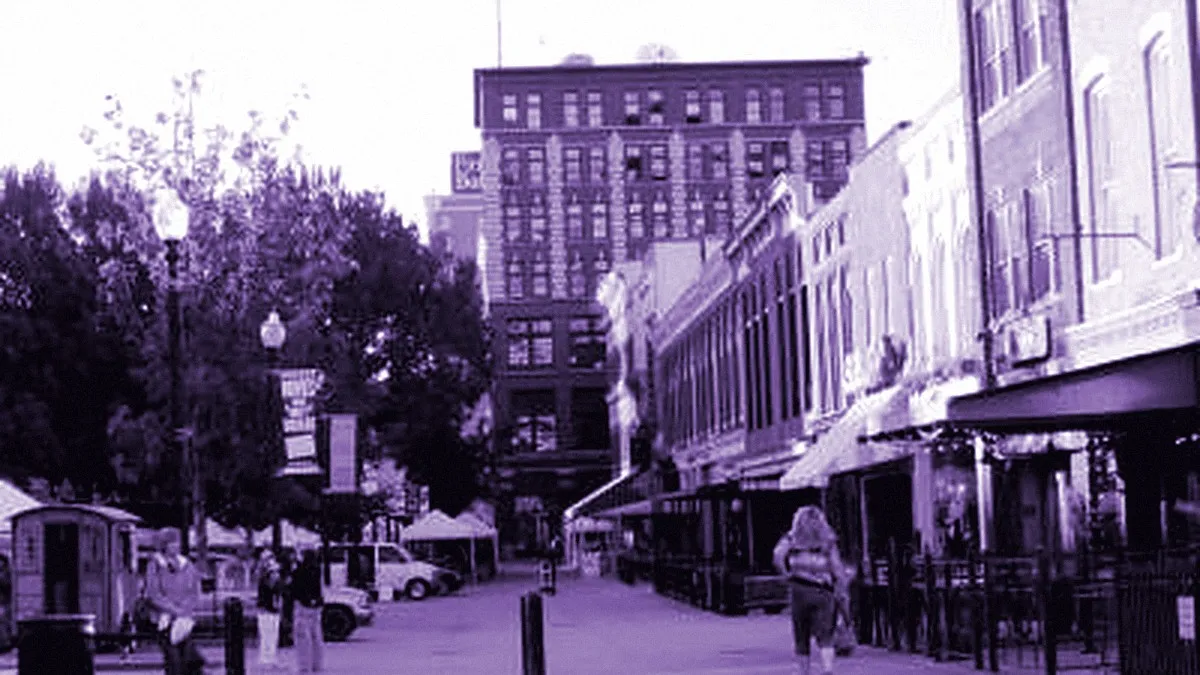
Things to do in Knoxville: what to see in Tennessee’s Marble City
Looking for things to do in Knoxville? This East Tennessee city brings together frontier history, African American heritage, museums, historic theatres, university life, and the Tennessee River. Its compact collection of landmarks makes Knoxville especially rewarding to explore on foot. Neywo has a free audio guide for Knoxville with 68 narrated places, available in 11 languages.
What to see in Knoxville
White’s Fort: where Knoxville began
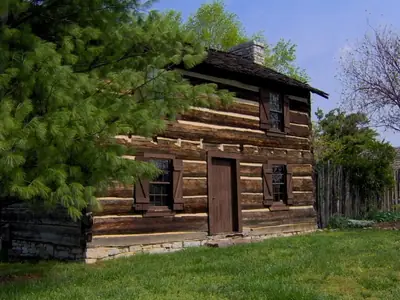
White’s Fort, also known as James White’s Fort, marks the beginning of Knoxville. James White established the settlement in 1786, creating a cluster of fortified log buildings around his first cabin. In 1791, William Blount moved the territorial capital here and renamed the settlement Knoxville, after Henry Knox.
The fort visible today preserves part of that story. Its original cabin was later moved and reconstructed at the present site, where the log buildings and stockade offer a glimpse of frontier life.
William Blount Mansion
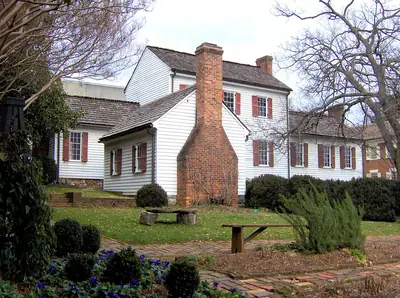
William Blount Mansion is one of Knoxville’s rare survivors from its earliest political history. William Blount was the only territorial governor of the Southwest Territory, a signer of the United States Constitution, and later a United States senator from Tennessee. The house served as the territory’s de facto capitol, and much of the Tennessee Constitution was drafted in Blount’s office between 1792 and 1796.
The wood-frame mansion was built with materials brought from North Carolina, an unusual choice when many Tennessee homes were log cabins. Its oldest section is the two-story central block, with a one-story wing on either side. Blount’s separate office still stands nearby.
Old Customs House and the East Tennessee History Center
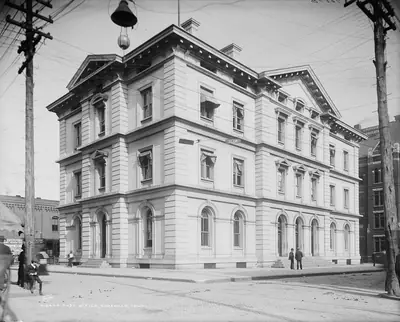
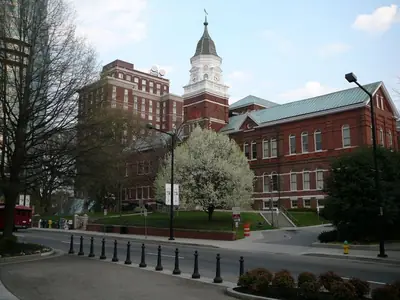
Completed in 1874, the Old Customs House was Knoxville’s first federal building. It housed federal courts, excise offices, and a post office until the 1930s, then served as offices for the Tennessee Valley Authority from 1936 to 1976. Today, it brings museums, archives, and historical collections together under the name East Tennessee History Center.
Its architecture combines Italianate, Renaissance Revival, and Second Empire influences. The building also recalls Robert L. Taylor, known as “Fiddlin’ Bob,” who worked there as a pension agent and entertained visitors with jokes, stories, and fiddle playing.
The Bijou Theatre
The Bijou Theatre occupies the rear wing of the Lamar House Hotel, whose history reaches back to 1817. The theatre was added in 1909, with a lobby opening onto Gay Street. Before that, the hotel had become a seventy-five-room complex and a gathering place for Knoxville’s wealthy. During the Civil War, the Union Army used it as a hospital for wounded soldiers.
The theatre and hotel were added to the National Register of Historic Places in 1975. The Bijou remains one of Knoxville’s important historic performance venues.
Church of the Immaculate Conception
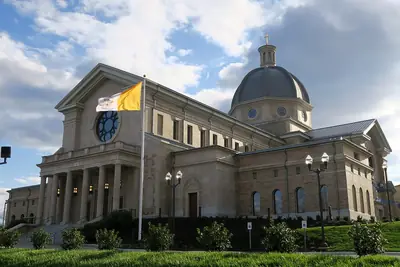
The Church of the Immaculate Conception stands on Summit Hill at 414 West Vine and remains an active parish in downtown Knoxville. Founded in 1855, it was Knoxville’s first Roman Catholic parish, growing as Irish immigrant laborers arrived for railroad construction.
The current sanctuary was designed by Joseph Baumann in 1886. Its brick Victorian Gothic design features a two-story form and a central clock tower rising into a turreted spire.
The Beck Cultural Exchange Center
In Knoxville’s historic Mechanicsville neighborhood, the Beck Cultural Exchange Center preserves and celebrates African American history and culture in East Tennessee. James H. Beck, Senior, established the center in 1975. Its collection contains more than fifty thousand artifacts, including photographs, documents, and objects from local African American families.
Exhibits explore slavery, the Civil Rights Movement, and African American contributions to art, music, and literature. The center combines museum exhibitions with educational programs and community events.
Knoxville Museum of Art
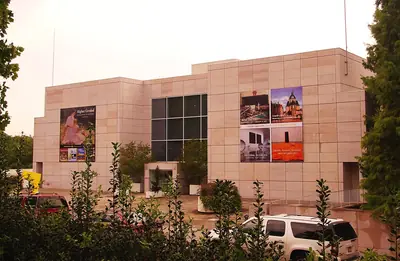
The Knoxville Museum of Art focuses especially on the historical and contemporary art of East Tennessee. Its permanent exhibition, Higher Ground: A Century of the Visual Arts in East Tennessee, presents work by notable regional artists as well as artists from elsewhere who made significant work in Knoxville.
The building itself is faced with pink Tennessee marble. Designed by Edward Larrabee Barnes, it opened in March 1990 and contains five galleries and two large outdoor garden areas. A renovation in 2013 and 2014 restored the marble cladding and redesigned the North Garden.
The Emporium Center for Arts and Culture
The Emporium Center for Arts and Culture on South Gay Street brings galleries, artists, and cultural organizations together in a restored historic building. Its galleries display work by local and regional artists, while the Balcony Gallery focuses on emerging and progressive artists.
Built in 1898, the building has served several purposes. It began as the main residence of a furniture company, later became a wholesale distribution center, and eventually housed a textile manufacturing facility that produced goods for military contracts.
The University of Tennessee and the McClung Museum
The University of Tennessee has roots reaching back to 1794. It is the flagship campus of the University of Tennessee system and one of the oldest public universities in the United States. The campus welcomes students from all 50 states and more than 100 countries.
The Frank H. McClung Museum of Natural History and Culture adds a broad cultural and scientific perspective. Its collections cover natural history, archaeology, anthropology, decorative arts, and local history. Permanent exhibitions include Tennessee fossils, East Tennessee geology, human evolution, freshwater pearl mussels, the archaeology and Native peoples of Tennessee, and ancient Egyptian artifacts. Outside the building, a replica of an Edmontosaurus annectens is known to University of Tennessee students as Monty.
Women’s Basketball Hall of Fame
The Women’s Basketball Hall of Fame is dedicated to every level of women’s basketball. Opened in 1999, it celebrates players, coaches, officials, and other contributors to the sport.
The 32,000-square-foot building includes a theatre, a basketball court, and interactive displays tracing the history of women’s basketball. Inductees are recognized in categories including coach, player, international player, veteran player, contributor, and official.
The Tennessee River
The Tennessee River is one of the major waterways of the southeastern United States. Its journey begins in Knoxville, where the French Broad and Holston rivers meet, before continuing through the Tennessee Valley toward the Ohio River. The river’s name is associated with Tanasi, a Cherokee village, and some sources refer to it as the Cherokee River.
Its presence helps explain Knoxville’s setting: the city and surrounding Knox County combine ridges, hills, valleys, bluffs, springs, lakes, islands, creeks, and rivers.
Mabry-Hazen House
Mabry-Hazen House rises on the crest of Mabry’s Hill. Built in 1858, the historic home preserves the story of the Mabry and Hazen families, along with more than 2,000 original objects.
The house combines Italianate and Greek Revival elements, with additions made in 1886. Its history is also linked to the Civil War: because it stood beside Fort Hill, both Confederate and Union forces occupied the strategic site.
Explore Knoxville with Neywo
Neywo offers a Knoxville self-guided walking tour experience, along with bus and bike routes. The app has four walking tours, one bus route, and one bike route:
- Where Knoxville Began: Frontier Fort, Founders and the Blount Mansion — 2.23 km, 82 minutes, 10 narrated stops
- Gay Street: Skyscrapers, Theatres and the Old Customs House — 1.38 km, 66 minutes, 11 narrated stops
- Market Square, Trains and Art: Old Knoxville Beyond Gay Street — 2.71 km, 85 minutes, 11 narrated stops
- Rocky Top: Campus Walk at the University of Tennessee — 2.36 km, 64 minutes, 7 narrated stops
- Blue Line Trolley: Founders, Theatres and the Hall of Fame — 3.4 km, 15 minutes, 5 narrated stops
- Tennessee River Greenway: Bicentennial Park to Third Creek — 5.4 km, 27 minutes, 3 narrated stops
The app tells the story of each place as you reach it, at your own pace. There is no group and no schedule, so you can explore independently while following the route that suits you.
Knoxville is a natural starting point for discovering Tennessee, with other destinations such as Gatlinburg, Chattanooga, and Nashville offering different perspectives on the state. Download Neywo and explore Knoxville with its history, culture, and riverfront stories playing as you walk.
Places with an audio guide in Knoxville
8 places in Knoxville with a Neywo audio guide. Each one starts telling its story as you reach it.


Self-guided tours in Knoxville
6 tours in Knoxville, free in the Neywo app. Each stop tells its story as you reach it.
- Bike ride
Tennessee River Greenway: Bicentennial Park to Third Creek
An easy ride along Knoxville's riverfront greenways from Bicentennial Park past Volunteer Landing and west toward East Third Creek.
Bicentennial Park · Volunteer Landing · East Third Creek
Open this tour: Tennessee River Greenway: Bicentennial Park to Third Creek - Bus ride
Blue Line Trolley: Founders, Theatres and the Hall of Fame
The free Blue Line trolley loops downtown Knoxville past First Baptist, the Blount Mansion, the Women's Basketball Hall of Fame, the old cemetery and the Tennessee Theatre.
First Baptist Church · William Blount Mansion · Women's Basketball Hall of Fame · First Presbyterian Church Cemetery · Tennessee Theatre
Open this tour: Blue Line Trolley: Founders, Theatres and the Hall of Fame - Walk
Where Knoxville Began: Frontier Fort, Founders and the Blount Mansion
Walk the birthplace of Tennessee's first capital: the log stockade where James White settled in 1786, the wooden mansion where the state constitution was drafted, and the oldest cemetery where the founders lie. End by the Tennessee River.
Women's Basketball Hall of Fame · White's Fort · Craighead-Jackson House · William Blount Mansion · Andrew Johnson Building · Knox County Courthouse …
Open this tour: Where Knoxville Began: Frontier Fort, Founders and the Blount Mansion - Walk
Gay Street: Skyscrapers, Theatres and the Old Customs House
The main street of downtown Knoxville from the Post Office up to the Fidelity Building. You pass the 1874 Customs House, the Tennessee Theatre movie palace of 1928 and the historic skyscrapers that made Gay Street the city's business spine.
First Baptist Church · United States Post Office and Courthouse · St. John's Cathedral · Tennessee Theatre · Bijou Theatre · General Building …
Open this tour: Gay Street: Skyscrapers, Theatres and the Old Customs House - Walk
Market Square, Trains and Art: Old Knoxville Beyond Gay Street
From the pedestrian heart of Market Square to the World's Fair Park, the railway stations that built the city and the warehouse district, a tour of Knoxville's civic and industrial past.
Tennessee Woman Suffrage Memorial · Market Square · Daylight Building · Church Street United Methodist Church · World's Fair Park · Knoxville Museum of Art …
Open this tour: Market Square, Trains and Art: Old Knoxville Beyond Gay Street - Walk
Rocky Top: Campus Walk at the University of Tennessee
The hilltop campus where the Volunteers play: Ayres Hall, a dinosaur outside the McClung Museum, the main library and the stadium on the river.
Neyland Stadium · Ayres Hall · McClung Museum · College of Architecture and Design (University of Tennessee) · University of Tennessee · John C. Hodges Library …
Open this tour: Rocky Top: Campus Walk at the University of Tennessee
Walk Knoxville with Neywo
Neywo turns Knoxville into a self-guided audio tour. Stories arrive as you reach the place they belong to, and the route reshapes when you wander off it.

