Nashville, United States: Self-Guided Walking Tour
Things to Do in Nashville: What to See in Music City
Looking for things to do in Nashville? Tennessee’s capital is a city of historic landmarks, major museums, recording studios, and venues shaped by country music and the wider history of recorded sound. From Fort Nashborough and the Cumberland River to the Ryman Auditorium and RCA Studio B, Nashville offers plenty to explore at street level. Neywo has a free Nashville audio guide with 110 narrated places.
Nashville is part of Tennessee, in the United States, and its attractions range from family-friendly science exhibits to museums devoted to individual performers, automobiles, and African American music.
What to see in Nashville
Fort Nashborough
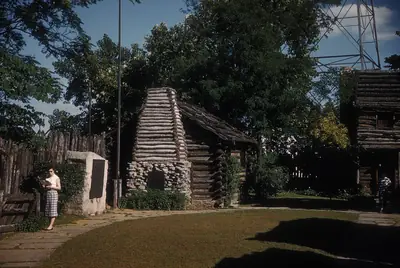
Fort Nashborough marks the beginning of Nashville’s story. Established in early 1779 in the French Lick area of the Cumberland River valley, the former stockade was a forerunner to the settlement that became Nashville. Despite its name, it was not a military garrison: the stockade was built to protect settlers from wild animals and Indians.
The square log stockade covered about two acres and contained 20 log cabins. It was abandoned in 1794, although the settlement continued to grow. Fort Nashborough was also known as Fort Bluff, Bluff Station, French Lick Fort, and Cumberland River Fort.
Country Music Hall of Fame and Museum
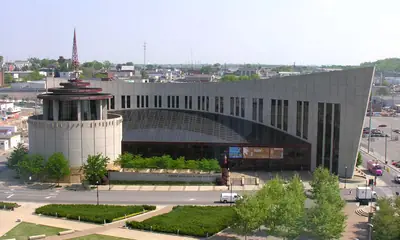
The Country Music Hall of Fame and Museum is one of the world’s largest museums and research centers devoted to American country music. Established in 1964, it documents and interprets the genre’s history, traditions, artists, and sounds.
Its collection contains more than two and a half million artifacts, including recordings, photographs, films, and musical instruments. The museum’s architecture also reflects Nashville’s musical identity: a piano keyboard appears to merge into a car grille, while a Cadillac tailfin and window designs echo the black diamond shapes of a WSM radio tower, the station known for broadcasting the Grand Ole Opry.
Ryman Auditorium
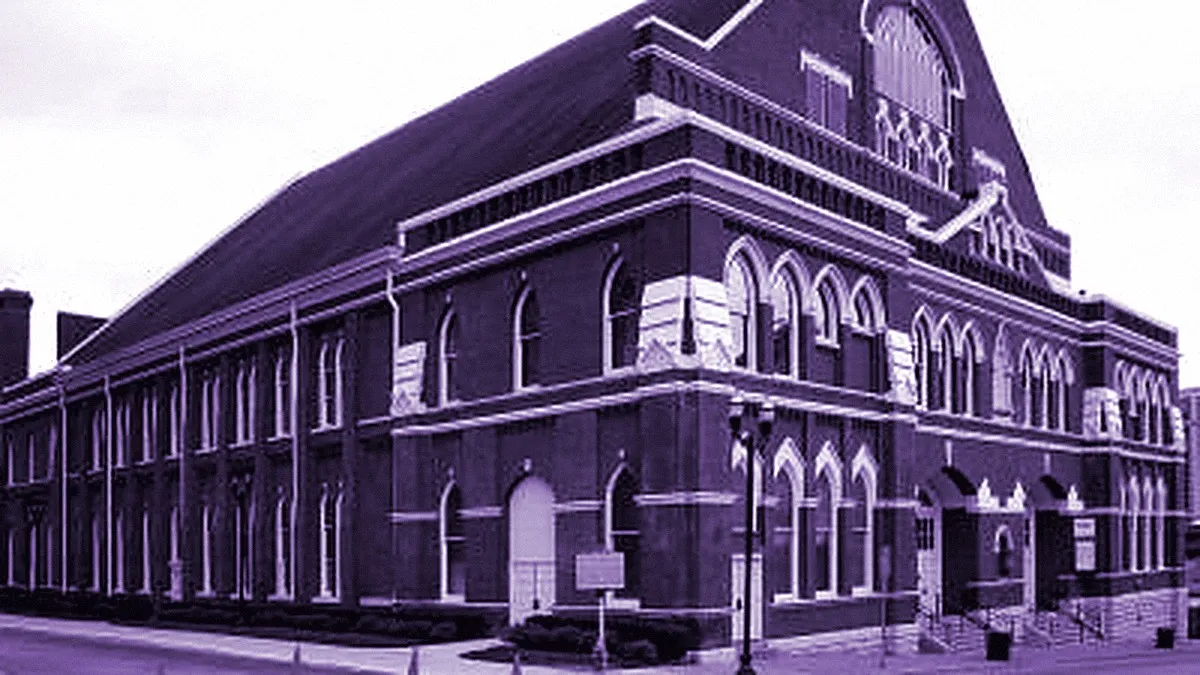
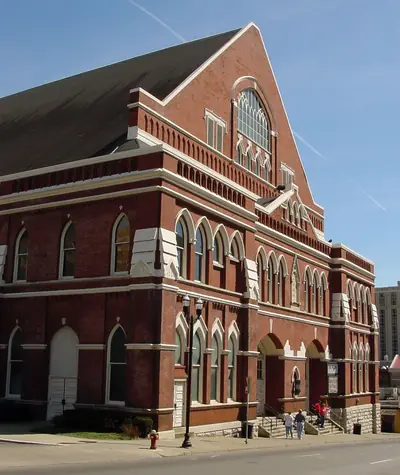
Known as the “Mother Church of Country Music,” Ryman Auditorium began as the Union Gospel Tabernacle. Construction started in 1885, and the building was completed in 1892 after businessman and riverboat captain Thomas G. Ryman was inspired by a Christian revival led by Reverend Sam Jones.
The auditorium later hosted political debates, community meetings, entertainment programs, and concerts. Its most famous musical chapter began in 1943, when it became the home of the Grand Ole Opry. The radio program remained there until 1974. Today, its 2,362 seats, amphitheater and balcony levels, and renowned acoustics preserve the atmosphere of one of Nashville’s most important performance venues.
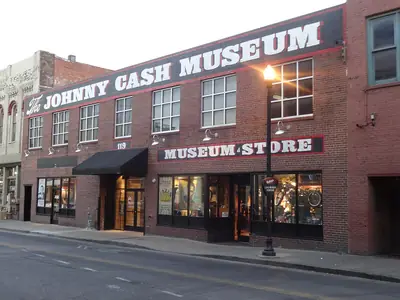
Johnny Cash Museum
The Johnny Cash Museum traces the life and career of one of the twentieth century’s most influential musicians. Known as the Man in Black, Cash is represented through stage costumes, instruments, personal letters, artwork, photographs, rare recordings, and handwritten song lyrics.
Opened in May 2013, the museum was founded by Bill Miller, a close friend of Cash, and is officially authorized by the musician’s estate. The displays follow Cash’s story chronologically, from his early years in Dyess, Arkansas, through his music career and continuing cultural influence. The collection even includes a stone wall taken from Cash’s lake house in Hendersonville, Tennessee.
Downtown Presbyterian Church
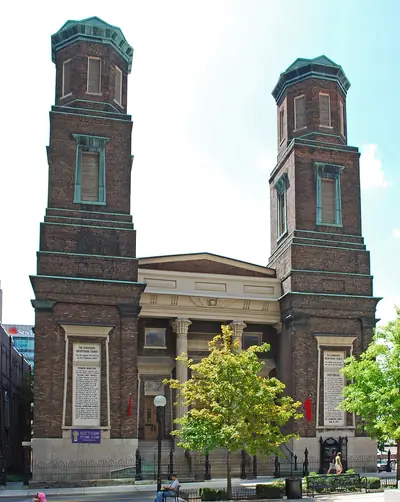
Downtown Presbyterian Church stands at the corner of Rep. John Lewis Way and Church Street. Its Egyptian Revival design makes it one of Nashville’s most distinctive historic buildings.
The present sanctuary was completed in 1848, after earlier structures on the site burned or were replaced. Egyptian-style details include lotus columns, a winged sun disk, stained-glass windows, woodwork, and murals depicting Egyptian scenes. The church has connections with Andrew Jackson, who was a member when it was still called First Presbyterian Church, and with Tennessee Governor James K. Polk, who was inaugurated in the second sanctuary.
Frist Art Museum
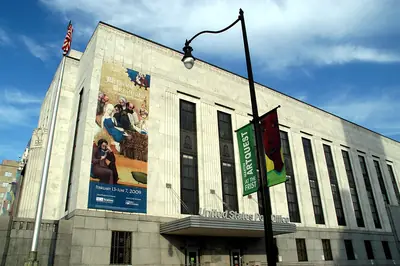
The Frist Art Museum occupies a white marble building that once served as Nashville’s main post office. Opened in 2001, it presents changing exhibitions featuring local, state, and regional artists alongside major exhibitions from across the United States and around the world.
The building’s Art Deco and Stripped Classicism design is part of the experience. It was added to the National Register of Historic Places in 1984. The museum also has an interactive area where visitors of all ages can try different art mediums through hands-on activities.
RCA Studio B
RCA Studio B is one of Nashville’s most important recording landmarks. Established in 1957 by Steve Sholes and Chet Atkins for RCA Victor, the compact studio helped create the polished style known as the Nashville Sound.
Its production techniques softened the rough edges of 1950s honky-tonk country music, bringing smooth vocals, lush strings, and background harmonies to the forefront. The studio closed as a commercial recording space in 1977. Since 1992, it has been owned by the Country Music Hall of Fame, which preserves the site and offers scheduled guided tours. RCA Studio B was added to the National Register of Historic Places in 2012.
National Museum of African American Music
At Fifth and Broadway, the National Museum of African American Music explores genres created, inspired, or influenced by African Americans. It places music at the center of a wider cultural story and is one of Nashville’s significant musical institutions.
Musicians Hall of Fame and Museum
The Musicians Hall of Fame and Museum focuses on the musicians, producers, and engineers behind famous recordings. Its instruments and exhibits highlight the contributions of people whose names may be less familiar than the songs they helped create.
The museum opened on June 6, 2006. Its timeline covers the history of recorded music, with particular attention to session musicians working in studio communities including Memphis, Los Angeles, Detroit, Nashville, Muscle Shoals, and New York City, especially from the 1950s through the 1980s.
The Hermitage
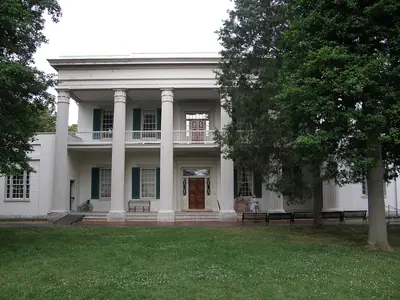
East of downtown Nashville, The Hermitage is a historic plantation and museum with a deeply layered history. The National Historic Landmark was the home and final resting place of Andrew Jackson, the seventh president of the United States.
The property covers more than 1,000 acres in Davidson County. Jackson owned it from 1804 until his death there in 1845. Although he lived at The Hermitage intermittently before retiring from public life in 1837, the plantation was managed by his wife, Rachel Jackson.
Adventure Science Center
Adventure Science Center is designed primarily for children, with more than 175 hands-on exhibits covering biology, physics, visual perception, the mind, air and space, energy, and Earth science. The exhibits fill 44,000 square feet, giving families plenty to explore through seeing, listening, touching, and experimenting.
Two features stand out: the 75-foot-tall Adventure Tower and the Sudekum Planetarium. The center began in 1945 as the Children’s Museum of Nashville and moved to its present location atop Old Saint Cloud Hill in 1974. It became known as Adventure Science Center in November 2002.
Bridgestone Arena
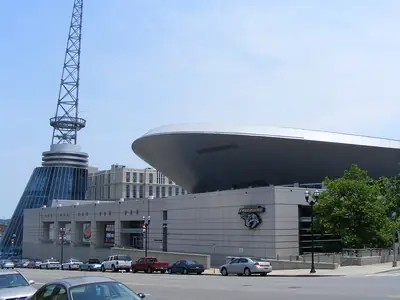
Bridgestone Arena is a major all-purpose venue in downtown Nashville and the home of the Nashville Predators of the National Hockey League. Opened in 1996, it hosts ice hockey, basketball, concerts, and other events.
The arena was designed with particular attention to concert acoustics and can accommodate as many as 20,000 people for center-stage concerts. It is also connected with the Tennessee Sports Hall of Fame, which honors athletes, teams, coaches, sports writers, and sports executives for their contributions to sports in Tennessee.
George Jones Museum
The George Jones Museum is a four-level tribute to the country singer known for his distinctive voice, style, and stories. Opened in 2015, it combines exhibition spaces with a restaurant, gift shop, and rooftop bar overlooking the Cumberland River.
Among the memorable objects on display are Jones’s green and gold John Deere riding lawnmower and the Big Rocking Chair, recalling his song “I Don’t Need Your Rockin’ Chair.”
Lane Motor Museum
Lane Motor Museum offers a different perspective on Nashville’s collections, focusing on unusual and inventive automobiles, especially European vehicles. Founded in October 2002 by Jeff and Susan Lane, the museum began with 70 vehicles and has grown to more than 500 automobiles, along with art and memorabilia.
Around 150 vehicles are displayed on any given day. The collection includes microcars, three-wheeled cars, amphibious vehicles, alternative-fuel vehicles, military vehicles, competition cars, propeller-driven vehicles, and one-off creations. Its group of 23 Tatras is another notable part of the collection.
Explore Nashville with a self-guided audio tour
A Nashville self-guided walking tour lets you explore the city without joining a group or following a fixed schedule. Neywo offers five walking tours, one bus route, and one bike route, with narration available in 11 languages.
The walks range from 2.08 to 4.23 km and from 53 to 97 minutes:
- Honky Tonk Highway: The Soul of Country Music — 2.12 km, 80 minutes, 10 stops
- Where Nashville Began: Fort, River and Bridge — 2.08 km, 64 minutes, 7 stops
- Capitol Hill: From Union Station to the Capitol — 2.28 km, 91 minutes, 12 stops
- West End: Athens in Tennessee — 4.23 km, 97 minutes, 8 stops
- From the Marathon Works to Jubilee Hall — 2.55 km, 53 minutes, 4 stops
The Music City Green Circuit bus route covers 3.3 km in 14 minutes and has 7 narrated stops. The Riverfront Ride bike route covers 1.9 km in 10 minutes and has 6 stops.
Download Neywo to explore Nashville at your own pace. The app tells the story of each place as you reach it, so you can walk, ride, or take the bus with no group and no schedule.
Places with an audio guide in Nashville
8 places in Nashville with a Neywo audio guide. Each one starts telling its story as you reach it.
Self-guided tours in Nashville
7 tours in Nashville, free in the Neywo app. Each stop tells its story as you reach it.
- Bike ride
Riverfront Ride: Fort, Amphitheater and the Bridge
Cycle the Cumberland riverfront from Fort Nashborough, where the city began, along Riverfront Park to the Ascend Amphitheater. Cross the 960 m Seigenthaler bridge, open to bikes, and finish at Nissan Stadium.
Johnny Cash Museum · Riverfront station · Fort Nashborough · Ascend Amphitheater · John Seigenthaler Pedestrian Bridge · Nissan Stadium
Open this tour: Riverfront Ride: Fort, Amphitheater and the Bridge - Bus ride
Music City Green Circuit: Capitol to the Country Music Hall of Fame
WeGo's free Music City Circuit (route 61) is a regular downtown bus. Ride it from the Performing Arts Center and the Musicians Hall of Fame past the 1957 Life & Casualty Tower to the Country Music Hall of Fame, the Ryman, the Egyptian Revival Downtown Presbyterian Church and St. Mary's.
Tennessee Performing Arts Center · Musicians Hall of Fame and Museum · Life & Casualty Tower · Country Music Hall of Fame and Museum · Ryman Auditorium · Downtown Presbyterian Church, Nashville …
Open this tour: Music City Green Circuit: Capitol to the Country Music Hall of Fame - Walk
Honky Tonk Highway: The Soul of Country Music
Walk Lower Broadway from the Symphony Center and the Country Music Hall of Fame to the neon honky-tonks. Pass the Man in Black's museum and Robert's Western World, then finish at the Ryman, the Mother Church of Country Music.
Country Music Hall of Fame and Museum · Schermerhorn Symphony Center · Johnny Cash Museum · Broadway Historic District · Robert's Western World · Tennessee Sports Hall of Fame …
Open this tour: Honky Tonk Highway: The Soul of Country Music - Walk
Where Nashville Began: Fort, River and Bridge
Start at the log stockade where settlers founded Nashville in 1779 and follow the Cumberland River. See a Victorian feed store, the old rail depot and the long Seigenthaler bridge, built for cars in 1909, over to the stadium.
Fort Nashborough · Acme Farm Supply Building · Riverfront station · Symphony Place · Ascend Amphitheater · John Seigenthaler Pedestrian Bridge …
Open this tour: Where Nashville Began: Fort, River and Bridge - Walk
Capitol Hill: From Union Station to the Capitol
Climb from a Romanesque railway hotel and an Art Deco post office turned gallery to Church Street's Gothic cathedral and Egyptian Revival church. End at William Strickland's Greek Revival Capitol, with its iron frame and Civil War scars.
Nashville Union Station · Frist Art Museum · Christ Church Cathedral · Hume-Fogg High School · Nashville Public Library · McKendree United Methodist Church …
Open this tour: Capitol Hill: From Union Station to the Capitol - Walk
West End: Athens in Tennessee
Visit Nashville's full-size Parthenon, with its 42-foot Athena, and its park. Continue past Vanderbilt's tree-filled campus, the Exit/In rock club and the Roman-style cathedral, ending at RCA Studio B, where the Nashville Sound was recorded.
Parthenon · Centennial Park · Vanderbilt University · Vanderbilt Museum of Art · Exit/In · Cathedral of the Incarnation …
Open this tour: West End: Athens in Tennessee - Walk
From the Marathon Works to Jubilee Hall
Follow Nashville's Black heritage west of downtown, from the old Marathon automobile factory and a historic C.M.E. church to Meharry Medical College and Fisk University's Gothic Revival Jubilee Hall, home of the Jubilee Singers.
Capers C.M.E. Church · Marathon Motor Works · Meharry Medical College · Jubilee Hall
Open this tour: From the Marathon Works to Jubilee Hall
Walk Nashville with Neywo
Neywo turns Nashville into a self-guided audio tour. Stories arrive as you reach the place they belong to, and the route reshapes when you wander off it.

