Things to Do in Memphis, United States: Walking Guide
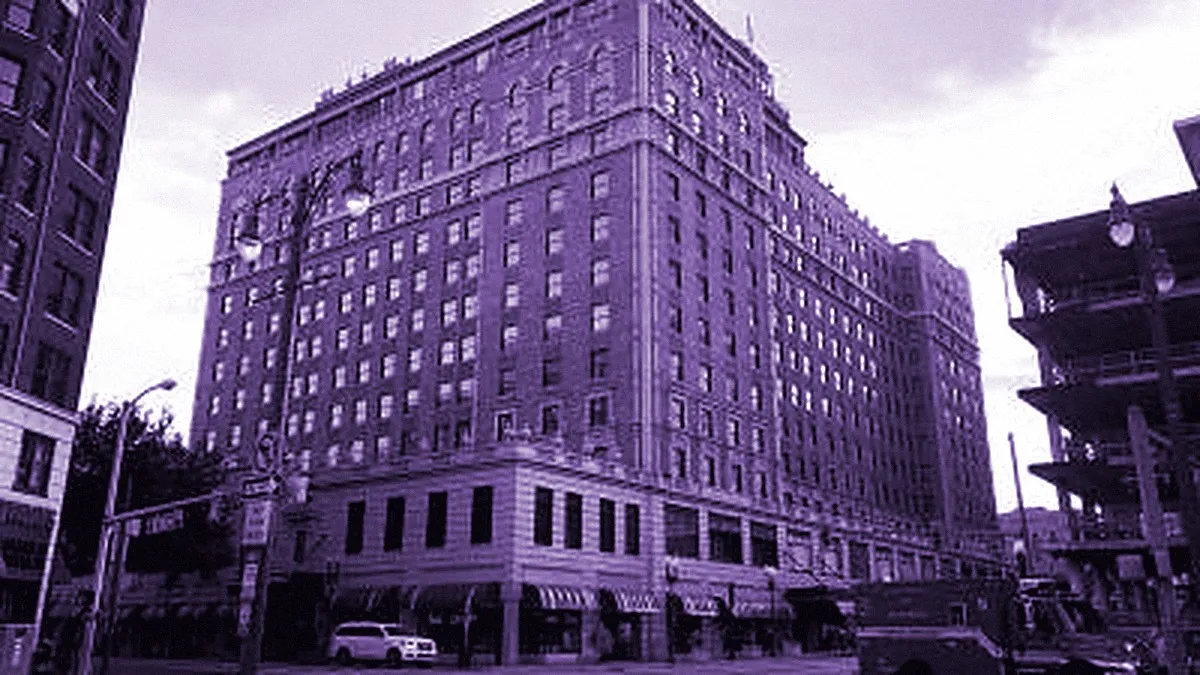
Things to do in Memphis: music, history and museums
Memphis is a Tennessee city known for its deep connections to blues, soul and rock ’n’ roll, as well as its important civil rights history. The best things to do in Memphis range from exploring former homes and recording studios to visiting museums devoted to music, art, firefighting and the city’s complex past. Neywo has a free audio guide for Memphis with 97 narrated places.
What to see in Memphis
Graceland
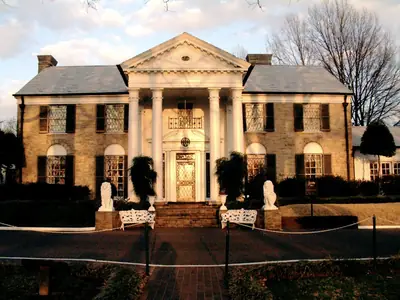
Graceland is the Memphis estate forever associated with Elvis Presley. The former home is now a house museum and a place of remembrance focused on his life and legacy.
Elvis bought the house in March 1957 as a gift for his parents, Vernon and Gladys. He lived at Graceland from the age of 22 until his death in 1977. He is buried on the estate alongside his parents, his paternal grandmother Minnie Mae, his grandson Benjamin and his daughter Lisa Marie.
Graceland opened to the public on June 7, 1982. The estate covers 13.8 acres in Memphis’s Whitehaven neighbourhood and includes Graceland Mansion, where the rooms offer a more personal view of the singer behind the public image.
Sun Studio
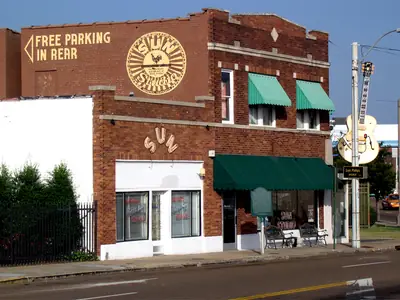
Sun Studio occupies a modest brick building on Union Avenue, in the former auto repair shop where Sam Phillips opened the Memphis Recording Service in 1950. It is widely known as the Birthplace of Rock ’n’ Roll.
In 1951, Jackie Brenston and his Delta Cats recorded “Rocket 88” here, with Ike Turner on keyboards. The studio also hosted early recordings by B.B. King, Howlin’ Wolf, Junior Parker, Little Milton, James Cotton, Rufus Thomas and Rosco Gordon.
The central recording room retains original 1950s light fixtures and fibreboard acoustic tiles installed by Sam Phillips. A small X on the floor marks the position where Elvis Presley stood while recording.
Memphis Rock ’n’ Soul Museum
The Memphis Rock ’n’ Soul Museum at 191 Beale Street traces the development of popular music in Memphis. It opened in 2000 after growing from a Smithsonian Institution research project.
Seven galleries follow the story from field hollers and sharecropper songs through gospel, blues, country, rhythm and blues, and rock ’n’ roll. Recordings, photographs, instruments, costumes, film clips and listening stations introduce figures including Elvis Presley, B.B. King, Otis Redding and Isaac Hayes.
One of the first exhibits is a life-sized recreation of a 1930s sharecropper cabin. It places the origins of Delta music in the difficult living conditions experienced by the musicians and their families.
Blues Hall of Fame
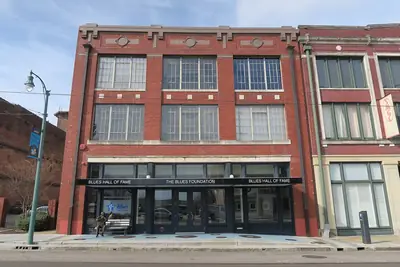
The Blues Hall of Fame began in 1980 as a recognition programme created by the Blues Foundation. Since May 8, 2015, it has also been a museum in Memphis.
Its galleries present more than 400 honoured inductees and use touchscreens, databases, music, video, photographs and personal stories to explore their contributions. Displays include Mavis Staples’ Grammy gown and Charlie Musselwhite’s harmonica, offering two different perspectives on the history of blues.
Memphis Music Hall of Fame
The Memphis Music Hall of Fame celebrates musicians and music-industry figures connected with the city. Its exhibits include memorabilia, photographs, recordings, instruments, stage costumes, personal objects, rare video performances and interviews.
The Hall of Fame was established on November 29, 2012, and has honoured more than 48 individuals and groups. The physical museum opened on August 1, 2015, at the intersection of Second and Beale Streets, between the Hard Rock Cafe and Lansky’s.
National Civil Rights Museum at the Lorraine Motel
The National Civil Rights Museum occupies the former Lorraine Motel and nearby historic buildings connected with the assassination of Martin Luther King Jr. Its exhibitions trace the history of the civil rights movement in the United States from the seventeenth century to the present.
Multimedia displays, interactive exhibits, short films, police files and evidence files examine the movement and the events surrounding King’s assassination. The Lorraine Motel was one of the few comfortable places where Black people could stay safely during segregation.
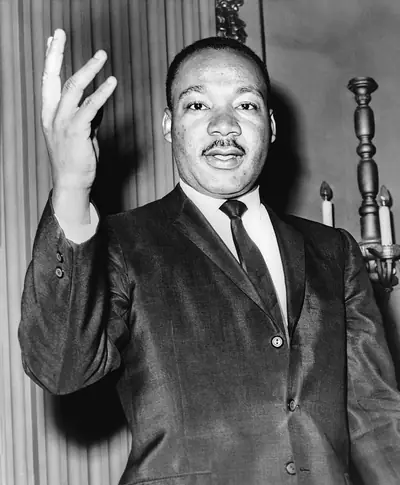
Martin Luther King Jr. was fatally shot at the Lorraine Motel on April 4, 1968. The museum preserves the setting while placing the tragedy within the wider history of slavery, segregation, protest and racial injustice. It officially opened in 1991, reopened after renovations in 2014 and became an affiliate museum of the Smithsonian Institution in 2016.
Burkle Estate, or Slavehaven
The Burkle Estate, also known as Slavehaven, is a historic house museum on North Second Street. Jacob Burkle, a German immigrant whose occupations included livestock trading and baking, built the house in 1849.
Since 1997, it has been home to the Slave Haven Underground Railroad Museum. The museum presents the history of the Underground Railroad, slavery, the slave trade, slave auctions and the daily experiences of enslaved people in the Memphis region.
The house’s small cellar is speculated to have been used as a hiding place by people escaping slavery before continuing upriver by boat. Possible underground tunnels linking homes are also part of the story, although these details remain debated.
Metal Museum
The Metal Museum is devoted entirely to the art and craft of metalwork. Founded by artist-blacksmith James Wallace, it presents both historical and contemporary work by metalsmiths.
The institution includes a Blacksmith Shop, Foundry, metals lab and design lab alongside its exhibitions. These working spaces support the creation of metal art and provide opportunities for metalsmiths to learn and work. The museum is the only institution of its kind in North America dedicated exclusively to fine metalwork.
Mallory–Neely House and Magevney House
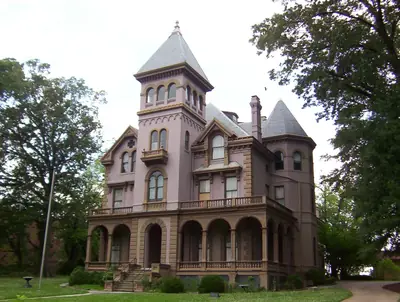
Memphis’s Victorian Village contains several historic residences. The Mallory–Neely House is an Italianate villa built in 1852 for banker Isaac Kirtland and his family. Later residents included the Barton Lee Mallory family and the James Columbus Neely family. Stained-glass windows, artwork, statues and turn-of-the-century furnishings help reveal the lives of the families who lived there between 1852 and 1969.
Magevney House on Adams Avenue is one of Memphis’s oldest surviving residences. Built in the 1830s by Eugene Magevney, the clapboard house retains an herb garden, grape arbor and many family possessions. It was the setting for Memphis’s first Catholic marriage, first Catholic baptism and first Catholic Mass. The Magevney family donated the house to the city in 1941, and it was added to the National Register of Historic Places in 1973.
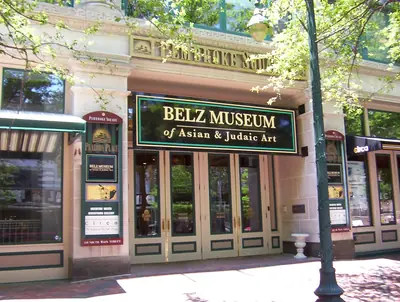
Belz Museum of Asian and Judaic Art
At 119 South Main Street, the Belz Museum of Asian and Judaic Art brings together more than 1,000 objects from two artistic and cultural traditions. The collection grew from the private holdings of Memphis developers Jack and Marilyn Belz.
The Asian collection includes jade, tapestries, furniture, carvings, porcelain, ivory and other decorative works, with much of it focused on China’s Qing period, which lasted from 1644 to 1911. Its exceptional jade pieces have led to the informal nickname “the Jade Museum.”
Memphis Brooks Museum of Art
Founded in 1916, the Memphis Brooks Museum of Art is Tennessee’s oldest and largest art museum. The privately funded nonprofit is located in Overton Park in Midtown Memphis.
Its complex includes 29 galleries, art classrooms, a print study room, a research library and an auditorium. The collections contain more than 7,000 paintings, sculptures, drawings, prints, photographs, furniture and textiles. The Samuel H. Kress Collection features Renaissance and Baroque paintings, while the Hugo N. Dixon Collection focuses on Impressionism and the Levy Collection on American prints.
Pink Palace Museum and Planetarium
The Pink Palace Museum and Planetarium, also known as the Museum of Science and History, combines local history and natural history. Its exhibits range from archaeology to chemistry, and the complex also includes a large theatre and a planetarium.
Fire Museum of Memphis
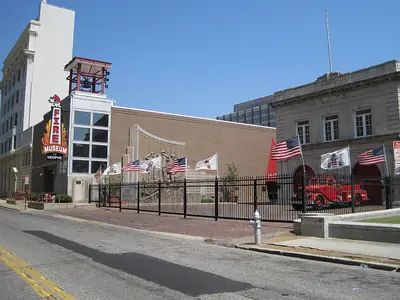
The Fire Museum of Memphis presents the history of local firefighting through objects, vehicles and interactive exhibits. Its collection includes early twentieth-century artefacts, the Hale Water Tower, a 1929 American LaFrance pumper, helmets, badges, lanterns and fire chiefs’ desks.
Visitors can explore a recreation of a 1910 fire station, try fighting a simulated fire from a snorkel basket, experience the heat in a fire room and look inside an ambulance or fire-truck cabin.
Children’s Museum of Memphis
The Children’s Museum of Memphis in Midtown is designed around learning through play. More than 20 hands-on exhibits give children and families opportunities to explore interactive activities together.
Explore Memphis with Neywo
Neywo’s Memphis audio guide includes 5 walking tours and 1 bus route, covering 97 narrated places in total. The five walks range from 1.38 to 2.87 km and from 50 to 81 minutes, with between 4 and 10 narrated stops each. The Main Street Trolley Line bus route covers 2 km, lasts 9 minutes and has 6 stops.
The walks include routes through Beale Street and downtown, early Memphis, the Lorraine Motel and civil rights history, Sun Studio and Victorian Village, and the Pyramid, skyscrapers and Mud Island. The bus route follows the Main Street Trolley Line through downtown Memphis.
Download Neywo and explore at your own pace: the app tells the story of each place as you reach it, with no group and no schedule. Narration is available in 11 languages.
Memphis is part of Tennessee in the United States, and you can continue exploring the state with nearby destinations such as Nashville or Chattanooga.
Places with an audio guide in Memphis
8 places in Memphis with a Neywo audio guide. Each one starts telling its story as you reach it.
Self-guided tours in Memphis
6 tours in Memphis, free in the Neywo app. Each stop tells its story as you reach it.
- Bus ride
Main Street Trolley Line: Downtown Memphis Top to Bottom
The MATA Main Street trolley line (run by trolley-replica buses while the rail cars are out of service) rolls the length of Main Street. Ride from the Fire Museum past skyscrapers and the Orpheum to the Blues Hall of Fame near the Lorraine Motel, in under four kilometres.
Fire Museum of Memphis · Lincoln American Tower · Madison Hotel · Belz Museum of Asian and Judaic Art · Orpheum Theatre · Blues Hall of Fame
Open this tour: Main Street Trolley Line: Downtown Memphis Top to Bottom - Walk
Ducks, Blues and Beale Street
Start where five mallards parade across a red carpet each day and end on the street that made the blues famous. Between them: a jade museum, a 1928 theatre palace, B.B. King's neon guitar, the last original shop on Beale, a museum that follows the music from the cotton field to rock 'n' roll, and the neon-lit blocks of Beale Street.
Peabody Hotel · Belz Museum of Asian and Judaic Art · Orpheum Theatre · B.B. King's Blues Club of Memphis · A. Schwab's · Beale Street …
Open this tour: Ducks, Blues and Beale Street - Walk
Cotton, Skyscrapers and Early Memphis
See how a river port grew rich on cotton and built upward. From the old Cotton Exchange trading floor to the Gothic Sterick Building, the Lincoln American Tower, a one-third replica of New York's Woolworth Building, and the colourful terra-cotta Dermon Building, then back in time to the oldest church and house in the city.
The Cotton Museum · Madison Hotel · D.T. Porter Building · Lincoln American Tower · Fire Museum of Memphis · Calvary Episcopal Church …
Open this tour: Cotton, Skyscrapers and Early Memphis - Walk
Faith and Freedom: Beale to the Lorraine Motel
Follow the story of Memphis's Black community, from the church founded by freed slaves that housed Ida B. Wells's newspaper office to Clayborn Temple, the heart of the 1968 sanitation workers' strike. Walk past a Civil War mansion and a Victorian house, end at the National Civil Rights Museum at the Lorraine Motel, the Blues Hall of Fame and the riverside brewery.
Beale Street Baptist Church · St Patrick Church of Memphis · Second Presbyterian Church · John Alexander Austin House · National Civil Rights Museum · Blues Hall of Fame …
Open this tour: Faith and Freedom: Beale to the Lorraine Motel - Walk
Sun Studio and Victorian Village: Where Rock 'n' Roll Began
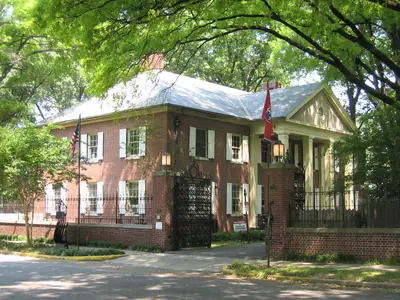
Start at the Hunt-Phelan mansion and walk to Sun Studio, the birthplace of rock 'n' roll where Elvis recorded. Then step into Victorian Village, a row of grand 19th-century mansions with the Mallory-Neely house, and finish at St. Mary's Episcopal Cathedral.
Hunt-Phelan House · Sun Studio · Mallory–Neely House · Victorian Village · St. Mary's Episcopal Cathedral in Memphis
Open this tour: Sun Studio and Victorian Village: Where Rock 'n' Roll Began - Walk
Pyramid, Skyscraper and Mud Island
Start at the giant steel pyramid on the riverfront, now a Bass Pro Shops megastore with a lookout, and the tallest building in Memphis. Then cross to Mud Island for the Mississippi River Museum and its five-block scale model of the river, and the open-air amphitheater.
Pyramid Arena · 100 North Main · Mississippi River Museum · Mud Island Amphitheater
Open this tour: Pyramid, Skyscraper and Mud Island
Walk Memphis with Neywo
Neywo turns Memphis into a self-guided audio tour. Stories arrive as you reach the place they belong to, and the route reshapes when you wander off it.

