Visiting Manchester, United States: Top Sights on Foot
Things to Do in Manchester, New Hampshire: A Self-Guided Walk Through Its History
Manchester is a city in New Hampshire with a rich architectural, religious, artistic, and cultural heritage. From a pioneering Romanesque armory and historic churches to the Currier Museum of Art and the century-old Palace Theatre, there is plenty to see on foot. Neywo has a free audio guide for Manchester with five narrated places, available in 11 languages.
What to See in Manchester
The most important sights are spread across several of Manchester’s historic neighborhoods. A self-guided walking tour makes it possible to connect them at your own pace while learning about the people, buildings, and communities that shaped the city.
New Hampshire State Union Armory
The New Hampshire State Union Armory stands out along Pleasant Street with its solid brick construction and Romanesque architecture. Built in 1904, it was the first armory building in New Hampshire.
Its historical and architectural importance was officially recognized in 1982, when the building was added to the National Register of Historic Places. The distinctive brick exterior gives the armory a strong, permanent appearance and makes it an interesting stop for anyone exploring Manchester’s built heritage.
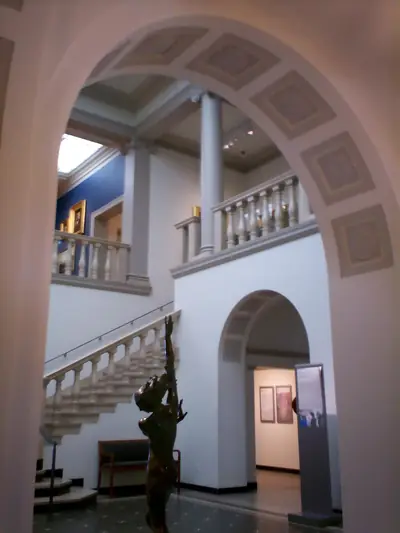
Currier Museum of Art
The Currier Museum of Art is Manchester’s premier art destination and is regarded as one of the finest small museums in New England. Founded in 1929, it brings together European and American paintings, decorative arts, photographs, and sculpture.
The collection includes works by artists such as Picasso, Matisse, Monet, O’Keeffe, Calder, John Singer Sargent, and Andrew Wyeth. The museum also has a special connection with Frank Lloyd Wright: it maintains two house museums designed by the architect, the Zimmerman House and the Toufic H. Kalil House. Both homes offer an opportunity to see Wright’s Usonian approach to residential architecture.
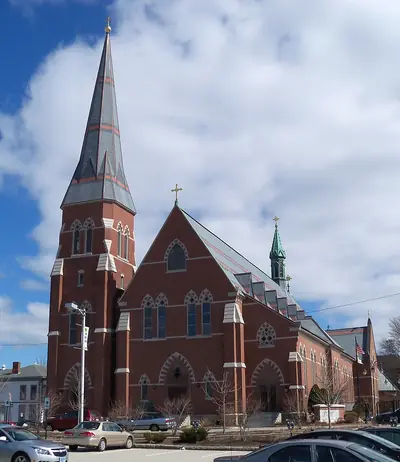
Cathedral of St. Joseph
The Cathedral of St. Joseph stands on Lowell Street in downtown Manchester and serves as the mother church of the Roman Catholic Diocese of Manchester. The parish was founded in 1869 for the city’s growing community of Irish immigrants.
The Diocese of Manchester was established by Pope Leo XIII in 1884, and St. Joseph’s became a cathedral in 1894. The building has undergone several renovations and expansions. Among the most significant changes took place in 1968, when the main altar, the Stations of the Cross, and other decorative features were removed in accordance with the reforms of the Second Vatican Council. A later renovation, begun in 2014, introduced elements from Holy Trinity Church in Boston after that church closed.
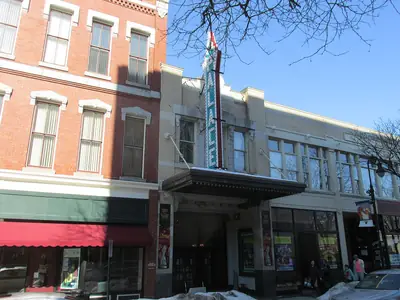
Palace Theatre
The Palace Theatre has been part of Manchester’s cultural life since 1914. Located at 76-96 Hanover Street, the historic venue was originally built to serve both as a live stage theatre and a movie theatre.
It remains an important stage production venue today. When the building was added to the National Register of Historic Places, it was listed under the name Athens Building—a useful detail to remember when researching its history. Its long connection with performances makes the Palace Theatre one of Manchester’s best-known cultural landmarks.
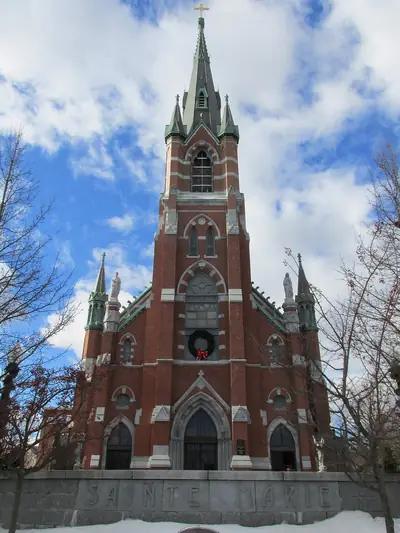
Ste. Marie Church
Ste. Marie Church rises above Manchester’s West Side on the plateau of Rimmon Heights. Its Gothic Revival silhouette is one of the neighborhood’s most recognizable features.
The Roman Catholic church was founded to serve the French-Canadian Catholic immigrants who settled in New Hampshire. It remains a focal point of the Notre Dame neighborhood, together with Lafayette Park across the street. The church also has a connection with St. Mary’s Bank: in 1908, Monsignor Pierre Hevey, then pastor of Ste. Marie, organized its founding. The church and the other buildings on its campus became part of the Sainte Marie Roman Catholic Church Parish Historic District, which was added to the National Register of Historic Places in September 2019.
Explore Manchester with a Self-Guided Walking Tour
The Neywo route Manchester, NH: Mills, Music and Frank Lloyd Wright connects all five featured sights: the Currier Museum of Art, Cathedral of St. Joseph, Palace Theatre, New Hampshire State Union Armory, and Ste. Marie Church.
The walking tour covers 3.01 km, takes about 68 minutes, and includes five narrated stops. It is a practical way to experience Manchester’s art, religious heritage, historic architecture, and performing arts in a single route. If you are planning a wider trip through the state, you can also explore Tennessee and nearby destinations such as Nashville or Chattanooga.
Download Neywo and Explore Manchester at Your Own Pace
Download Neywo to explore Manchester with one walking tour, covering 3.01 km in 68 minutes and featuring five narrated stops. The app tells the story of each place as you reach it, at your own pace, with no group and no schedule.
The Manchester audio guide is free, and its narration is available in 11 languages. Start the walk when you are ready and discover the city through its museums, churches, theatre, and historic buildings.
Places with an audio guide in Manchester
5 places in Manchester with a Neywo audio guide. Each one starts telling its story as you reach it.

Self-guided tours in Manchester
1 tour in Manchester, free in the Neywo app. Each stop tells its story as you reach it.
- Walk
Manchester, NH: Mills, Music and Frank Lloyd Wright
Begin at the Currier Museum, home to Picasso and Monet and two Frank Lloyd Wright houses. Pass the cathedral of the Manchester diocese and the 1914 Palace Theatre downtown, then head west to the state's very first armory and the Gothic Revival church of the French-Canadian mill families.
Currier Museum of Art · Cathedral of St. Joseph · Palace Theatre · New Hampshire State Union Armory · Ste. Marie Church
Open this tour: Manchester, NH: Mills, Music and Frank Lloyd Wright
Walk Manchester with Neywo
Neywo turns Manchester into a self-guided audio tour. Stories arrive as you reach the place they belong to, and the route reshapes when you wander off it.

