Visiting Rostock, Germany: Top Sights on Foot
Things to Do in Rostock: A Self-Guided Tour of the Hanseatic City
Rostock is a historic Hanseatic city in Mecklenburg-Western Pomerania, with medieval gates, university buildings, museums, and a maritime district extending to Warnemünde on the Baltic coast. The city is worth visiting for the way its urban history connects with shipping, Jewish culture, political remembrance, and life beside the Warnow. Neywo offers a free audio guide for Rostock with 76 narrated places.
What to See in Rostock
The best things to do in Rostock range from the medieval Old Town to the waterfront and the former fishing village of Warnemünde. These are some of the places that reveal the city’s history most clearly.
Hausbaumhaus
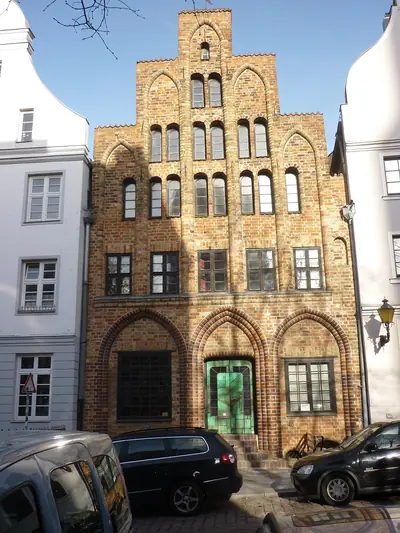
The Hausbaumhaus is one of the oldest largely preserved merchant houses in Rostock and the surrounding area from the Hanseatic period. Dating from around 1490, it is a late Gothic building with a narrow street-facing façade, a closed brick front, and a stepped gable.
Its name comes from an unusual structural feature: an oak house tree rises through the centre of the building and rests on a large erratic block in the basement. The building’s official name is Haus der Architekten, but the house tree gives it its familiar name. Visitors have been able to see the interior and this remarkable construction since 15 April 2014.
Palais und Barocksaal
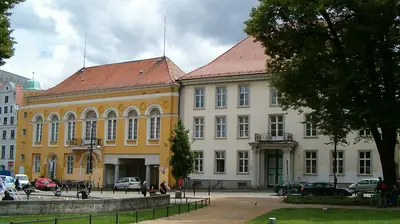
At Universitätsplatz, the Palais und Barocksaal form a historic building ensemble created in two stages. The ducal Palais was built in the eighteenth century as a residence for the reigning Duke of Mecklenburg. The Baroque Hall was added later, giving the ensemble its second distinctive section.
University of Rostock
Founded in 1419 by the dukes of Mecklenburg-Schwerin, the University of Rostock is one of Germany’s oldest universities. It is also the oldest university in the Baltic Sea region and in continental northern Europe.
The university’s long academic tradition remains part of the city’s character. Today, it is a public university with ten faculties and more than one hundred degree programmes, including bachelor’s and master’s degrees and state examinations.
Abbey of the Holy Cross and the Cultural History Museum
The Abbey of the Holy Cross is Rostock’s only completely preserved medieval abbey complex. It was founded around 1270 by Cistercian nuns and later received papal authorization in 1276. The former abbey church is now known as the University Church.
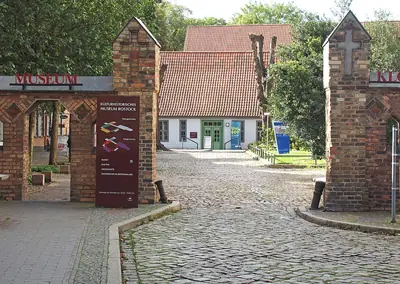
Inside, medieval treasures include two winged altarpieces, a triumphal cross, and a sacrament house in the choir. The former convent buildings also house the Kulturhistorisches Museum Rostock, which presents the city’s cultural and artistic history. Founded in 1859, it is one of the largest and most significant museums in Mecklenburg-Western Pomerania.
Kuhtor
Kuhtor is one of the most remarkable surviving parts of Rostock’s medieval fortifications. First mentioned in a document in 1262, it is the oldest of the four remaining gates from the city’s former twenty-two and is considered probably the oldest surviving city gate in northern Germany.
The four-storey defensive tower measures about eight by nine metres, with walls roughly two metres thick. Its name comes from its later use as the gate through which cattle were driven to the meadows along the Warnow. Arrow slits, recesses, and the massive stones at the base still reveal its defensive purpose.
Stasi Documentation and Memorial Centre
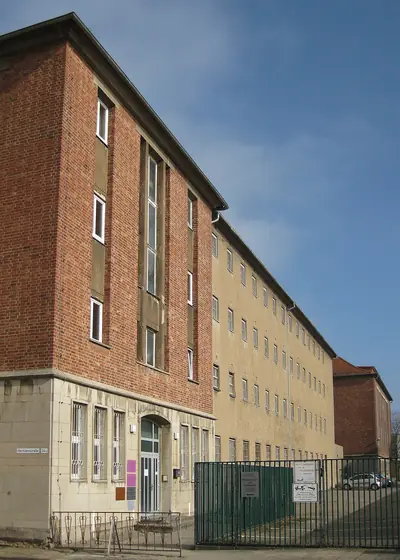
The Stasi Documentation and Memorial Centre occupies a former investigation prison operated by the Ministry for State Security of the German Democratic Republic. Its exhibitions explain how the Stasi worked and remember the people who became its victims.
The building is one of the best-preserved former Stasi investigation prisons. After closing for renovation in August 2017, the centre reopened in 2021 under the responsibility of the State Agency for Civic Education of Mecklenburg-Vorpommern.
Max-Samuel-Haus
The Max-Samuel-Haus is a villa dedicated to Jewish history and culture in Rostock. Since 1991, it has hosted readings, exhibitions, and concerts, making it a place for learning and cultural exchange.
Warnemünde
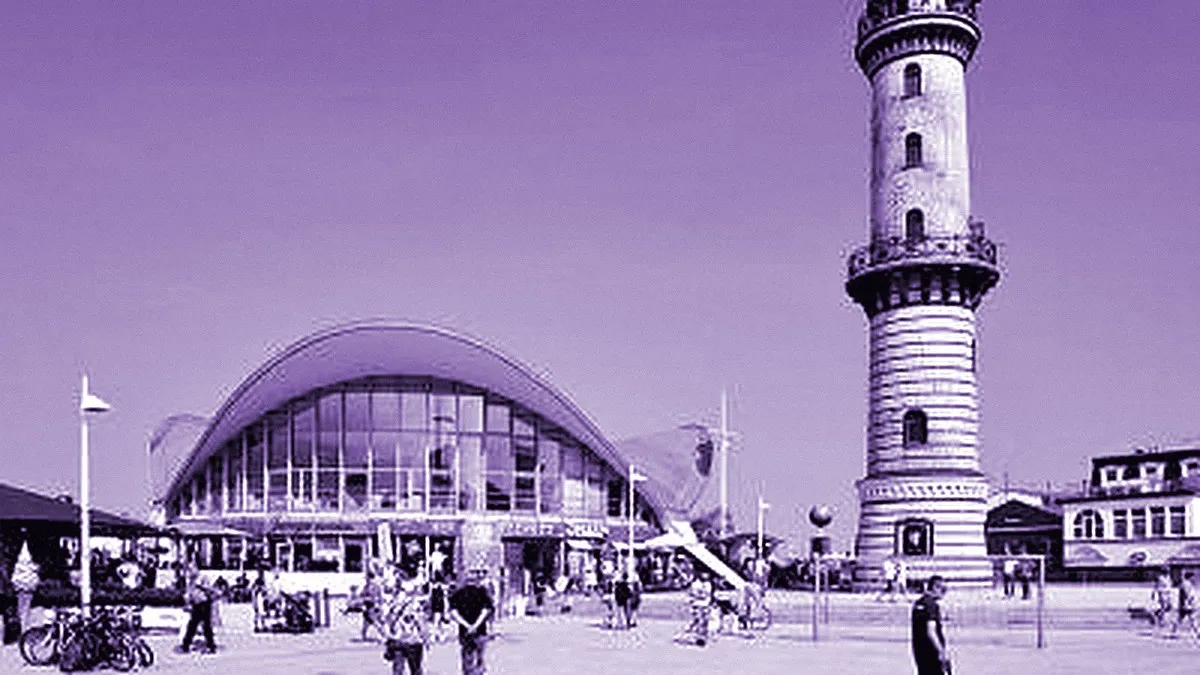
Warnemünde gives a visit to Rostock a distinctly maritime dimension. The former fishing village is now known for its Baltic beach, cruise-port activity, traditional houses, and waterfront along the Alter Strom.
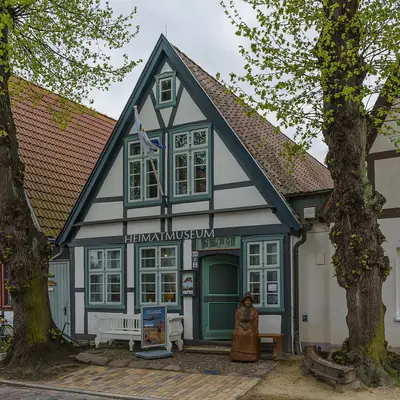
The Heimatmuseum Warnemünde is housed in an authentic fisherman’s and skipper’s house from 1767. Its rooms recreate everyday spaces from the late nineteenth and early twentieth centuries, including the parlor, kitchen, bedroom, and hall. Exhibits include sea chests, nautical equipment, fishing tools, and a line rescue wagon used by pilots from 1883. The museum also explores the history of the beach chair.
Bahnhofsbrücke Warnemünde
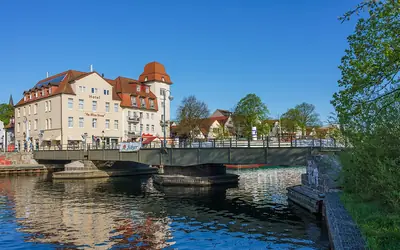
The Bahnhofsbrücke crosses the Alter Strom and connects the railway station on the Mittelmole with the town centre on the western side. Built in 1903 as a swing bridge, it spans the waterway that was once the only sea channel linking Warnemünde with Rostock’s city harbour.
Today, the bridge is reserved for pedestrians and cyclists. It is both a practical connection and a reminder of Warnemünde’s relationship with the port and the sea.
Dresden and Langer Heinrich
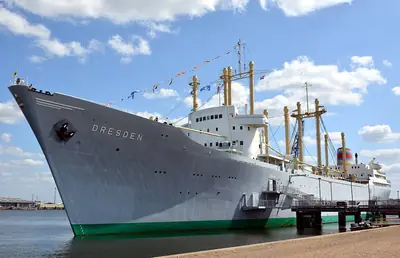
The museum vessel Dresden, also known as the Traditionsschiff Typ Frieden, offers an insight into merchant shipping during the 1950s and 1960s. Built at the Warnow Shipyard in 1956 and 1957, it was the fifth Type IV vessel in the first series of ten-thousand-ton piece-goods freighters built at East German shipyards after the Second World War.
The ship operated scheduled services to East Asia, Indonesia, Africa, India, and Latin America until 1969. Around it, the Schiffbau- und Schifffahrtsmuseum explores shipbuilding and shipping in East Germany, shipyard work, maritime radio, navigation, and ship engines.
The floating crane Langer Heinrich is another museum exhibit. Built in 1905 in Duisburg, it worked in the ports of Danzig and Rostock until 1978 before being preserved at the museum in 1980.
Forst- und Köhlerhof Wiethagen
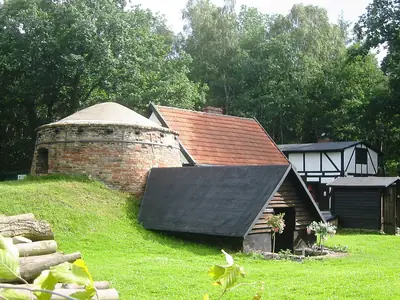
In Rostock-Wiethagen, the Forst- und Köhlerhof Wiethagen is an open-air museum dedicated to the traditional work of charcoal burners. The Köhlerhaus and two remaining tar ovens illustrate the production of charcoal, wood tar, and turpentine.
Together, the buildings were declared a technical monument in 1984. The smaller oven is still functional and is described as the last surviving example of its kind in Europe.
Explore Rostock with Neywo
For a Rostock self-guided walking tour, Neywo lets you explore at your own pace. The app has five walking tours and one bike route, with narration available in 11 languages. Each story plays as you reach the place, so there is no group and no schedule.
The routes include:
- Brick Gothic and the Gates of Old Rostock — 1.83 km, 67 minutes, 9 narrated stops.
- Where the Baltic’s Oldest University Took Root — 1.99 km, 82 minutes, 11 narrated stops.
- Cow Gate to Petrikirche: Rostock’s Eastern Old Town — 2.21 km, 66 minutes, 7 narrated stops.
- Warnemünde: From Fishing Village to Baltic Resort — 2.35 km, 78 minutes, 9 narrated stops.
- West of the Old Town: Gate Suburb, Stage and Sailors — 4.33 km, 92 minutes, 6 narrated stops.
- From the Petrikirche to the Kunsthalle: Rostock by Bike — 10.9 km, 54 minutes, 9 narrated stops.
Download Neywo and discover Rostock with a free audio guide that tells the story of each place as you arrive. When you are ready to continue exploring the region, compare Rostock with Schwerin or Binz, and see more destinations in Mecklenburg-Western Pomerania and Germany.
Places with an audio guide in Rostock
8 places in Rostock with a Neywo audio guide. Each one starts telling its story as you reach it.
Self-guided tours in Rostock
6 tours in Rostock, free in the Neywo app. Each stop tells its story as you reach it.
- Bike ride
From the Petrikirche to the Kunsthalle: Rostock by Bike
A cross-town ride from the old town's oldest church tower to Rostock's contemporary art museum. Pass the Steintor and St. Mary's, roll out to the Stadthafen and the huge bronze memorial to the Red Sailors, and finish in the parkland around the Schwanenteich lake at the Kunsthalle.
St. Peter's Church · Kloster Sankt Katharinen · Sinnende · Stasi Dokumentations- und Gedenkstätte Rostock · Steintor · St. Mary's Church …
Open this tour: From the Petrikirche to the Kunsthalle: Rostock by Bike - Walk
Brick Gothic and the Gates of Old Rostock
Start at the Kröpelin Gate with its astronomical clock, then follow the old market squares to St. Mary's, the seven-towered town hall and a terracotta-covered patrician house. Pass the ruins of a Dominican monastery and the Mecklenburg estates' brick parliament and finish at the Steintor, the Renaissance gate that once guarded the city.
Sinnende · St. Mary's Church · Neuer Markt · Am Schilde · Rostock town hall · Kerkhoffhaus …
Open this tour: Brick Gothic and the Gates of Old Rostock - Walk
Where the Baltic's Oldest University Took Root
Rostock's university dates from 1419, and this walk circles the square it grew around. Start at a late-Gothic merchant house held up by an oak tree, then see the monastery that housed Mecklenburg's first printing press, a ducal palace, the lively Fountain of Joy of Life and the university's Renaissance Revival main building. End at the Cistercian abbey, the site of a lost church and the Stasi memorial.
Hausbaumhaus · Michaeliskloster · Palais und Barocksaal · Universitätsplatz · Brunnen der Lebensfreude · University of Rostock main building …
Open this tour: Where the Baltic's Oldest University Took Root - Walk
Cow Gate to Petrikirche: Rostock's Eastern Old Town
A loop through the older, quieter east side of the old town. Start at the station and the site of the lost 'Bayreuth of the North' opera house, pass the Kuhtor, the oldest of Rostock's surviving gates, and the Franciscan Katharinen monastery, and end among the squares and churches of Alter Markt, under the 117-metre tower of St. Peter's.
Rostock Friedrich-Franz railway station · Municipal Theatre · Kuhtor · Kloster Sankt Katharinen · St. Nicholas church (Rostock) · Alter Markt …
Open this tour: Cow Gate to Petrikirche: Rostock's Eastern Old Town - Walk
Warnemünde: From Fishing Village to Baltic Resort
Cross the Bahnhofsbrücke from the station and wander through the former fishing village at the mouth of the Warnow. Visit a fisherman's house from 1767, the neo-Gothic church with its votive ships, the bronze procession fountain on narrow Alexandrinenstraße, the Alter Strom canal and the white lighthouse at the harbour entrance.
Bahnhofsbrücke Warnemünde · Heimatmuseum Warnemünde · Warnemünde · Warnemünde Church · Warnminner Ümgang · Alter Strom …
Open this tour: Warnemünde: From Fishing Village to Baltic Resort - Walk
West of the Old Town: Gate Suburb, Stage and Sailors
Walk from the Stadthafen museum icebreaker through the Kröpeliner-Tor-Vorstadt: Doberaner Platz, the Church of the Holy Spirit and the Volkstheater, then the University's older buildings and the great bronze memorial to the Red Sailors.
Stephan Jantzen · Doberaner Platz · Church of the Holy Spirit (Rostock) · Volkstheater Rostock · University of Rostock · Gedenkstätte für Revolutionäre Rote Matrosen
Open this tour: West of the Old Town: Gate Suburb, Stage and Sailors
Walk Rostock with Neywo
Neywo turns Rostock into a self-guided audio tour. Stories arrive as you reach the place they belong to, and the route reshapes when you wander off it.


More in Mecklenburg-Western Pomerania
Elsewhere in Germany
- AachenNorth Rhine-Westphalia
- AnholtNorth Rhine-Westphalia
- BonnNorth Rhine-Westphalia
- CologneNorth Rhine-Westphalia
- DuisburgNorth Rhine-Westphalia
- DüsseldorfNorth Rhine-Westphalia
- EssenNorth Rhine-Westphalia
- MonschauNorth Rhine-Westphalia
- MünsterNorth Rhine-Westphalia
- Annweiler am TrifelsRhineland-Palatinate
- BacharachRhineland-Palatinate
- CochemRhineland-Palatinate