Cologne, Germany: Self-Guided Walking Tour
Things to Do in Cologne: What to See in the City
The best things to do in Cologne include visiting its Gothic cathedral, discovering Romanesque churches, exploring museums, and following the city’s perfume and religious history. Set in North Rhine-Westphalia on the Rhine, Cologne brings together Roman foundations, medieval architecture, wartime destruction and a lively modern city centre. Neywo’s free audio guide for Cologne includes 118 narrated places, helping you understand what you see as you walk.
What to See in Cologne
Cologne Cathedral
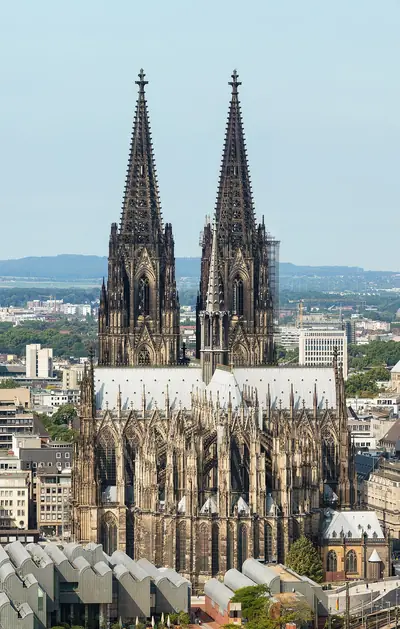
Cologne Cathedral, known in German as the Kölner Dom, is the city’s defining landmark. This Roman Catholic cathedral is one of Germany’s most famous Gothic buildings and reaches about 157 metres in height. Its construction began in 1248 under Konrad I, following designs by Master Gerhard, but work stopped around 1560. The project resumed in the nineteenth century and was completed in 1880 under Friedrich Wilhelm IV, based on designs by Ernst Friedrich Zwirner.
The cathedral was planned both as a representative church for the archbishops of Cologne and as a monumental reliquary for the relics of the Three Kings. Its scale and long construction history make it an essential first stop when deciding what to see in Cologne.
St. Mariä Himmelfahrt
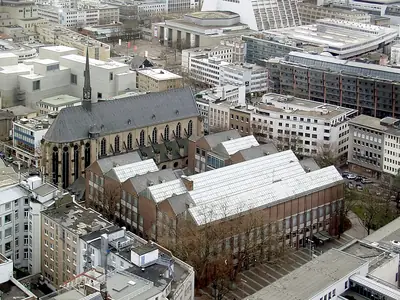
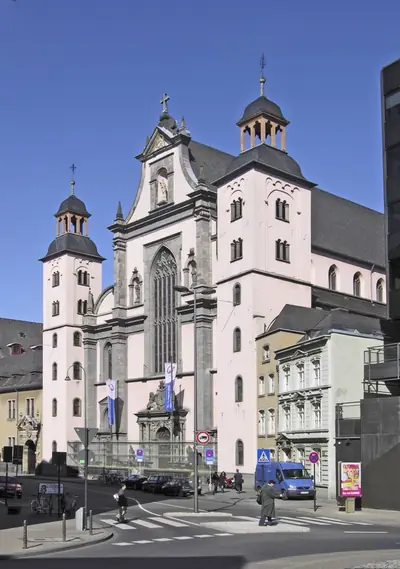
Close to the cathedral on Marzellenstraße, St. Mariä Himmelfahrt is one of Cologne’s most important churches. It was built for the Jesuit college and local worshippers according to plans by Christoph Wamser. The foundation stone was laid in 1618, the church was in use by 1629, and construction ended in 1678.
The church was secularized and turned into a temple dedicated to the Décade in 1794 during the French revolutionary administration of the canton of Cologne. It returned to Catholic worship after the 1801 concordat and became a parish church in 1803. Severe wartime damage was followed by restoration between 1949 and 1979.
Basilica of St. Ursula
The Basilica of St. Ursula stands on the site of an ancient Roman cemetery and is dedicated to Saint Ursula and her companions. Tradition connects the site with the burial of 11,000 virgins, and the basilica contains a reliquary made from bones found in the former cemetery.
Its Romanesque nave and main tower contrast with the Gothic choir. The discovery of numerous remains during construction led to the creation of a gallery basilica in the early twelfth century, designed to accommodate the relics. The choir was rebuilt in the thirteenth century in the Gothic style.
St. Kunibert’s Church
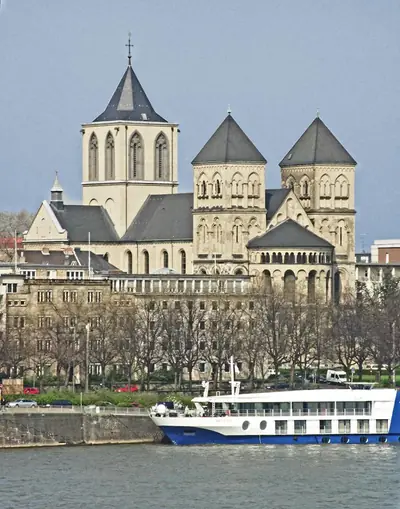
St. Kunibert is one of Cologne’s twelve Romanesque churches and is described as the last of the group to be built. It was consecrated in 1247, one year before construction began on Cologne Cathedral. In 1998, Pope John Paul II declared it a minor basilica.
St. Gereon
St. Gereon is one of Cologne’s most distinctive Romanesque churches. Its history reaches back to a structure first constructed in 380 AD, while the present church developed between the eleventh and thirteenth centuries. The building has an unusual oval form, a decagonal nave and a dome.
The church is associated with Saint Gereon, traditionally described as a Roman soldier from Egypt who was beheaded in the third century for his faith. Medieval mosaics, murals and ancient relics enrich the interior. St. Gereon was elevated to a Minor Basilica in 1920 and, after suffering partial destruction during the Second World War, was restored.
Basilica of the Holy Apostles
Near Neumarkt, the Basilica of the Holy Apostles, or St. Aposteln, is another major Romanesque church. Its east end follows a trefoil plan, with three semicircular apses arranged around a domed clover-leaf chancel. The church’s single west tower is about 67 metres high.
A monastery was founded here in the tenth century. Later construction under Archbishop Heribert, who ruled from 999 to 1021, or under Archbishop Pilgrim, created a larger Salian building. Parts of that earlier structure remain in the outer walls and transept.
St. Maria im Kapitol and Die Trauernde
St. Maria im Kapitol is the largest of Cologne’s twelve Romanesque basilicas. Its name recalls the Roman temple complex that once occupied the site. The church was built on the walls of that temple, which measured 33 metres by 29.5 metres and had a courtyard measuring 97 by 69 metres.
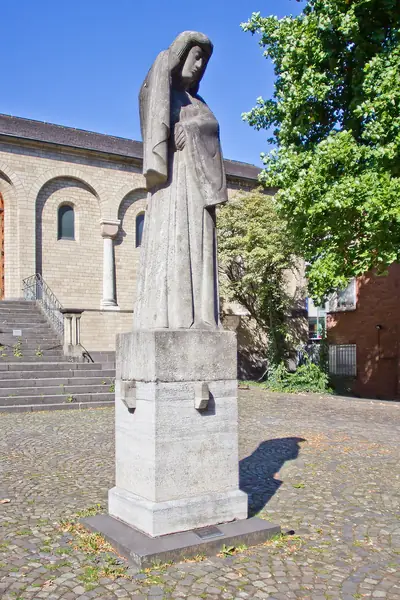
Its Romanesque design includes a three-apse eastern end, a nave with aisles and three western towers. In the Lichhof, the sculpture Die Trauernde, also known as the Kölner Totenmal, commemorates the victims of the Second World War.
St. Maria vom Frieden
In Altstadt-Süd, St. Maria vom Frieden is a Baroque church that originally served a convent of Discalced Carmelites. It was consecrated in 1692, and its dedication refers to an image of the Virgin Mary given to the convent in 1642.
The church and monastery were largely destroyed in April 1942. Reconstruction in the old style took place step by step between 1947 and 1957, making the building another example of Cologne’s postwar recovery.
Cologne’s museums and perfume heritage
Cologne’s museums offer several ways to explore its artistic and cultural history. The Museum für Angewandte Kunst Köln, or MAKK, presents applied art through objects such as jewellery, porcelain, weaponry, furniture and architectural exhibits. Until 1987, it was known as the Kunstgewerbemuseum.
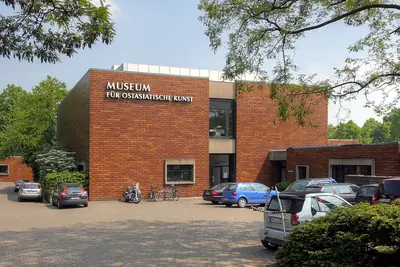
The Museum of East-Asian Art opened in 1913 and is the oldest museum of its kind in Germany. Its origins lie in the collection of Adolf Fischer and Frieda Fischer. The current building, designed by Kunio Maekawa, opened in 1977.
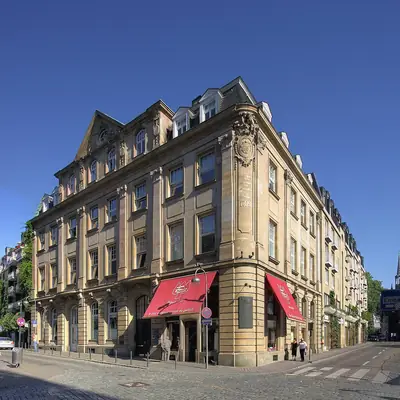
For a different kind of history, visit the Fragrance Museum in the Farina House, the birthplace of Eau de Cologne. The museum occupies original eighteenth-century production rooms and explores perfume-making through distillation equipment, technical devices, pictures and documents. It also presents the history of imitations and forgeries from a period when copyright did not exist.
Cologne’s fortifications and bridges
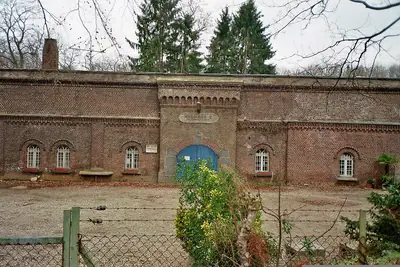
Cologne’s historic landscape also includes remnants of fortifications. Zwischenwerk IIIb, also known as Städtische Waldschule II, is an unusual surviving piece of the city’s defensive system. Ulrepforte is another fortification landmark and a practical stop when travelling around Cologne by Stadtbahn.
The South Bridge, or Südbrücke, crosses the Rhine as a two-track railway bridge while also providing footpaths for pedestrians and cyclists. It forms part of Cologne’s freight railway bypass and is used mainly for freight traffic, with passenger trains crossing only in special circumstances.
Explore Cologne with a self-guided audio tour
Neywo offers a free Cologne audio guide with 118 narrated places and tours in 11 languages. There are six walking tours, one bus route and one bike route:
- Walking tours: routes range from 0.92 to 5.61 km and from 53 to 189 minutes. They include the Cathedral, Museum Ludwig and the EL-DE House; Cologne’s northern churches; the old town and 4711; Heumarkt and the riverside churches; the opera, applied arts museum and Schildergasse; and an ultimate Cologne route. The walks have between 7 and 15 narrated stops.
- Bus route: the Kölner CityTour covers 10.9 km in 47 minutes and has 10 stops, including the Cathedral, Roman Gates and the Rhine Bend.
- Bike route: Across the Rhine and Through the Ring Gates covers 6.7 km in 34 minutes and has 9 stops.
The app tells the story of each place as you reach it, at your own pace, with no group and no schedule. Download Neywo and explore Cologne independently, from the cathedral and Romanesque churches to its museums, bridges and riverside landmarks.
Cologne is part of North Rhine-Westphalia in Germany. Nearby destinations include Bonn, Düsseldorf and Aachen.
Places with an audio guide in Cologne
8 places in Cologne with a Neywo audio guide. Each one starts telling its story as you reach it.
Self-guided tours in Cologne
8 tours in Cologne, free in the Neywo app. Each stop tells its story as you reach it.
- Bike ride
Across the Rhine and Through the Ring Gates
Ride from the KölnTriangle tower in Deutz over the river into the old town, past the Heumarkt king on horseback, the Kölner Totenmal memorial, Antoniterkirche, St. Peter's and Neumarkt, then out along the medieval ring to the Basilica of the Holy Apostles, the Hahnentorburg gate and on to Zur Heiligen Familie.
KölnTriangle · Equestrian statue of Frederick William III · Die Trauernde · Antoniterkirche · St Peter's Church · Neumarkt …
Open this tour: Across the Rhine and Through the Ring Gates - Bus ride
Kölner CityTour: Cathedral, Roman Gates and the Rhine Bend
The hop-on hop-off CityTour leaves the cathedral and loops through old Cologne: Heumarkt and its equestrian king, Neumarkt, St. Peter's and the medieval Ulrepforte gate, the Romanesque Lyskirchen church, and on to the Messeturm in Deutz. A sightseeing line run by Willms Touristik, not a city bus, so check the current timetable and ticket.
Fürstenhof · Cologne Cathedral · Stapelhaus · Equestrian statue of Frederick William III · Belgisches Haus · Neumarkt …
Open this tour: Kölner CityTour: Cathedral, Roman Gates and the Rhine Bend - Walk
The Cathedral, Museum Ludwig and the EL-DE House
Cologne's centre of gravity: a cathedral that took 632 years, the Roman mosaics next door, the Pop Art at the Ludwig, and at the end the EL-DE House, the Gestapo prison whose cell-wall inscriptions were left as they were found.
Museum Ludwig · Romano-Germanic Museum · Cologne Cathedral · Fürstenhof · St. Mariä Himmelfahrt · St. Andreas Church …
Open this tour: The Cathedral, Museum Ludwig and the EL-DE House - Walk
The northern churches: St Gereon, St Ursula and Deutz
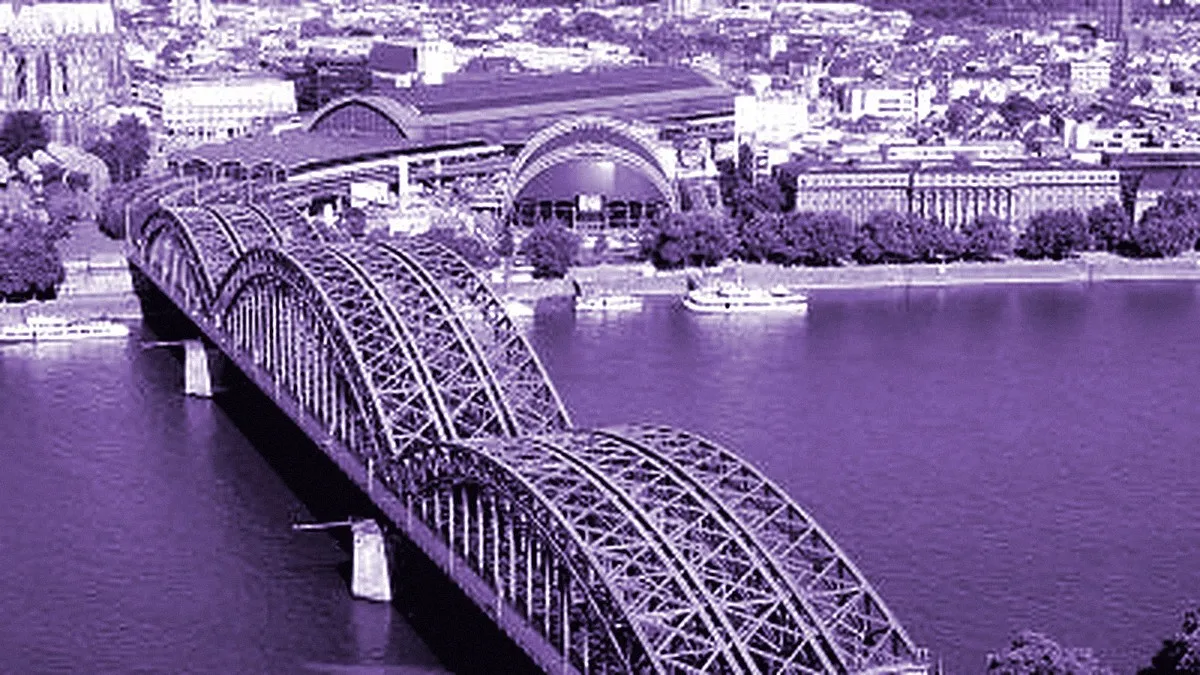
Five kilometres taking in the trade-fair halls across the river, the Hohenzollern Bridge, and three of the twelve Romanesque churches — St Kunibert, St Ursula with its Golden Chamber of bones, and the strange decagon of St Gereon.
Basilica of the Holy Apostles · Kapelle St. Joseph · St. Gereon · Maria Ablass Kapelle · Basilica of St. Ursula, Cologne · Ursulinenkirche St. Corpus Christi …
Open this tour: The northern churches: St Gereon, St Ursula and Deutz - Walk
The old town: Great St Martin, the Wallraf and 4711
Between the cathedral and the Rhine — the Romanesque tower of Great St Martin over the rebuilt riverfront houses, the Wallraf-Richartz's medieval panels, and the house on Glockengasse where eau de Cologne was invented.
Stapelhaus · Great St. Martin Church · An Groß St. Martin · Brauhaus Sion · Jan-von-Werth-Brunnen · Wallraf–Richartz Museum …
Open this tour: The old town: Great St Martin, the Wallraf and 4711 - Walk
Heumarkt and the riverside churches
South from the hay market — a brewery tap that has been pouring Kölsch since 1858, then St Maria Lyskirchen with its thirteenth-century painted vault and St Georg, the only Romanesque columned basilica in the city.
St. Maria Lyskirchen, Cologne · Trinity Church · Brauerei zur Malzmühle · Equestrian statue of Frederick William III · Heumarkt · Die Trauernde …
Open this tour: Heumarkt and the riverside churches - Walk
The opera, the applied arts museum and Schildergasse
The shopping and theatre quarter, with better reasons to be there than shopping: the applied arts collection, the Rautenstrauch-Joest ethnographic museum, and St Peter's, which holds a Rubens.
Neumarkt · Neumarkt Galerie Cologne · Belgisches Haus · Rautenstrauch-Joest Museum · St Peter's Church · St. Cecilia's Church …
Open this tour: The opera, the applied arts museum and Schildergasse - Walk
The Ultimate Cologne: the Cathedral, the old town and 4711
Two kilometres holding the cathedral, the Roman museum, the Museum Ludwig, Great St Martin, the Wallraf-Richartz collection, the 4711 perfume house and the applied arts museum.
Museum für Angewandte Kunst · Fragrance Museum · Fastnachtsbrunnen (Köln) · Wallraf–Richartz Museum · Jan-von-Werth-Brunnen · Great St. Martin Church …
Open this tour: The Ultimate Cologne: the Cathedral, the old town and 4711
Walk Cologne with Neywo
Neywo turns Cologne into a self-guided audio tour. Stories arrive as you reach the place they belong to, and the route reshapes when you wander off it.

