What to See in Duisburg, Germany: Free Audio Guide
Things to Do in Duisburg: Churches, Museums and Industrial Heritage
Duisburg is a city in North Rhine-Westphalia shaped by trade, industry and its position where the Ruhr meets the Rhine. The best things to do in Duisburg include exploring historic churches, museums, former industrial districts and distinctive local landmarks. Neywo offers a free audio guide for Duisburg with 109 narrated places, available in 11 languages.
What to See in Duisburg
From the old city centre to Ruhrort and the outer districts, Duisburg’s sights reveal different chapters of the city’s history. These are some of the places worth including in your visit.
Haniel Museum
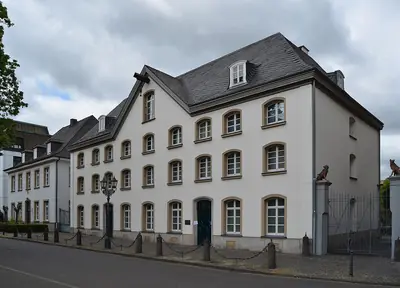
The Haniel Museum occupies Ruhrort’s oldest building, the former Ruhrorter Packhaus, built in 1756 for mayor Jan Willem Noot. In 1772, Jacob Wilhelm Haniel established the family’s first trading house here.
The museum extends across almost the entire building, apart from the ground-floor reception rooms. Its exhibitions cover inland and maritime shipping, Ruhrort, the Haniel family, pharmacy, mining, iron and steel production, offices and domestic life in the nineteenth century. The building itself is part of the experience: the museum developed gradually from former office rooms, with its early focus on inland shipping and the Haniel shipping company.
Church of Our Saviour
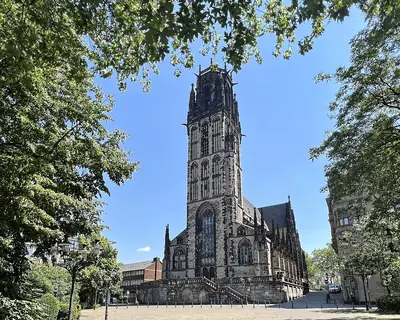
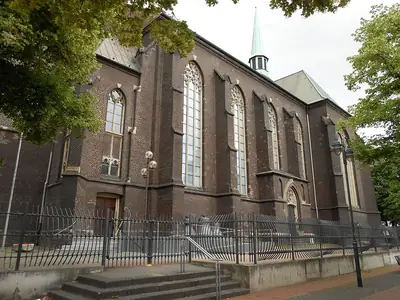
The Church of Our Saviour, or Salvatorkirche, is one of Duisburg’s most important historic landmarks. The late Gothic church stands on Burgplatz and was built from the fourteenth century onward, replacing an older palatine church.
Together with Wesel’s Willibrordi Cathedral, it is regarded as one of the most significant late Gothic churches on the right bank of the Lower Rhine. The building suffered extensive damage during the Second World War and was rebuilt afterward, apart from its spire. Its present appearance therefore reflects both medieval construction and twentieth-century reconstruction.
Kreuzeskirche
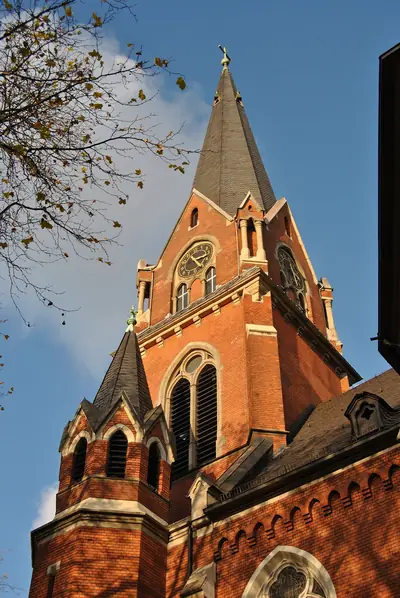
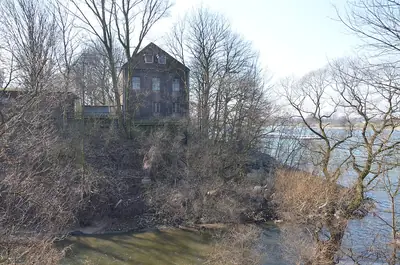
Kreuzeskirche is an evangelical church in Duisburg’s Marxloh district. Its surroundings reflect the industrial character of the Hamborn-Marxloh area, while the church stands with a listed parsonage on the Kircheninsel, or “church island”.
Architect Heinrich Behrens designed the church, which was built between 1903 and 1905. Kreuzeskirche has been protected as a heritage building since 1985.
Theater Duisburg
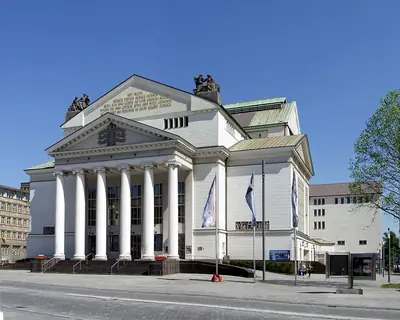
In the city centre, Theater Duisburg is a neoclassical opera house and one of the two venues of the Deutsche Oper am Rhein. It is also home to the Duisburg Philharmoniker, making it an important part of the city’s musical life.
Martin Dülfer designed the original building, constructed between 1911 and 1912. The theatre has 1,117 seats and has been protected as a listed monument since 1985. The original building was destroyed during the Second World War and rebuilt in 1950. Duisburg and Düsseldorf joined their theatrical activities in 1956 to form the Deutsche Oper am Rhein.
Liebfrauenkirche
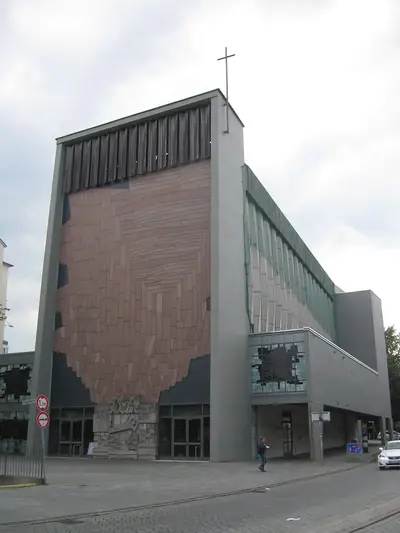
Liebfrauenkirche stands at König-Heinrich-Platz in the city centre. Once a parish church, it is now an independent cultural church. The building was consecrated in 1961 and served the Roman Catholic Liebfrauen parish until its deconsecration in 2010.
Since 2005, Liebfrauenkirche has been protected as a listed monument. Its changed role illustrates how religious buildings can acquire a new place in contemporary city life.
Haus Angerort
Haus Angerort is a medieval moated castle and fortress in Duisburg’s Hüttenheim district, near the boundary with Wanheim-Angerhausen. It stands beside the Angerbach stream, whose position helped shape the setting of this former fortified water castle.
Karmelkirche
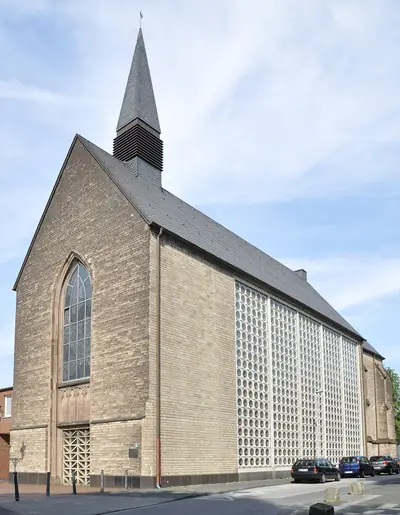
Karmelkirche has connections with the Carmelite nuns and with an earlier church on the same site. It was once the church of the Carmelite order and was rebuilt after the Second World War on the foundations of the former Minorite church.
The building consequently brings together several layers of Duisburg’s religious history.
St. Michael in Meiderich
St. Michael, also known as Sankt Michael, is a Roman Catholic church in Duisburg-Meiderich. It serves as the parish church of the St. Michael parish in the Diocese of Essen.
St. Norbert
St. Norbert is a protected Roman Catholic church in Obermarxloh, part of Duisburg’s Hamborn district. The church belongs to the Diocese of Essen and provides a quieter local landmark away from the main city centre.
St. Michael in Wanheimerort
A second church named St. Michael can be found in Duisburg-Wanheimerort. It is a church building in this part of the city and forms part of the district’s local character.
Mercatorbrunnen
Mercatorbrunnen is a fountain and local landmark in Duisburg. It is included on the historic city-centre route, close to Burgplatz and other central sights.
Radiomuseum Duisburg
The Radiomuseum Duisburg, in Ruhrort, explores the story of radio through a private collection. The museum was founded in 1994 through a private initiative and opened in the district where its history began.
It adds a technological and cultural perspective to a neighbourhood strongly associated with shipping and trade.
Sankt Peter
Sankt Peter, or St Peter’s Church, stands in Marxloh. This Roman Catholic church is one of Duisburg’s notable church buildings and the city’s second-largest church.
When it was completed, it was the largest church in the then-independent city of Hamborn, to which Marxloh belonged as a district. Today, it serves as a branch church of the abbey church of St Johann.
Haus Hartenfels
Haus Hartenfels is a castle-like country estate in Duisburg’s Stadtwald. Surrounded by forest, it has a different atmosphere from the city’s industrial and urban landmarks, with its setting closely connected to the woodland landscape.
Bienenmuseum Duisburg
The Bienenmuseum Duisburg is a small natural history museum devoted to beekeeping. It is housed in a pavilion on the grounds of the Albert Einstein Gymnasium in Rumeln-Kaldenhausen.
Its exhibition space covers around 400 square metres and presents objects from the history of beekeeping and bee research. The museum also looks at other hymenopterans, including wasps and ants, explaining how these animals differ and how their ways of life compare.
Explore Duisburg with a Self-Guided Audio Tour
A Duisburg self-guided walking tour is an easy way to connect the city’s historic centre, Ruhrort and its cultural quarter without joining a group. Neywo’s free audio guide tells the story of each place as you reach it, at your own pace, with no group and no schedule.
Its Duisburg tours include:
- Old Town Duisburg: Gates, Gothic Spires and Grain Mills — a 2.87 km walk lasting 116 minutes, with 12 narrated stops.
- Ruhrort: Where the Ruhr Meets the Rhine — a 2.24 km walk lasting 87 minutes, with 9 narrated stops.
- Art and Stage Quarter: Lehmbruck, Theatres and Dellviertel — a 2 km walk lasting 74 minutes, with 9 narrated stops.
- From Ruhrort to the City Centre by Cycle Lane — a 7.5 km bike route lasting 38 minutes, with 3 narrated stops.
The routes include places such as the Haniel Museum, Radiomuseum Duisburg, Karmelkirche, Church of Our Saviour, Mercatorbrunnen and Theater Duisburg. Together, the three walks and one bike route provide different ways to experience the city.
Download Neywo for Duisburg
Download Neywo to explore Duisburg with a free audio guide covering 109 narrated places. Choose one of the three walking tours or the bike route, reach each stop at your own pace and let the app tell you the story when you arrive. With narration in 11 languages, Neywo lets you explore without a group or a fixed schedule.
Duisburg is a good starting point for discovering North Rhine-Westphalia and Germany. You can also continue your journey through nearby cities such as Düsseldorf, Cologne or Essen.
Places with an audio guide in Duisburg
8 places in Duisburg with a Neywo audio guide. Each one starts telling its story as you reach it.
Self-guided tours in Duisburg
4 tours in Duisburg, free in the Neywo app. Each stop tells its story as you reach it.
- Bike ride
From Ruhrort to the City Centre by Cycle Lane
Follow Duisburg's cycle lanes from the radio museum in the old harbour town of Ruhrort to Portsmouthplatz and Museum DKM in the centre. A flat urban ride from river to downtown.
Radiomuseum Duisburg · Portsmouthplatz · Museum DKM
Open this tour: From Ruhrort to the City Centre by Cycle Lane - Walk
Old Town Duisburg: Gates, Gothic Spires and Grain Mills
From the former grain mill of the Küppersmühle art museum in the Inner Harbour to the late Gothic Salvatorkirche on Burgplatz, where the city began, trace Duisburg's medieval city: Mercator's hometown museum, the modern synagogue, its last city gate and the opera house.
Museum Küppersmühle · Synagoge Duisburg · Kultur- und Stadthistorisches Museum Duisburg · Stadtarchiv Duisburg · Karmelkirche · Church of Our Saviour …
Open this tour: Old Town Duisburg: Gates, Gothic Spires and Grain Mills - Walk
Ruhrort: Where the Ruhr Meets the Rhine
Walk the old harbour town at the mouth of the Ruhr, from the glowing Rhine Orange sculpture to the Haniel family's 1756 warehouse, the castle site that once taxed passing ships. A flat stroll through Europe's largest inland port.
Rhine Orange · Ruhr · Schifferbörse · Kasteel Ruhrort · Haniel Museum · St. Jakobus …
Open this tour: Ruhrort: Where the Ruhr Meets the Rhine - Walk
Art and Stage Quarter: Lehmbruck, Theatres and Dellviertel
Walk from the station forecourt past the DKM museum to the Lehmbruck Museum and its Henry Moore sculpture in Kant Park, then through the Dellviertel's squares, churches and small theatres. A quiet circuit for art lovers south of the city centre.
Portsmouthplatz · Museum DKM · Lehmbruck Museum · Two Piece Reclining Figure No. 1 · Dellplatz · St. Joseph …
Open this tour: Art and Stage Quarter: Lehmbruck, Theatres and Dellviertel
Walk Duisburg with Neywo
Neywo turns Duisburg into a self-guided audio tour. Stories arrive as you reach the place they belong to, and the route reshapes when you wander off it.

