Otranto, Italy: Self-Guided Walking Tour
Things to do in Otranto: a self-guided walk through history
Wondering what to do in Otranto? This coastal town in southeastern Italy, in the Puglia region and the Province of Lecce, brings together a Byzantine church, a medieval cathedral, a historic fortress and places connected with some of the most solemn moments in its past. Its compact historic center makes it especially well suited to exploring on foot. Neywo’s free audio guide for Otranto covers 9 narrated places, with stories available in 11 languages.
What to see in Otranto
The best way to discover Otranto is to move through its historic center and follow the places that reveal the town’s religious, military and cultural history. The route below includes the main highlights featured in Neywo’s Otranto walking tour.
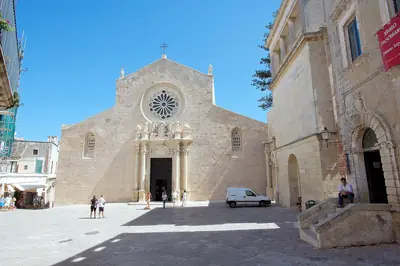
Otranto Cathedral and its mosaic floor
Otranto Cathedral, also known as the Cathedral of Santa Maria Annunziata, is the principal Catholic place of worship in the town and the seat of the Archdiocese of Otranto. Dedicated to the Annunciation of the Virgin Mary, it was consecrated in 1088 and became a minor basilica in July 1945. It is also recognized as an Italian national monument.
The cathedral’s most remarkable feature is its twelfth-century mosaic floor. The decoration extends across the nave, the sanctuary and the apse, making it one of the best-preserved works of its kind. The building has a three-aisled plan ending in an apse and contains forty-two monolithic granite and marble columns, whose quarries remain unknown. Two lancet windows frame the west façade.
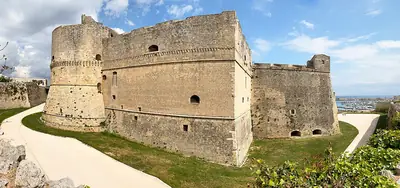
Castello di Otranto
The Castello di Otranto, also called the Castello Aragonese, is one of the town’s defining landmarks. It forms a single defensive system with Otranto’s surrounding walls, showing how closely the fortress was connected with the protection of the settlement.
The castle’s origins reach back to the eleventh century. It also has an unusual literary connection: the fortress gave its name to the first Gothic novel in history.
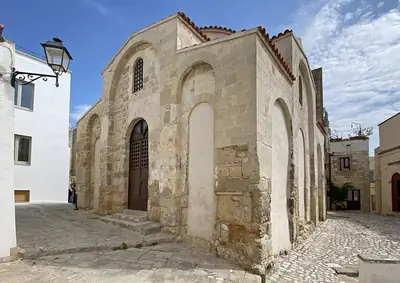
San Pietro
The Church of San Pietro, or Basilica di San Pietro, offers a distinctive glimpse of Otranto’s Byzantine heritage. Located in the historic center, this Byzantine church reflects the architectural tradition that helped shape the town’s character.
It is one of the places where Otranto’s connections with the eastern Mediterranean remain especially visible, alongside the town’s later medieval and defensive structures.
Madonna dell’Altomare
The Church of Madonna dell’Altomare, also known as Chiesa della Madonna dell’Altomare, is a Roman Catholic church in Otranto. It is included among the historic center’s places of worship and forms part of the town’s wider religious heritage.
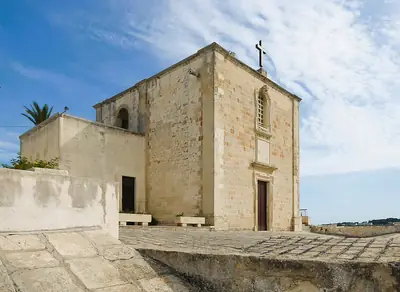
Chiesa della Madonna della Serra
The Chiesa della Madonna della Serra is another church in Otranto. Compared with the town’s cathedral and fortress, it provides a quieter stop while exploring the places of worship scattered through and around the historic town.
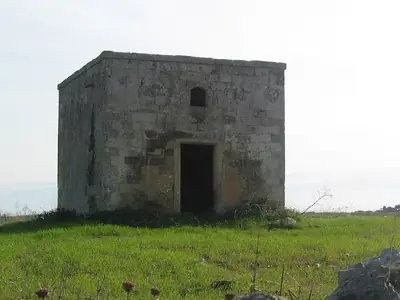
Chiesa di Sant’Antonio
Chiesa di Sant’Antonio is a further religious building to discover in Otranto. Its simple presence adds to the varied collection of churches that reflect the town’s long religious history.
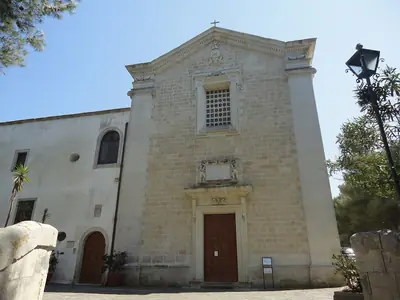
Chiesa di Santa Maria dei Martiri
The Church of Santa Maria dei Martiri stands on Otranto’s Minerva Hill, a place associated with one of the town’s most solemn historical events. The hill is remembered as the scene of the martyrdom of eight hundred people from Otranto on August 14, 1480.
The church gives this location a place of remembrance and reflection. It is also one of the stops on the walking route dedicated to Otranto’s martyrs, walls and mosaic floor.
Monastero di S. Nicola di Casole
A little beyond the historic center are the ruins of the Monastero di San Nicola di Casole, also known as the Abbey of San Nicola di Casole. This Basilian monastery was once among the important centers of history, art and culture in Salento.
The complex was destroyed in 1480 and survives only in ruins. Its remains offer a glimpse of the monastery’s role in the cultural life of medieval Salento.
Otranto in Puglia
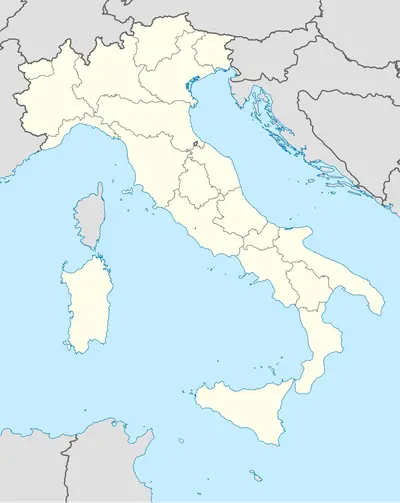
Otranto is the chief town of its municipality and lies in the southeastern part of Italy, in Puglia’s Province of Lecce. The town stands at an elevation of about fifteen metres and has a population of 4,914.
Its history is legible in a relatively concentrated area: the cathedral’s mosaic, the Byzantine Church of San Pietro, the Aragonese fortress and the churches connected with places of memory all contribute to the character of the town. For a wider look at the region, see the guide to Apulia, or explore more of the country with the guide to Italy.
Explore Otranto with Neywo
Download Neywo for an Otranto self-guided walking tour and explore the town without joining a group or following a schedule. Otranto has 1 walking tour:
Otranto: Martyrs, Walls and the Mosaic Floor covers 1.68 km, takes about 52 minutes and includes 5 narrated stops: Chiesa di Santa Maria dei Martiri, Castello di Otranto, San Pietro, Otranto Cathedral and Madonna dell’Altomare.
The app plays each story as you reach the place, so you can walk at your own pace. There is no group and no schedule—just the history of Otranto accompanying you as you explore.
Places with an audio guide in Otranto
7 places in Otranto with a Neywo audio guide. Each one starts telling its story as you reach it.
Self-guided tours in Otranto
1 tour in Otranto, free in the Neywo app. Each stop tells its story as you reach it.
- Walk
Otranto: Martyrs, Walls and the Mosaic Floor
Otranto, at Italy's easternmost edge, was stormed by the Ottomans in 1480. Climb Minerva Hill where eight hundred townspeople died, walk through the Aragonese castle and a Byzantine church, then read the twelfth-century mosaic carpeting the cathedral floor.
Chiesa di Santa Maria dei Martiri · Castello di Otranto · San Pietro · Otranto Cathedral · Madonna dell'Altomare
Open this tour: Otranto: Martyrs, Walls and the Mosaic Floor
Walk Otranto with Neywo
Neywo turns Otranto into a self-guided audio tour. Stories arrive as you reach the place they belong to, and the route reshapes when you wander off it.

