Lecce, Italy: Self-Guided Walking Tour
Things to Do in Lecce: A Guide to the Baroque City
The best things to do in Lecce combine Roman ruins, richly decorated Baroque churches, historic gateways, and museums that reveal the city’s long past. The historic center is especially rewarding on foot, where warm limestone architecture gives the city its distinctive character. Neywo offers a free audio guide for Lecce with 68 narrated places.
Lecce is the capital of the province of Lecce, in Apulia, at the southern end of Italy’s Salento peninsula. Often associated with the nickname “Florence of the South,” it is known for the elaborate style created by carving the region’s soft limestone into flowers, figures, animals, columns, and theatrical façades.
What to see in Lecce
Piazza Sant’Oronzo and the historic center
Piazza Sant’Oronzo is one of the main gathering places in Lecce and brings several layers of the city’s history together. The square is home to the Roman Amphitheatre and the column dedicated to Saint Oronzo, while the surrounding streets lead towards churches, palaces, and other Baroque landmarks.
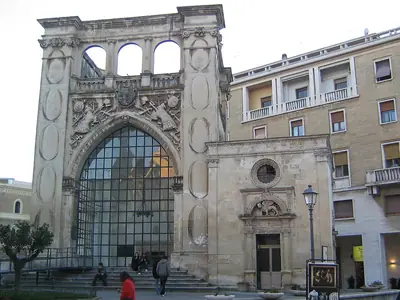
Nearby, Il Sedile stands as an unusual combination of Gothic and Renaissance design. Built in 1592 as the Palace of the Seggio, it has strong corner pillars, oval openings, pointed arches, and open decorative galleries known as loggias. Beside it, the Chapel of San Marco dates from 1543 and was established by Lecce’s Venetian community as a religious center near the merchants’ lodges and Venetian consulate.
Basilica di Santa Croce
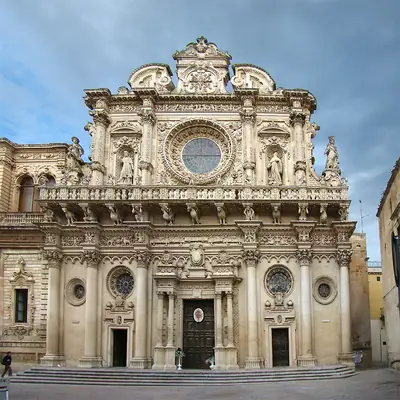
The Basilica di Santa Croce is one of the clearest expressions of Lecce Baroque. Its façade, completed in 1699 after more than a century of work, is covered with elaborate details. Six columns frame the portal, while the frieze features fantastical animals and exotic foliage. Heraldic cameos represent Philip the Third of Spain, Mary of Enghien, and Walter the Sixth of Brienne, and the decorative band also includes faces of captured Turks.
The interior follows a Latin cross plan and contains sixteen Baroque altars. Two side aisles have been transformed into chapels, while the dome dates from 1590 and survived earthquakes. The basilica also preserves a fragment of the Holy Cross and is home to the parish and confraternity of the Most Holy Trinity of Pilgrims. The former Celestine convent beside it, now the Palazzo della Provincia, completes the monumental setting.
Lecce Cathedral and Cathedral Square
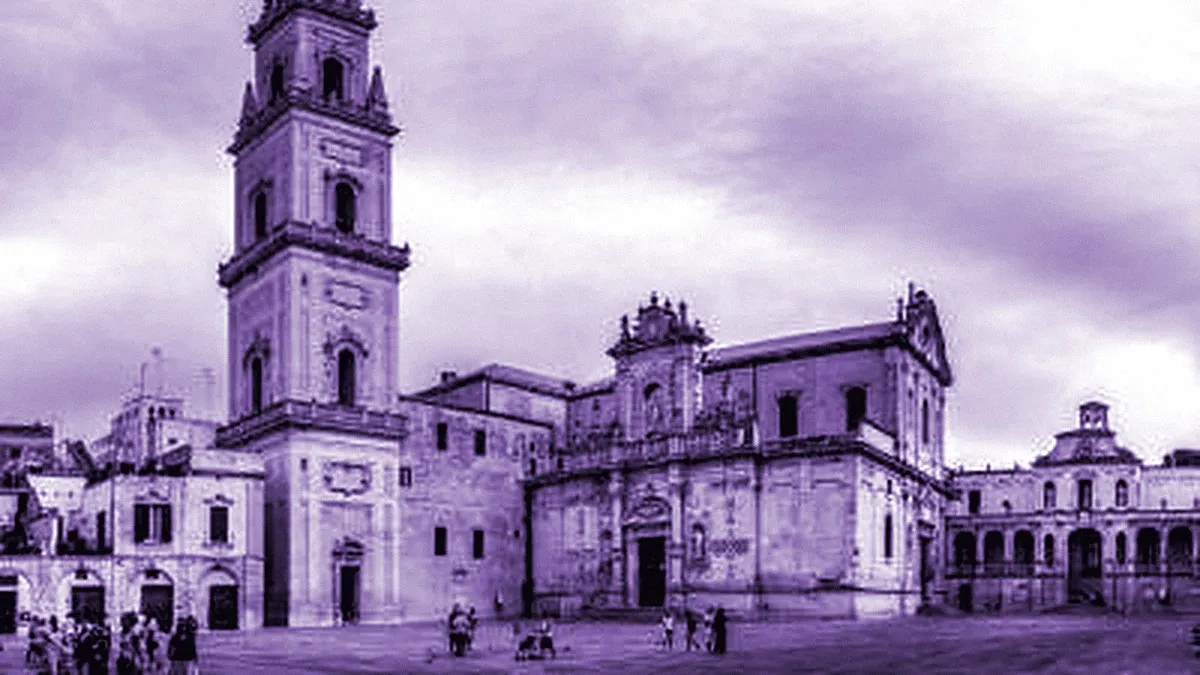
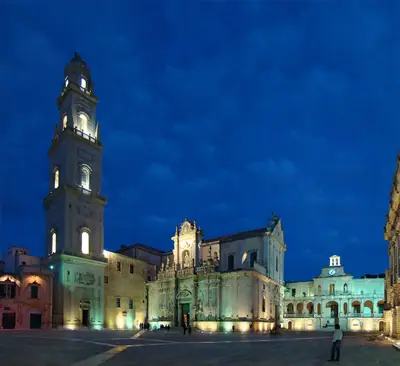
A passage from Libertini Street opens onto Cathedral Square, where Lecce Cathedral rises above cascading steps. Also known as the Duomo di Lecce, it is dedicated to Santa Maria Assunta and is the city’s principal Catholic church.
The cathedral was inaugurated in 1144, altered in 1230, and transformed again in 1659 under the direction of Giuseppe Zimbalo. That later work gave the building its dramatic Baroque character. At the entrance, stout columns frame niches containing statues of Saints Giusto and Fortunato, while an ornate arch carries the figure of Saint Orontius.
Zimbalo also designed the adjoining bell tower, which dates from 1682. Inside, three naves are divided by sculpted pilasters and columns. The wooden ceiling was painted in 1685 by Giuseppe da Brindisi, and twelve side chapels contain altars dedicated to subjects including the Sacrament and episodes from the lives of Jesus and Mary.
Castle of Charles V
Near Piazza Sant’Oronzo, the Castle of Charles V shows how Lecce’s defenses developed over several centuries. Archaeologists found that the site began as a Norman stronghold dating from the twelfth century. In 1537, Emperor Charles V ordered it to be strengthened in response to the Turkish threat from the eastern Adriatic coast.
By 1553, Gian Giacomo dell’Acaya had incorporated the old keep into a new defensive design with a curtain wall and four bastions. The Master Tower and Show Tower remain from this period. The rebuilding also altered the medieval Chapel of the Trinity to create openings for cannons.
The castle later had a very different role: one room served as an eighteenth-century theater. After more than a century as a military site, it functioned as a military post from 1870 to 1979.
Porta Napoli
Porta Napoli is the monumental arch marking one of the historic entrances to Lecce. Built in 1548 as a triumphal gateway for Charles V, it was designed by Gian Giacomo, a military engineer and architect involved in the fortification of southern Italy against Ottoman attacks.
Two Corinthian pillars support a triangular pediment, while carvings of armor and weapons emphasize the gateway’s military purpose. The Habsburg Spanish coat of arms adds a statement of imperial power. Porta Napoli stands beside Arco di Trionfo Square and faces the Obelisk of Terra d’Otranto, also known as the Obelisk of Ferdinand I, which was placed there in 1922.
Porta San Biagio
A few steps from Piazza d’Italia, Porta San Biagio marks the southern entrance to Lecce’s old city. The gate was rebuilt in 1774 on the site of an earlier medieval entrance commissioned by Charles V.
Its façade has pairs of smooth columns on tall bases, the coats of arms of King Ferdinand the Fourth of Naples and the city of Lecce, and a statue of Saint Biagio dressed as a bishop. Both the exterior and interior façades contain decorative details, so the gateway is worth viewing from both sides.
Convento dei Teatini and Santa Irene
The Ex Convento Teatini, or Convento dei Teatini, stands beside the Church of Santa Irene. The Baroque complex was home for several centuries to the Theatine fathers and was large enough to accommodate forty of them during the first thirty years of the seventeenth century.
Its quadrangular cloister is arranged around four wings. A vaulted portico links the lower level, while a corridor connects the upper floor. After religious orders were suppressed, the complex passed to the Municipality of Lecce and was later used as a barracks, school, and municipal offices. Today, its historic spaces serve as a cultural venue for exhibitions and fairs.
Museo Archeologico Faggiano
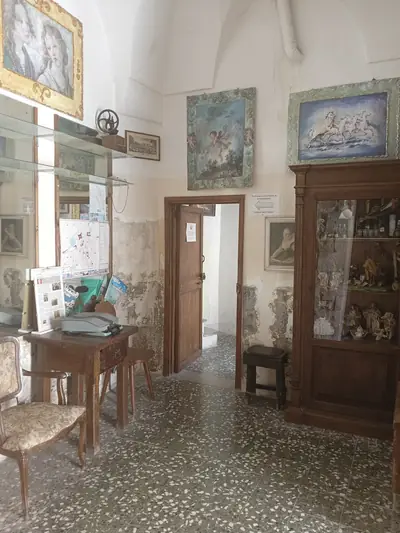
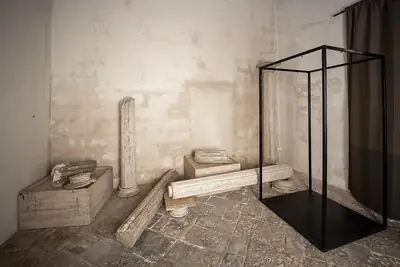
The Museo Archeologico Faggiano is an archaeological site inside a private house in Lecce’s historic center. It was discovered in 2001, when Luciano Faggiano needed to dig up the floor of his home to repair a sewer pipe. Archaeological remains appeared, and Luciano and his three sons then spent seven years excavating the site with the supervision of the Archaeological Superintendence of Taranto.
The layers span about two and a half thousand years, from the Messapi civilization in the fifth century BC through the Roman period, the Middle Ages, and the Renaissance. The excavations uncovered tombs, granaries, cisterns, hypogeums, a well, ossuaries, underground escape routes, and Templar frescoes. The museum opened to the public in April 2008.
Santi Niccolò e Cataldo
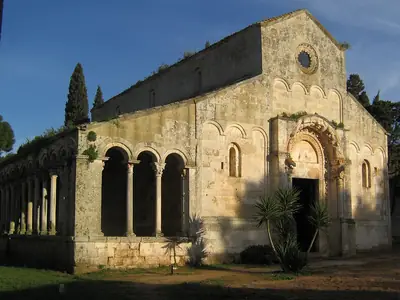
Beyond Lecce’s ancient walls, the Church of Saints Nicholas and Cataldo stands in the city cemetery. Founded in 1180 by the Norman Count Tancredi d’Altavilla, it is an important example of Apulian Romanesque architecture.
The adjoining monastery was first entrusted to Benedictine monks and passed to the Olivetan order in 1494. The complex later became the Liceo Palmieri, a national lyceum, and from the 1980s has been associated with the University of Salento’s Faculty of Cultural Heritage.
The church’s main entrance and rose window retain important Romanesque features, despite a Baroque renovation carried out by Giuseppe Cino in 1716. The result is a striking meeting of medieval structure and later Lecce decoration.
Museums beyond the main Baroque landmarks
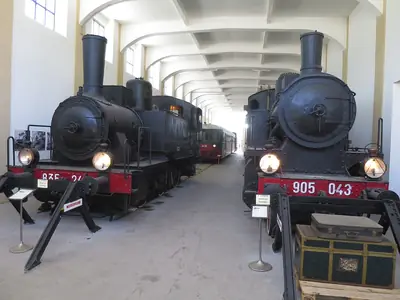
Lecce has several museums for travellers who want to explore more than its churches and squares. The Museo del Teatro Romano presents the city’s Roman theatrical heritage, while the Museo Ferroviario della Puglia traces the railway history of the region through locomotives, wagons, carriages, objects, and models.
MUSA, the Museo Storico-Archeologico dell’Università del Salento, brings together archaeological research carried out by the university across the Mediterranean basin. MUST, the Museo Storico di Lecce, offers another way to discover the city through its historical museum collection.
Santa Maria di Cerrate Abbey
Near Lecce, the former Abbey of Santa Maria di Cerrate is one of the important examples of Otranto Romanesque architecture. Built in the eleventh century, it was once a monastery of Basilian monks. Its history makes it a place where Eastern and Western traditions meet.
A Lecce self-guided walking tour with Neywo
Neywo’s Lecce audio guide includes four walking tours and one bike route, with 68 narrated places in total. The four walks cover the city from different angles:
- Baroque Lecce: The Florence of the South — 1.59 km, 84 minutes, 11 stops
- Cathedral Square and Roman Lupiae — 0.76 km, 49 minutes, 7 stops
- Triumphal Gates and Northern Churches — 2.23 km, 82 minutes, 10 stops
- West Side: Carmelites, Franciscans and Porta Rudiae — 1.02 km, 55 minutes, 8 stops
The bike route, Lecce’s Western Gates by Bike, covers 2.8 km in 14 minutes and includes 5 narrated stops. Each story plays as you reach the place, at your own pace: no group and no schedule. Narration is available in 11 languages.
Download Neywo and explore Lecce at your own pace
Download Neywo to explore Lecce with a free audio guide that tells the story of each place as you arrive. Choose one of the four walking tours or the bike route, follow the route at your own pace, and discover Lecce without joining a group or keeping to a schedule.
Lecce is also a natural starting point for discovering Otranto and other destinations across Italy.
Places with an audio guide in Lecce
8 places in Lecce with a Neywo audio guide. Each one starts telling its story as you reach it.
Self-guided tours in Lecce
5 tours in Lecce, free in the Neywo app. Each stop tells its story as you reach it.
- Bike ride
Lecce's Western Gates by Bike
A short ride along Lecce's cycle lanes, from the university's archaeological museum past the Naples Gate and Porta Rudiae, then Palazzo Adorno, to the church of San Giacomo on the southern edge of town.
Museo Storico-Archeologico dell'Università del Salento · Porta Napoli · Porta Rudiae · Palazzo Adorno · San Giacomo (Lecce)
Open this tour: Lecce's Western Gates by Bike - Walk
Baroque Lecce: The Florence of the South
Walk from a Renaissance castle through the golden-limestone Baroque of Santa Croce and the Celestines' palace, past a Venetian loggia and a Roman amphitheatre half-buried in the main square. Finish in a house that turned out to hide 2,500 years of history under its floor, and at the Baroque gate that guards the old city.
Castle of Charles V · Palazzo dei Celestini · Basilica di Santa Croce · Palazzo del Seggio · Colonna di Sant'Oronzo · Roman amphitheatre of Lecce …
Open this tour: Baroque Lecce: The Florence of the South - Walk
Cathedral Square and Roman Lupiae
Lecce's ancient and sacred heart: a Roman theatre rediscovered in 1929, the Zimbalo-designed cathedral with its Baroque bell tower and the walled ensemble of seminary and bishop's palace. Then on to the Theatine cloister, Sant'Irene and the Jesuit church.
Roman Theatre of Lecce · San Sebastiano · Lecce Cathedral · Seminary Palace in Lecce · Ex Convento Teatini · Sant’Irene …
Open this tour: Cathedral Square and Roman Lupiae - Walk
Triumphal Gates and Northern Churches
Enter through the Porta Napoli, built in 1548 for Charles V, and follow the quieter northern streets past an opera-house theatre and a string of small Baroque and Byzantine-rite churches. The walk ends at the hilltop church of Santi Niccolò e Cataldo.
Porta Napoli · Santa Maria della Porta · Teatro Paisiello · Santa Maria della Provvidenza · Sant'Angelo · Chiesa di San Nicola dei Greci …
Open this tour: Triumphal Gates and Northern Churches - Walk
West Side: Carmelites, Franciscans and Porta Rudiae
A quiet loop through Lecce's western quarter: Giuseppe Zimbalo's restrained Santa Teresa, the Franciscan church of Scarpa, the old Sant'Anna conservatory and the city's oldest gate, Porta Rudiae.
Church of San Francesco of Scarpa · Carmine · Santa Teresa · Santa Elisabetta (Lecce) · Sant'Anna church · Former conservatory of Sant'Anna …
Open this tour: West Side: Carmelites, Franciscans and Porta Rudiae
Walk Lecce with Neywo
Neywo turns Lecce into a self-guided audio tour. Stories arrive as you reach the place they belong to, and the route reshapes when you wander off it.

