Visiting Parma, Italy: Top Sights on Foot
Things to Do in Parma: What to See in the City
The best things to do in Parma include exploring its Romanesque cathedral, Renaissance interiors, opera heritage, museums, and historic parks. The city brings together religious monuments, important works by artists such as Correggio and Parmigianino, and collections that trace Parma’s artistic, musical, and cultural history. Neywo offers a free audio guide for Parma with 184 narrated places.
Parma is in Emilia-Romagna, a region known for its remarkable artistic and culinary traditions. Its historic center is compact, making it well suited to discovering on foot, while the districts beyond the center add further museums, churches, and places connected with the city’s cultural life.
What to see in Parma
Parma Cathedral and Piazza Duomo
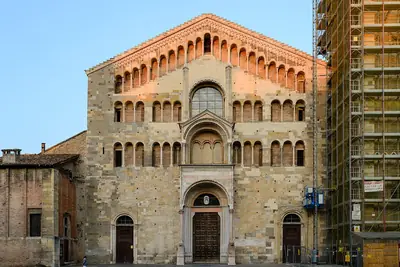
Parma Cathedral, also known as the Duomo di Parma, is the center of the city’s important religious ensemble in Piazza Duomo. Dedicated to Santa Maria Assunta, the cathedral was consecrated in 1106 and became a minor basilica in 1834.
Its exterior is a fine example of Romanesque architecture in Emilia-Romagna, with a strong medieval character and a gabled façade. Inside, later changes introduce Renaissance elements: the central nave, dome, and transept were largely shaped by Renaissance interventions, while some side chapels contain Gothic frescoes. The dome is especially notable for its illusionistic fresco by Correggio.
The cathedral stands beside the Baptistery and the Bishop’s Palace, making Piazza Duomo one of the essential places to visit in Parma.
Sanctuary of Santa Maria della Steccata
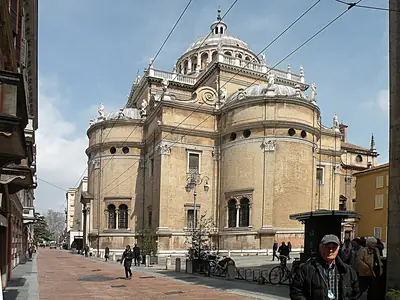
The Sanctuary of Santa Maria della Steccata, also called the Basilica of Santa Maria della Steccata, combines Renaissance and Baroque forms. Its name refers to the fence, or steccato, that once gave the church its name.
Built between 1521 and 1539, the church has a Greek-cross plan and is considered an important example of Parma’s Renaissance architecture. Inside, it houses a Nursing Madonna, an image crowned in 1601. Since 1718, the sanctuary has served as the Magistral Church of the Sacred Military Constantinian Order of Saint George.
The complex also contains the Museo Costantiniano della Steccata, dedicated to the heritage of the order.
Palazzo della Pilotta and the Galleria nazionale di Parma
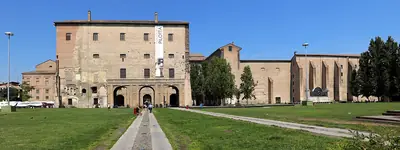
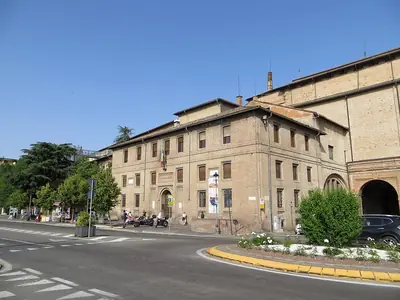
The Palazzo della Pilotta is a monumental complex between Piazzale della Pace and the Lungoparma. It is home to several cultural institutions, including the Galleria nazionale di Parma and the Academy of Fine Arts of Parma.
The Galleria nazionale di Parma presents works from the Middle Ages, Renaissance, Baroque, Rococo, and more recent periods. Its artists include Beato Angelico, Leonardo da Vinci, Correggio, Canaletto, Sebastiano del Piombo, Guercino, Parmigianino, and Tintoretto. Among the works highlighted in the collection are Leonardo’s painting, Guercino’s Susannah and the Elders, and Parmigianino’s Mystic Marriage of Saint Catherine.
Much of the permanent collection developed from the Ducal Academy of Fine Arts, founded in the Palazzo della Pilotta in 1752. The gallery also includes modern artists such as Renato Guttuso and Amedeo Bocchi.
Academy of Fine Arts of Parma
The Academy of Fine Arts of Parma occupies a wing of the Palazzo della Pilotta. Duke Philip of Bourbon founded it there in 1757. Over time, several important artistic institutions developed from its history, including the Collegio degli Accademici, the Institute of Art, and the Regia Pinacoteca.
The academy was suppressed in 1802 and re-established in 1816 by Maria Luigia. Today, related institutions occupy the west wing of the Palazzo della Pilotta along Viale Paolo Toschi, facing the Lungoparma.
Bodoni Museum
The Bodoni Museum, or Museo Bodoniano, is located inside the Palazzo della Pilotta and is reached through the Palatina Library. It is devoted to Giambattista Bodoni, who lived from 1740 to 1813, and to the history of books and printing.
The collection includes thousands of volumes, Bodoni’s correspondence, and the typographic tools from his printing office. One section follows the development of the book from manuscripts to printed editions. The museum’s materials survived the bombing that destroyed the Palatina Library during the Second World War and were brought together for display as a museum in 1963.
Teatro Regio
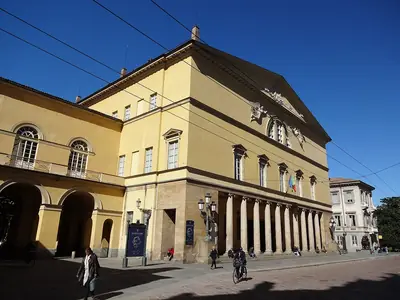
Teatro Regio is one of Parma’s celebrated opera houses. Originally known as the Nuovo Teatro Ducale, it was founded by Maria Luigia of Austria to replace an older opera house and opened on 16 May 1829 with the premiere of Vincenzo Bellini’s Zaira.
The auditorium holds about 1,400 people, with four tiers of boxes and a gallery above them. The theatre remains closely connected with Parma’s passion for music and the Italian operatic tradition. Its programme includes operas presented from mid-January to April, as well as an annual Verdi Festival each October.
Camera di San Paolo
Inside the former Monastery of San Paolo, the Camera di San Paolo—also called the Camera della Badessa, or Abbess’ Chamber—is one of Parma’s most remarkable interiors.
Antonio da Correggio painted the frescoes between 1518 and 1519. The decoration covers the vault and the area above the fireplace, centering on the goddess Diana and a network of philosophical and mythological ideas. The frescoes transform the entire room, including its vault, which measures about 697 by 645 centimeters.
Antica Spezieria di San Giovanni
The Antica Spezieria di San Giovanni is a historic pharmacy that has been transformed into a museum. It is located inside the Abbey of San Giovanni Evangelista at Borgo Pipa 1/a.
The restored space offers a glimpse into the history of pharmacy. Since June 2024, the museum has belonged to the Pilotta Monumental Complex and reopened to the public that same year.
State Archives of Parma
The State Archives of Parma preserve the documentary memory of the city and its province. Their records include documents produced by public offices and institutions, including the administrations of the Duchy of Parma and Piacenza.
The collections also contain records from the Napoleonic period and from Italian government offices after national unification. Other historically important archives may have entered the holdings through deposit, custody, donation, or purchase.
Palazzo del Giardino and Parco Ducale
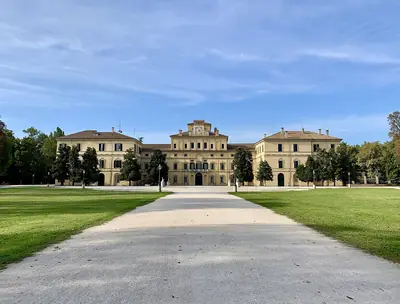
In Parma’s Parco Ducale, the Palazzo del Giardino is one of the park’s notable historic buildings and gives the setting its name.
It should not be confused with the former official residence of Duchess Marie Louise, which stood at what is now Piazzale della Pace between the Palazzo della Pilotta and the Palazzo della Provincia. That older Ducal Palace was destroyed on 13 May 1944, along with parts of the Pilotta and the Teatro Reinach, during an air raid in the Second World War.
Arturo Toscanini’s birth house
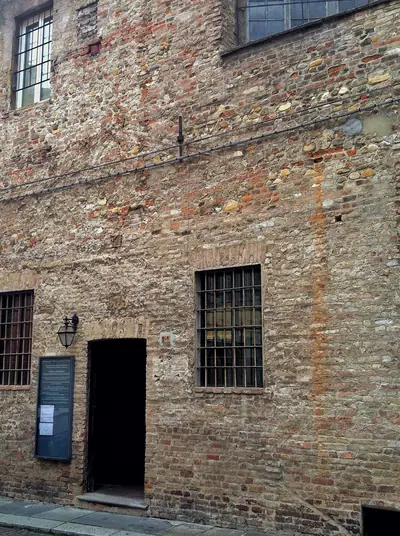
The Casa natale di Arturo Toscanini stands at number 13 on Borgo Rodolfo Tanzi, in Parma’s Oltretorrente district. Arturo Toscanini was born here on 25 March 1867, when the street was known as Borgo San Giacomo.
The museum preserves a direct link with the early life of one of Parma’s celebrated conductors and adds a personal dimension to the city’s musical heritage.
Other museums and cultural stops
Parma has several further museums that broaden the picture of its cultural history:
- Casa del Suono explores the development of instruments used to reproduce and transmit sound.
- Casa della Musica is housed in Palazzo Cusani, an aristocratic residence at the northern edge of the historic center.
- Castello dei Burattini – Museo Giordano Ferrari presents puppets, marionettes, and other objects connected with puppetry and theatrical performance.
- Casa del Suono and Casa della Musica together reflect Parma’s longstanding connection with music and sound.
- The Cariparma Foundation Museum contains works belonging to Fondazione Cariparma. Its collection was displayed at Palazzo Bossi Bocchi between 1995 and 2020 and is now available virtually through the foundation’s website. Palazzo Bossi Bocchi combines neoclassical forms with Art Nouveau features.
For more city discoveries in the region, you can also continue to Modena, Bologna, or Ravenna.
Explore Parma with a free audio guide
A Parma self-guided walking tour is an easy way to connect the city’s monuments, museums, churches, and musical heritage. Neywo has three walking tours, one bus route, and one bike route in Parma, with narration available in 11 languages.
The walks include:
- Correggio’s Parma: From the Duomo to the Ducal Park — 3.2 km, 119 minutes, and 12 narrated stops.
- Behind the Pilotta: Markets, Monasteries and Music — 1.49 km, 71 minutes, and 10 narrated stops.
- Oltretorrente: Across the River, Toscanini’s Parma — 3.24 km, 96 minutes, and 10 narrated stops.
The other routes are:
- A bus route of 8.2 km and 35 minutes, with 9 narrated stops.
- A bike route of 9 km and 45 minutes, with 7 narrated stops.
With the Neywo app, each story plays as you reach the place, at your own pace. There is no group and no schedule: simply choose a route, walk, cycle, or take the bus, and let the app tell you the story of Parma as you explore it.
Places with an audio guide in Parma
8 places in Parma with a Neywo audio guide. Each one starts telling its story as you reach it.
Self-guided tours in Parma
5 tours in Parma, free in the Neywo app. Each stop tells its story as you reach it.
- Bike ride
Parma by Bike: Cafes, Palaces and Baroque Oratories
Pedal from the suburb of Vicopo into the historic centre on OSM cycle lanes. Stop at the neoclassical Casino Petitot, one of Italy's first cafes, then past Palazzo Soragna and the Baroque San Quirino and Santa Maria delle Grazie to the Galleria Nazionale in the Pilotta.
Chiesa di San Biagio in Vicopò · Casino Petitot · Santa Maria degli Angeli · Palazzo Soragna · San Quirino · Oratory of Santa Maria delle Grazie, Parma …
Open this tour: Parma by Bike: Cafes, Palaces and Baroque Oratories - Bus ride
Linea 11: Bixio Gate to the Pilotta and the Opera House
TEP line 11 links the old Porta San Francesco with the heart of Parma. Ride past the Gothic ruins of Santa Cecilia, the Baptistery beside the Duomo, the puppet museum, the Galleria Nazionale in the Pilotta, the market square of Ghiaia and the Teatro Regio, ending at Palazzo Sanvitale.
Barriera Bixio · Santa Maria del Tempio (Parma) · Santa Cecilia · Baptistery of Parma · Castello dei Burattini - Museo Giordano Ferrari · Galleria nazionale di Parma …
Open this tour: Linea 11: Bixio Gate to the Pilotta and the Opera House - Walk
Correggio's Parma: From the Duomo to the Ducal Park
Parma's greatest hits in one line: the Romanesque cathedral and Antelami's octagonal baptistery, Correggio's frescoed abbey and convent room, the civic square, the Steccata, the opera house that audiences treat as a courtroom, the Pilotta palace and the park of the dukes.
Parma Cathedral · Baptistery of Parma · San Giovanni Evangelista · Camera di San Paolo · Palazzo del Comune · Museo Costantiniano della steccata (Parma, Italy) …
Open this tour: Correggio's Parma: From the Duomo to the Ducal Park - Walk
Behind the Pilotta: Markets, Monasteries and Music
The quieter heart of Parma: the old market square, the governor's palace, a monastery turned gallery, the bishop's palace with its Roman walls, the apothecary of San Giovanni and the deconsecrated church where Parma keeps its sound archive. Ends at the courtyard of Hercules and Antaeus.
Piazza Ghiaia · Palazzo del Governatore · Museo Glauco Lombardi · Monumento ai Caduti di tutte le guerre · Pinacoteca Stuard · Diocesan Museum of Parma …
Open this tour: Behind the Pilotta: Markets, Monasteries and Music - Walk
Oltretorrente: Across the River, Toscanini's Parma
The working-class quarter on the far bank of the Parma torrent, where Arturo Toscanini was born. Baroque oratories, the old hospital founded in the 13th century, the Basilica del Paradiso and the surviving Renaissance gates of the city walls.
Birth house of Arturo Toscanini · Oratory of Santa Maria delle Grazie, Parma · Santissima Annunziata, Parma · Santa Maria del Fiore · Sant'Ilario · San Giuseppe …
Open this tour: Oltretorrente: Across the River, Toscanini's Parma
Walk Parma with Neywo
Neywo turns Parma into a self-guided audio tour. Stories arrive as you reach the place they belong to, and the route reshapes when you wander off it.

