What to See in Spello, Italy: Free Audio Guide
Things to Do in Spello: What to See in Umbria’s Hill Town
The best things to do in Spello include exploring its historic churches, discovering Renaissance art, and walking through a town known for its flower-filled streets. Set beneath Mount Subasio in the Valle Umbra, Spello combines Roman and medieval heritage with a quieter atmosphere than nearby Assisi. Neywo has a free audio guide for Spello with 19 narrated places, available in 11 languages.
What to See in Spello
Spello’s sights are spread through and around its historic streets. This is a town to explore on foot, moving between churches, museums, gardens, and the remains of places shaped by centuries of religious and civic history.
Museo delle Infiorate
The Museo delle Infiorate introduces Spello’s celebrated tradition of flower decoration. The museum is dedicated to the Infiorate, the elaborate floral artworks associated with the town’s Corpus Christi celebrations.
The tradition dates back to the early seventeenth century. During the festival, local artists create detailed designs and religious scenes from flower petals, turning the streets into colourful carpets. A visit to the museum offers a way to discover this part of Spello’s identity beyond the festival itself.
Pinacoteca comunale di Spello
The Pinacoteca comunale di Spello is a civic and diocesan gallery bringing together works connected with the town’s artistic life and local devotion. It is one of the most useful stops for understanding Spello’s religious and cultural heritage through art.
Collegiate Church of Santa Maria Maggiore and the Baglioni Chapel
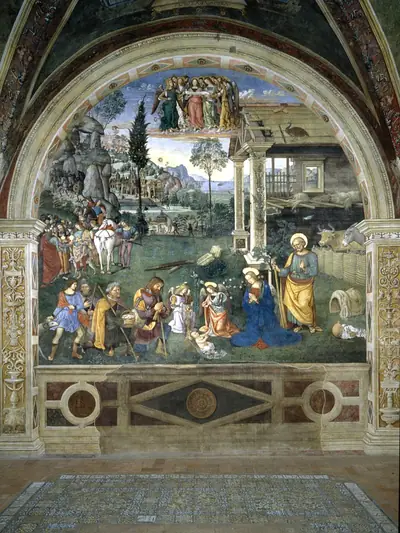
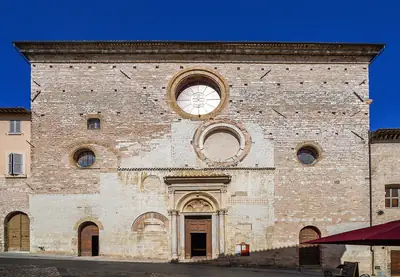
The Collegiate Church of Santa Maria Maggiore is Spello’s principal church and contains one of the town’s most important artistic treasures: the Baglioni Chapel, or Cappella Baglioni.
The chapel is known for its Renaissance frescoes by Pinturicchio. The fresco cycle was painted around 1500 and 1501, placing the chapel firmly within the artistic world of the early sixteenth century. Its paintings make Santa Maria Maggiore an essential stop for anyone interested in Renaissance art in Umbria.
Sant’Anna
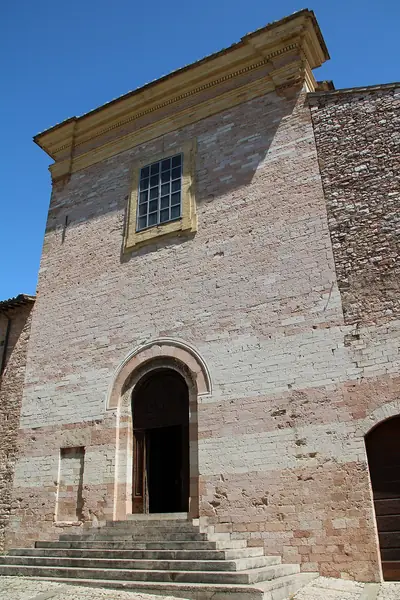
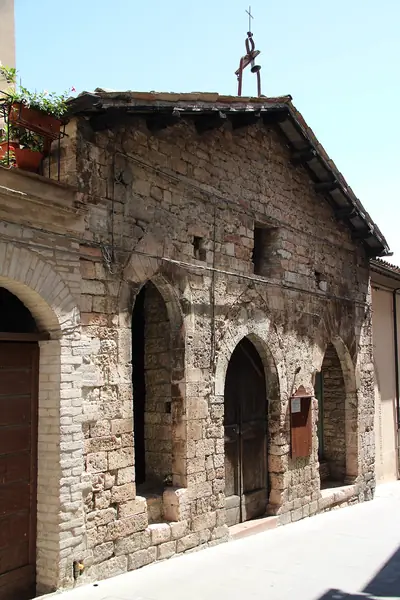
Sant’Anna is a small oratory with roots reaching back to the fourteenth century. It is one of the historic religious buildings encountered while walking through Spello and appears among the town’s older places of worship.
San Ventura
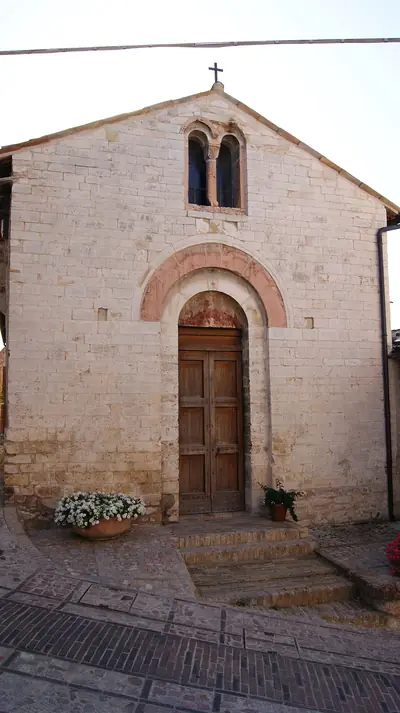
San Ventura, also known as the Chiesa di San Ventura, offers a quieter point of interest along a walk through the town. Its religious character adds to the succession of churches and oratories that shape Spello’s historic atmosphere.
Chiesa di Sant’Andrea
The Church of Sant’Andrea has origins in the fourteenth century. Its age makes it part of Spello’s long architectural history and gives another perspective on the town’s medieval religious heritage.
Chiesa di San Lorenzo
The Collegiate Church of San Lorenzo stands on Via Garibaldi. Also known in English as San Lorenzo, it has fourteenth-century origins and is one of the historic churches to include in a walk through Spello.
San Martino in the Pusterula district
San Martino stands in Spello’s terziere of Pusterula. This Roman Catholic church dates from the twelfth century, offering a glimpse into the town’s medieval past and the history of one of its traditional districts.
San Biagio
The Chiesa di San Biagio is another religious building that contributes to Spello’s distinctive character. It is a quieter stop to notice while continuing through the town’s historic streets.
Santissima Trinità
Santissima Trinità, also known as the Chiesa della Santa Trinità, is one of the religious buildings to discover in Spello. Together with the town’s other churches, it reflects the importance of faith in the development of the historic centre.
Madonna di Vico
Madonna di Vico is also known as Chiesa tonda. This small place of worship provides another brief stop during a walk through Spello, adding to the variety of religious buildings found around town.
San Girolamo
San Girolamo is a fifteenth-century Roman Catholic church belonging to a larger religious complex with an adjoining monastery. It offers a glimpse of Spello’s later medieval and religious history.
San Severino
San Severino is another point of interest within Spello. It adds to the sequence of historic religious buildings that can be encountered while exploring the town on foot.
Villa Fidelia
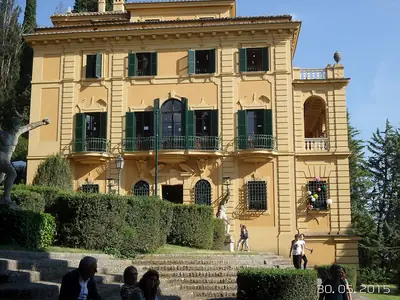
At the foot of a hill along the Strada Centrale Umbra, Villa Fidelia—also known as Villa Costanzi—is a seventeenth-century residence surrounded by walls, a large park, and an Italian-style garden.
The villa was built on the site of a Roman sanctuary dating from the fourth century. The grounds therefore connect a much later residence with Spello’s ancient past, while the park provides a different setting from the narrow streets of the historic centre.
San Silvestro in Collepino
In the village of Collepino, the remains of San Silvestro reveal the history of an ancient abbey. According to tradition, it began in 1025 as a hermitage founded by Saint Romuald before becoming an abbey.
The abbey was completely destroyed in 1535 by order of Pope Paul the Third after it had sheltered followers of the Baglioni family of Perugia, who were rebelling against the Papal States. The surviving restored structures include the apse, crypt, and base of the bell tower.
Four symbols represented the abbey’s privileges: a ring, a seal, a mitre, and a pastoral staff. After the destruction, these were entrusted to the parish priests of Collepino, who kept them until 1875.
Spello’s Flowers and Historic Streets
Spello’s floral character extends beyond the Infiorate. Balconies, windows, and alleyways are regularly decorated with plants, reflecting a local beautification competition and giving everyday walks through the town a carefully tended atmosphere.
The combination of flowers, warm-coloured buildings, narrow lanes, and historic churches is central to the experience of Spello. Rather than following a long checklist, visitors can take their time and notice how Roman, medieval, Renaissance, and religious heritage appear throughout the town.
Spello is one of the memorable places to visit in Umbria, with the major artistic and historic sights of Assisi nearby and other Umbrian destinations such as Perugia and Orvieto to explore.
Explore Spello with Neywo
Download Neywo for a free, self-guided way to discover Spello. The app offers one walking tour: “Spello: Roman Gates, Pinturicchio and Medieval Lanes.” It covers 1.76 km in about 80 minutes and includes 11 narrated stops, including Porta Consolare, Villa dei Mosaici, Sant’Anna, San Ventura, Santa Maria Maggiore, the Pinacoteca comunale di Spello, Sant’Andrea, San Lorenzo, San Martino, San Severino, and San Biagio.
The app tells the story of each place as you reach it, at your own pace, with no group and no schedule. Use it to turn a walk through Spello into a narrated journey through its Roman gates, Renaissance art, medieval lanes, and historic churches.
Places with an audio guide in Spello
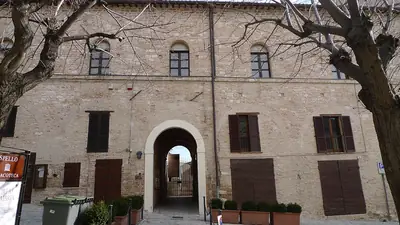
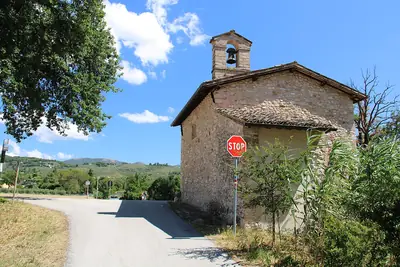
8 places in Spello with a Neywo audio guide. Each one starts telling its story as you reach it.
Self-guided tours in Spello
1 tour in Spello, free in the Neywo app. Each stop tells its story as you reach it.
- Walk
Spello: Roman Gates, Pinturicchio and Medieval Lanes
Climb from the Roman Porta Consolare through the stepped lanes of one of Umbria's prettiest hill towns. You pass a 4th-century villa with mosaic floors, Pinturicchio's frescoed Baglioni Chapel and a string of medieval churches.
Porta Consolare · Villa dei Mosaici (Spello) · Sant'Anna, Spello · San Ventura · Collegiate church Santa Maria Maggiore · Pinacoteca comunale di Spello …
Open this tour: Spello: Roman Gates, Pinturicchio and Medieval Lanes
Walk Spello with Neywo
Neywo turns Spello into a self-guided audio tour. Stories arrive as you reach the place they belong to, and the route reshapes when you wander off it.

