Verona, Italy: Self-Guided Walking Tour
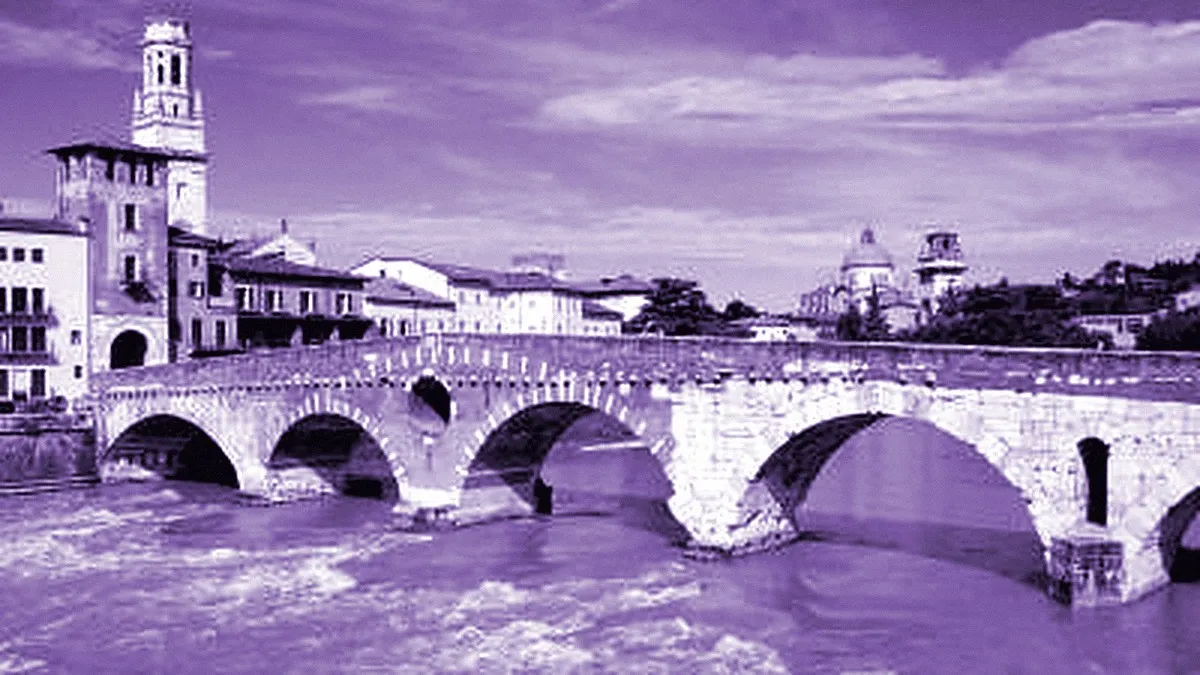
Things to Do in Verona: What to See in the Historic City
Verona is an Italian city where Roman monuments, medieval churches, Renaissance palaces and nineteenth-century fortifications form a remarkably layered urban landscape. The historic centre brings many of its most important sights together, while the hills and outskirts reveal the defensive system that once surrounded the city. Neywo offers a free audio guide for Verona with 223 narrated places.
What to See in Verona
Verona Arena and Piazza Bra
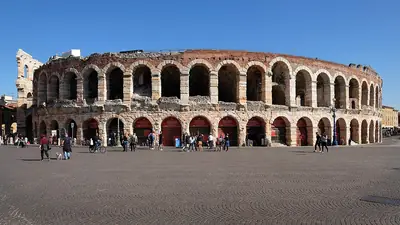
The Verona Arena, or Arena di Verona, is an ancient Roman amphitheatre at the heart of the city and one of its most recognizable landmarks. About 32 metres high, it has a seating area roughly 138 metres long and 110 metres wide. Its three concentric walls were designed around the needs of the building, although the outer wall has almost entirely disappeared.
Systematic restoration work began in the sixteenth century and helped preserve the monument’s essential form. The Arena remains a rare place to experience Roman architecture in a building that has continued to serve the public for centuries. It stands in Piazza Bra, a major urban space that also reflects Verona’s later architectural history.
Verona Cathedral
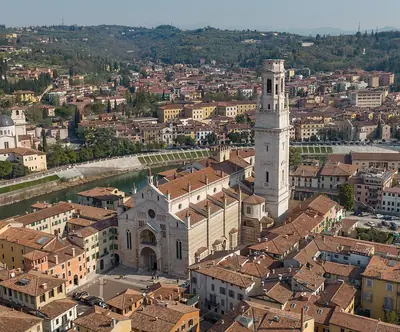
Verona Cathedral, officially the Cathedral of Santa Maria Assunta and also known as Santa Maria Matricolare, is the principal Catholic church of the city and the seat of the Diocese of Verona. Its site has a much older Christian history: two early Christian churches once stood here before an earthquake destroyed them in 1117.
The present Romanesque cathedral was consecrated on September 13, 1187. Later renovation campaigns changed aspects of the building, but its original plan remained unchanged. The name Santa Maria Matricolare recalls the early Christian church that once occupied the site.
Sant’Anastasia
Known formally as the Church of San Pietro da Verona in Santa Anastasia, Sant’Anastasia is Verona’s largest and most representative church. This Gothic basilica stands near Ponte Pietra, at a point where important road and river routes once converged.
Its unfinished façade leads into a vast interior divided into three naves by monumental cylindrical pillars. Built entirely in brick, the church introduced important features to Verona’s religious architecture, including a broad transept, four chapels around the presbytery and a new type of bell tower.
The Dominican friars received the land in 1260, and construction began in 1290. The essential structures were ready by the third decade of the fourteenth century, although the building was considered complete only in the 1440s. It was consecrated on October 22, 1471.
Basilica of San Zeno
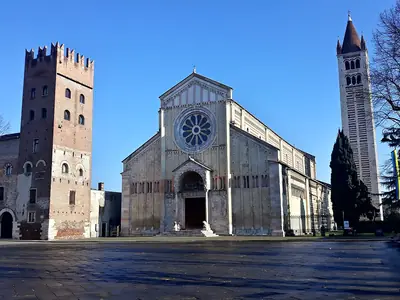
The Basilica of San Zeno, also called San Zeno Maggiore or San Zenone, is regarded as a masterpiece of medieval architecture. It remains an important Catholic place of worship in the San Zeno district and stands on a site occupied by at least five earlier religious buildings.
Tradition connects the origins of the church with a building over the tomb of Saint Zeno of Verona, who died sometime between 372 and 380. Much of the present Romanesque basilica emerged from a major renewal begun around the end of the eleventh century and the start of the twelfth. Work was interrupted by the earthquake of 1117, but much of the present church had been completed by about 1138. Later changes did not fundamentally alter its layout, allowing its medieval character to survive.
Bevilacqua Palace
Along Corso Cavour, Bevilacqua Palace is one of Verona’s notable Renaissance buildings. The palace was commissioned by the Bevilacqua family and designed in the sixteenth century by Michele Sanmicheli, a celebrated Renaissance architect from Verona. One source dates the project to around 1530.
The palace is also included in the wider architectural story around Castelvecchio, where Verona’s Renaissance buildings stand alongside Roman remains and medieval structures.
Castel San Pietro
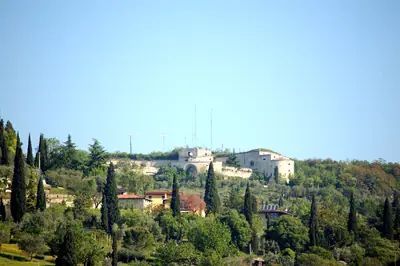
Castel San Pietro stands high above Verona on San Pietro Hill. Its elevated position provides a broad panoramic view of the city and makes it one of Verona’s favorite viewpoints for visitors and local residents.
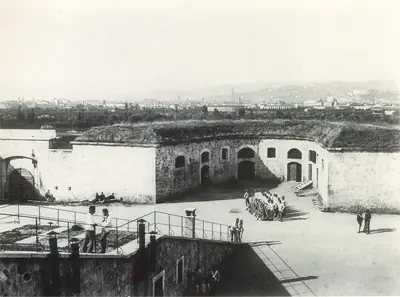
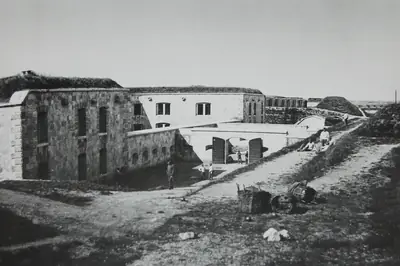
The present military building was designed by the Austrian military engineering directorate stationed in Verona and constructed between 1852 and 1858. Its original name, Aerarialcasernen Castel San Pietro, reflected its beginnings as a state military barracks. The site also preserves sections of an earlier defensive wall associated with a castle dating from the end of the fourteenth century.
Verona’s nineteenth-century forts
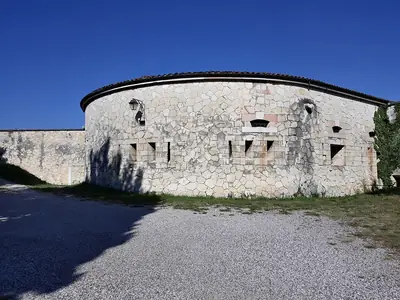
Verona’s defensive landscape extends well beyond the historic centre. The hills and plain around the city contain a network of forts built during the nineteenth century, including the following sites:
- Forte Biondella, originally known as Werk Biondella, was built in 1838 as part of the hill forts and advanced plain forts created between 1837 and 1843. Its construction was directed by Franz von Scholl.
- Forte San Mattia, originally Werk San Mattia, was completed in 1843. Franz von Scholl and his pupil Michael von Maly directed its construction.
- Forte Santa Caterina was built between 1850 and 1852 on a natural escarpment near the Adige. It formed part of Verona’s first entrenched camp on the plain, developed between 1848 and 1856.
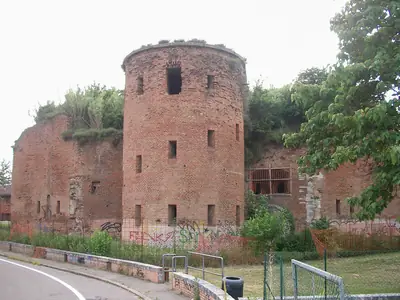
- Forte San Zeno, originally Werk Radetzky, was built between 1848 and 1856. Much of the fort disappeared, but one smaller tower with exposed brick facing remains.
- Forte Azzano, originally Werk Neu Wratislaw, was built between 1860 and 1861 and belonged to Verona’s second fortified field on the plain.
- Forte Dossobuono, also known as Forte Gisella, was built between 1860 and 1861 as part of the second fortified field of the plain.
- Forte Lugagnano, originally Werk Kronprinz Rudolf or Crown Prince Rudolf Fort, belonged to the second fortified camp in the plain, established between 1859 and 1866.
- Forte Preara, also known as Forte Montorio, was built between 1859 and 1860 as part of the second fortified camp.
- Forte Tomba, originally Werk Stadion, was built between 1860 and 1861. Much of its original form disappeared after its earthworks and ditch were leveled in the early 1950s, and later road and interchange works further affected the site.
Together, these forts show how Verona’s military landscape continued to evolve long after the Roman and medieval periods. Their positions connected the plain, the city walls, the Adige and the hill forts around the city.
Explore Verona with a self-guided audio guide
A Verona self-guided walking tour lets you explore the city independently while hearing its history at the places themselves. Neywo has five walking tours, one bus route and one bike route in Verona, with narration available in 11 languages.
The walks include:
- From the Arena to the Forum: Roman Verona and Its Squares — 1.89 km, 101 minutes and 11 narrated stops.
- The Scaligeri: Verona’s Dynasty of Dante’s Patron — 1.64 km, 94 minutes and 11 stops.
- Fortress, Arch and Bridge: Castelvecchio and Sanmicheli’s Verona — 1.23 km, 80 minutes and 10 stops.
- San Zeno: The Romanesque Heart of Verona — 1.48 km, 64 minutes and 8 stops.
- Gates, Saints and Museums: Eastern Verona — 2.11 km, 70 minutes and 8 stops.
- Line 31 Through Verona’s Gates: San Zeno to Porta Vescovo — a 6.4 km bus route lasting 27 minutes, with 10 stops.
- Riding the Walls: Porta Palio to Porta Vescovo — a 3.9 km bike route lasting 20 minutes, with 8 stops.
Download Neywo and explore Verona at your own pace. The app tells the story of each place as you reach it, with no group and no schedule. After Verona, continue discovering the wider region through Veneto, or plan another stop in Vicenza, Venice or Padua.
Places with an audio guide in Verona
8 places in Verona with a Neywo audio guide. Each one starts telling its story as you reach it.
Self-guided tours in Verona
7 tours in Verona, free in the Neywo app. Each stop tells its story as you reach it.
- Bike ride
Riding the Walls: Porta Palio to Porta Vescovo
Follow the cycle lanes beside Verona's Venetian and Habsburg walls, from the monumental Porta Palio through the bastions and Porta Nuova to Porta Campofiore, the Museo delle Mura and Porta Vescovo. Easy, mostly flat, and almost entirely off the busy streets.
Porta Palio, Verona · Bastione di Santo Spirito · Bastione dei Riformati · Porta Nuova · Porta Vittoria · Porta di Campofiore …
Open this tour: Riding the Walls: Porta Palio to Porta Vescovo - Bus ride
Line 31 Through Verona's Gates: San Zeno to Porta Vescovo
A regular ATV city bus that crosses the old town west to east: San Zeno's abbey tower, the Castelvecchio fortress, the Roman gate of Porta Borsari, the medieval Porta San Giorgio, Ponte Pietra beside the Roman theatre, and on to Santi Nazaro e Celso and Porta Vescovo. Buy a city ticket and ride from stop to stop.
Abbazia di San Zeno (Verona, Italy) · Church San Zeno in Oratorio · Castelvecchio · Bevilacqua Palace · Porta Borsari · Porta San Giorgio …
Open this tour: Line 31 Through Verona's Gates: San Zeno to Porta Vescovo - Walk
From the Arena to the Forum: Roman Verona and Its Squares
Start under the arches of the Arena, still staging opera after two thousand years, and walk the old Roman road to the gate that once welcomed travellers to Colonia Verona Augusta. Then enter Piazza delle Erbe, built on the Roman forum, and finish at the arcaded square named after Dante.
Verona Arena · Piazza Bra · Palazzo Barbieri · Santi Apostoli church · Porta Borsari · Piazza delle Erbe …
Open this tour: From the Arena to the Forum: Roman Verona and Its Squares - Walk
The Scaligeri: Verona's Dynasty of Dante's Patron
Follow the family who ruled Verona for over a century: the Gothic tombs with knights on horseback, their private chapel and the fortified streets around them. Cross the Adige on the Roman bridge Ponte Pietra to the Roman theatre and the hilltop viewpoint over the red roofs.
Scaliger Tombs · Santa Maria Antica · Casa di Romeo · Palazzo del Podestà · Sant'Anastasia · Verona Cathedral …
Open this tour: The Scaligeri: Verona's Dynasty of Dante's Patron - Walk
Fortress, Arch and Bridge: Castelvecchio and Sanmicheli's Verona
Walk from the Gran Guardia and one of Europe's oldest public museums to the Renaissance palace of Michele Sanmicheli. Pass the Roman Arco dei Gavi, rebuilt after Napoleon's engineers took it down, then reach the red-brick fortress of Castelvecchio and its daring bridge over the Adige.
Gran Guardia · Museo Lapidario Maffeiano · Teatro Filarmonico · Bevilacqua Palace · Palazzo Canossa · Arco dei Gavi …
Open this tour: Fortress, Arch and Bridge: Castelvecchio and Sanmicheli's Verona - Walk
San Zeno: The Romanesque Heart of Verona
Leave the centre for Verona's finest Romanesque church, with its bronze doors, Mantegna altarpiece and the crypt where legend says Romeo and Juliet were married. Start at Sanmicheli's Renaissance chapel, wander the square and the abbey tower, and finish at the old gate.
Santa Maria del Pianto church · Pellegrini chapel · Piazza San Zeno · Basilica of San Zeno · Abbazia di San Zeno (Verona, Italy) · San Procolo, Verona …
Open this tour: San Zeno: The Romanesque Heart of Verona - Walk
Gates, Saints and Museums: Eastern Verona
Cross to the east side of the old town: the Roman Gate of the Lions, the layered church of San Fermo, the Natural History and Archaeological museums, a Romanesque gate and the ancient crypt of San Giovanni in Valle. A quieter Verona, away from the crowds.
Porta Leoni · San Fermo Maggiore · Museo di Storia Naturale · Museo archeologico nazionale di Verona · Porta Organa · Santa Maria in Organo …
Open this tour: Gates, Saints and Museums: Eastern Verona
Walk Verona with Neywo
Neywo turns Verona into a self-guided audio tour. Stories arrive as you reach the place they belong to, and the route reshapes when you wander off it.

