Things to Do in Oaxaca, Mexico: Walking Guide
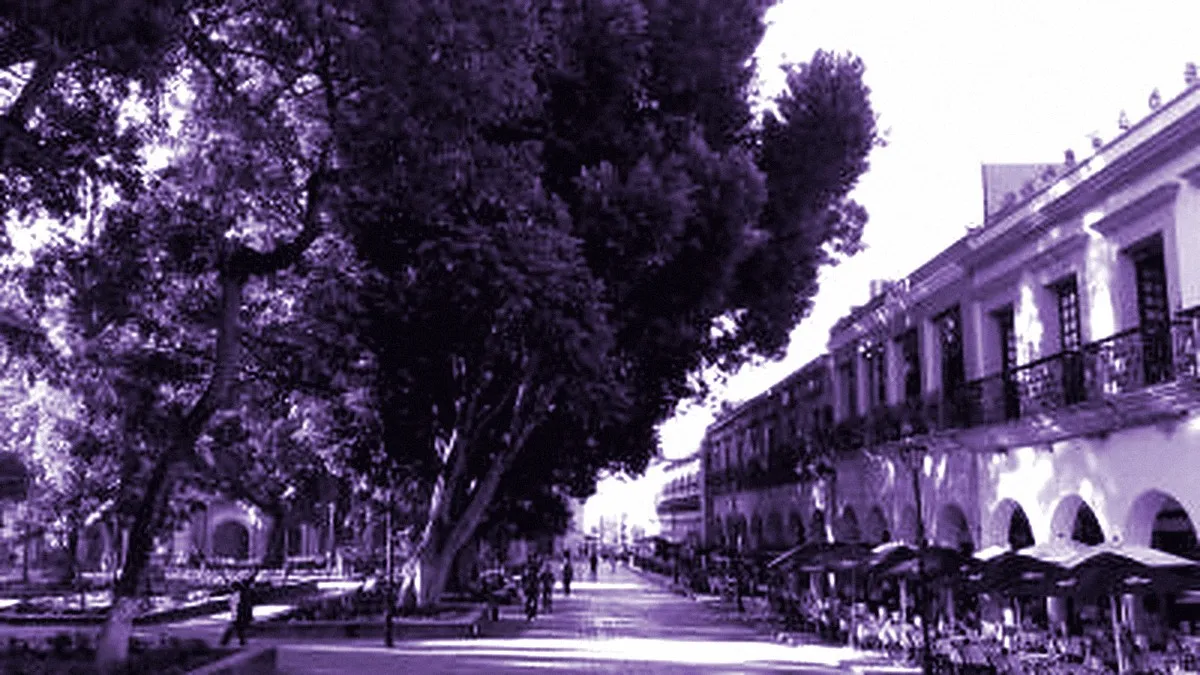
Things to Do in Oaxaca: What to See in Oaxaca de Juárez
Looking for things to do in Oaxaca? Oaxaca de Juárez is a cultural centre in southern Mexico where colonial architecture, Indigenous Zapotec and Mixtec traditions, museums, churches and living artistic traditions meet. Its historic centre is especially rewarding on foot, with green-stone buildings, Baroque churches and museums gathered around lively streets and plazas. Neywo has a free audio guide for Oaxaca with 11 narrated places.
What to See in Oaxaca’s Historic Centre
The best way to discover Oaxaca is to move through its historic centre from one landmark to the next. These are some of the most important places to include in an Oaxaca self-guided walking tour.
Basilica of Our Lady of Solitude
The Basilica of Our Lady of Solitude is a Baroque church dedicated to the Virgin of Solitude, Oaxaca’s patron saint. Its low towers and spires were designed to withstand earthquakes, while its greenish cantera stone and later yellow-limestone façade give the building a distinctive appearance.
Inside, gold decoration, Baroque paintings and numerous wooden and plaster statues create a richly ornamented setting. The basilica’s treasured image of the Virgin wears a golden diadem set with diamonds and pearls.
Museo Rufino Tamayo
The Museo de Arte Prehispánico de México Rufino Tamayo was founded by the Oaxacan painter Rufino Tamayo. Its collection brings together three important periods of Mexican art: the prehispanic era, the viceregal or colonial period and modern art.
It is a useful stop for understanding the artistic traditions that influenced Tamayo and continue to shape Oaxaca’s cultural identity.
Museo de los Pintores Oaxaqueños
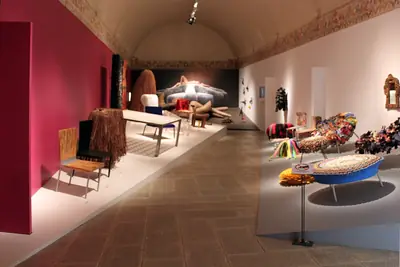
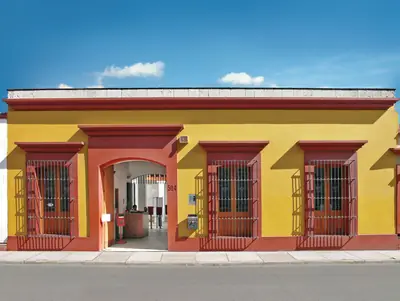
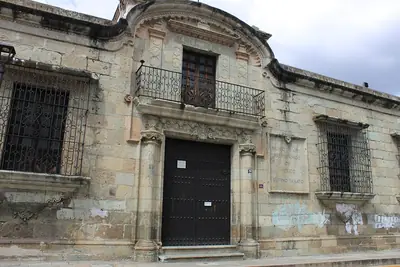
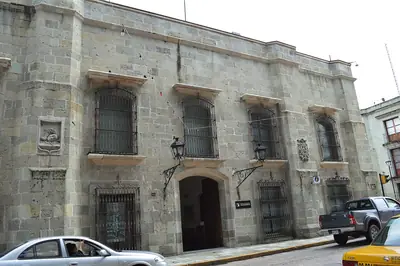
Housed in a 17th-century colonial building at the corner of Avenida Independencia and García Vigil, the Museo de los Pintores Oaxaqueños opened in 2004. Its exhibition rooms display paintings and graphics by Oaxacan artists alongside works by other Mexican and international creators.
The museum’s purpose is not only to show local art, but also to connect Oaxacan artists with a wider network of creators and museums.
Cathedral of Our Lady of the Assumption
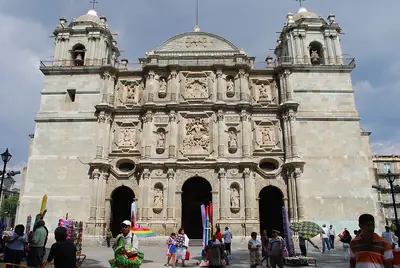
The Cathedral of Our Lady of the Assumption is the seat of the Roman Catholic Archdiocese of Antequera and one of the spiritual centres of Oaxaca. It is a three-nave basilica crowned by an octagonal dome, with a Baroque façade carved from local greenish stone.
The façade is filled with sculpture. Saint Peter and Saint Paul stand beside the main doors, while the Virgin Mary appears above them surrounded by cherubs. The southern tower contains a clock gifted to Oaxaca by King Ferdinand VII of Spain.
Teatro Macedonio Alcalá
Teatro Macedonio Alcalá is a theatre and opera house regarded as one of Mexico’s important cultural venues. Built in 1909, it reflects the cultural flourishing of Oaxaca during the early twentieth century.
Its Art Nouveau design is marked by elegant lines and decorative details, making it one of the city centre’s most distinctive buildings.
Museo Textil de Oaxaca
The Museo Textil de Oaxaca occupies Casa Antelo, a historic building on Avenida Hidalgo 917 in Oaxaca’s historic centre. The museum is dedicated to textiles and adds another perspective to the region’s artistic and cultural heritage.
Church of Santo Domingo de Guzmán
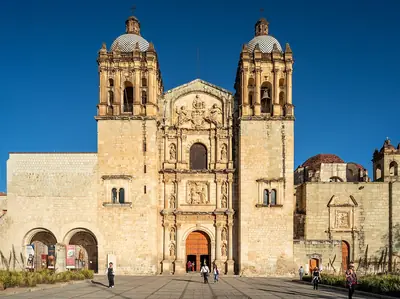
The Church of Santo Domingo de Guzmán is one of Oaxaca’s most memorable examples of New Spanish Baroque architecture. Its high, narrow façade is framed by massive square towers, and its local cantera-stone walls were built to withstand earthquakes.
The façade includes a relief of Saints Dominic and Hippolytus, with the Holy Spirit above them, as well as niches containing statues of Dominican saints. Inside, the nave ceiling features a painted genealogical tree of Saint Dominic, while the dome, wall paintings and carved organ loft add to the richly decorated interior.
Construction began in 1551, and the conventual complex was inaugurated in 1608, although it was still unfinished at that time. The seminary attached to the complex became a university in 1623.
Museo de las Culturas de Oaxaca
The Museo de las Culturas de Oaxaca is located in Oaxaca, Mexico, and is one of the city’s key cultural museums. It belongs naturally in a visit focused on the region’s history and heritage, alongside Oaxaca’s churches, historic buildings and archaeological traditions.
Museo de Filatelia de Oaxaca
Known locally as MUFI, the Museo de Filatelia de Oaxaca is dedicated to the art and hobby of stamp collecting. It was founded on July 9, 1998, through the initiative of the Fundación Alfredo Harp Helú Oaxaca.
The museum’s original holdings came from the personal stamp collection of Alfredo Harp Helú, donated to create its inaugural collection. Its mission is to encourage an interest in philately and collecting among visitors.
Oaxaca de Juárez
Oaxaca de Juárez is the capital and largest city of the state of Oaxaca, set at the base of Cerro del Fortín. Its historic architecture, archaeological heritage and living Zapotec and Mixtec traditions make it one of Mexico’s major cultural destinations.
The city is also known as la Verde Antequera, a name connected with its earlier Spanish name, Nueva Antequera, and the distinctive local green stone used in many buildings. In 1987, Oaxaca and the nearby Monte Albán site received UNESCO World Heritage status.
The city’s name has changed over time: the settlement was called Antequera de Oaxaca after receiving the title “Muy noble y leal ciudad” in 1532, became Oaxaca in 1821, and acquired the suffix “de Juárez” in 1872 in honour of Benito Juárez.
Plan a Visit to Mexico
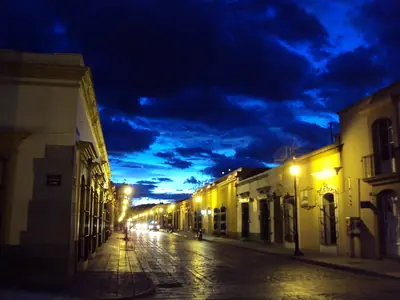
Oaxaca is one of the many destinations to explore in Mexico. Its historic centre combines museums, churches, theatres and local stone architecture in a compact cultural setting, making it particularly well suited to exploring on foot.
Explore Oaxaca with Neywo
Neywo’s free Oaxaca audio guide includes 11 narrated places and one walking tour. The walk, Green Stone and Baroque Gold in Oaxaca’s Centro Histórico, covers 2.39 km, takes about 84 minutes, and includes 10 stops.
The app tells the story of each place as you reach it, at your own pace. There is no group and no schedule: download Neywo and explore Oaxaca independently, with its narration accompanying you through the historic centre.
Places with an audio guide in Oaxaca
8 places in Oaxaca with a Neywo audio guide. Each one starts telling its story as you reach it.
Self-guided tours in Oaxaca
1 tour in Oaxaca, free in the Neywo app. Each stop tells its story as you reach it.
- Walk
Green Stone and Baroque Gold in Oaxaca's Centro Histórico
Oaxaca is called la Verde Antequera for the green cantera stone of its buildings. Follow it from the earthquake-proof Basilica of Solitude through museums of Mexican painters and prehispanic art, the Baroque cathedral and the Art Nouveau Teatro Macedonio Alcalá, to the golden four-tiered facade of Santo Domingo and the museums in its former convent. Pause on the Zócalo, the green city's main square, between cathedral and theatre.
Basilica of Our Lady of Solitude · Museo De Arte Prehispanico De Mexico Rufino Tamayo · Museo de los Pintores Oaxaqueños · Cathedral of Our Lady of the Assumption, Oaxaca · Oaxaca de Juárez · Teatro Macedonio Alcalá …
Open this tour: Green Stone and Baroque Gold in Oaxaca's Centro Histórico
Walk Oaxaca with Neywo
Neywo turns Oaxaca into a self-guided audio tour. Stories arrive as you reach the place they belong to, and the route reshapes when you wander off it.

