Drøbak, Norway: Self-Guided Walking Tour
Things to Do in Drøbak, Norway
Drøbak is a coastal town on the eastern side of the Drøbaksundet, where the Oslofjord narrows to about one kilometre wide. Its history as a market town, wooden architecture, museums and connection with the dramatic sinking of the German cruiser Blücher make it a rewarding place to explore. Neywo has a free audio guide for Drøbak with 6 narrated places.
What to See in Drøbak
Explore Drøbak
Drøbak is the administrative centre of Frogn Municipality in Akershus county. The town has around 13,800 residents and was formerly a market town, or kjøpstad, reflecting its long-standing role in regional trade and commerce.
Its name comes from the Old Norse Drjúgbakki, meaning “the dry hill”. Drøbak remained an independent municipality until 1963, when it was merged into Frogn. Its position beside the narrowest part of the Oslofjord has also given it considerable strategic importance.
Visit Drøbak Church
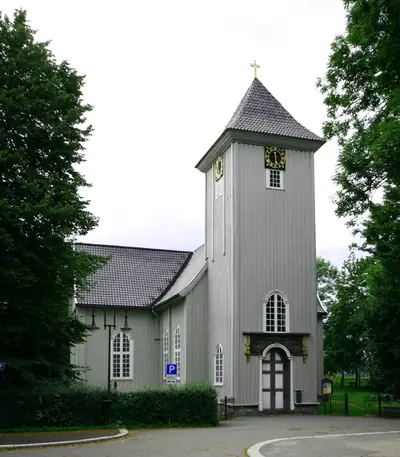
Drøbak Church, also known as Vår Frelsers kirke, is a wooden cruciform church consecrated in 1776. It was built on the initiative of the merchant Niels Carlsen and his wife, Martha Zachariasdatter, essentially as a gift to the local community.
The interior is especially notable for its Rococo decoration. The altarpiece and pulpit were financed by Martha’s father, Zacharias Simonsen Wesseltoft, and the church also contains several old portraits. Its design was inspired by the older Vår Frelsers kirke in Christiania, the city now known as Oslo, including the building that became Oslo Cathedral.
See the drawings at Avistegnernes hus
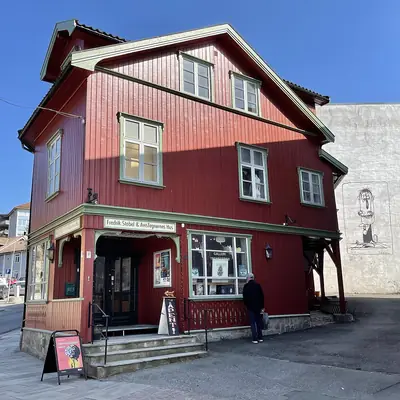
Avistegnernes hus is a gallery devoted to drawing and freedom of expression. Founded on April 8, 1999, with support from Frogn municipality, Akershus county and several Norwegian newspapers, it was created as a space where drawing could be presented as an art form in its own right.
The gallery has a permanent exhibition of drawings by Fredrik Stabel, as well as changing exhibitions of newspaper cartoons, comic strips and illustration art. It also includes a bookshop and a sales department for art. The gallery has produced travelling exhibitions focused on political illustration and expressive art.
Discover Follo Museum
Follo Museum is the regional museum for the Follo area in Akershus and is part of MiA, the Museums in Akershus. Its main site is an open-air museum at Seiersten, just outside Drøbak.
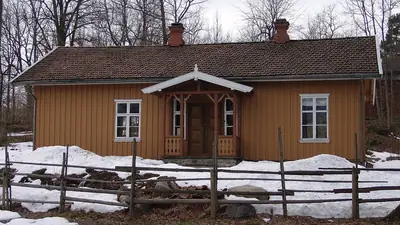
Historic buildings from across Follo have been brought together here. The collection includes a farmyard with outbuildings from Skoklefall on Nesodden, a barn from Børsum in Ås and a brewhouse from Skjellerud in Frogn.
Following the museum’s country road, visitors can see the former Holstad school, dating from 1869, and Korsegården, a coaching station from the 1700s. The site also has an exhibition building with a café, museum shop, offices and storage facilities. Its exhibitions explore the cultural history of the Follo region, while the museum’s collections include objects and archives.
Follo Museum also includes Uranienborg at Svartskog, the Swiss-style villa that was Roald Amundsen’s home by the Bunnefjorden from 1908 until his death in 1928.
Visit Frogn Church
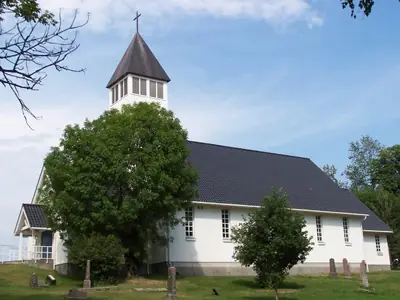
Frogn Church is a modern church whose history reaches back to the Middle Ages. The current building was completed in 1999, constructed from lightweight concrete in the traditional long-church layout and designed to seat around 240 people.
It replaced a wooden neo-Gothic church built in 1859 and destroyed by fire in 1994. A church has stood somewhere in Frogn since medieval times, although the exact location of the earliest church is unknown. The present building was consecrated on June 6, 1999.
Learn about the sinking of Blücher
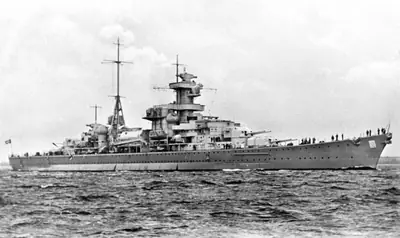
The narrow waters at Drøbak were the scene of one of the most dramatic events of the Second World War in Norway. On the morning of April 9, 1940, the German heavy cruiser Blücher was sunk here while leading the naval force assigned to capture Oslo.
Blücher was the second of five ships in the Admiral Hipper class. Launched on June 8, 1937, at the Deutsche Werke shipyard in Kiel, it was named after the Prussian field marshal Gebhard Leberecht von Blücher. The ship carried eight main guns, twelve anti-aircraft guns and twelve torpedo tubes.
During the invasion of Norway, Blücher served as the flagship of Rear Admiral Oskar Kummetz. As it entered the narrows, the old 28-centimetre guns at Oscarsborg Fortress opened fire. The event highlights why Drøbak’s position at the narrowest part of the Oslofjord was strategically important.
Explore Drøbak with a self-guided audio tour
Download Neywo and discover Drøbak with the free audio guide. The app’s walking tour, “Drøbak: Wooden Church, Cartoons and the Narrow Fjord,” covers 1.92 km in about 50 minutes and includes 4 narrated stops: Drøbak Church, Drøbak, Avistegnernes hus and Follo Museum.
Each story plays as you reach the place, at your own pace, with no group and no schedule. Narration is available in 11 languages, making this a simple way to explore Drøbak independently.
Places with an audio guide in Drøbak
6 places in Drøbak with a Neywo audio guide. Each one starts telling its story as you reach it.
Self-guided tours in Drøbak
1 tour in Drøbak, free in the Neywo app. Each stop tells its story as you reach it.
- Walk
Drøbak: Wooden Church, Cartoons and the Narrow Fjord
Drøbak is a pretty wooden town on the narrowest stretch of the Oslofjord. Visit its 1776 church, the national centre for drawing and free speech, and the open-air Follo Museum, set near the fort that sank the cruiser Blücher in 1940.
Drøbak Church · Drøbak · Avistegnernes hus · Follo museum
Open this tour: Drøbak: Wooden Church, Cartoons and the Narrow Fjord
Walk Drøbak with Neywo
Neywo turns Drøbak into a self-guided audio tour. Stories arrive as you reach the place they belong to, and the route reshapes when you wander off it.

