Visiting Svolvær, Norway: Top Sights on Foot
Things to Do in Svolvær: Museums, Churches and Lofoten Heritage
Svolvær is the largest town in the Lofoten archipelago and the administrative heart of Vågan Municipality in Nordland, Norway. Set on Austvågøya beside Vestfjorden, it combines a working coastal identity with museums, historic churches and access to the wider landscapes of Norway. Neywo has a free audio guide for Svolvær with 15 narrated places, available in 11 languages.
What to See in Svolvær and Nearby
The most interesting things to do in Svolvær include exploring the town’s wartime history, visiting the museums around Kabelvåg and Storvågan, and seeing the churches that reflect the region’s religious and architectural heritage. Several of the best places to visit lie outside the town itself, in nearby fishing villages and coastal communities around Austvågøya.
Lofoten War Memorial Museum
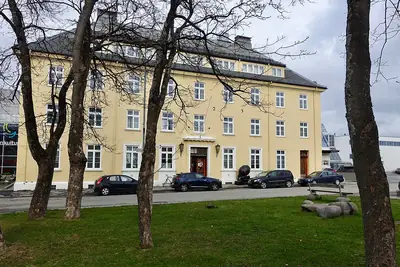
In central Svolvær, the Lofoten War Memorial Museum presents Norway’s largest collection of wartime memorabilia, uniforms and military objects from the Second World War. The museum opened on June 15, 1996, following years of private collecting by William Hakvaag.
It became part of Museum Nord in 2010. Its non-partisan approach focuses on an informative and factual presentation of the war, making it a reflective stop for anyone interested in the history of Lofoten and Norway during the conflict.
Svolvær Church
Svolvær Church stands on a small rise in the centre of town. Built in 1934, it is a white concrete long church designed by Harald Sund and August Nielsen, with seating for around 400 people.
The church was funded entirely through private contributions. Ole Johan Kaarbø, a steamship operator and merchant, played a leading role in the project, which was consecrated by Bishop Berggrav on April 25, 1934. In 2003 and 2004, the parish council’s decision to hang a rainbow flag inside the church sparked debate and marked the building as a place of inclusion.
Lofotmuseet in Storvågan
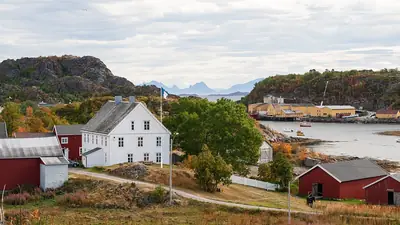
Lofotmuseet, the regional museum of Lofoten, is located in the old fishing village of Storvågan near Kabelvåg. Its setting is a former fishing estate that was one of the largest fishing villages in Lofoten during the 19th century.
The main building, a væreiergård with its residential house, dates from 1815. The grounds include traditional rorbuer fishermen’s cabins, boat houses with Nordland boats and a garden of historic perennial plants. Exhibitions explore the Lofoten fisheries, coastal harbours and lighthouses, as well as the medieval town of Vágar, which once stood in the area.
The museum also presents traditional boat-building and handicraft demonstrations, old boat engines and other aspects of coastal life.
Lofotakvariet
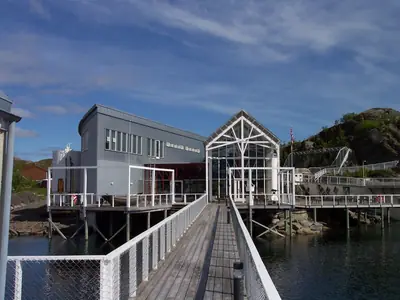
Also in Storvågan, Lofotakvariet is the northernmost aquarium in Norway. It opened in 1989, although the first aquarium in the area was built at the pier in Kabelvåg in 1931.
Its tanks show the underwater life of the Lofoten Islands, while dedicated pools house seals and otters. The site also includes an exhibition about cold-water corals and a display centre focused on Norwegian aquaculture, linking marine life with the fishing and seafood industries that remain important to the region.
Espolin Gallery
The Espolin Gallery is a small gallery in Storvågan devoted primarily to the work of Kaare Espolin Johnson. Established in 1992, it has an intimate atmosphere and gives visitors the opportunity to spend time with the artist’s paintings.
Alongside the permanent collection, the gallery hosts temporary exhibitions by other artists. It is a quieter cultural stop than the larger regional museums, and a useful addition to a visit to Storvågan.
Vågan Church, the Lofoten Cathedral
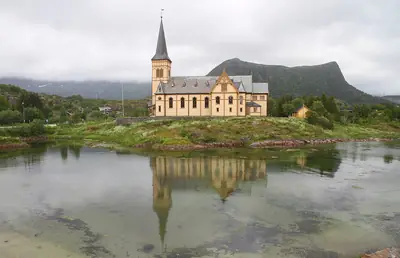
Vågan Church stands in Kabelvåg and is often called the Lofoten Cathedral. Consecrated on October 9, 1898, it was designed by Carl Julius Bergstrøm in a neo-Gothic style.
The yellow timber church has a cruciform plan and seats around 1,200 people. It is one of Norway’s largest churches and the largest wooden building in Northern Norway, which explains its nickname, although it is technically a parish church of the Church of Norway.
The site has an even older history. A church is believed to have stood here for around 900 years, and five or six earlier churches may have occupied the area of the present building. The surrounding churchyard is one of the two oldest in Northern Norway.
Henningsvær Church
In the fishing village of Henningsvær, Henningsvær Church is a white wooden building on Heimøya. Designed by Odd Storm, it was built in 1974 in a simple rectangular style.
Inside, it follows the traditional Norwegian langkirke, or long church, design and seats about 250 people. Its straightforward architecture provides a contrast to the dramatic setting of the village and surrounding islands.
KaviarFactory
KaviarFactory occupies a former caviar factory in Henningsvær. Built in 1920, the building operated as a factory until the mid-1990s, and its history remains closely connected to local families and the fishing community.
Today it is a contemporary art space with a permanent exhibition by northern Norwegian photographer Rune Johansen, temporary exhibitions by national and international artists, and a studio for visiting artists. Its transformation from working factory to art venue reflects the way contemporary culture has become part of Lofoten’s coastal identity.
Sildpollnes Church
Sildpollnes Church is one of the most photographed churches in Lofoten. The small white wooden chapel stands on a peninsula in Austnesfjorden and was built in 1891 in a traditional long-church style.
It originally served as a prayer house and was consecrated as a chapel in 1960. The building may be admired from outside, but it was closed for church services in 2015 because of a dispute concerning road access and parking.
Other churches around Austvågøya
Several smaller churches offer further insight into the communities around Svolvær. Strandlandet Church in Straumnes is a white wooden parish church built in 1938, with a traditional long-church layout and seating for about 250 people.
Strauman Church in Sydalen was built in 1984 and seats around 125 people. It began as Sydal School Chapel, created by extending a school gymnasium with a choir area for worship.
On Hinnøya, Digermulen Church is an octagonal concrete church dating from 1951. Its unusual shape and white exterior stand out beside the Raftsundet strait. Gimsøy Church, on Gimsøya, was built in 1876 and is at least the third church to occupy the island. Its structure was anchored firmly to the ground to protect it from strong winds.
Explore Svolvær with Neywo
Neywo’s free Svolvær audio guide includes 15 narrated places. There are no scheduled tours or group to join: the app tells the story of each place as you reach it, at your own pace. Choose the places that interest you, walk independently and listen when you arrive.
Places with an audio guide in Svolvær
8 places in Svolvær with a Neywo audio guide. Each one starts telling its story as you reach it.
Walk Svolvær with Neywo
Neywo turns Svolvær into a self-guided audio tour. Stories arrive as you reach the place they belong to, and the route reshapes when you wander off it.

